Counting skills Math Worksheets for Ages 3-8 - Page 20
459 filtered results
-
From - To
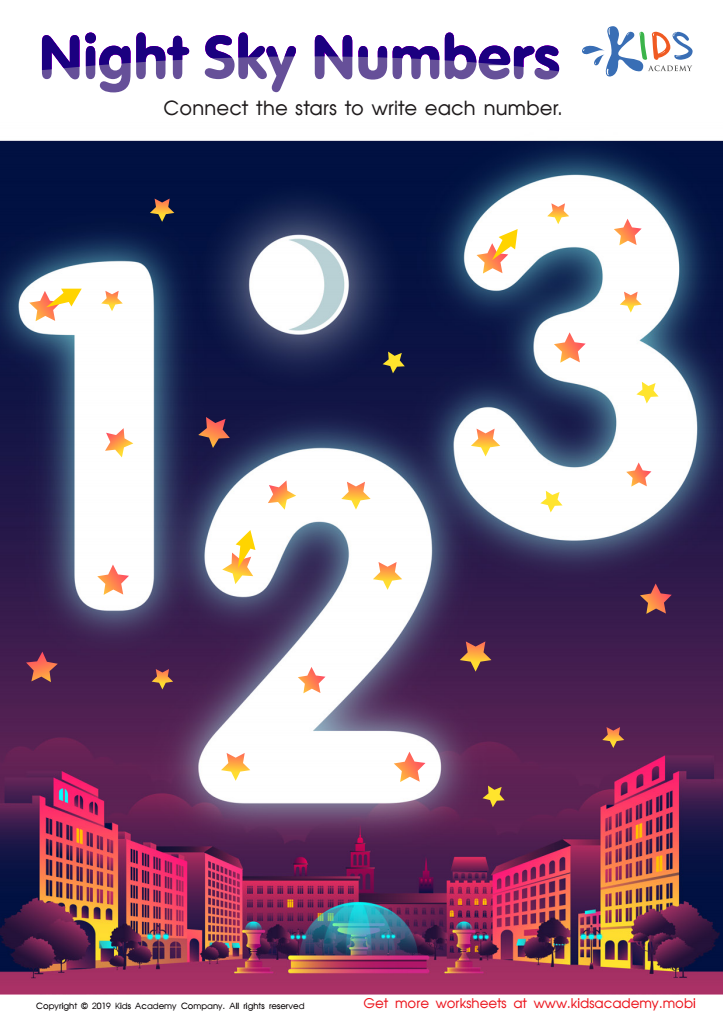
Night Sky Numbers Worksheet
 Assign to My Students
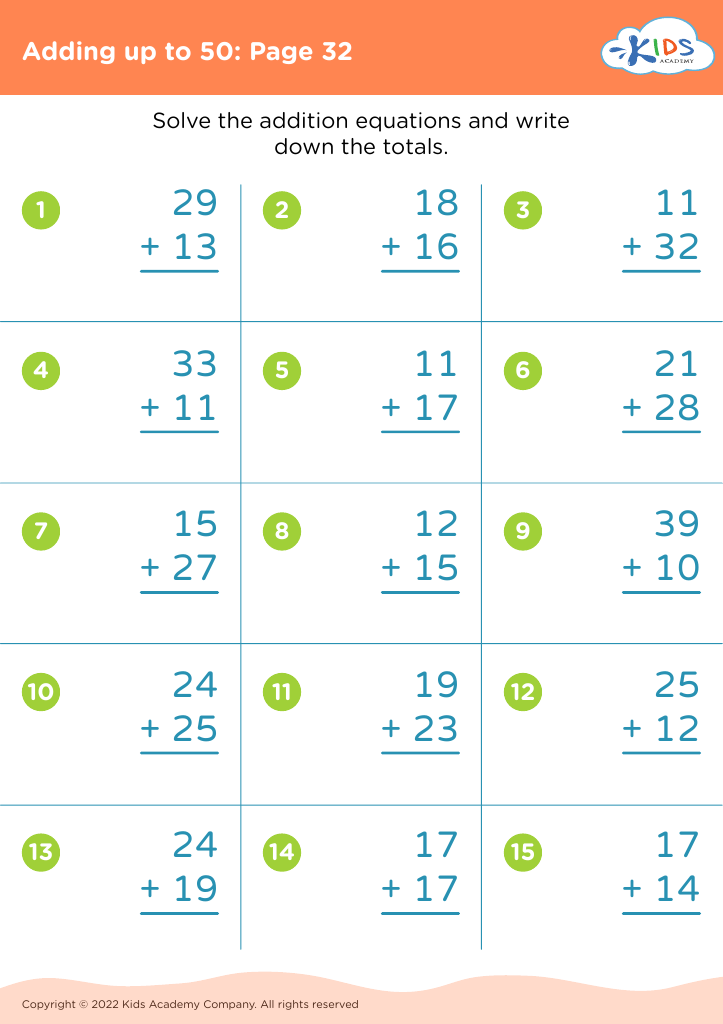
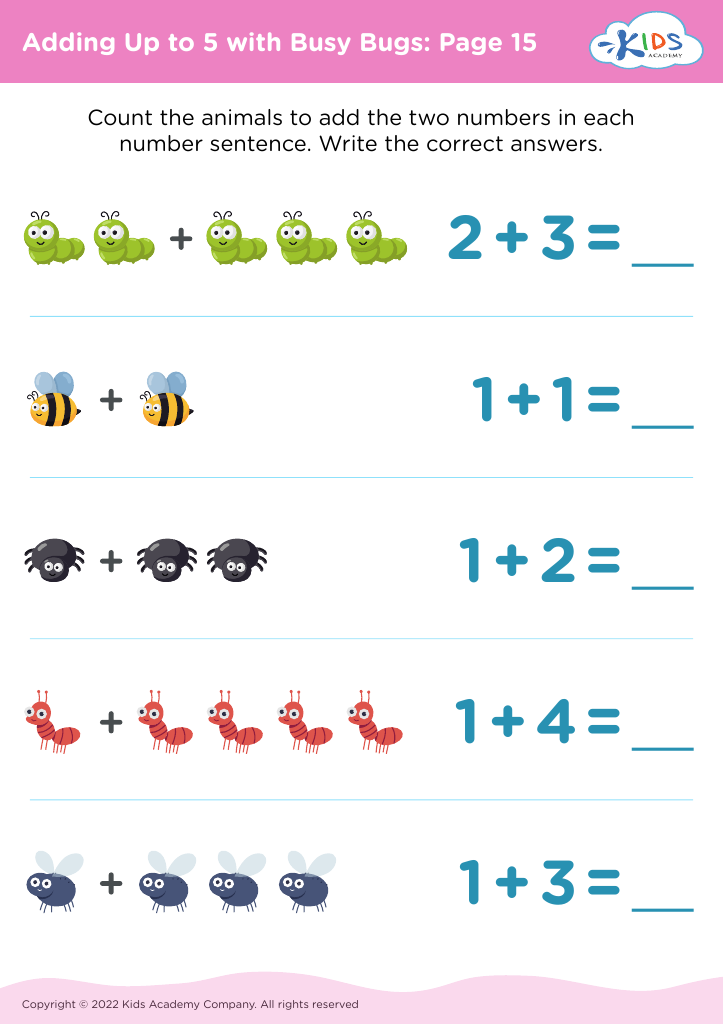


.jpg)





Counting skills are fundamental for children ages 3-8 as they establish the foundation for all subsequent mathematical learning. At this age, children are in a critical developmental stage where they start to understand numbers, their sequences, and basic relationships. Here’s why parents and teachers should prioritize these skills:
Firstly, counting is pivotal for number sense, the intuitive grasp of numbers and their meanings, which is essential for higher-order math skills such as addition, subtraction, multiplication, and division. Counting also promotes cognitive development, fostering children's logical thinking and problem-solving abilities.
Secondly, counting skills readily translate into daily life scenarios, enabling kids to navigate through routine tasks such as understanding time, handling money, and measuring quantities. These practical applications make math more relatable and help develop a child's confidence when dealing with the world around them.
Moreover, early proficiency in math, particularly counting, is linked with improved academic performance across subjects. It encourages a positive attitude toward learning, facilitating a smoother and more enthusiastic transition into formal schooling.
Lastly, counting activities can be interactive and fun, helping to engage young minds and stimulate their curiosity. As parents and teachers foster these experiences, they are instilling a love for learning and empowering their children with essential skills that resonate well beyond the classroom.
Therefore, supporting and nurturing counting skills is an investment in a child's educational journey and overall cognitive development.








