Data analysis Math Worksheets for Ages 3-8
4 filtered results
-
From - To
Unlock the world of data analysis for young minds with our comprehensive Math Worksheets designed for ages 3-8! These engaging resources introduce foundational concepts in a fun, accessible way, encouraging interactive and practical learning. Each worksheet is crafted to develop critical thinking and analytical skills through exercises involving sorting, classifying, graphing, and interpreting data. Perfect for use at home or in the classroom, our vibrant, educator-approved worksheets ensure children grasp basic mathematical principles while having fun. Give your child a head start in math and analytical thinking with our expertly designed data analysis worksheets.
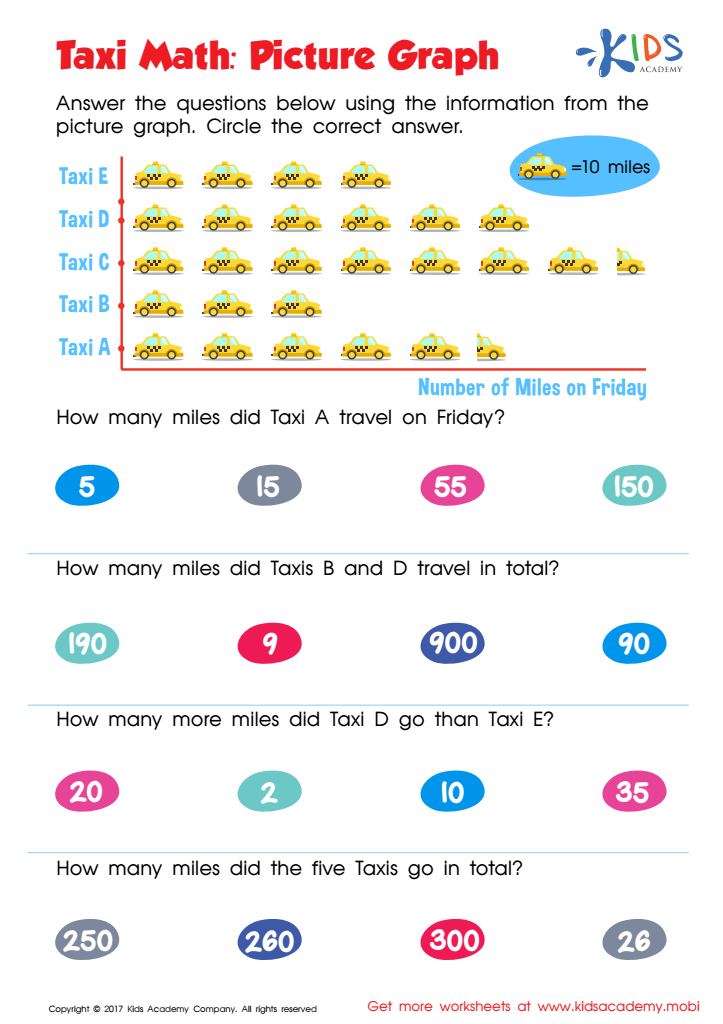
Taxi Math Worksheet
 Assign to My Students
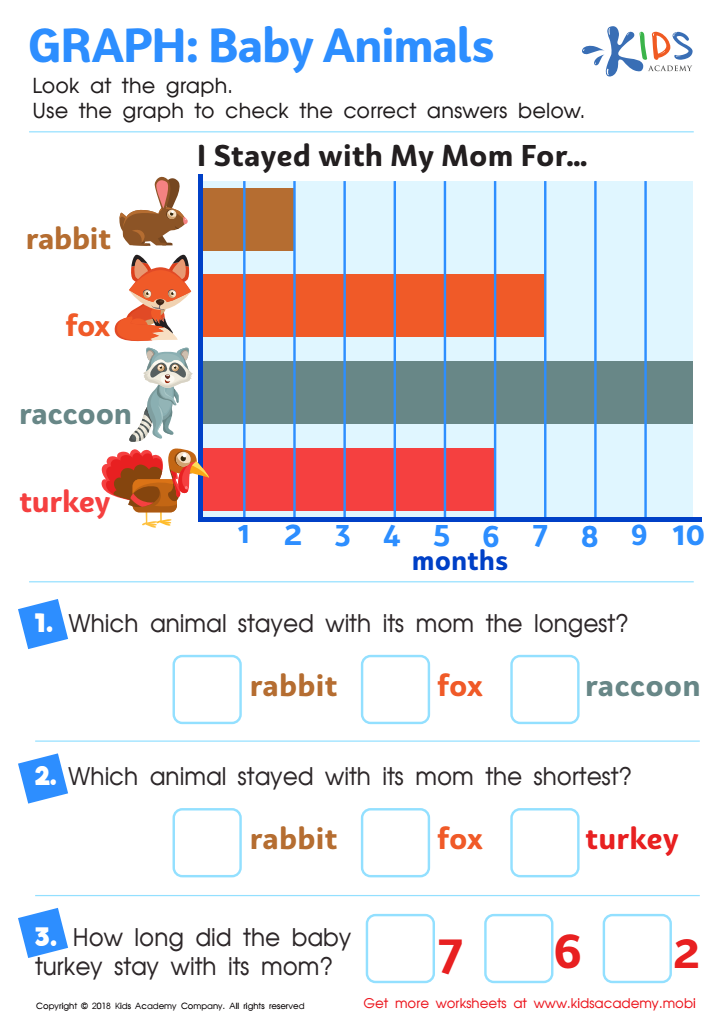
Graph: Baby Animals Worksheet
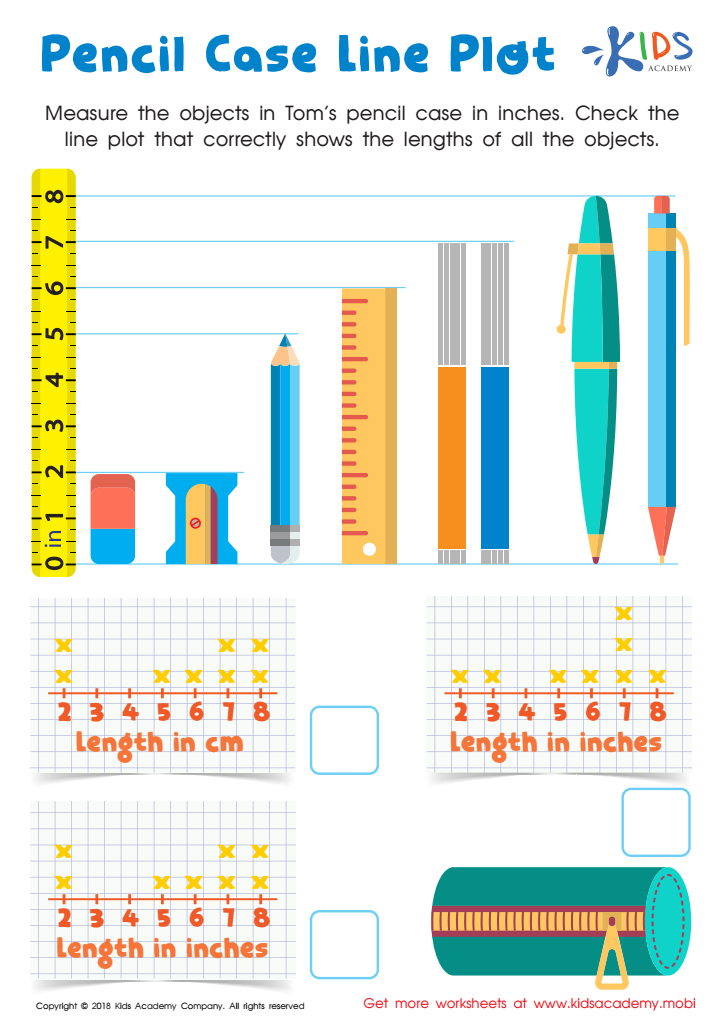
Pencil Case Line Plot Worksheet
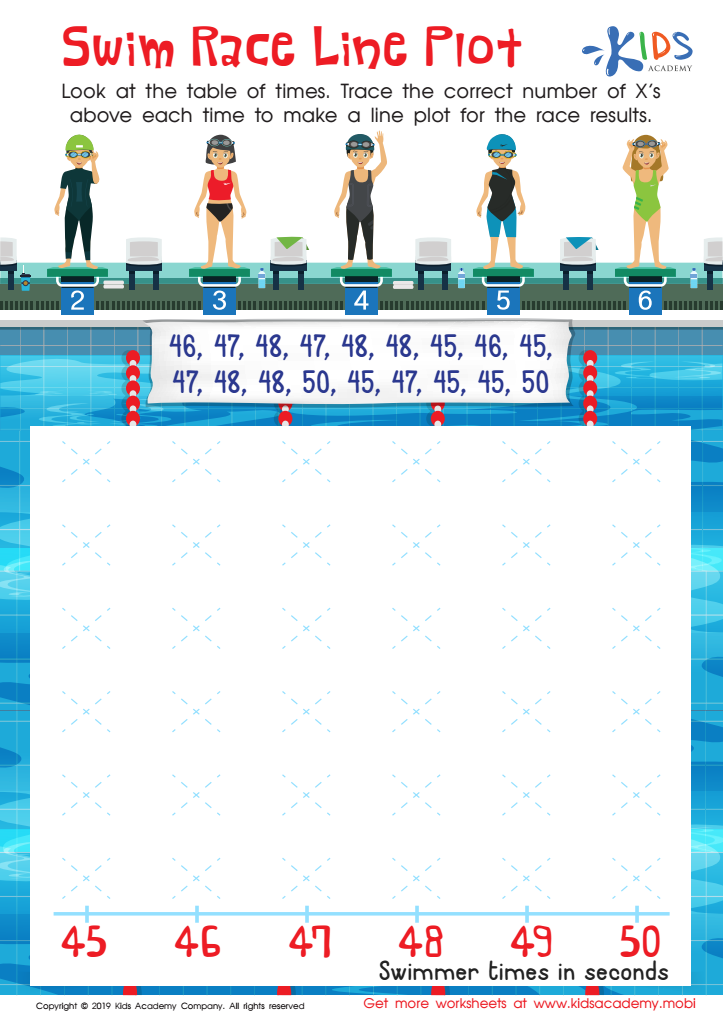
Swim Race Line Plot Worksheet




.jpg)



Data analysis may sound complex for young children, but embedding this skill in early education is actually crucial. At ages 3-8, children are at a prime stage for building foundational cognitive skills, and data analysis fosters critical thinking, problem-solving, and decision-making abilities. Parents and teachers should recognize its value because those skills transcend mathematics and apply to various life situations.
Introducing data concepts allows children to observe, compare, and ask questions about the world around them. Activities like sorting objects by color or size, counting classroom items, or even charting daily weather patterns enable kids to collect data and recognize patterns. This hands-on, playful approach aligns with early childhood learning styles, making complex concepts accessible and engaging.
Moreover, data literacy is increasingly essential in our data-driven world. Early exposure helps demystify mathematical concepts early, making future learning more approachable and less intimidating. It builds children's confidence in handling numbers, details, and logical reasoning, setting a strong foundation for more advanced mathematical coursework.
Ultimately, prioritizing data analysis in early education equips students with skills they will use throughout their education and beyond. Parents and teachers should support this learning phase as it's an investment in the child's ability to understand and interact with the world effectively.








