Develop addition skills Math Worksheets for Ages 3-8
5 filtered results
-
From - To
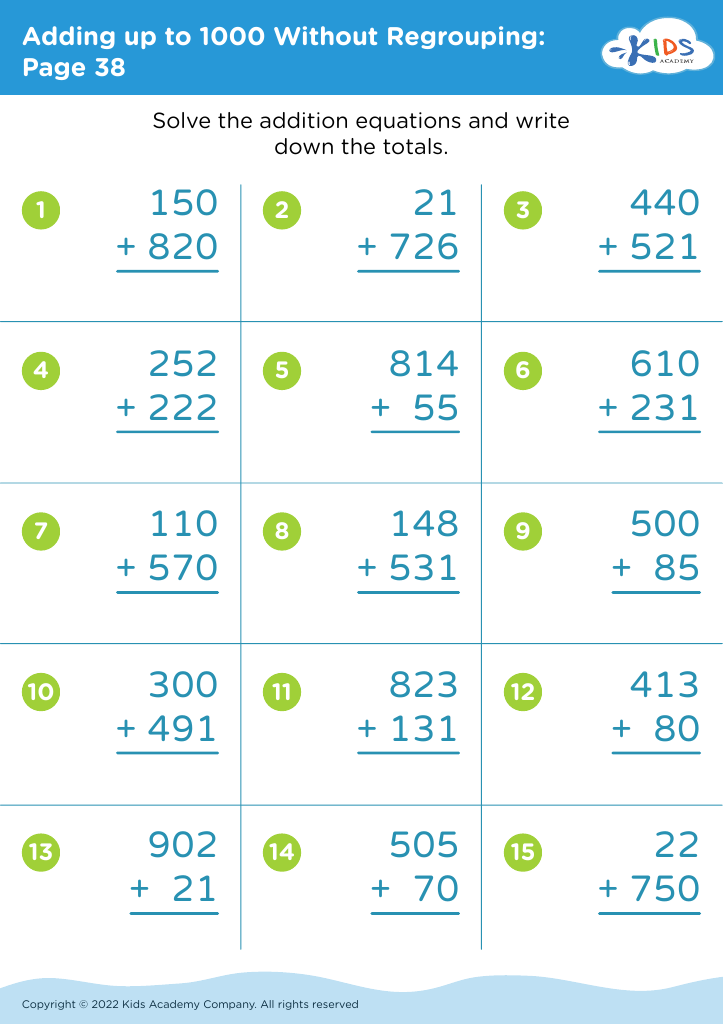
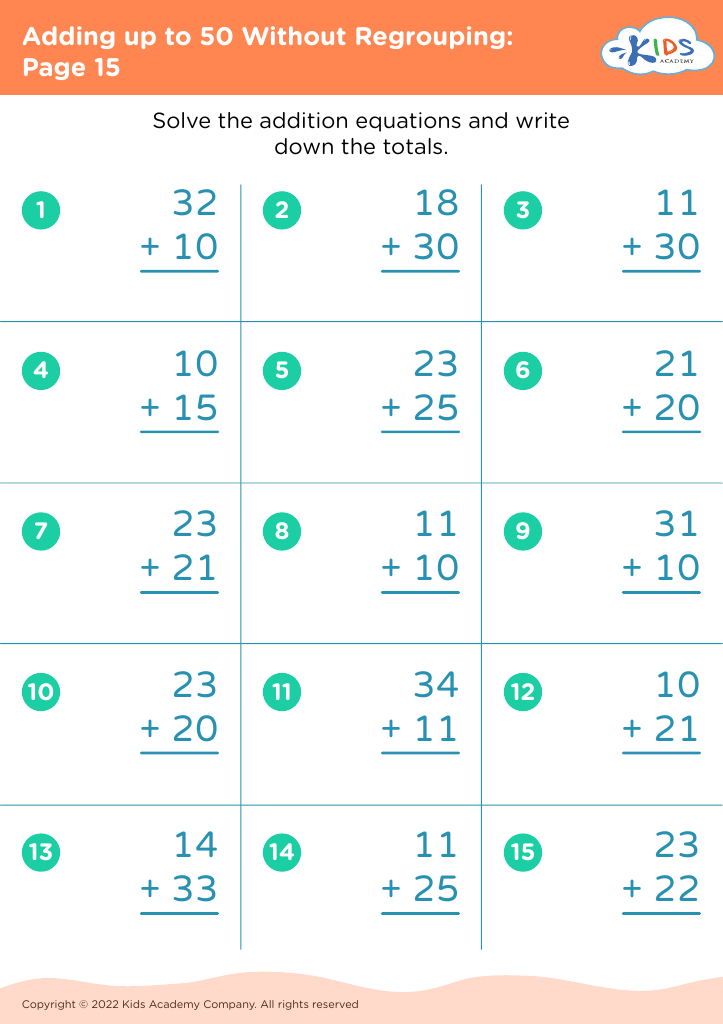
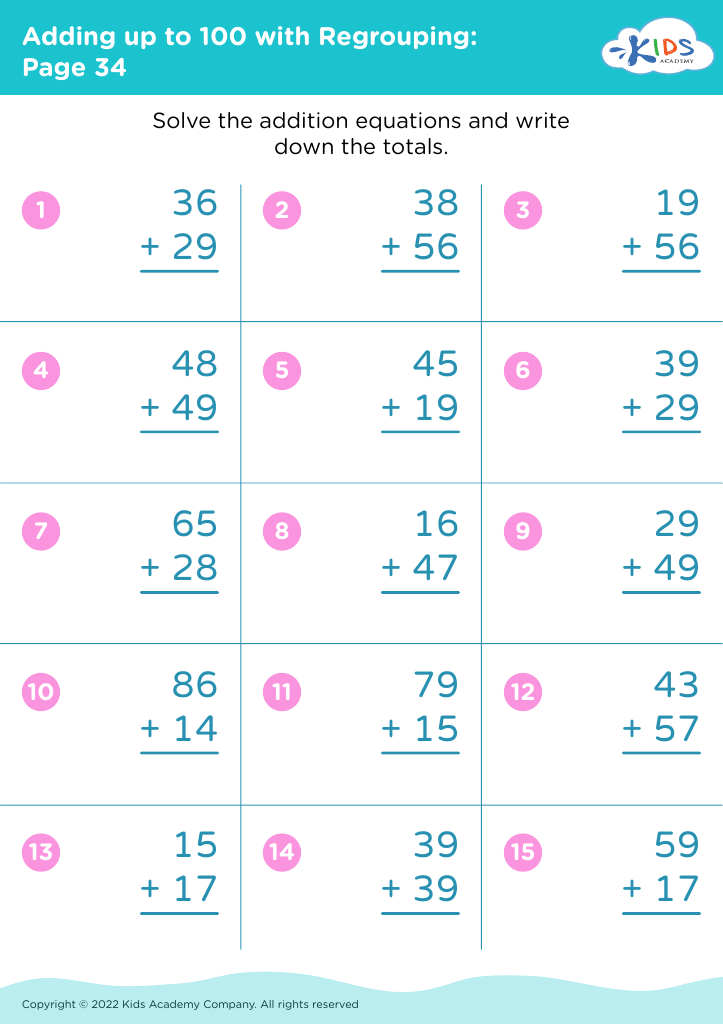
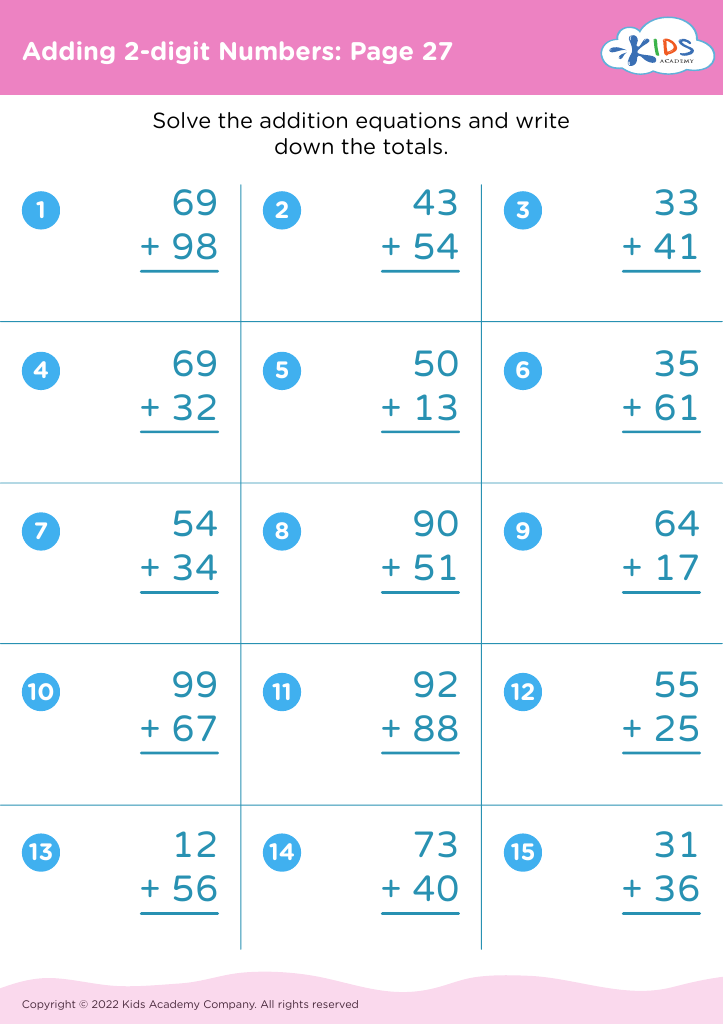
Welcome to our engaging "Develop Addition Skills Math Worksheets" designed specifically for children aged 3-8! These interactive resources offer a fun and effective way for young learners to master basic addition concepts through colorful exercises and stimulating activities. Our worksheets are crafted to build confidence in mathematical skills, making learning enjoyable. Each activity progressively challenges your child, enhancing their number recognition and addition abilities. Perfect for parents and educators, these worksheets can easily be incorporated into daily learning routines. Empower your child’s mathematical journey today with our thoughtfully designed addition skill resources! Explore and watch them flourish!
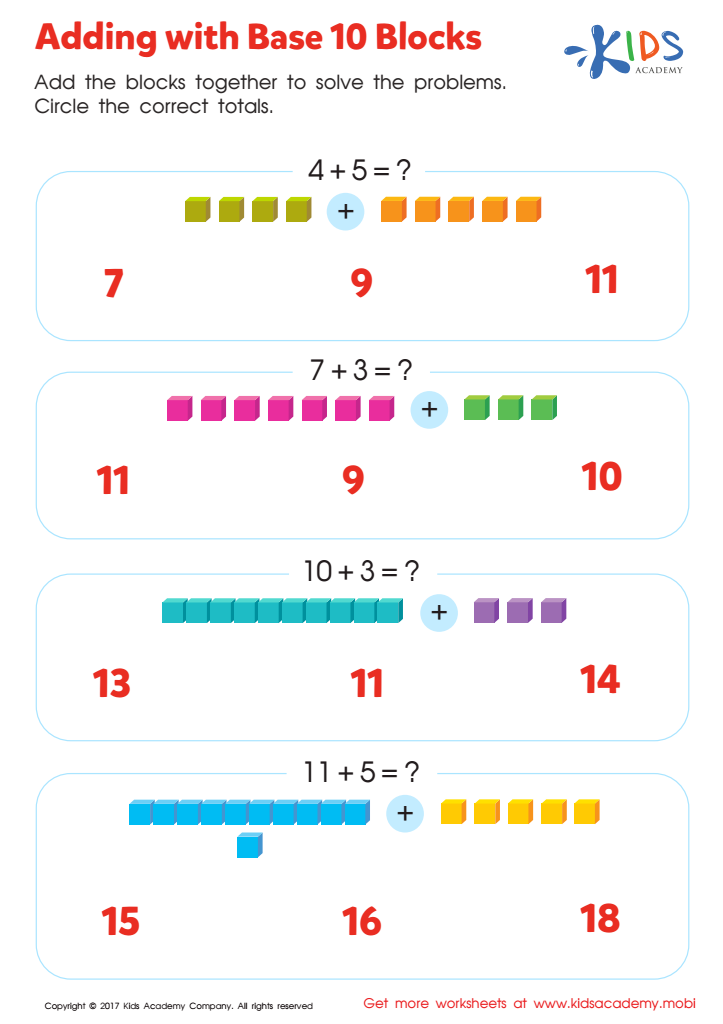
Adding with Base Ten Blocks Worksheet
 Assign to My Students







Developing addition skills in young children, ages 3-8, is crucial for their cognitive and social development. Early mathematics forms the foundation for critical thinking and problem-solving abilities. By introducing addition concepts at a young age, children gain confidence in their mathematical abilities, which can influence their attitude towards learning in general.
The early years are a prime time for brain development, and engaging children with fun and interactive math activities cultivates a positive learning environment. Parents and teachers can use relatable experiences, such as counting toys or snacks, making math relevant and enjoyable. This kind of engagement helps children develop spatial awareness, pattern recognition, and logical reasoning.
Furthermore, developing addition skills boosts children's numerical fluency, setting the stage for more advanced math concepts in later years. Children who struggle with early math often face challenges in later grades, which can lead to math anxiety and a lifelong aversion to the subject.
By focusing on addition skills now, caregivers play a vital role in fostering not just arithmetic skills, but also creativity, persistence, and cooperation during group activities. Overall, investing time in these foundational skills encourages a lifelong love of learning and equips children for future academic success.








