
Developing numeracy skills Math Worksheets for Ages 3-8
3 filtered results
Difficulty Level
Grade
Age
-
From - To
Subject
Activity
Standards
Enhance your child's mathematical understanding with our engaging numeracy skills worksheets designed for ages 3 to 8. These worksheets provide a fun and interactive way for young learners to explore essential math concepts, including counting, addition, subtraction, shapes, and patterns. Tailored to support early education, each activity fosters critical thinking and problem-solving skills. Our resources are perfect for both classroom use and home learning, ensuring that children build a solid foundation in mathematics while having fun. Promote confidence and proficiency in numeracy with our easy-to-follow worksheets, paving the way for a successful future in math for your little ones!
Favorites
With answer key
Interactive
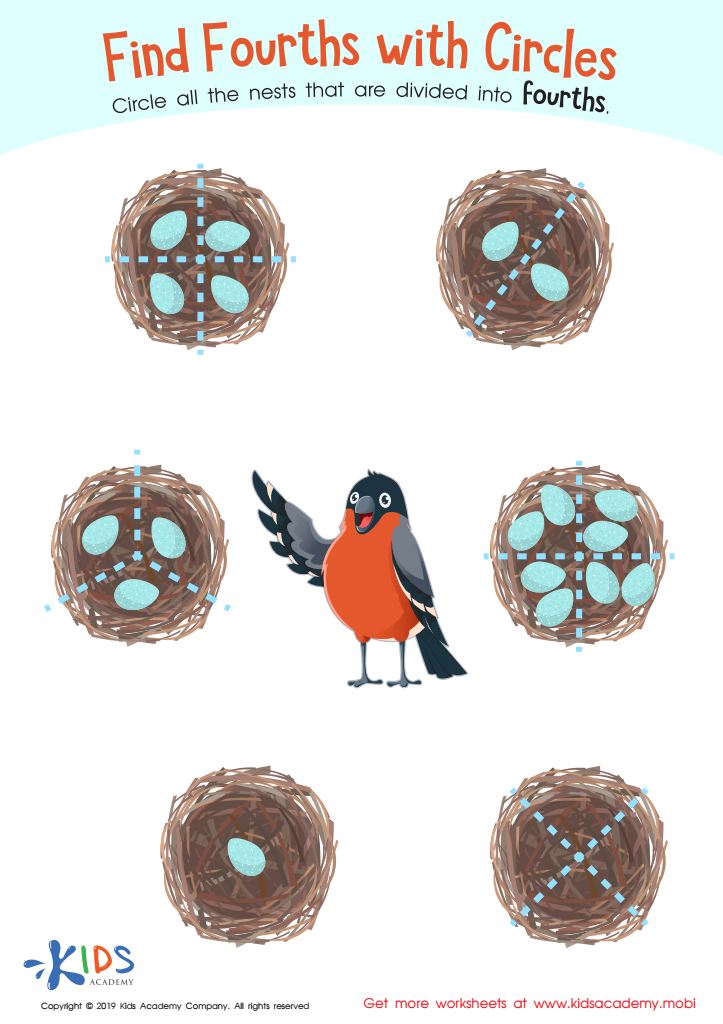
Find Fourths Circles Worksheet
Finding fractions with this Find Fourths with Circles worksheet can be fun! Your child will see a picture of circles divided into different fractions and circle the nests divided into fourths. With the help of their cheery bird friend, they can look for nests with four equal parts and be successful in finding the correct nest.
 Assign to My Students
Find Fourths Circles Worksheet
Worksheet
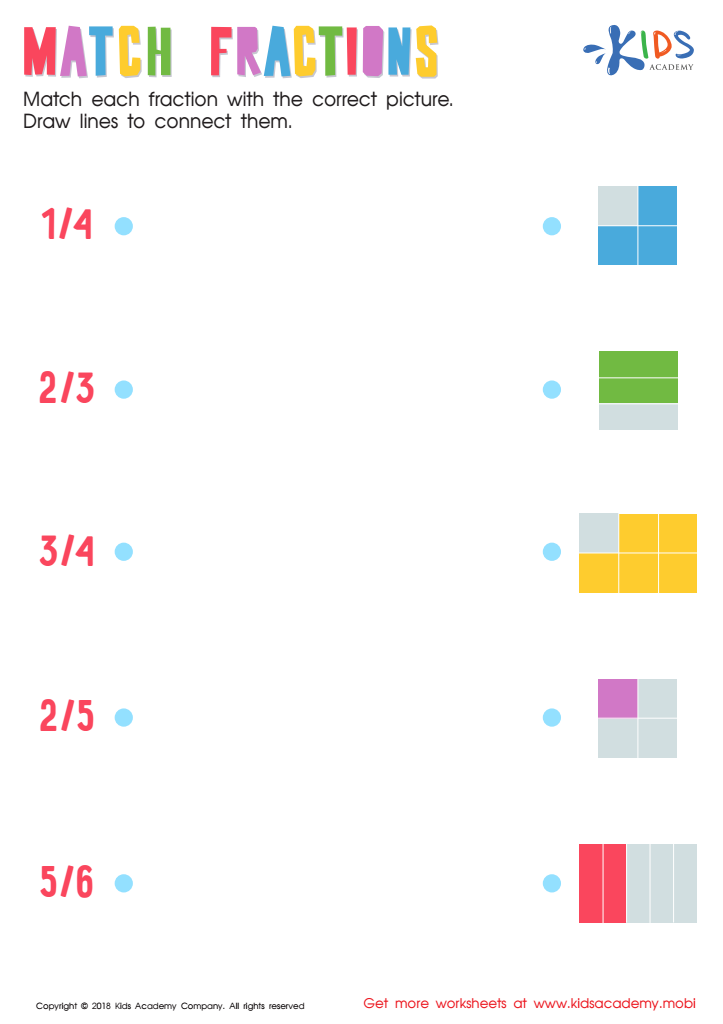
Match Fractions Worksheet
Have your child match fractions to images with this worksheet. There are five fractions on the left and five pictures on the right. Ask them to draw lines to connect each fraction to the right image. It's a great way to learn while having fun!
Match Fractions Worksheet
Worksheet
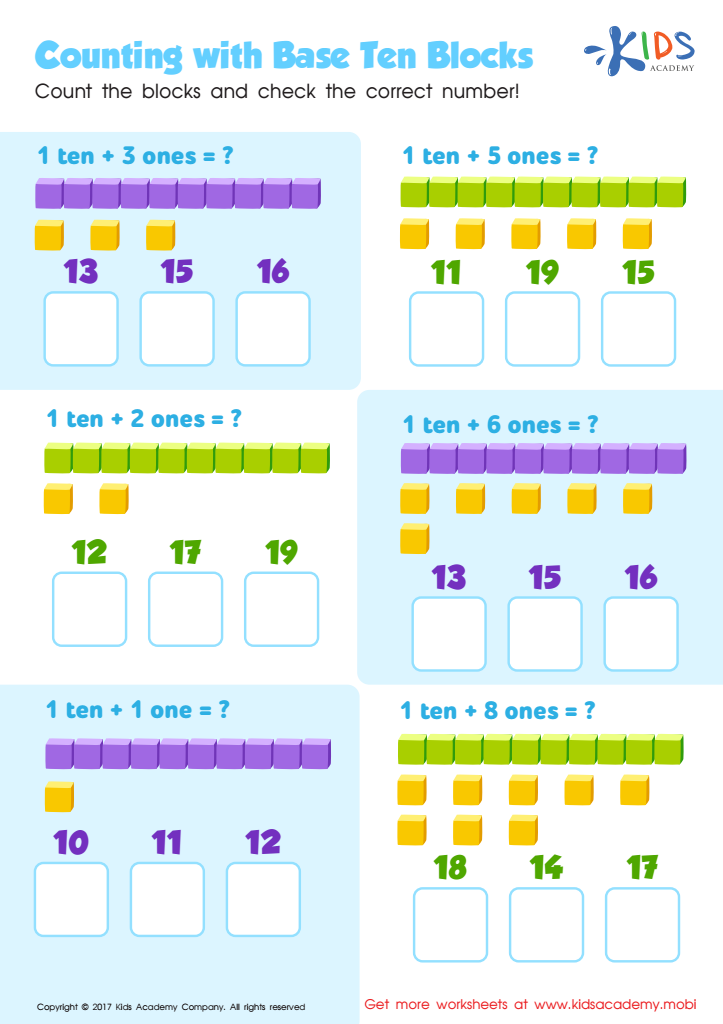
Counting with Base Ten Blocks Worksheet
Math has different levels and gets harder as your child progresses. Don't be surprised when they bring home an algebra worksheet! In this one, they will add 1 tens to varying numbers and fill in the total. This builds their understanding of base tens.
Counting with Base Ten Blocks Worksheet
Worksheet
Join Kids Academy for Free
Who is primarily going to use this learning content?



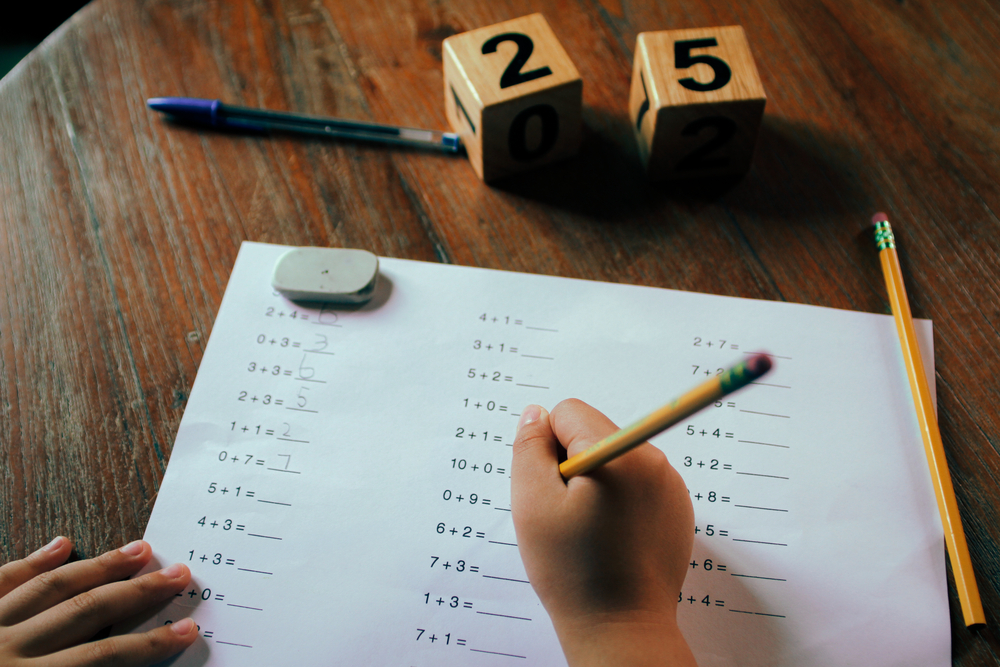




Developing numeracy skills in children aged 3-8 is crucial for their overall cognitive development and lifelong learning. During these formative years, children are naturally curious and possess a remarkable capacity to absorb information. Early numeracy skills serve as the foundation for future mathematical concepts, ensuring they develop critical thinking and problem-solving abilities.
Practicing numeracy enhances a child’s ability to make sense of their environment, like understanding quantities, recognizing patterns, and engaging in basic operations such as addition and subtraction. These skills are not just essential for advanced math later; they also play a vital role in everyday life—like budgeting, cooking, and even understanding time.
Moreover, numeracy helps boost a child’s confidence in their abilities. By building a strong mathematical foundation, they are more likely to approach problem-solving with a positive attitude. For parents and teachers, fostering these skills means creating a rich, engaging learning environment that can make math a fun and enjoyable discipline.
Furthermore, strong numeracy skills can help reduce math anxiety, a common challenge as children move into more advanced topics. In summary, prioritizing numeracy in early education sets children up for academic success and empowers them with essential life skills.








