
Enhance addition skills Math Worksheets for Ages 3-8
3 filtered results
Difficulty Level
Grade
Age
-
From - To
Subject
Activity
Standards
Welcome to our "Enhance Addition Skills" Math Worksheets for Ages 3-8! Our engaging worksheets are designed to make learning addition fun and effective for young learners. Catering to different skill levels, these resources feature colorful visuals, interactive exercises, and age-appropriate challenges that capture children’s attention while reinforcing their math skills. From simple one-to-one correspondence to more complex addition problems, our worksheets help develop critical thinking and problem-solving abilities. Ideal for both classroom and home use, our materials encourage practice and progression, paving the way for confident mathematicians. Start your child’s journey to mastering addition today!
Favorites
With answer key
Interactive
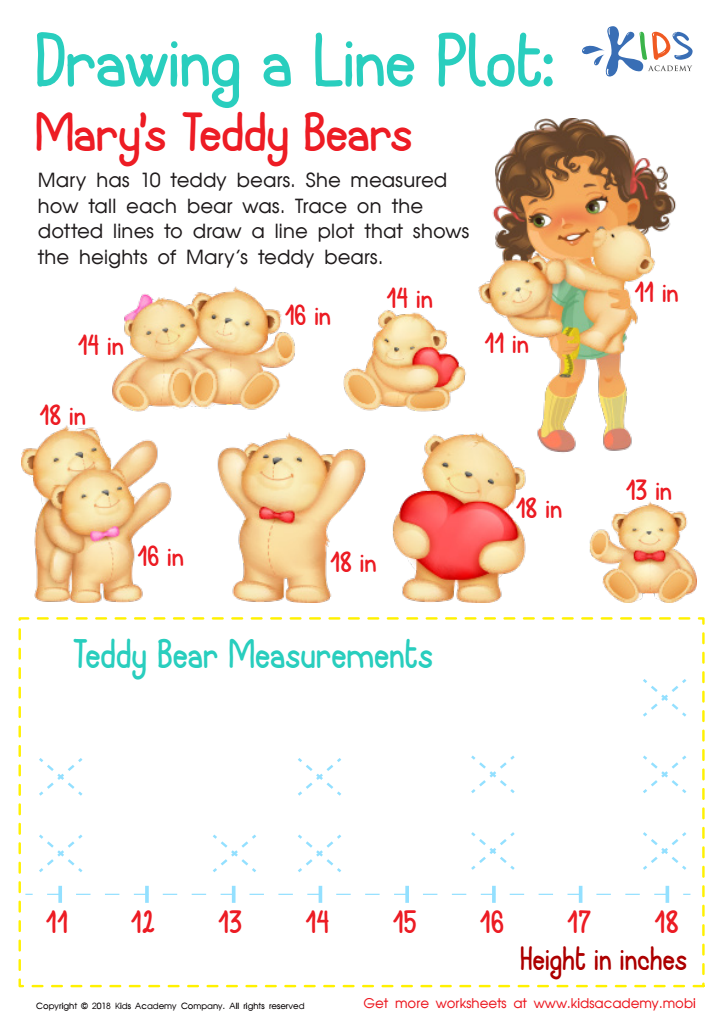
Drawing and Line Plot: Mary's Teddy Bears Worksheet
This worksheet teaches kids to draw and interpret line plots. Mary has 10 teddy bears and has measured their heights. Ask your child to draw a line plot showing the heights of Mary's teddy bears. It's a great way for little ones to learn how to organize information quickly and correctly.
 Assign to My Students
Drawing and Line Plot: Mary's Teddy Bears Worksheet
Worksheet
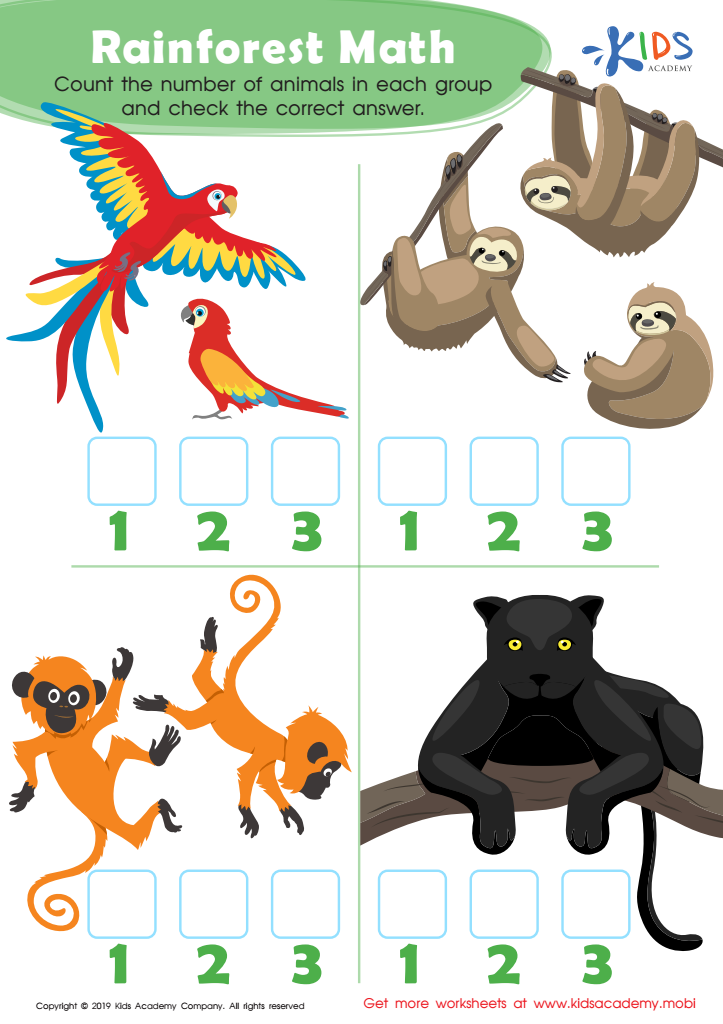
Rainforest Math Worksheet
Kids love learning about rainforest animals! This worksheet helps them with counting and number sense. It features recognizable rainforest animals and asks children to choose the correct number from the answer choices. It's a fun way for children to build their skills - without even knowing it!
Rainforest Math Worksheet
Worksheet
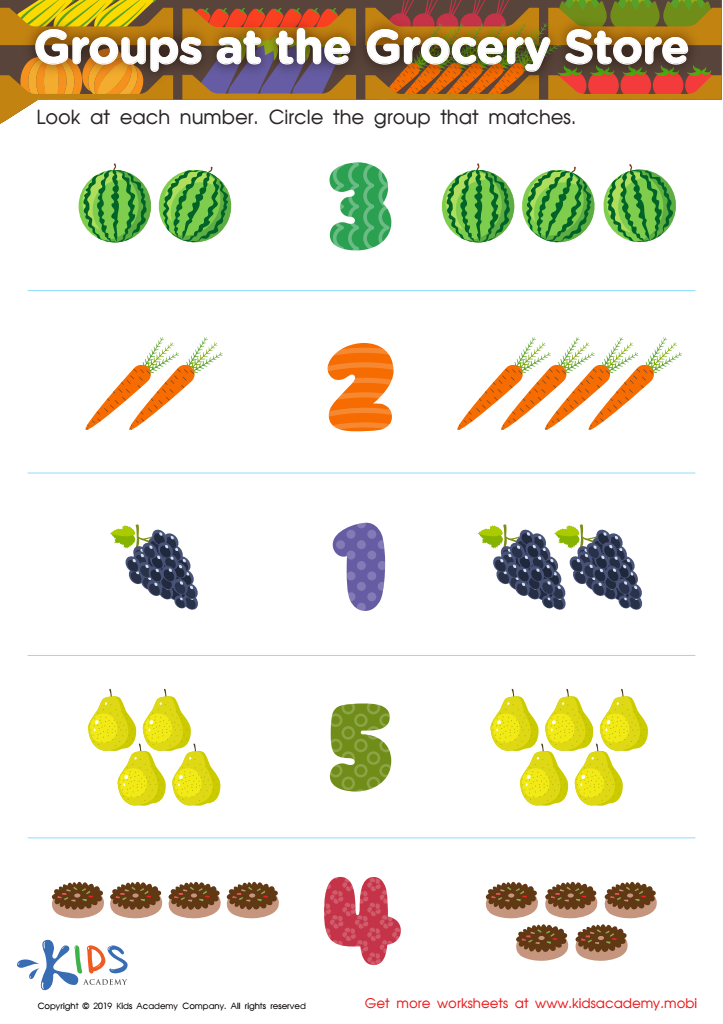
Groups at the Grocery Store Worksheet
Help your kids learn about counting with this worksheet! Look at each group of objects and circle the one that matches. It's a fun way to support what they're learning at school and give them a boost in counting.
Groups at the Grocery Store Worksheet
Worksheet
Join Kids Academy for Free
Who is primarily going to use this learning content?







Enhancing addition skills in young children, ages 3-8, is crucial for their cognitive development and early mathematical understanding. Early math skills, including addition, lay the foundation for future academic success. When children grasp these concepts early on, they develop stronger problem-solving skills and logical reasoning abilities. Additionally, learning addition helps children build confidence in their abilities, encouraging a positive attitude toward mathematics, which is essential as they progress in their education.
For parents and teachers, focusing on addition skills fosters a child's number sense, which encompasses understanding numbers, counting, and the relationships between them. It encourages active engagement with mathematics, making the subject less intimidating and more approachable. Interactive activities, games, and everyday situations can serve as meaningful ways to teach addition, allowing children to grasp practical applications of their mathematical knowledge.
Moreover, enhancing addition skills prepares children for more complex mathematical concepts they will encounter later in school. This foundational understanding can significantly reduce math-related anxiety and difficulties in later grades. By investing time in developing addition skills, parents and teachers can ensure that children are better equipped to face educational challenges, thus promoting lifelong learning and a genuine interest in mathematics.








