Fine motor skills (drawing) Math Worksheets for Ages 3-8
6 filtered results
-
From - To
Nurture your child's mathematical mind and fine motor skills with our engaging drawing math worksheets designed for ages 3-8! These captivating printable activities combine basic math concepts with creative drawing exercises, enhancing coordination and problem-solving abilities. Perfect for young learners, each worksheet offers playful math challenges that encourage active participation while boosting confidence and enjoyment in learning. From simple shapes to intricate patterns, our fine motor skill math worksheets provide a balanced educational experience, keeping kids entertained and academically stimulated. Prepare your little one for future math success with these fun, interactive practice sheets available at Kids Academy.
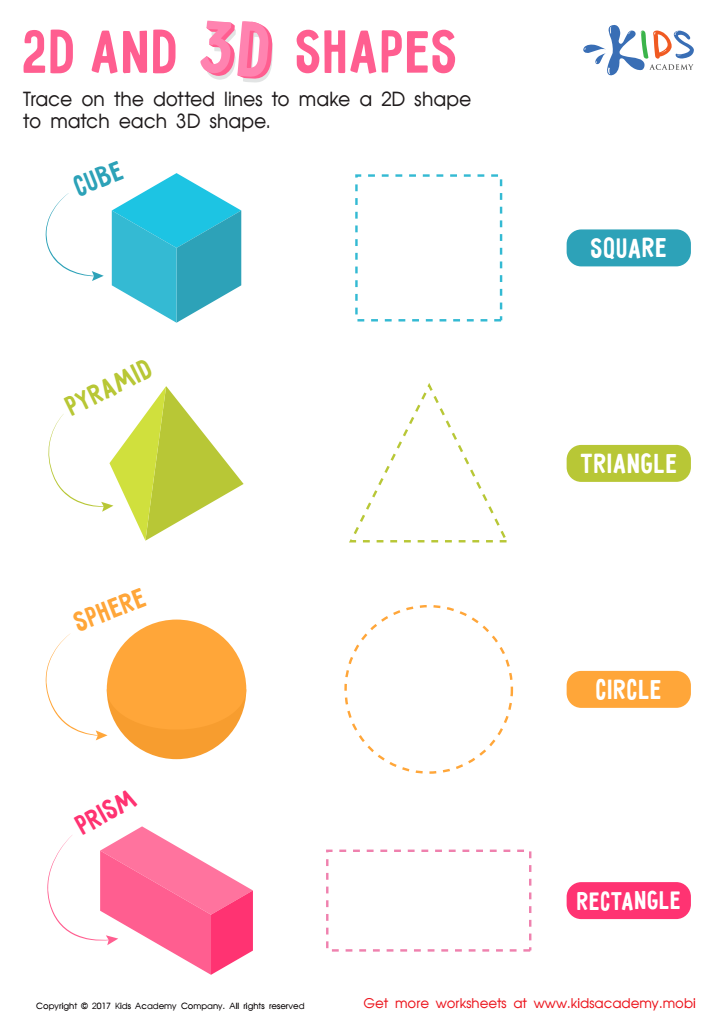
2D and 3D Shapes Worksheet
 Assign to My Students

Make it Even: St. Valentine's Day Worksheet
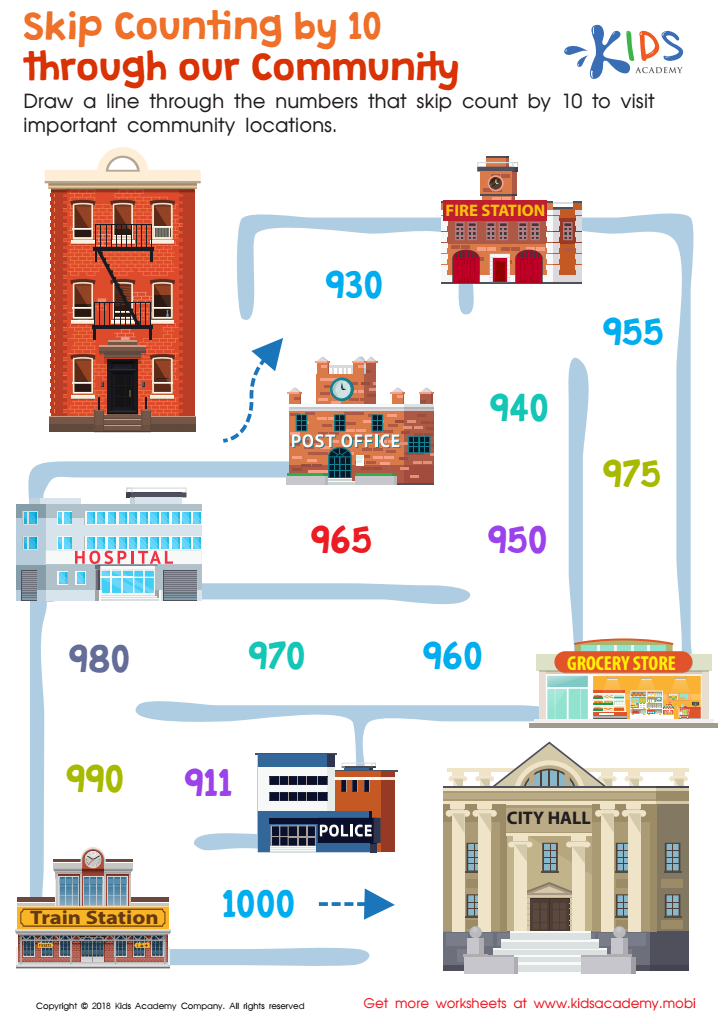
Skip Counting by 10 Through Our Community Worksheet
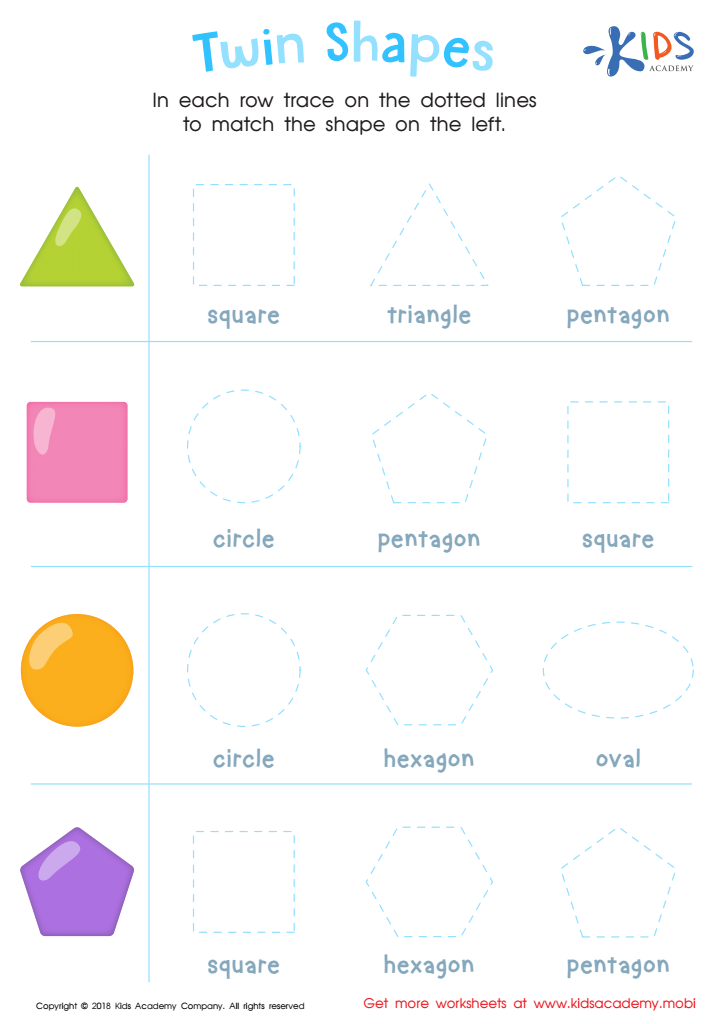
Twin Shapes Dot-to-Dot Worksheet
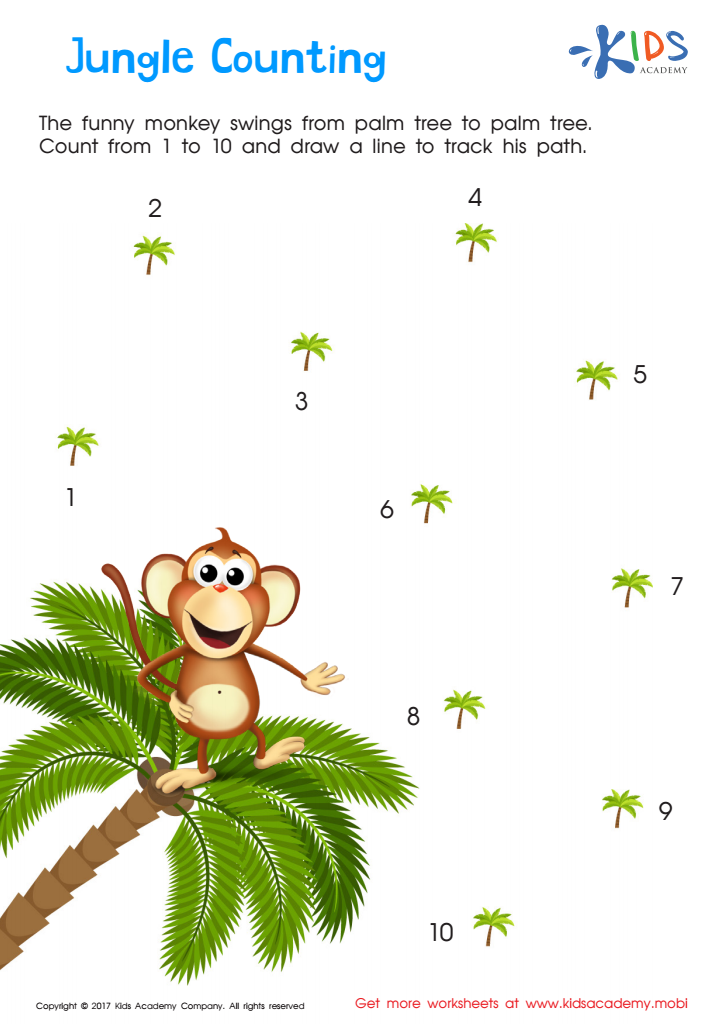
Jungle Counting Connect Dots Worksheet
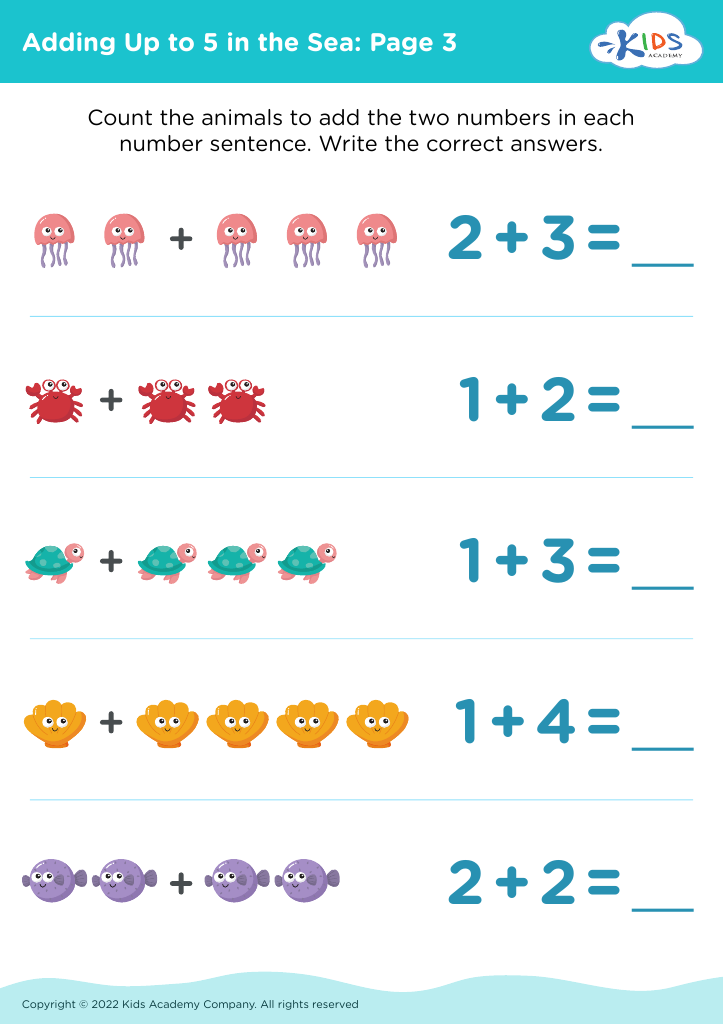







Fine motor skills, particularly those involved in drawing, are crucial for young children aged 3-8 as they underpin a variety of essential developmental milestones. For starters, exercises that refine fine motor skills, such as drawing, help children strengthen the small muscles in their hands, fingers, and wrists, which are necessary for later tasks like writing, dressing, and using utensils independently.
Moreover, drawing is intrinsically linked to cognitive and academic development, including math skills. When children draw shapes, lines, and patterns, they begin to understand spatial relationships and geometry. These activities help lay the foundational understanding needed for more advanced mathematical concepts. For instance, grasping the notion that shapes can be different sizes and still retain the same name is an early step towards understanding fractions and geometry in later years.
Additionally, drawing and other fine motor activities stimulate the brain’s coordination center, promoting enhanced hand-eye coordination and improving focus and attention span, crucial elements for lifelong learning. As children progress, their ability to experiment with drawing enables them to internalize abstract concepts, translating into better problem-solving skills. Also, encouraging their mathematical development through fine motor activities enhances their confidence and sets the stage for academic success and positive attitudes toward learning.
By nurturing these fine motor skills, parents and teachers ultimately empower children to develop essential academic abilities and crucial life skills, forming the bedrock of early childhood education.








