Improve counting Math Worksheets for Ages 3-8
3 filtered results
-
From - To
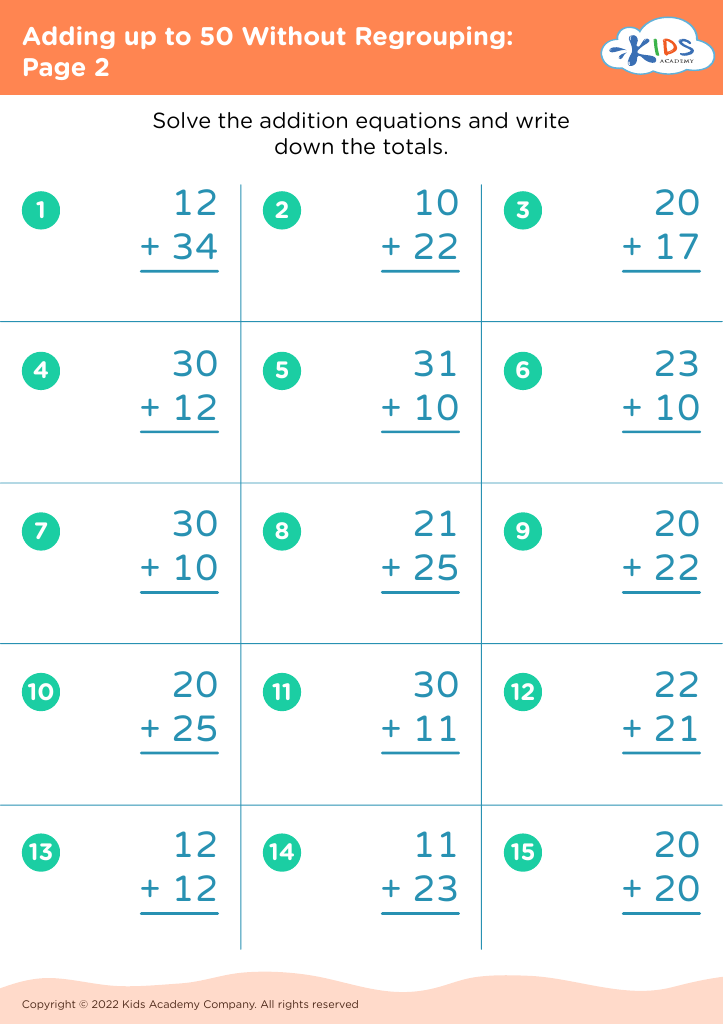
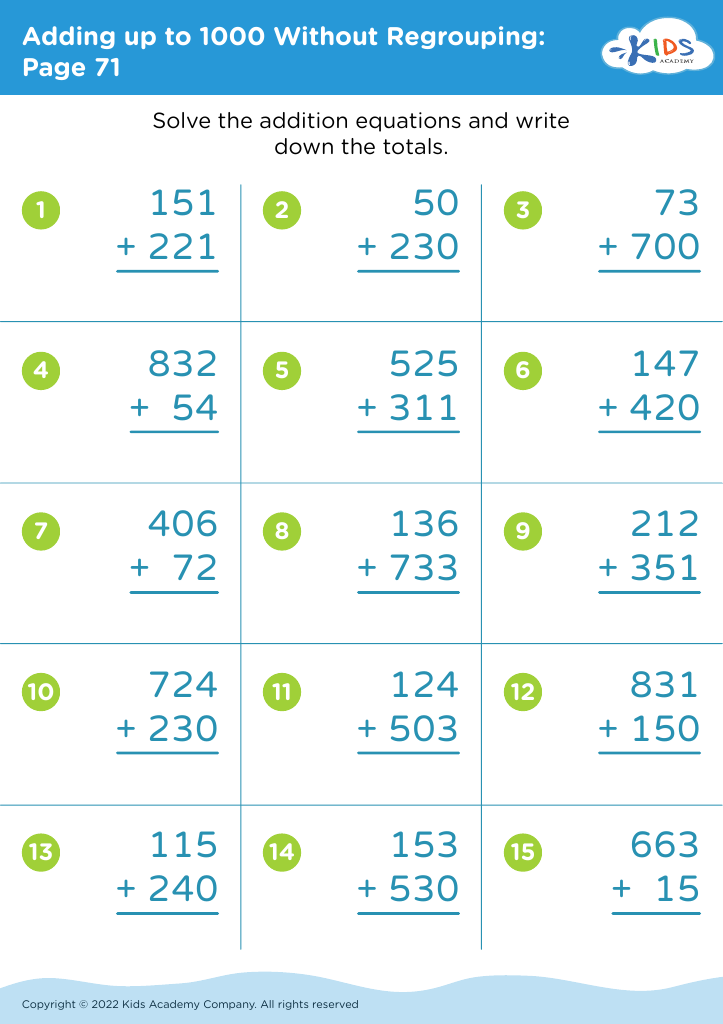
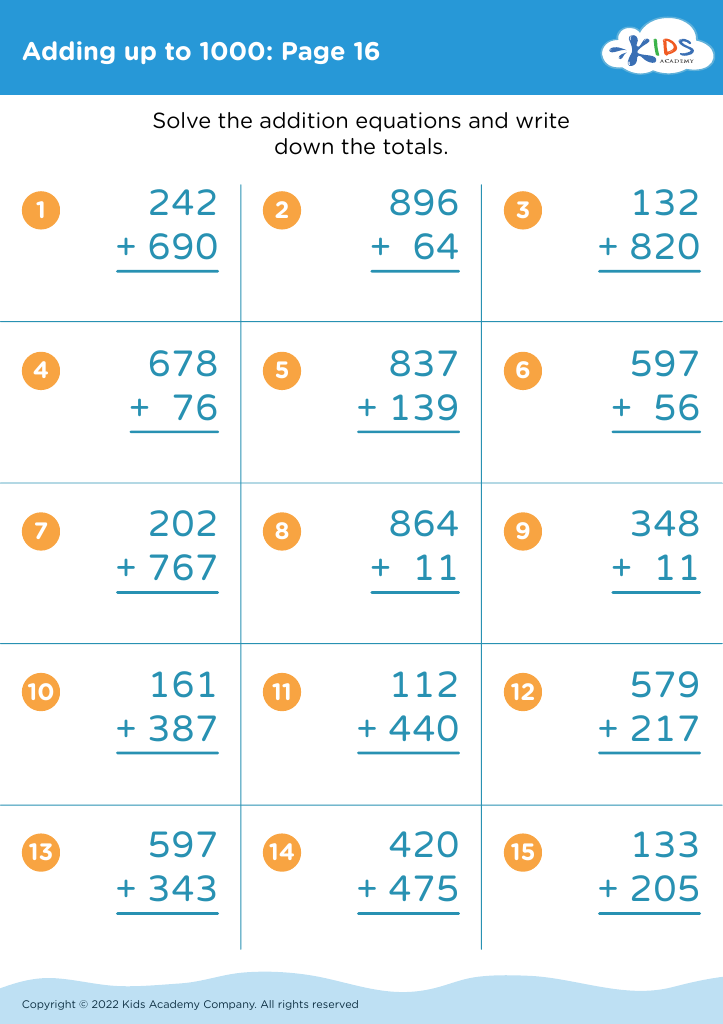
Boost your child's math skills with our engaging Improve Counting Math Worksheets for Ages 3-8! Designed with bright images and fun activities, these worksheets help young learners master counting, number recognition, and basic arithmetic operations. Perfect for preschool to early elementary students, the exercises offer progressive challenges that align with core learning standards. Whether counting objects, solving simple problems, or improving number sequencing, our worksheets make math enjoyable and effective. Ideal for both classroom use and homeschooling, these resources support your child's educational journey and build a solid foundation in essential math skills. Download today and watch their confidence grow!






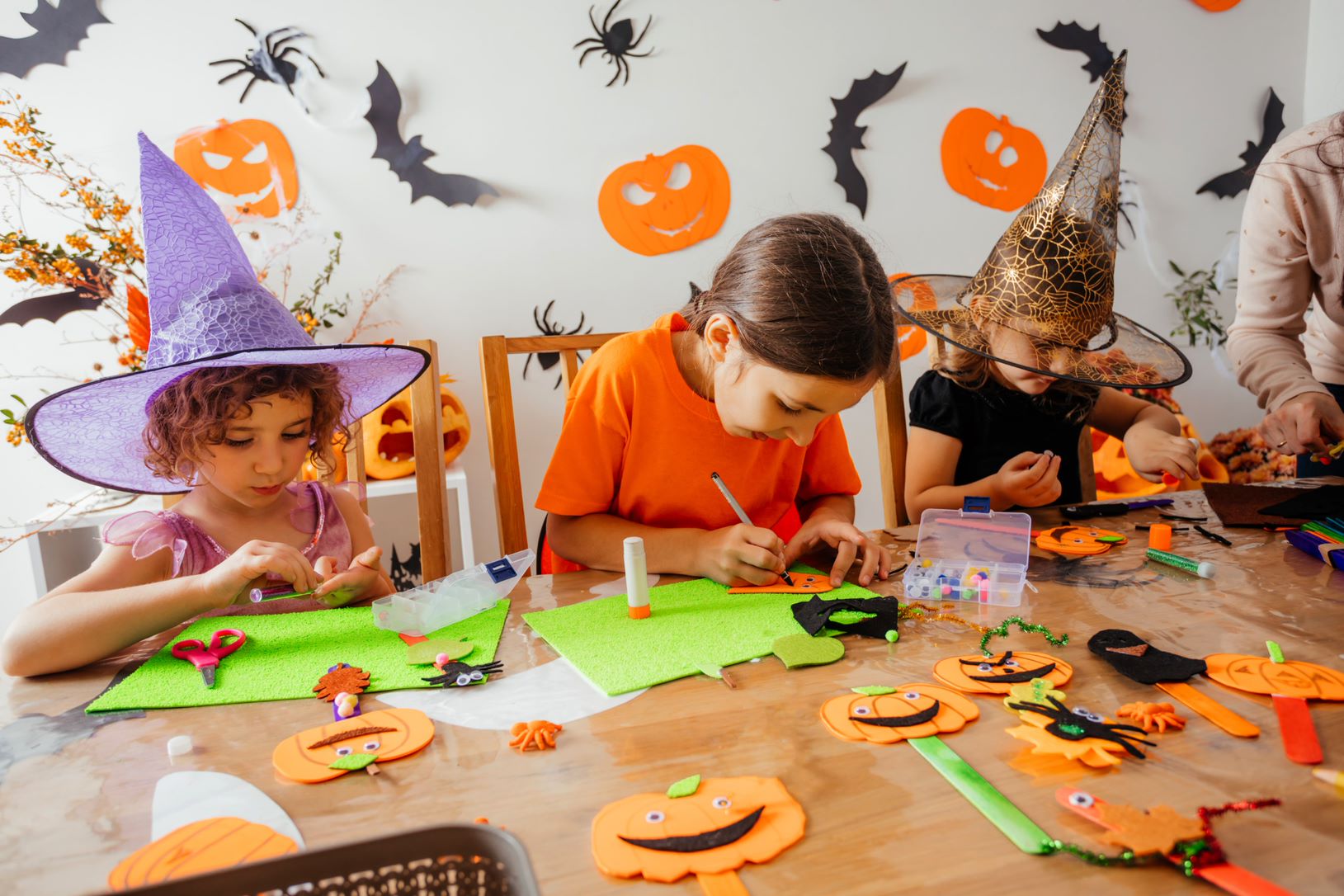
Counting forms the foundation for understanding math, making its improvement among children aged 3-8 crucial. At this stage, children’s brains rapidly develop, allowing them to absorb and process information efficiently. Understanding numbers and counting helps to cultivate numerical literacy, a core component for future math skills. When parents and teachers prioritize improving counting skills, they provide children with the tools needed for comprehension of more complex math concepts such as addition, subtraction, multiplication, and division later on.
Moreover, building strong counting skills enhances a child's problem-solving abilities and logical thinking. Through consistent practice, children learn to recognize patterns, sequences, and relationships between numbers which aid cognitive development. Enhanced counting abilities also bolster a child's confidence in their academic pursuits, fostering a positive attitude towards learning.
Socially and practically, children use counting to quantify objects, understand time, and manage daily activities, seamlessly connecting math to the real world. For example, when they count toys during play or snacks during recess, they practice essential skills in engaging ways.
Hence, investing in the improvement of counting skills not only enriches mathematical understanding but also supports overall cognitive, social, and emotional development, setting young learners on a path to long-term academic and life success.








