Improving observation Math Worksheets for Ages 3-8
3 filtered results
-
From - To
Boost your child's observation skills with our engaging Math Worksheets designed for ages 3-8! These carefully crafted printables encourage young learners to identify patterns, compare sizes, and analyze various shapes through fun and interactive activities. Focusing on enhancing their observational skills, the worksheets facilitate critical thinking and problem-solving in a playful manner. Ideal for both classrooms and at-home learning, our resources support early math development while keeping children entertained. Discover a range of exciting exercises that promote essential cognitive skills, laying a strong foundation for future success in mathematics. Explore our collection today and watch your child thrive!
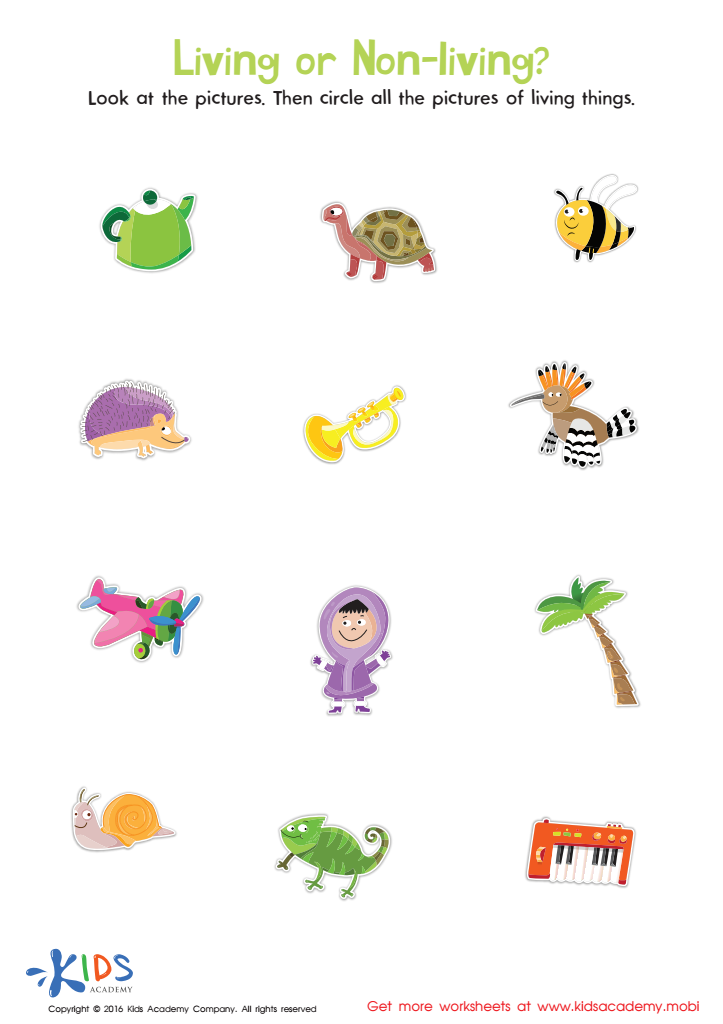
Identifying Living and Non–living Things Sorting Worksheet
 Assign to My Students
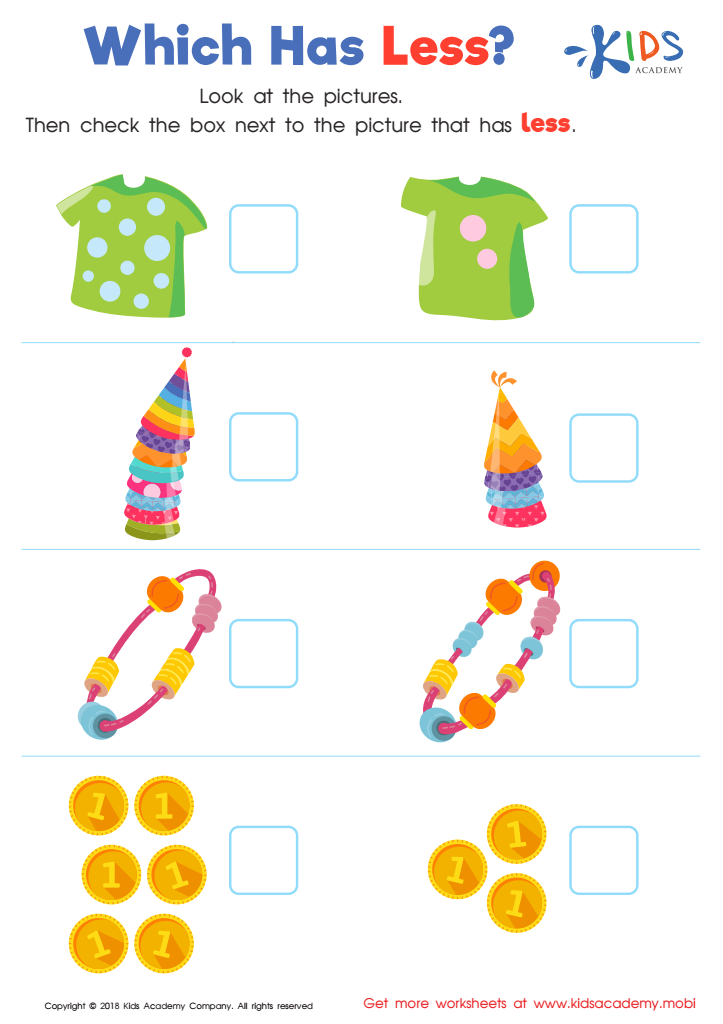
Which Has Less? Worksheet
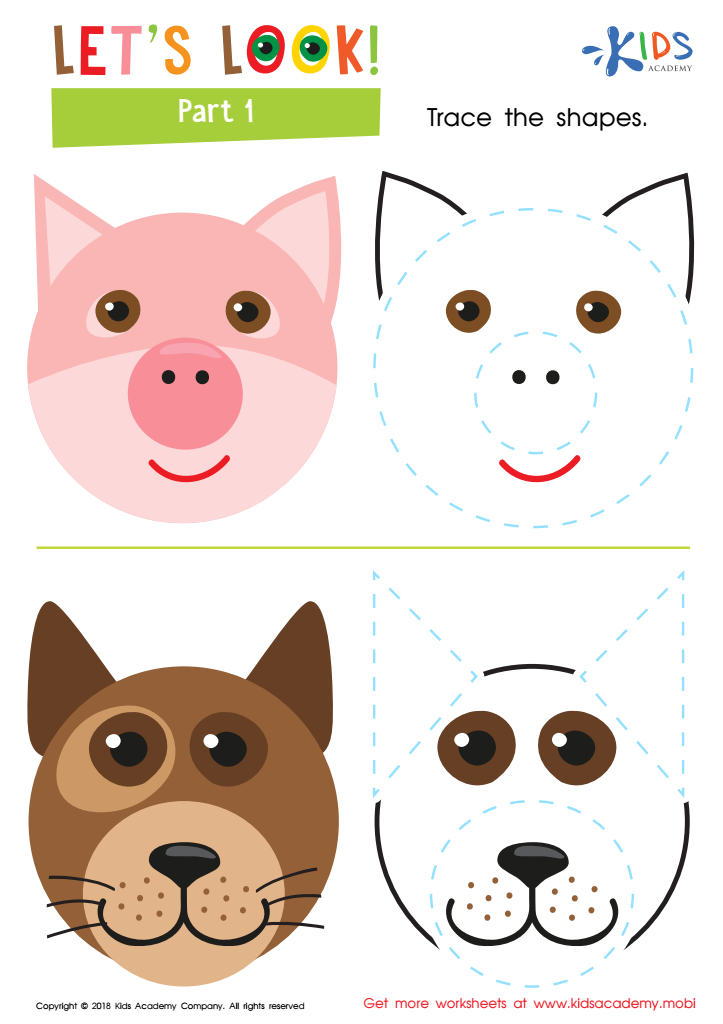
Let's Look! Part 1 Worksheet







Improving observation in math for children aged 3-8 is crucial for several reasons. First, observational skills lay the foundation for mathematical understanding. Young children learn math concepts such as counting, patterns, and spatial awareness through hands-on experiences and interactions with their environment. By enhancing observation skills, parents and teachers can better identify children’s strengths, challenges, and interests in math, allowing for more tailored educational strategies.
Moreover, fostering a positive attitude toward math from an early age builds confidence and encourages lifelong learning. When adults actively engage in observing and discussions about math, children feel supported and valued in their learning journey. This environment cultivates curiosity and a natural inclination towards math-related activities.
Additionally, children's early mathematical experiences are linked to future academic success. By focusing on observation, adults can create rich learning opportunities that blend play and math, making learning enjoyable and meaningful.
Ultimately, caring about improving observational math skills for young children helps create a robust groundwork for future math competencies, ensuring they develop problem-solving skills, critical thinking abilities, and the persistence needed to tackle complex challenges later in life. Engaging actively as observers transforms math from a subject to a joyful exploration.








