
Map reading skills Math Worksheets for Ages 3-8
5 filtered results
Difficulty Level
Grade
Age
-
From - To
Subject
Activity
Standards
Enhance your child's math proficiency with our engaging Map Reading Skills Math Worksheets, designed specifically for ages 3-8. These worksheets combine essential math concepts with map reading, allowing young learners to develop spatial awareness and interpret symbols effectively. Our colorful and interactive activities make learning fun, encouraging children to practice measurements, coordinate plotting, and distance calculations. With a focus on building foundational skills, parents and educators can easily integrate these worksheets into lesson plans or home study sessions. Help your child navigate the world of mathematics through the exciting lens of map reading—where learning meets adventure!
Favorites
With answer key
Interactive
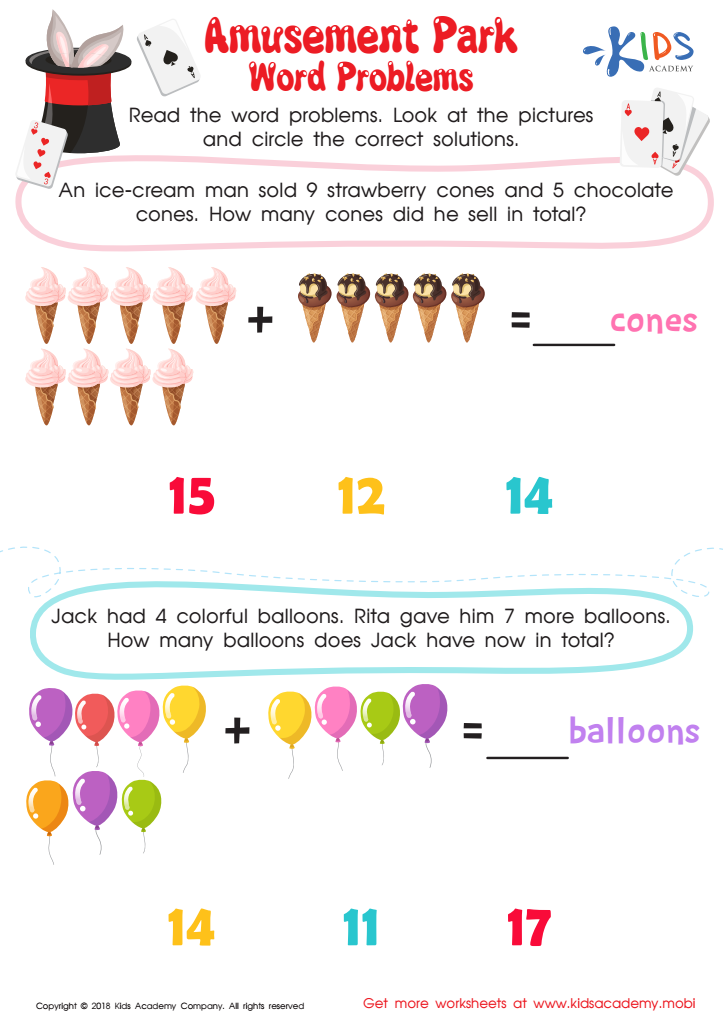
Amusement Park Word Problems Worksheet
Engage kids with math by making it realistic and incorporating manipulatives or pics they like! This worksheet helps kids understand word problems. Read the problem, note numbers and key phrases like "in total," then count the pics to find the total!
 Assign to My Students
Amusement Park Word Problems Worksheet
Worksheet
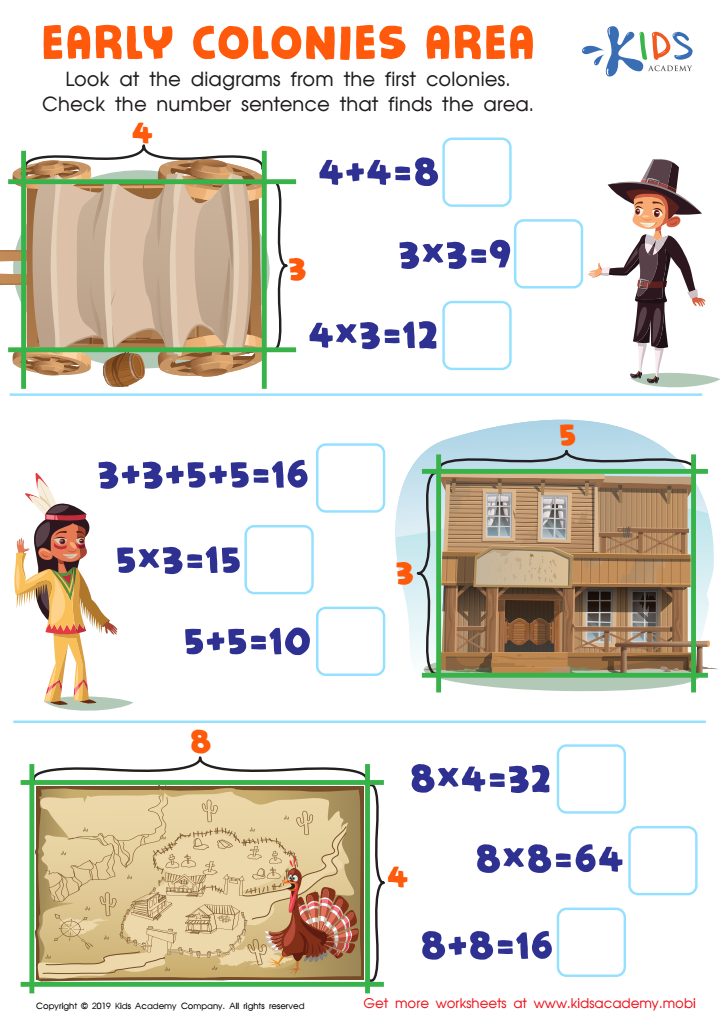
Early Colonies Area Worksheet
Before starting this worksheet, check if your kids know who the early colonizers were. Exercise their addition and subtraction skills by having them solve the equations, then look at the diagrams from the colonies. Guide them to check the number sentence to find the area.
Early Colonies Area Worksheet
Worksheet
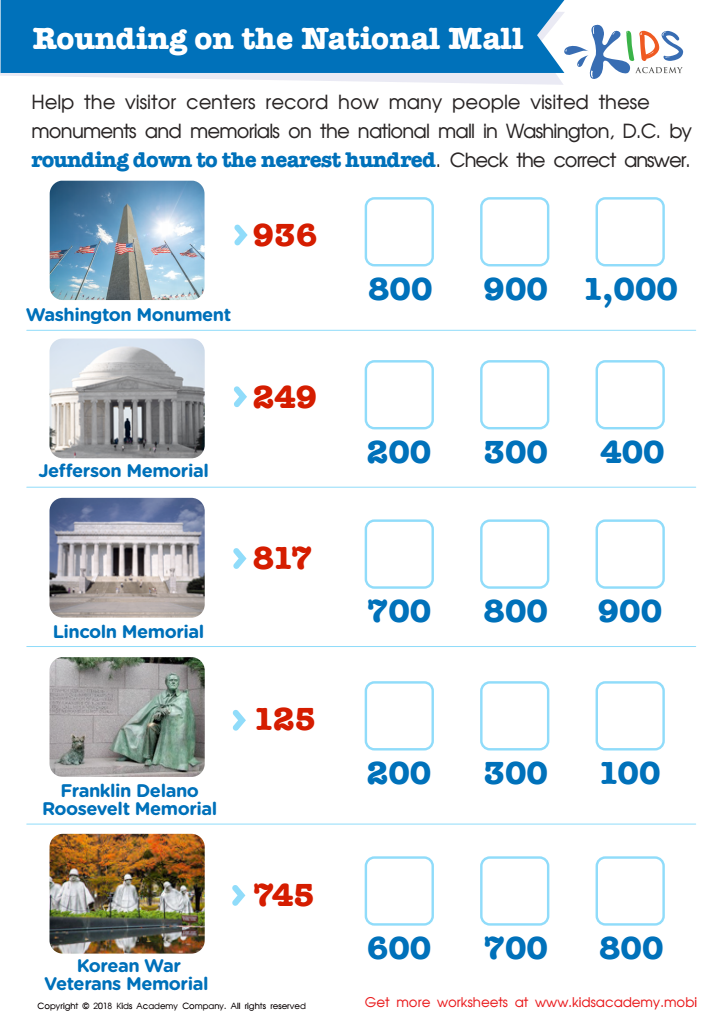
Rounding on the National Mall Worksheet
Math and social studies come together in this worksheet. Learners must round numbers to record attendance at Washington D.C. monuments and memorials. Remind them to round down to the nearest hundred. Extend the lesson by talking about each monument - a great way to teach or refresh your child's knowledge of these national landmarks!
Rounding on the National Mall Worksheet
Worksheet
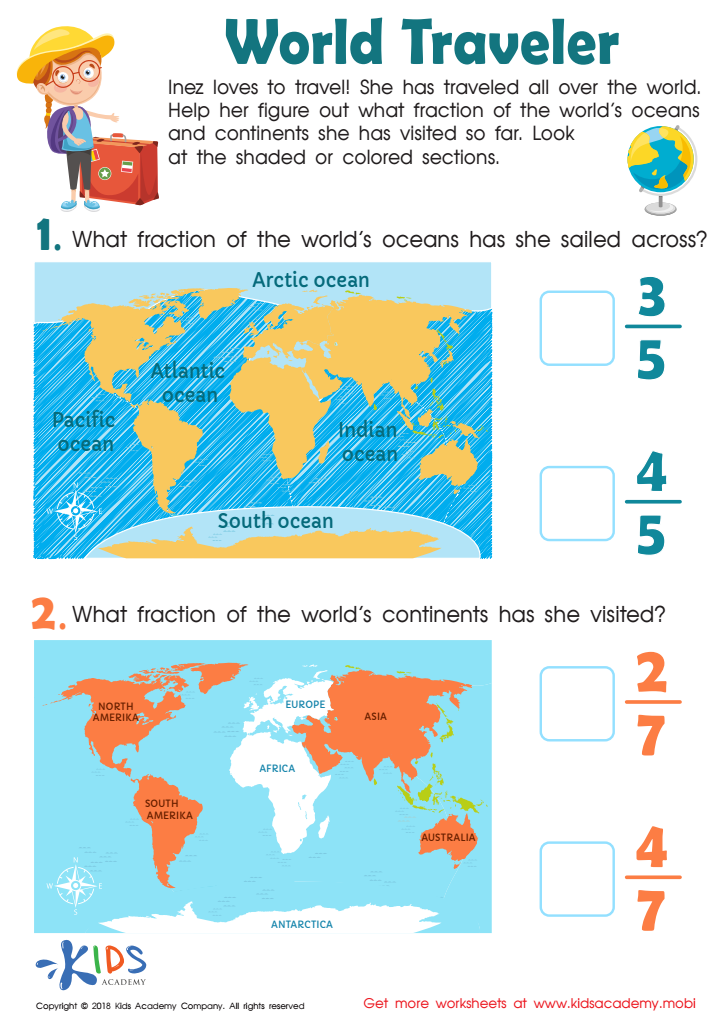
World Traveler Worksheet
Kids love exploring the world? Inez sure does! She's seen oceans and continents around the globe. Your kids can help her figure out what fraction of the world she has visited. Have them name all the countries they've been to, then look at the marked sections on the printout to find out!
World Traveler Worksheet
Worksheet
Join Kids Academy for Free
Who is primarily going to use this learning content?






Map reading skills are crucial for children aged 3-8 because they promote spatial reasoning, critical thinking, and a deeper understanding of the world around them. Engaging with maps introduces young learners to essential concepts such as direction, distance, and scale, which are foundational in mathematics. As children learn to interpret symbols and visual representations, they enhance their problem-solving abilities and improve their comprehension of complex ideas.
Moreover, map reading nurtures curiosity and exploration. Children who understand maps can connect their immediate surroundings to broader contexts, fostering independence and confidence in their navigational abilities. This skill also promotes language development, as children learn to describe routes and locations, enhancing their vocabulary and communication skills.
Incorporating map-related activities in educational settings and at home teaches teamwork and cooperative skills when children work together on scavenger hunts or treasure maps. These experiences not only support cognitive development but also encourage physical activity and outdoor learning.
Ultimately, parents and teachers should care about map reading skills because they are an engaging way to enrich young learners' academic foundation, nurture essential life skills, and inspire a lifelong love of learning and exploration. Integrating these skills into everyday experiences provides real-world applications that benefit children significantly.








