Number pattern recognition Math Worksheets for Ages 3-8
3 filtered results
-
From - To
Enhance young minds with our Number Pattern Recognition Math Worksheets for ages 3-8 from Kids Academy! These engaging worksheets are designed to help children master the foundations of math through fun patterns and sequences that hone critical thinking and problem-solving skills. Perfect for preschool and early elementary students, our expertly crafted activities make learning numbers exciting and accessible. Foster your child's development as they explore various number patterns, build confidence, and develop a strong mathematical foundation essential for future success. Start your child’s mathematical journey today with our comprehensive and age-appropriate worksheets!
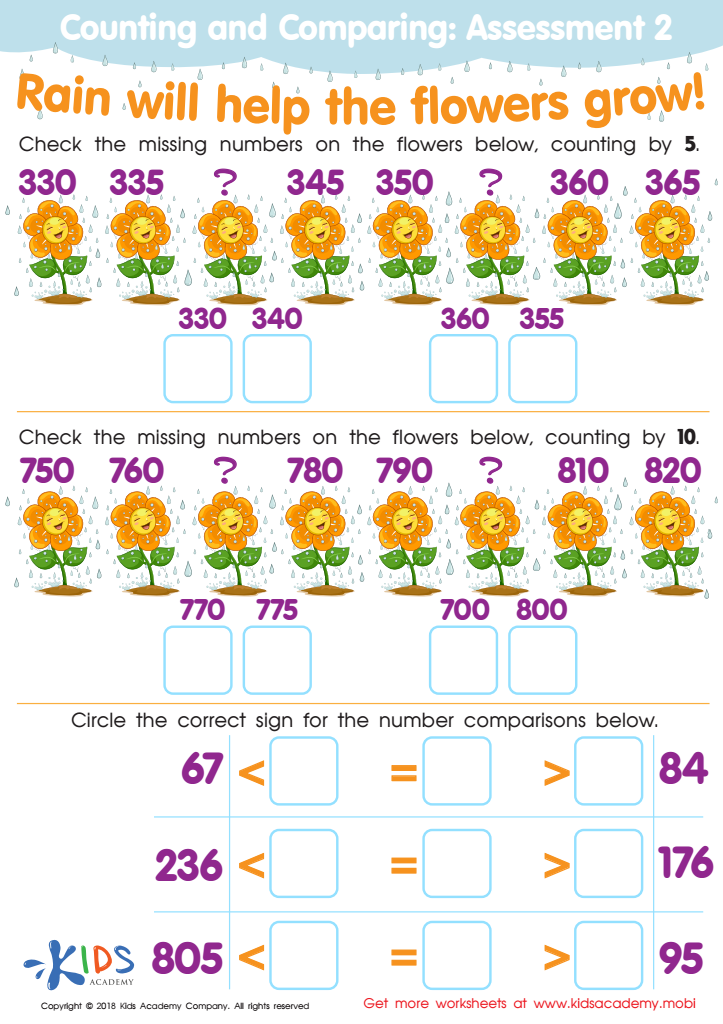
Counting and Comparing: Assessment 2 Worksheet
 Assign to My Students
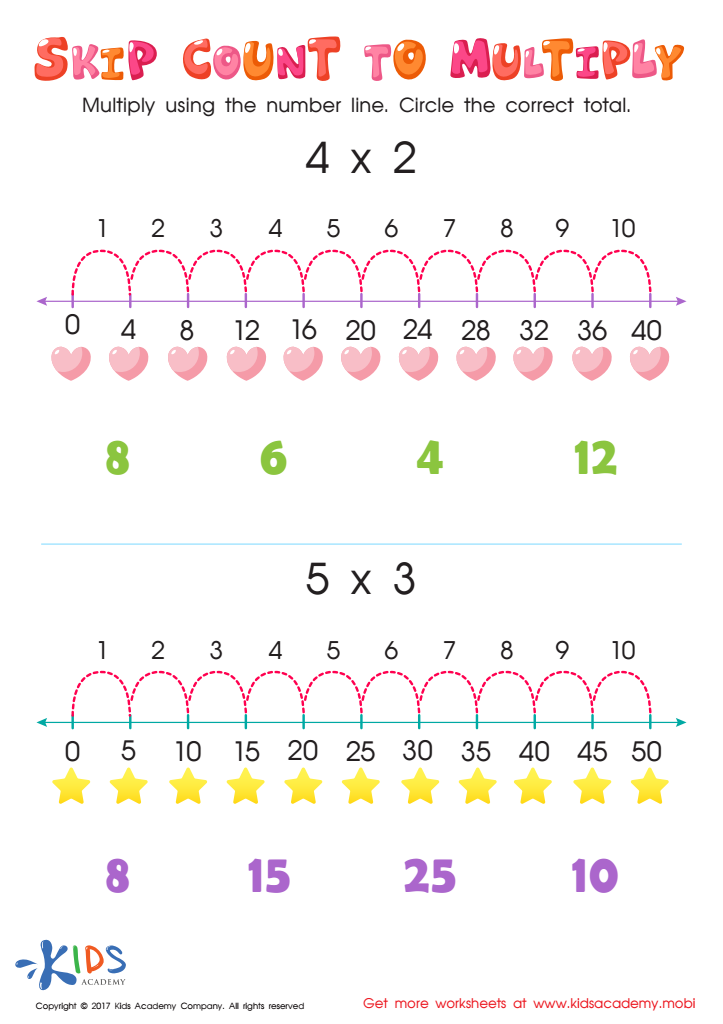
Skip Count Multiplication Worksheet
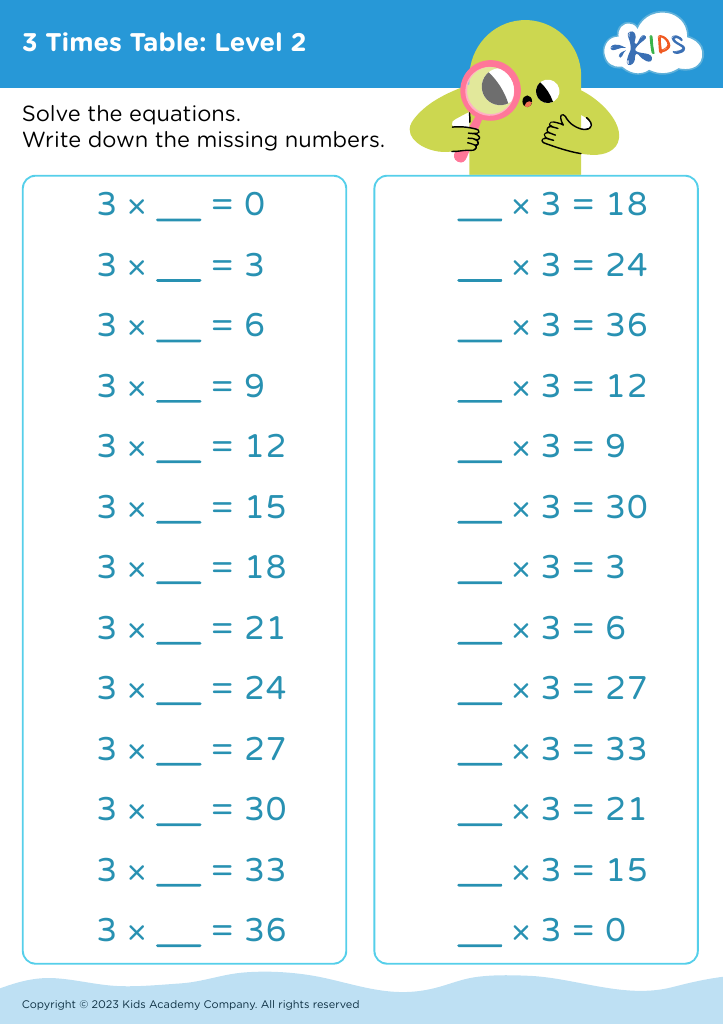








Number pattern recognition is a fundamental skill for children aged 3-8, offering critical benefits in cognitive development and future academic success. When parents and teachers emphasize this concept, they lay a foundation for enhanced mathematical understanding and logical thinking.
At this early stage, recognizing patterns helps children make sense of numbers and their relationships, fostering an intuitive sense of order and predictability. This can boost their confidence and interest in math, creating a positive association that encourages further learning. For example, identifying simple sequences or repeating patterns can help young learners grasp concepts like counting, addition, and subtraction more naturally.
Moreover, pattern recognition extends beyond math, aiding in problem-solving skills and general reasoning. It helps children develop the ability to predict outcomes and understand relationships, which are valuable in real-world situations and in learning other subjects. Patterns are also intrinsic to language development; recognizing rhythmic and repetitive patterns in speech can enhance phonemic awareness and reading skills.
In summary, prioritizing number pattern recognition for ages 3-8 equips children with crucial mathematical and analytical skills, fosters a robust problem-solving mindset, and promotes overall cognitive development, setting a strong groundwork for academic and everyday life challenges.








