
Numeracy skills Math Worksheets for Ages 3-8
11 filtered results
Difficulty Level
Grade
Age
-
From - To
Subject
Activity
Standards
Enhance your child's numeracy skills with our engaging math worksheets designed for ages 3-8. Our carefully crafted activities focus on building a strong foundation in essential mathematical concepts such as counting, number recognition, addition, subtraction, and more. Each worksheet is vibrant and interactive, making learning fun and effective. Tailored to suit early learners, our resources support both in-class education and home practice, ensuring your child gains confidence and proficiency in math. Help your little one develop the necessary skills for future academic success with our excellent assortment of numeracy skill worksheets. Start their math journey with us today!
Favorites
With answer key
Interactive
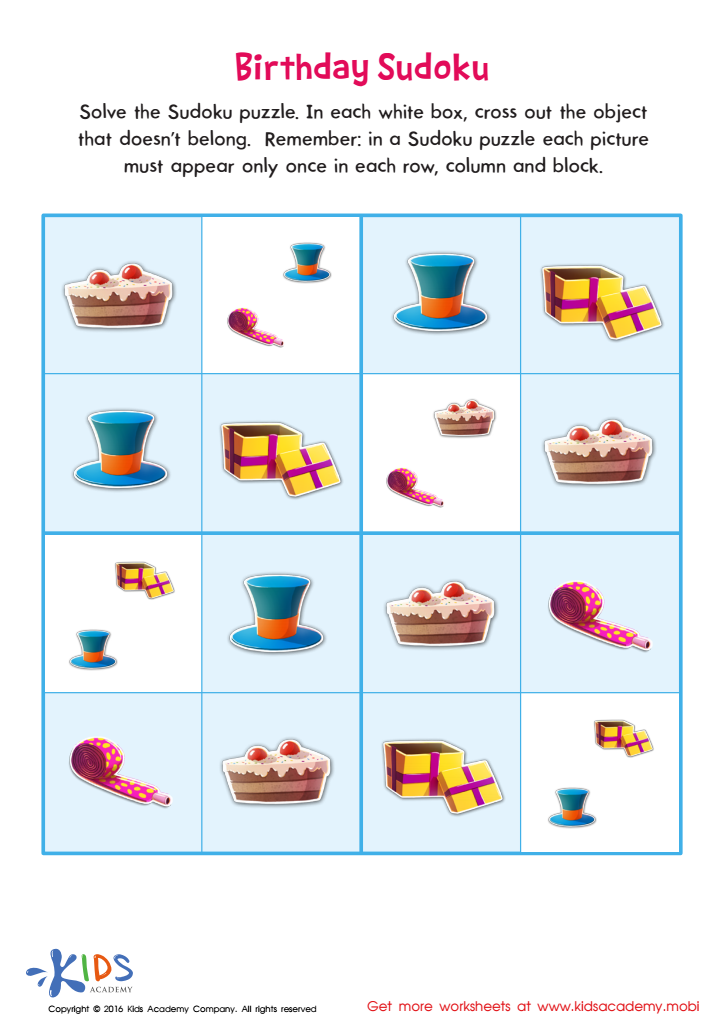
Birthday Sudoku Sorting Worksheet
With this Sudoku printable, your child will have fun and strengthen their problem-solving skills.
 Assign to My Students
Birthday Sudoku Sorting Worksheet
Worksheet
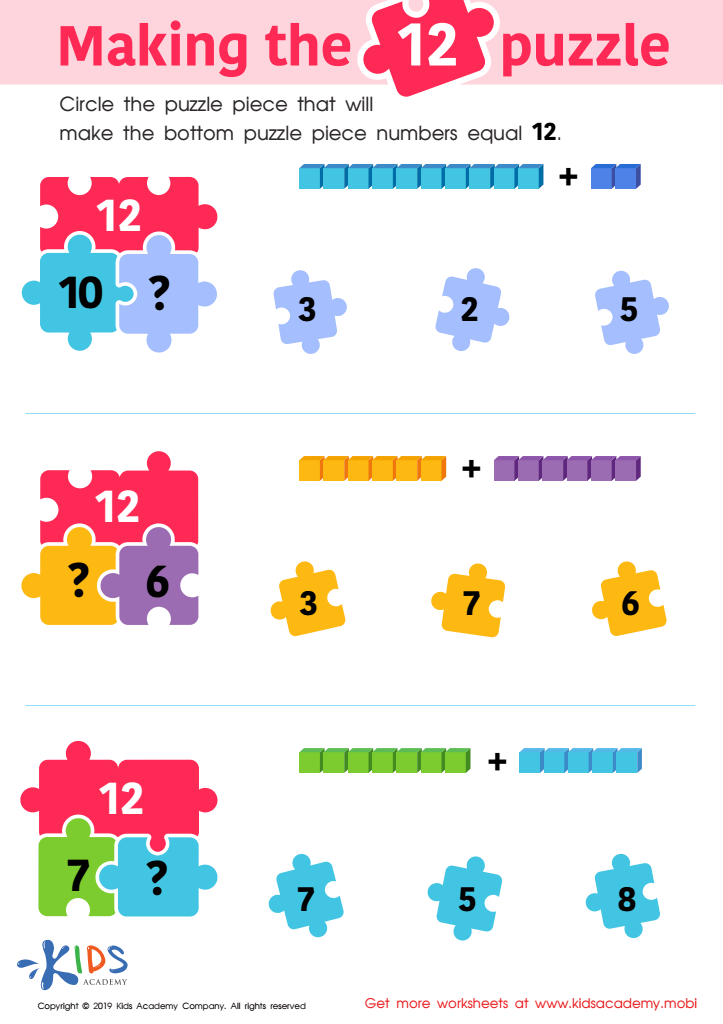
Making the 12 Puzzle Worksheet
Engage preschoolers in learning with this fun and colorful worksheet. Ask them to look at the picture and identify the missing equation on each puzzle piece; then help them solve the problems. When all the puzzle pieces make the bottom numbers equal 12, have them circle it. This is a great way to combine learning and fun!
Making the 12 Puzzle Worksheet
Worksheet
Community Places: 1 Less Worksheet
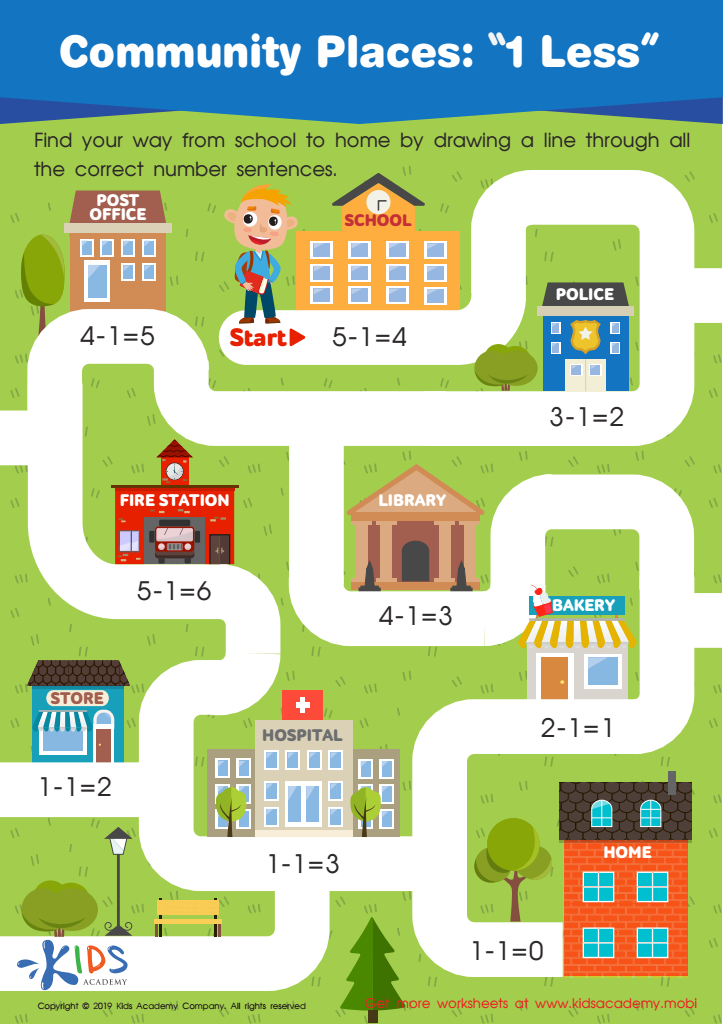
Have your kindergarteners draw a line through the correct number sentences as they find their way home from school. Ask them to identify the people, places, and buildings in their community and the jobs they do.
Community Places: 1 Less Worksheet
Worksheet
Join Kids Academy for Free
Who is primarily going to use this learning content?







Numeracy skills, or basic mathematical abilities, form a critical foundation for children ages 3-8, profoundly influencing both their academic and everyday lives. Understanding math during these years sets the stage for higher-level cognitive skills such as logical reasoning, problem-solving, and critical thinking. For parents and teachers, nurturing these skills early on fosters an environment where numbers and mathematical concepts become familiar and integral to a child’s world.
First and foremost, early numeracy skills are pivotal for success in school. Children comfortable with counting, recognizing shapes, comparing sizes, and basic arithmetic are more likely to excel in their subsequent educational endeavors. These skills promote a positive attitude toward learning and tackle more complex topics later with confidence.
Furthermore, numeracy is essential beyond the classroom. It empowers children to understand and manage everyday situations involving numbers, such as telling time, following recipes, or handling money. Basic math skills are indispensable tools for making informed decisions, which significantly affects their long-term financial literacy and problem-solving abilities.
Lastly, early numeracy strengthens language skills and cognitive development. Activities involving patterns, sequencing, and spatial awareness simultaneously enhance vocabulary and general thinking abilities. Thus, prioritizing numeracy for young children ensures they develop into well-rounded individuals, adept in both academic settings and practical daily tasks.








