Sea creatures identification Math Worksheets for Ages 3-8
3 filtered results
-
From - To
Discover our engaging Sea Creatures Identification Math Worksheets designed specifically for children ages 3-8. These interactive worksheets combine the fun of learning about ocean life with essential math skills. Kids will explore and identify various sea creatures while practicing counting, addition, and subtraction. Our resources are crafted to enhance cognitive skills, strengthen visual recognition, and promote a love for learning. Perfect for home or classroom use, these worksheets make math enjoyable and relatable by linking it to the wonders of the ocean. Dive into a world of learning and creativity as your little ones embark on their mathematical adventure with sea creatures!
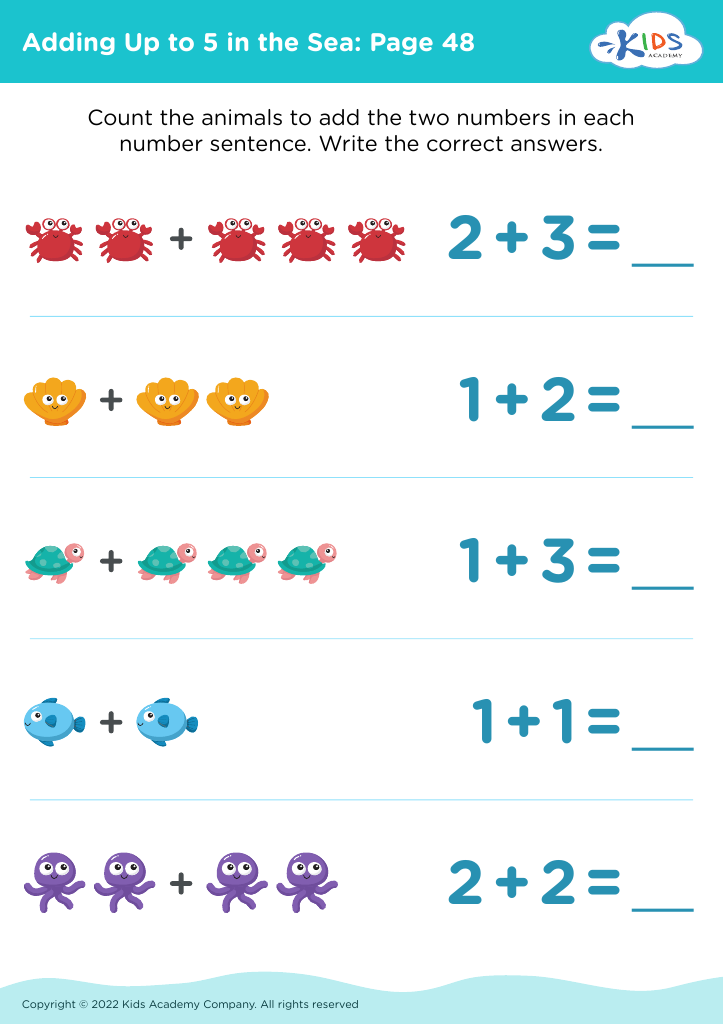
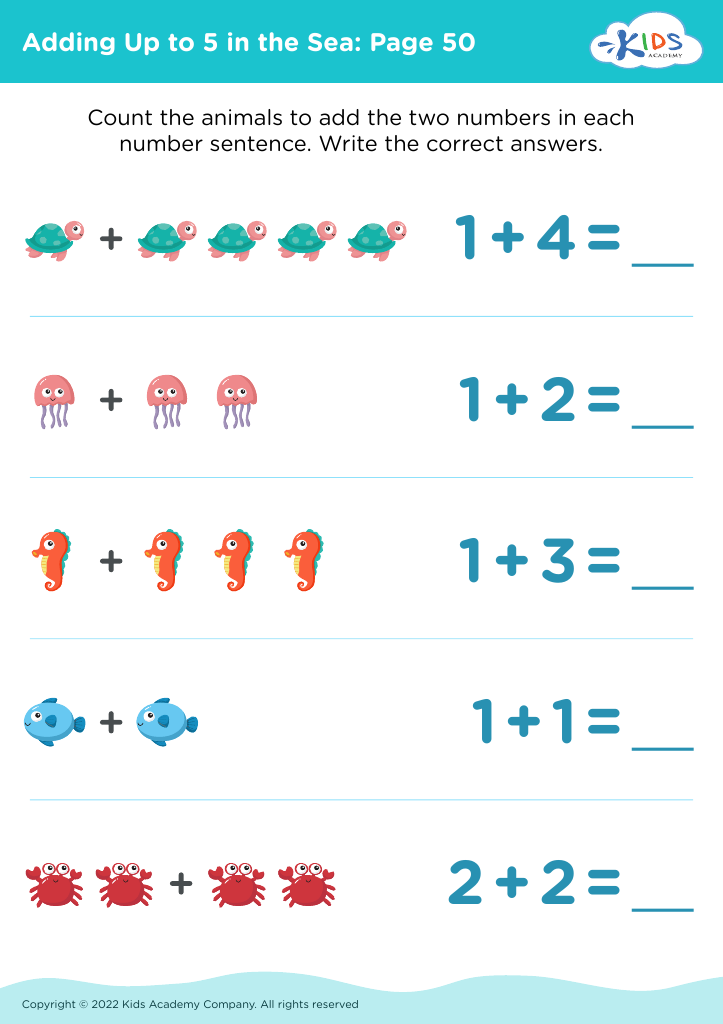
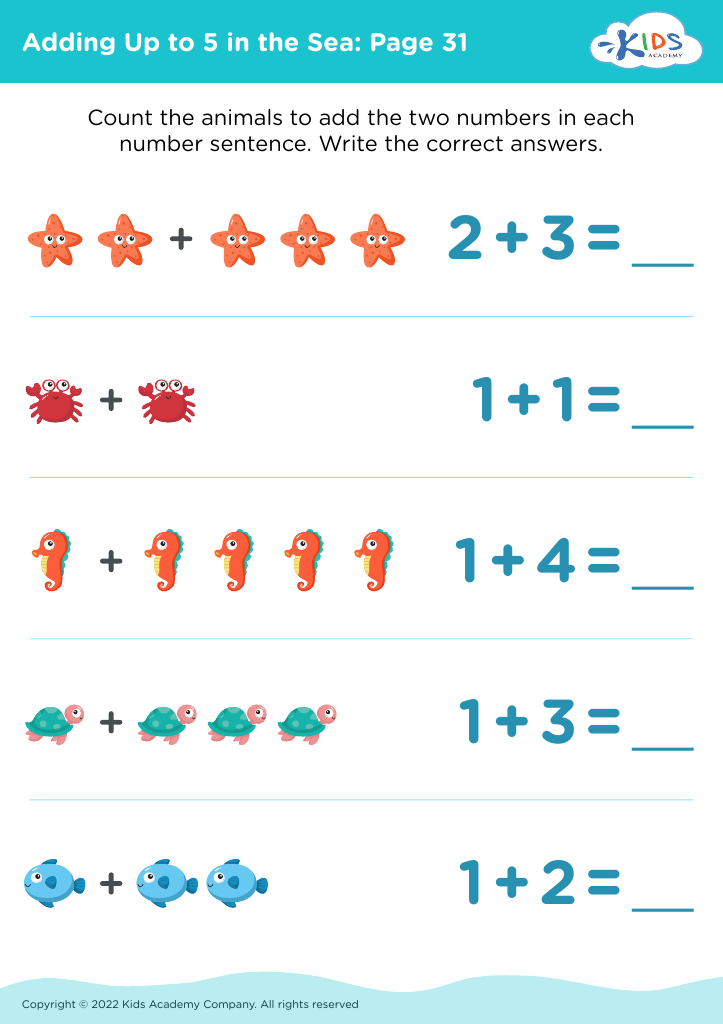








Understanding sea creatures identification can play a pivotal role in early childhood education, particularly in the field of math for children aged 3-8. First and foremost, incorporating sea creatures into math lessons makes learning engaging and relatable. Children are often fascinated by the ocean's wonders, and using this theme not only captures their interest but also helps maintain their focus.
Identifying different sea creatures can enhance children's observation skills and foster cognitive development. Integrating shapes, sizes, and counting into lessons about fish, starfish, and crabs can create a natural bridge between math and science, promoting critical thinking and problem-solving skills. For instance, arranging seashells by size or counting the number of tentacles on an octopus engages young learners in hands-on, experiential learning.
Moreover, sea creature activities can promote language development as children learn new vocabulary connected to marine life. This supports their overall literacy while creating a fun learning environment.
Lastly, awareness of marine biology nurtures empathy and respect for nature, instilling an understanding of environmental conservation from an early age. When parents and teachers prioritize sea creatures in math lessons, they cultivate an enriched curriculum that promotes holistic development and a sense of wonder about the natural world.








