Spatial Orientation Math Worksheets for Ages 3-8
4 filtered results
-
From - To
Discover a world of fun and learning with our Spatial Orientation Math Worksheets, designed specifically for children aged 3-8. These engaging worksheets help young learners develop essential spatial awareness skills crucial for mathematical understanding. Through a variety of activities, such as puzzles, mazes, and shape identification exercises, kids will enhance their ability to visualize and manipulate objects in space. Our worksheets are crafted to foster critical thinking and problem-solving abilities while keeping learning enjoyable. Perfect for homeschooling or classroom use, our resources support early math concepts in a playful environment. Explore our collection and watch your child's confidence in math grow!
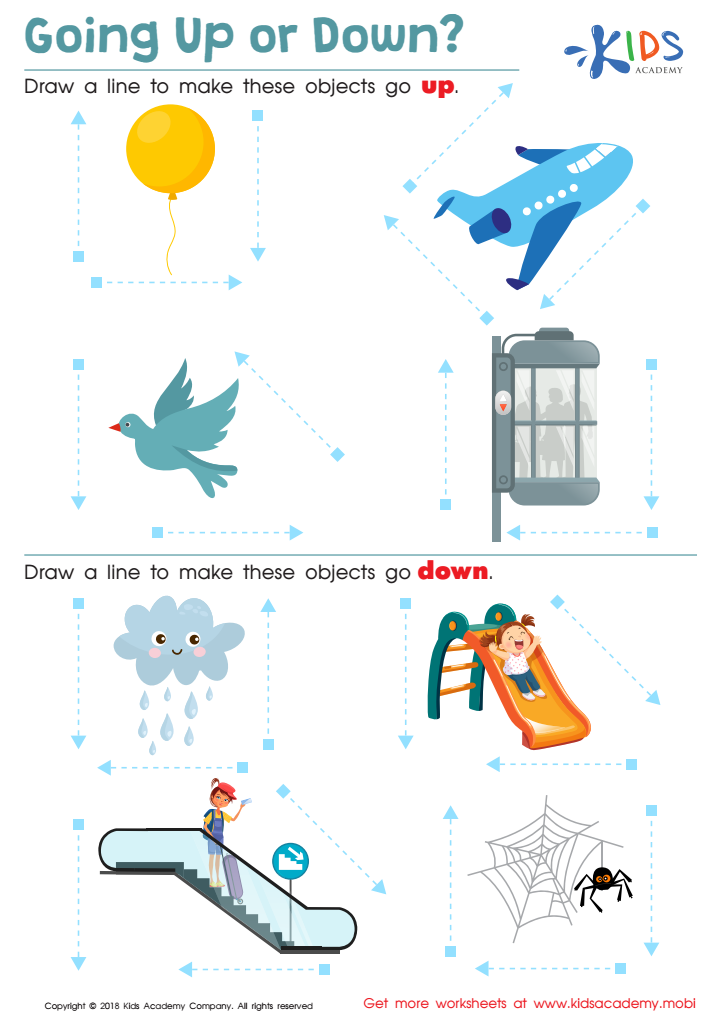
Going up or Down? Worksheet
 Assign to My Students
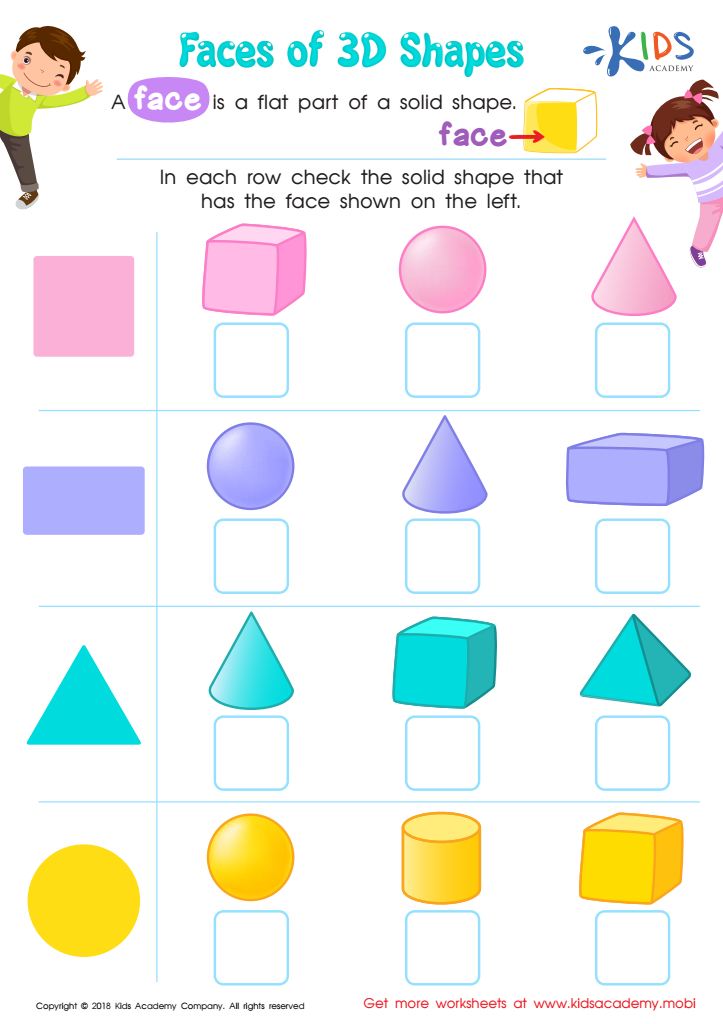
Faces of 3D Shapes Worksheet
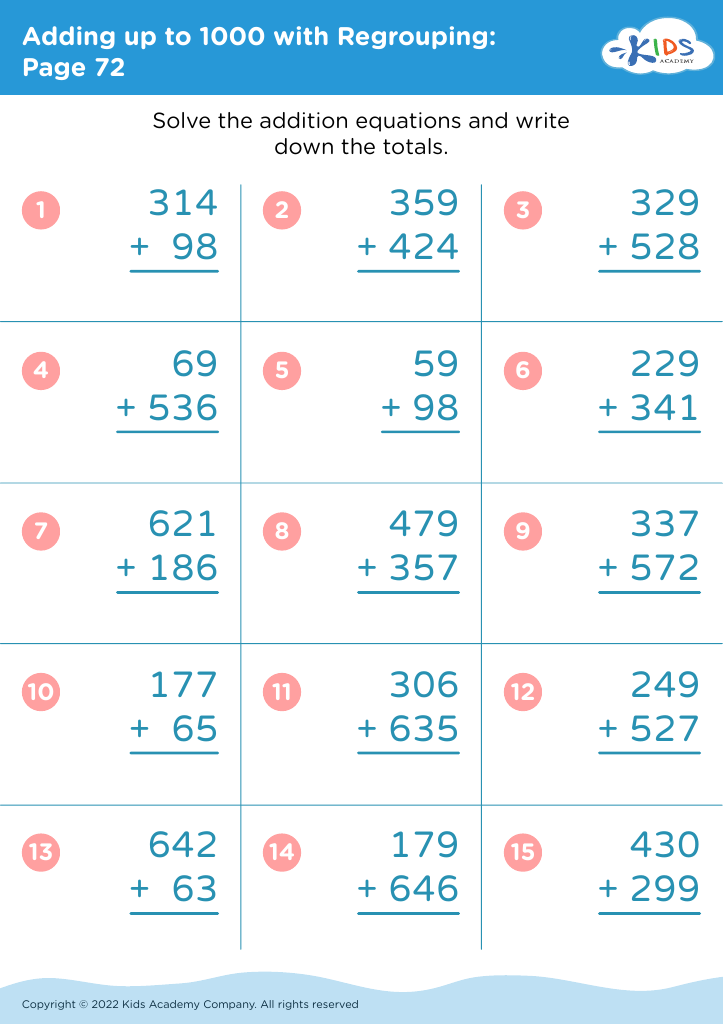
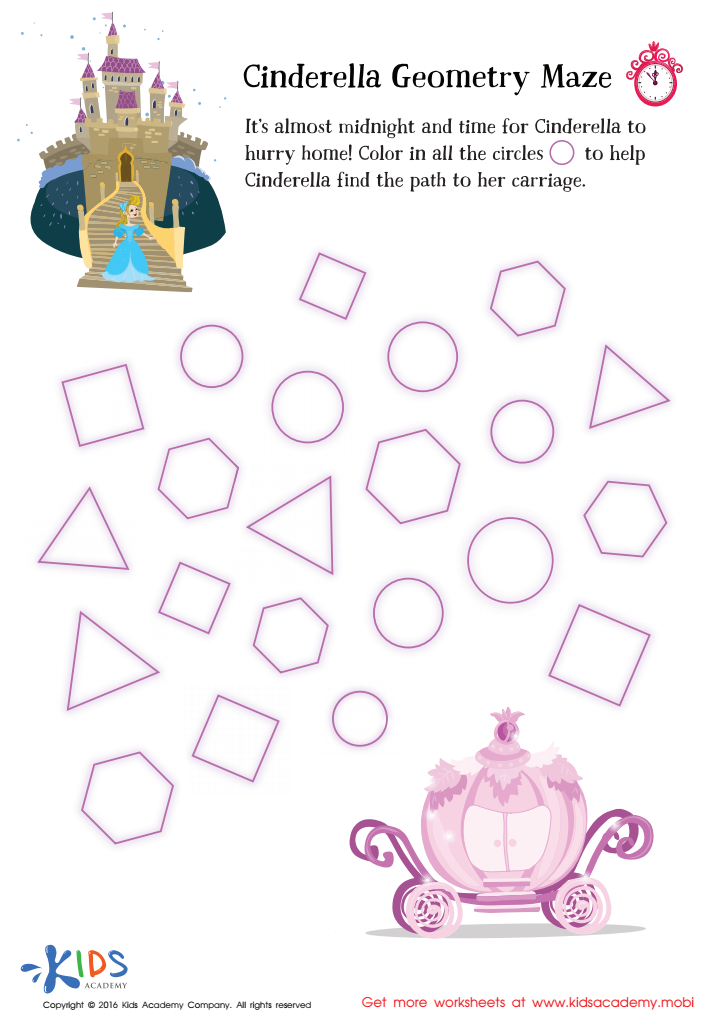
Cinderella Geometry Maze Worksheet







Spatial orientation is a crucial aspect of early child development that significantly influences math proficiency. For children aged 3-8, understanding spatial concepts lays the groundwork for later mathematical skills, such as geometry, measurement, and even problem-solving. Parents and teachers should recognize that spatial orientation involves comprehending how objects relate to each other and to oneself in space, which in turn fosters critical thinking and cognitive development.
Engaging children in activities that enhance spatial orientation—like puzzles, building blocks, and interactive games—promotes visualization and mental mapping skills. These activities not only stimulate children’s curiosity but also help them develop foundational abilities to interpret and analyze their environment. Research has shown that these skills correlate positively with later academic success in math and other STEM subjects.
Moreover, integrating spatial learning in early education creates a more inclusive classroom environment, as it caters to various learning styles, fosters teamwork, and encourages communication. Ultimately, by prioritizing spatial orientation math, parents and teachers can equip children with essential tools for lifelong learning and success in an increasingly complex world. A strong foundation in this area supports children in becoming adept problem solvers, innovators, and critical thinkers, fostering their overall development.








