Subtraction skills Math Worksheets for Ages 3-8 - Page 2
29 filtered results
-
From - To
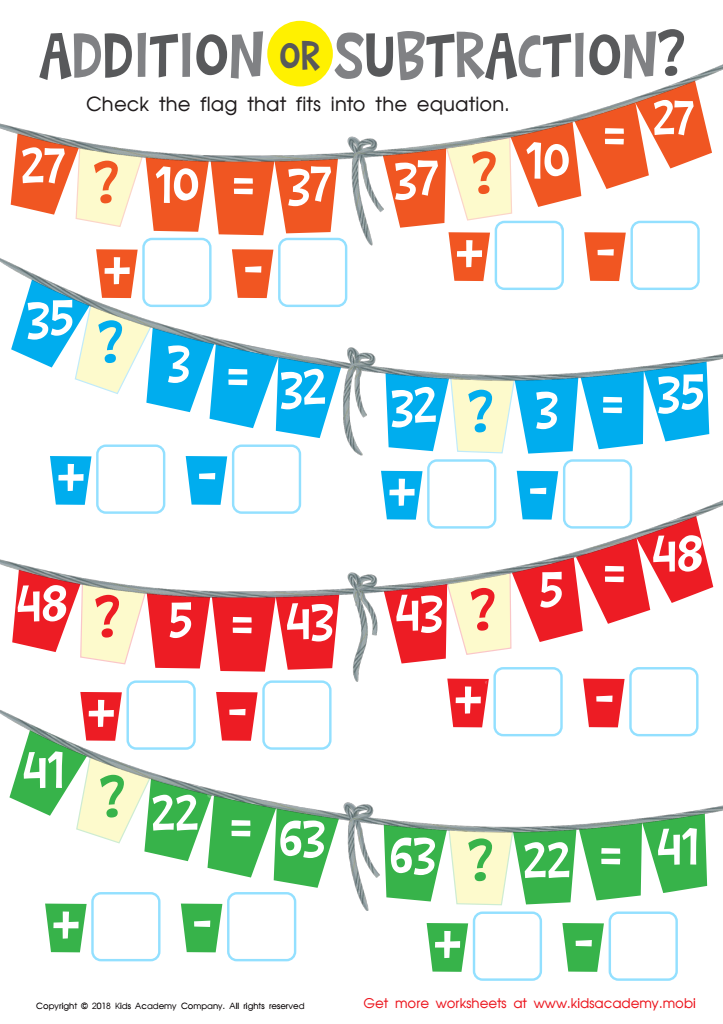
Addition or Subtraction? Worksheet
 Assign to My Students
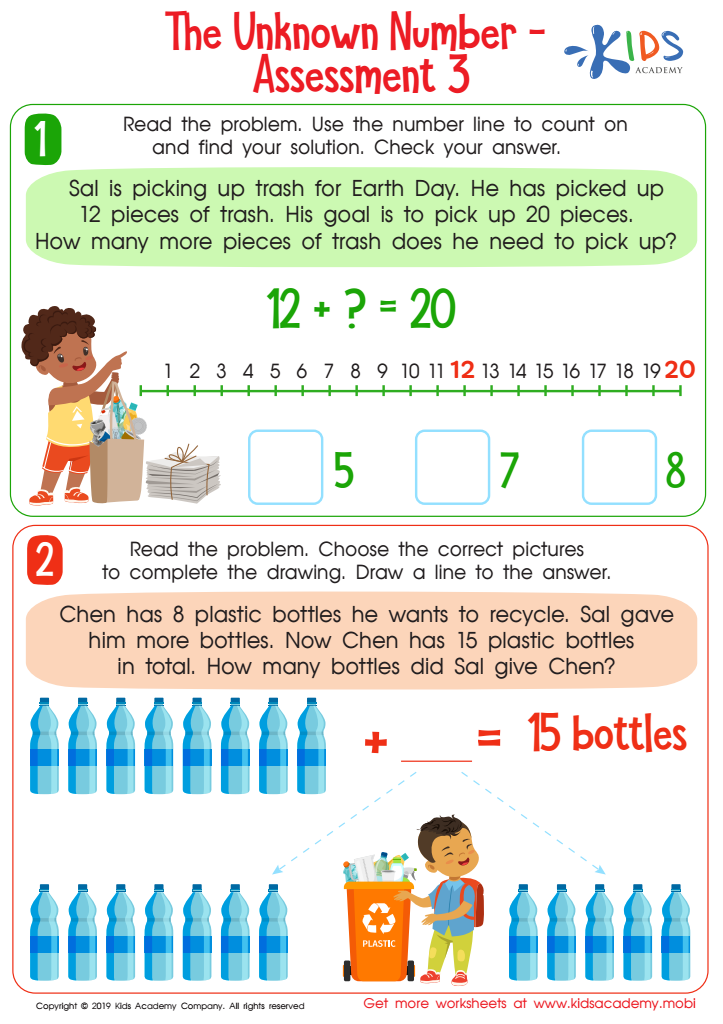
The Unknown Number - Assessment 3 Worksheet
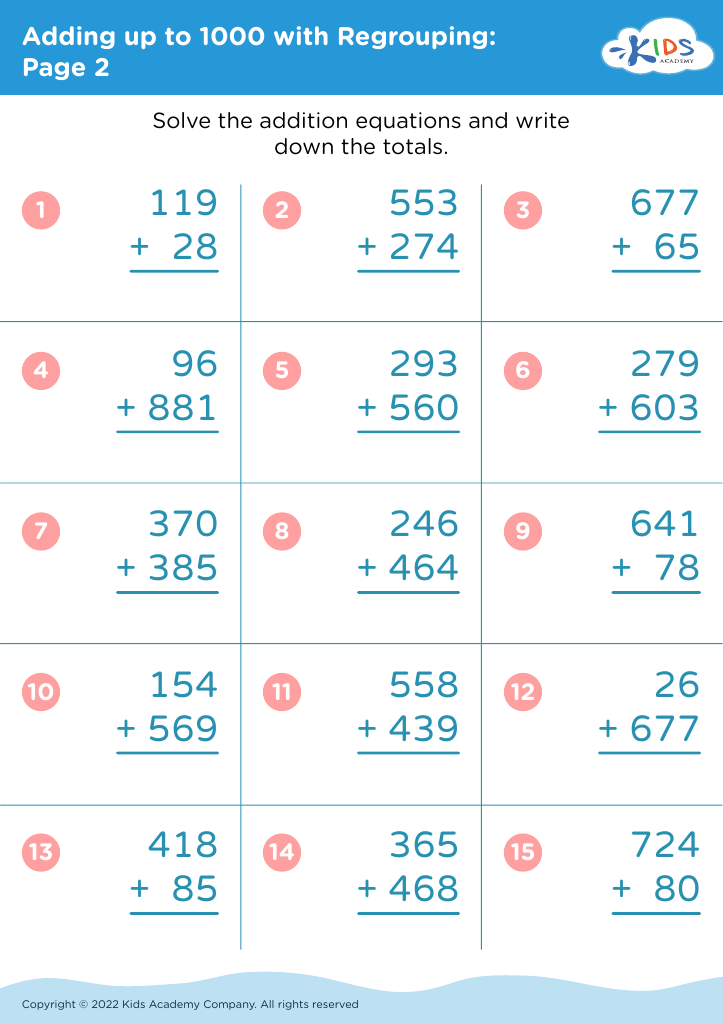
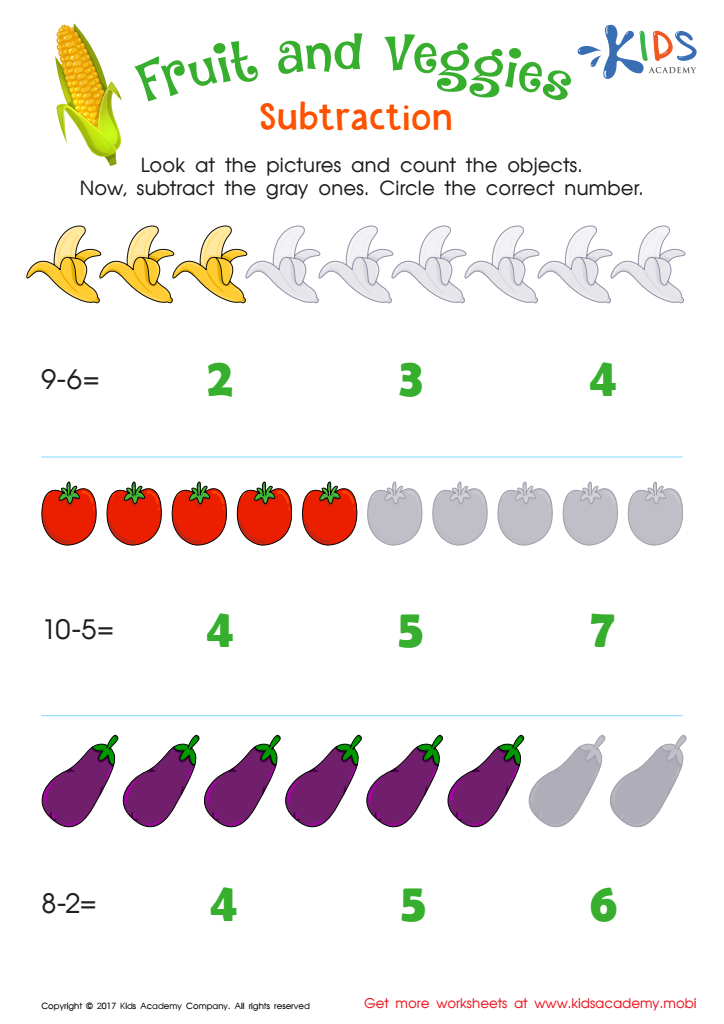
Fruit and Veggies Subtraction Worksheet
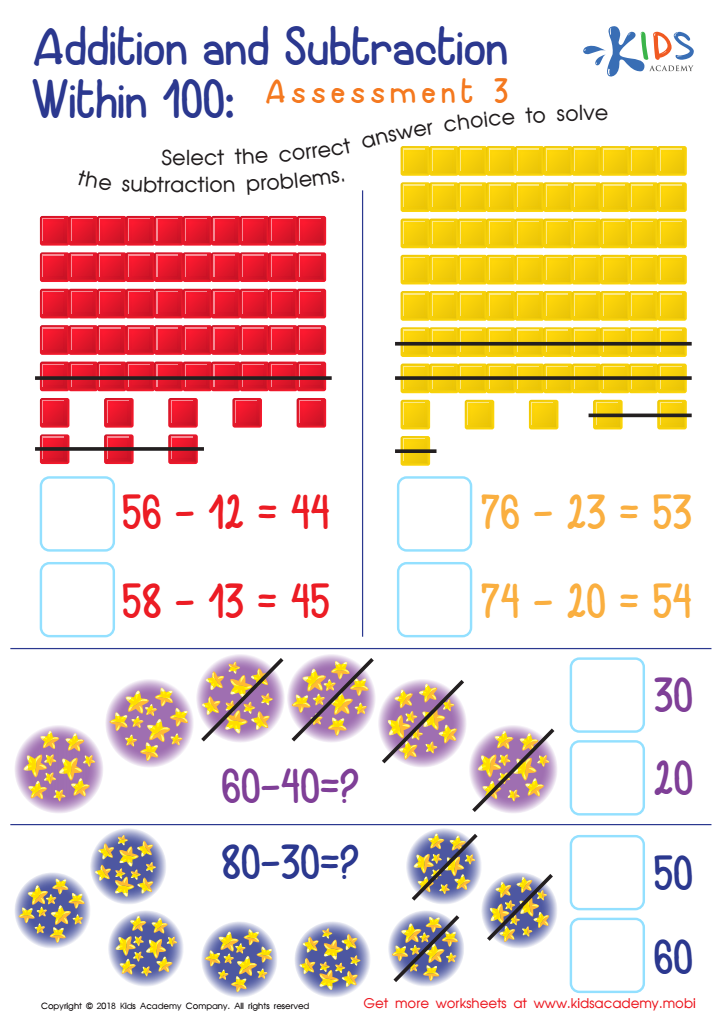
Addition and Subtraction Within 1: Assessment 3 Worksheet








Subtraction skills in early childhood are foundational for a child's overall mathematical competence. For parents and teachers, prioritizing subtraction is crucial because it lays the groundwork for future problem-solving abilities and logical thinking. At ages 3-8, children's brains are highly receptive to new concepts, making it an optimal time to introduce mathematical skills.
Firstly, subtraction is one of the basic operations that children need to understand before they can grasp more complex mathematical concepts. Good subtraction skills pave the way for learning division, algebra, and other higher-level math topics in later grades. Early difficulties in understanding subtraction can lead to long-term math anxiety and hinder academic performance.
Secondly, mastering subtraction contributes to improved cognitive development. It enhances critical thinking and reasoning abilities as children must comprehend 'taking away' or 'finding the difference' when solving problems. This skill also promotes numerical fluency, encouraging kids to handle everyday tasks like counting money, measuring ingredients, or sharing resources more effectively.
Lastly, developing strong subtraction skills boosts children's confidence in their mathematical abilities. When children feel competent in basic operations, they are more likely to approach math with enthusiasm and persistence. Thus, for a well-rounded education and strong future academics, caregivers and educators should focus on supporting and nurturing proficient subtraction skills in early learners.








