
Understand number relationships Math Worksheets for Ages 3-8
3 filtered results
Difficulty Level
Grade
Age
-
From - To
Subject
Activity
Standards
Welcome to our "Understand Number Relationships" Math Worksheets for Ages 3-8! Designed to foster early math skills, these engaging worksheets help young learners grasp the fundamental concepts of number relationships. Through fun and interactive activities, children will explore counting, comparing numbers, and recognizing patterns. Our worksheets cater to different learning styles, ensuring that each child finds joy in math. Perfect for both classroom use and home practice, these resources are ideal for building a strong foundation in mathematics. Empower your child with confidence in their number skills today! Explore our diverse collection and watch your little ones thrive in their math journey.
Favorites
With answer key
Interactive
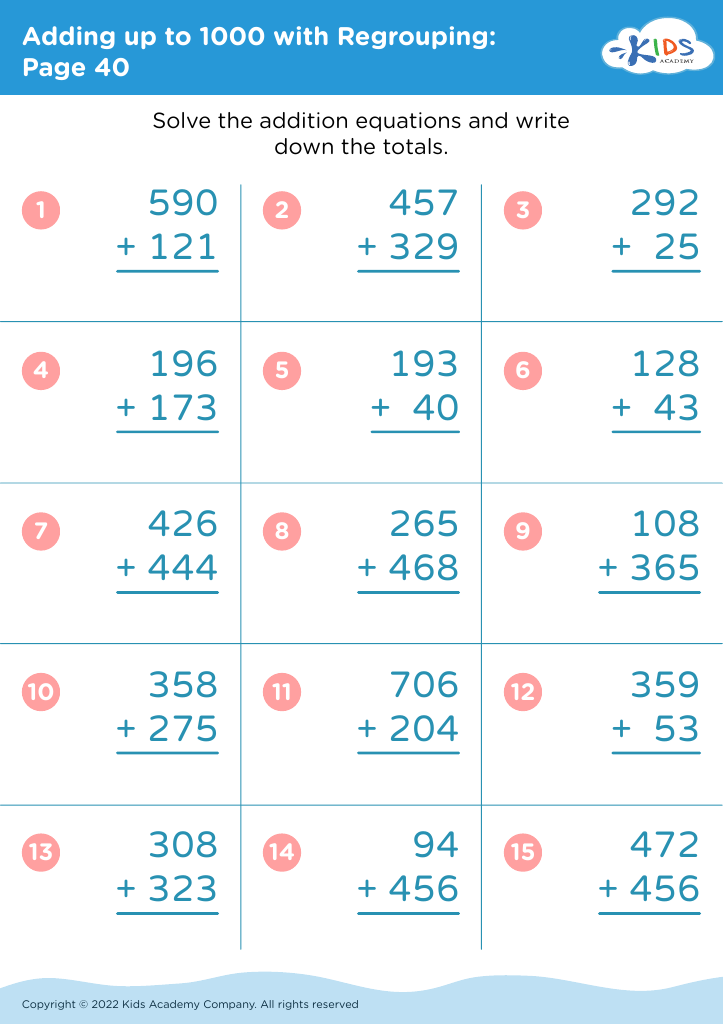
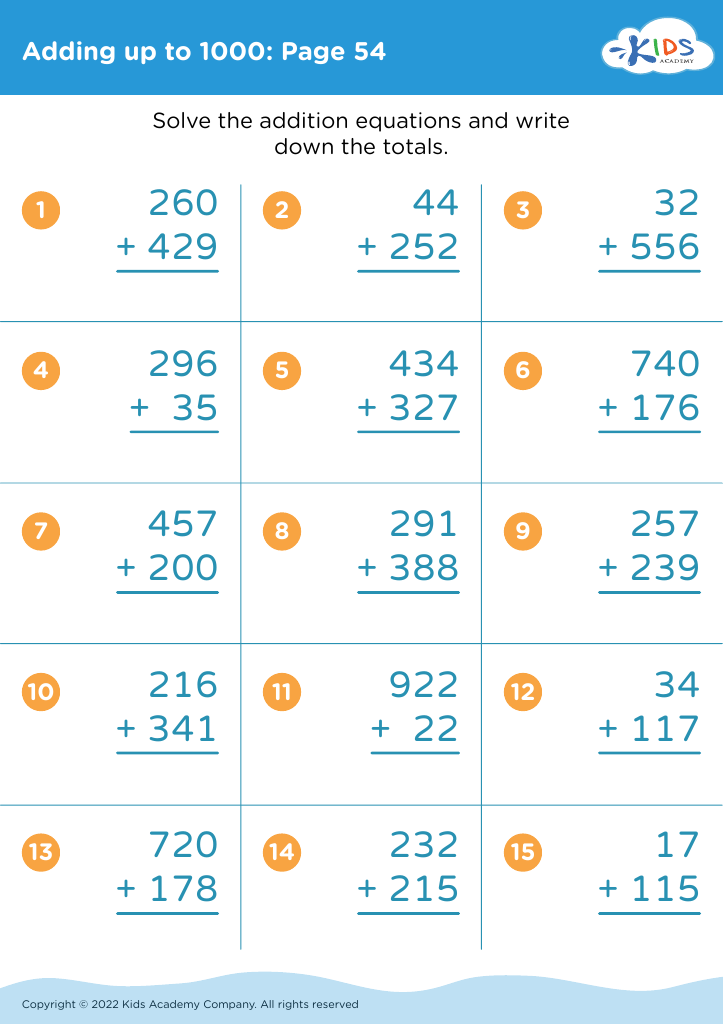
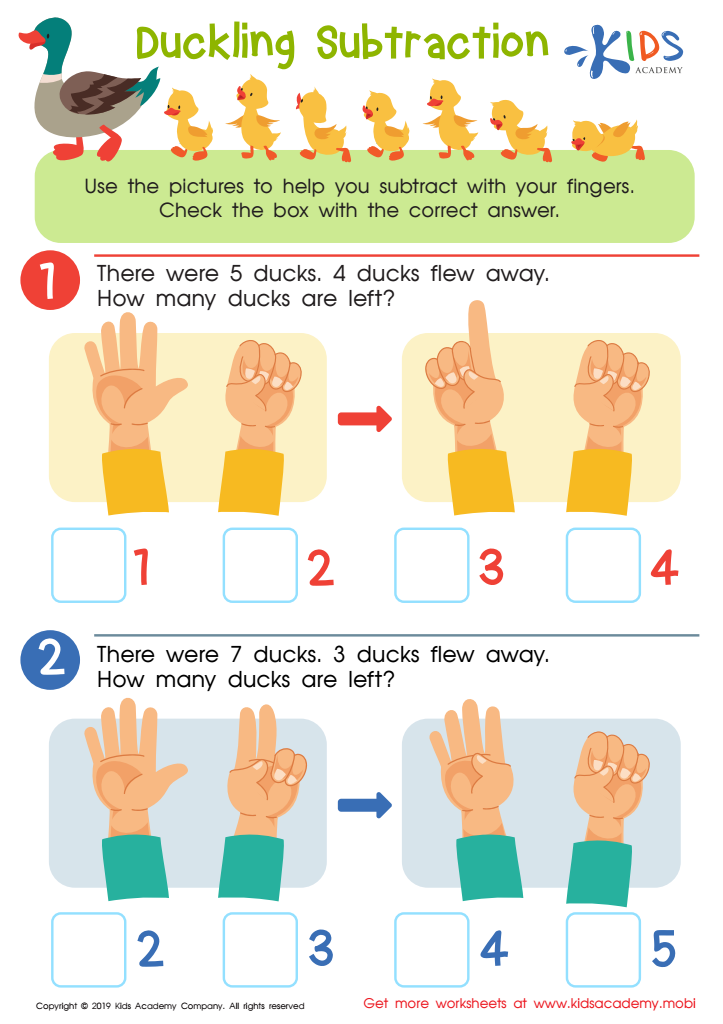
Duckling Subtraction Worksheet
Help your students learn equations and math with this fun worksheet. There are two questions to solve with the help of the pictures. Ask them to subtract with their fingers and check the box with the correct answer. This makes math easier and more enjoyable!
 Assign to My Students
Duckling Subtraction Worksheet
Worksheet
Join Kids Academy for Free
Who is primarily going to use this learning content?








Understanding number relationships is fundamental for young learners aged 3-8, laying a vital foundation for their mathematical development. At this critical age, children begin to form their initial concepts of quantity, size, and numerical comparisons. Parents and teachers should prioritize this aspect of math education because it fosters a deep understanding of how numbers interact, rather than focusing solely on rote memorization.
When children grasp number relationships, they develop essential skills such as addition and subtraction, which serve as a stepping stone for more complex operations later on. This knowledge encourages critical thinking and problem-solving skills as children learn to analyze relationships between numbers in various contexts, enhancing their overall cognitive abilities.
Moreover, such understanding promotes positive attitudes toward math, reducing anxiety and building confidence in young learners. As children see the connections between numbers, they become more engaged and enthusiastic about their learning journey. This foundational knowledge supports not just mathematical skills but also lays the groundwork for future academic success, aiding in subjects like science and economics where numerical relationships are key. By nurturing these skills, parents and teachers can help create a love for learning that extends beyond math, shaping well-rounded, confident individuals.








