Check out this FREE Trial Lesson on Math for age 3-8!

Fractions on a Number Line (same numerator)

Favorites
With answer key
Interactive
  • 3-8
  • Understanding fractions
  • Math
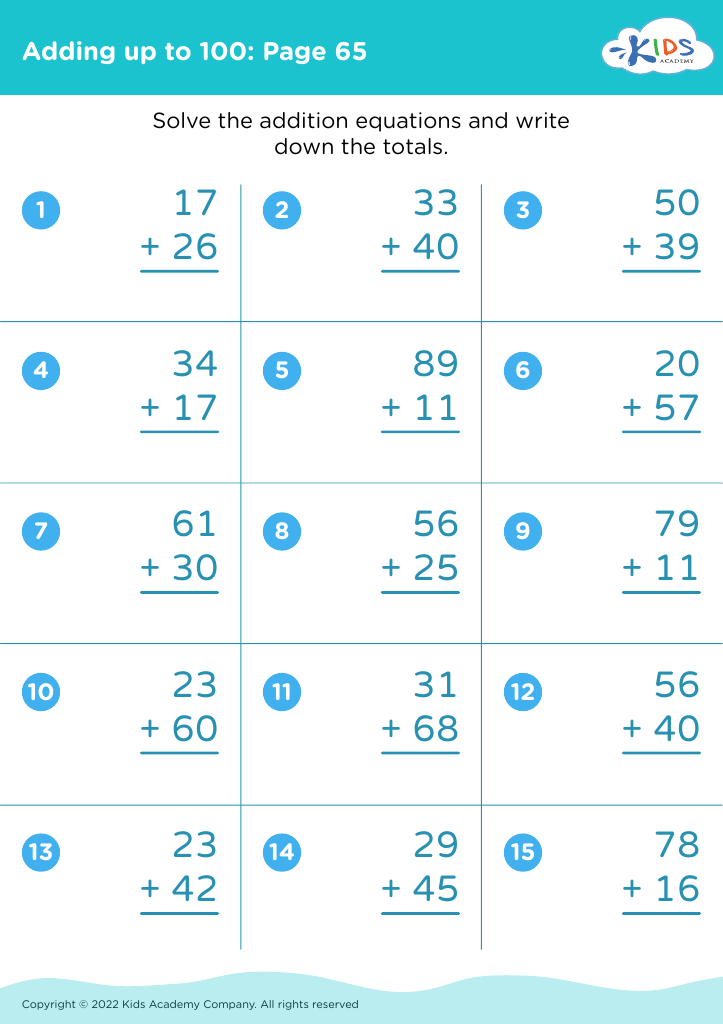
Adding up to 100: Page 65

Adding up to 100: Page 65

Adding up to 100: Page 65
Worksheet
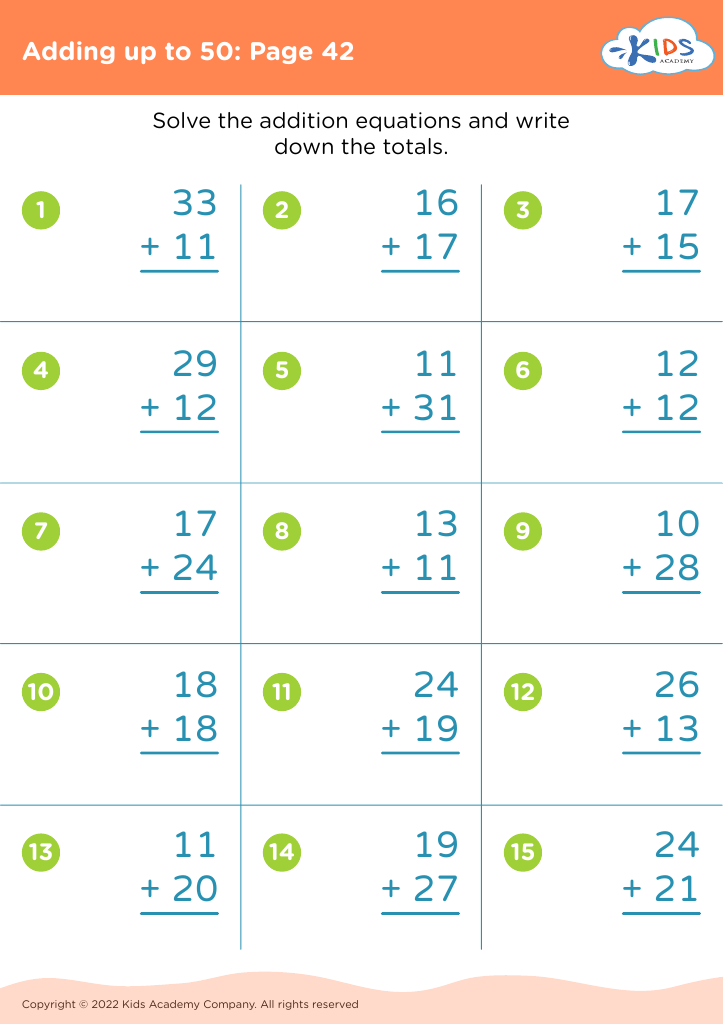
Adding up to 50: Page 42

Adding up to 50: Page 42

Adding up to 50: Page 42
Worksheet
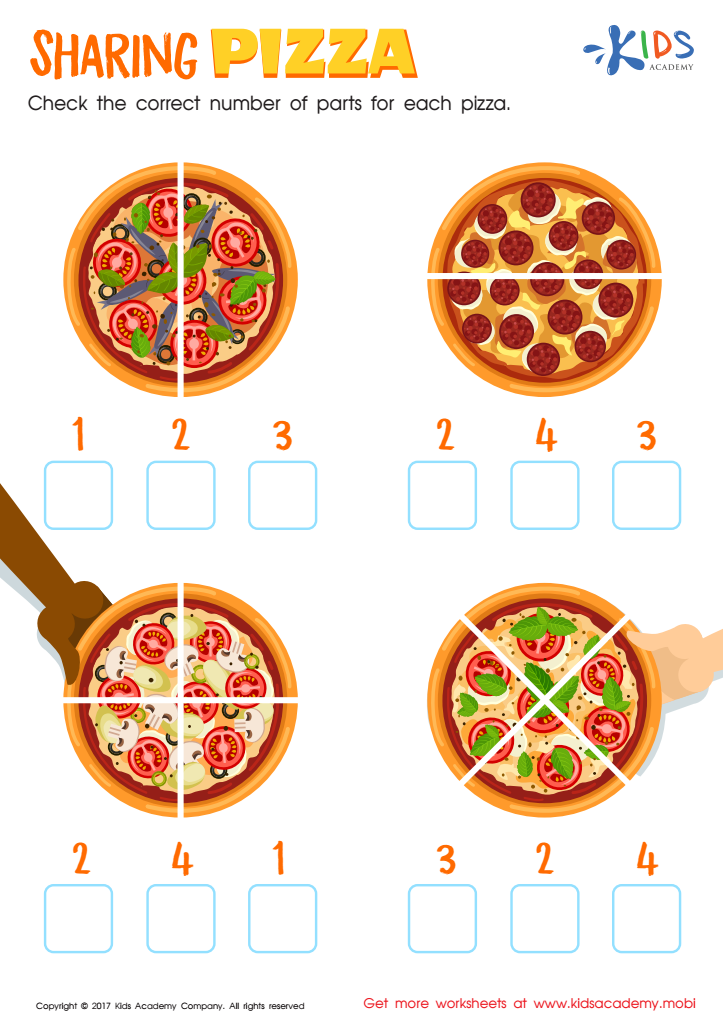
Sharing Pizza Worksheet

Sharing Pizza Worksheet

Show your child the four pizzas in this worksheet. Ask them to count the number of slices each one has. Help them count and check the answer for the first pizza, then do the same for the rest. Have fun counting the slices and see if they can spot the pizza!
Sharing Pizza Worksheet
Worksheet
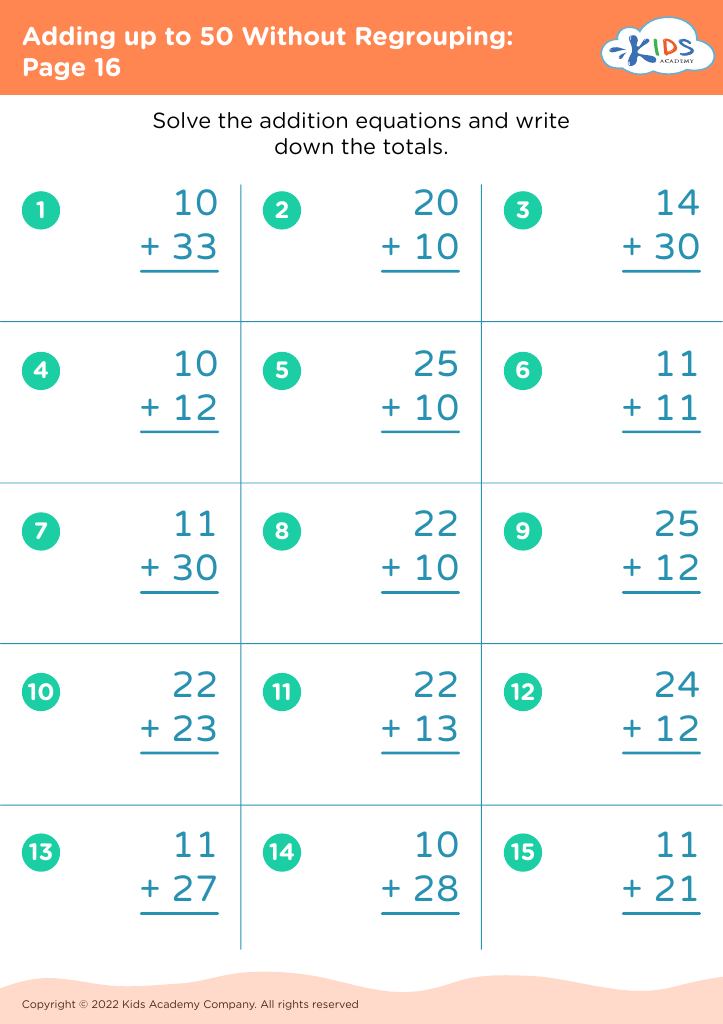
Adding up to 50 Without Regrouping: Page 16
Worksheet
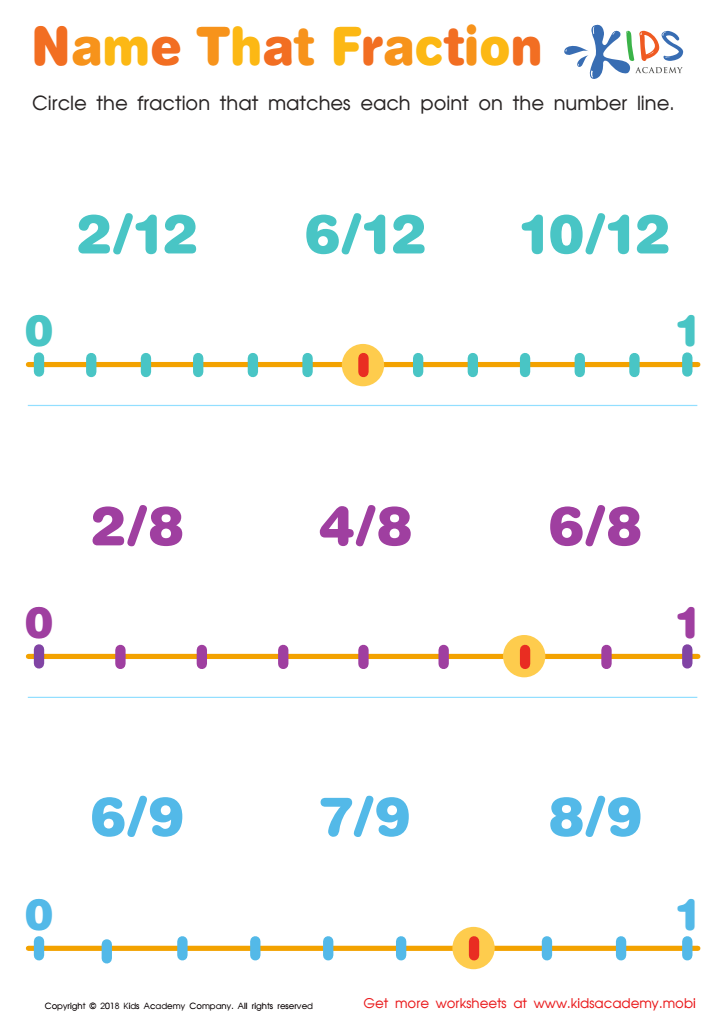
Name That Fraction Worksheet

Name That Fraction Worksheet

Kids must learn to identify and name fractions to solve equations. Included in this worksheet are three equations that need solving. Have your child match each point on the number line with the correct fraction and circle it. This exercise helps build their fraction skills.
Name That Fraction Worksheet
Worksheet
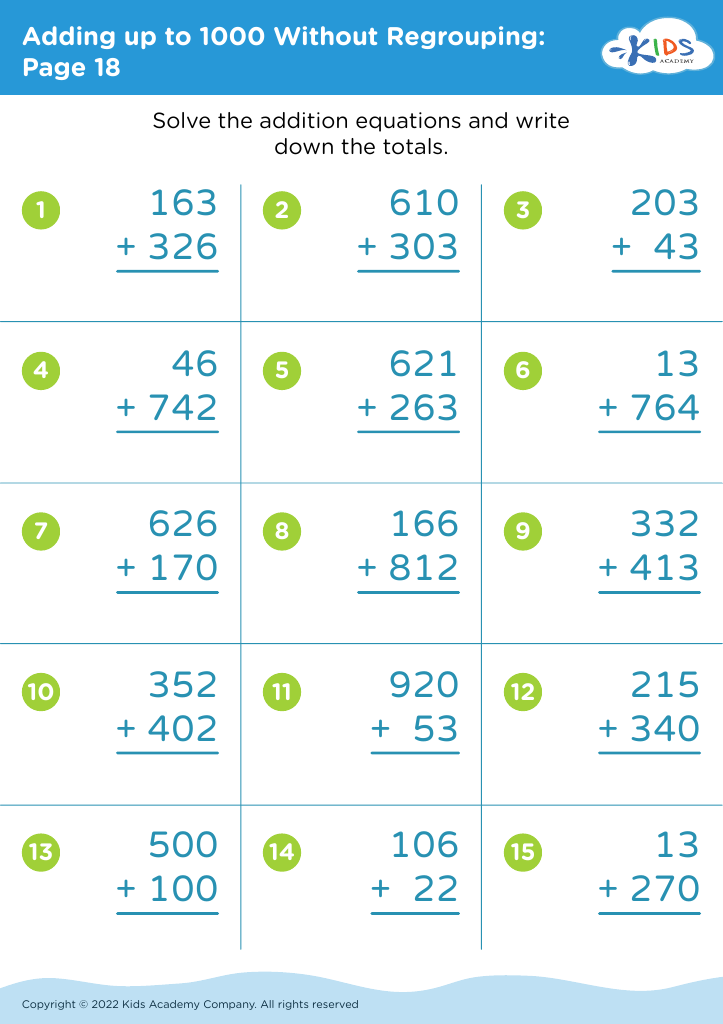
Adding up to 1000 Without Regrouping: Page 18
Worksheet
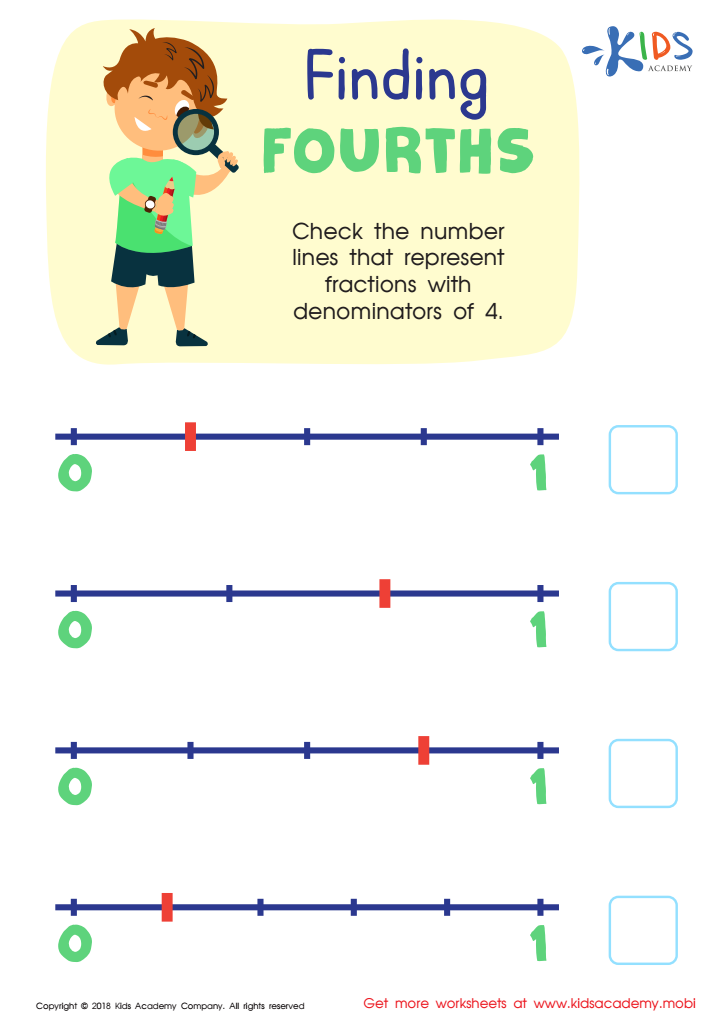
Finding Fourths Worksheet
Finding Fourths Worksheet
Help your kids sharpen math skills with extra homework, stimulating exercises, and fun worksheets. This printout features four equations with fractions and number lines. Your child's task is to check the number lines with denominators of 4. Enough to get them thinking and learning.
Finding Fourths Worksheet
Worksheet
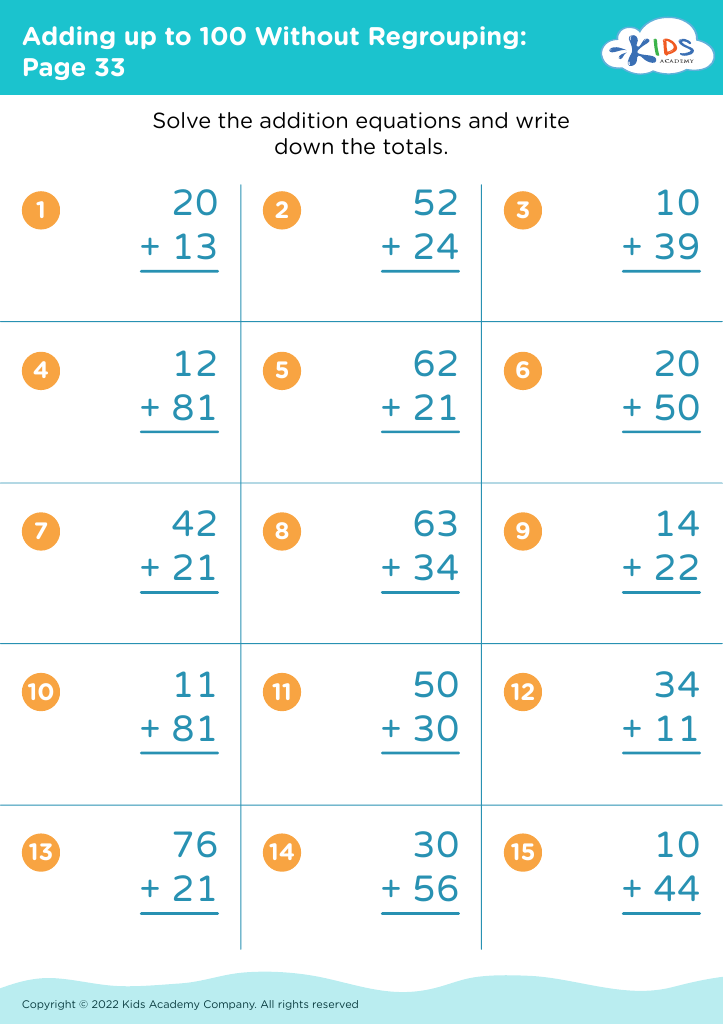
Adding up to 100 Without Regrouping: Page 33
Worksheet
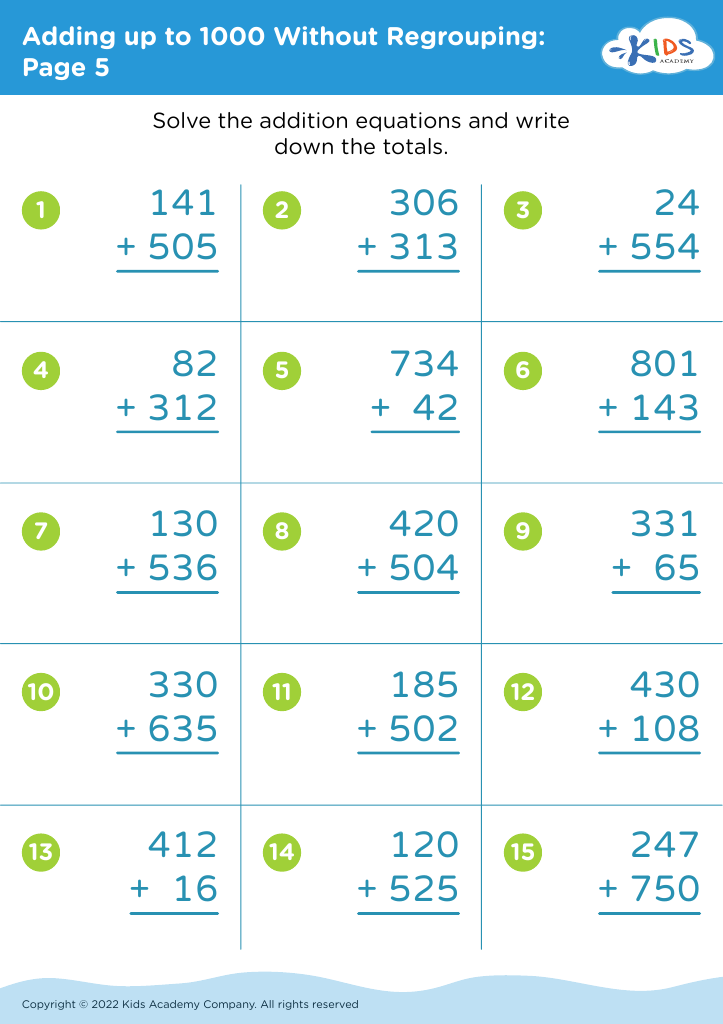
Adding up to 1000 Without Regrouping: Page 5
Worksheet
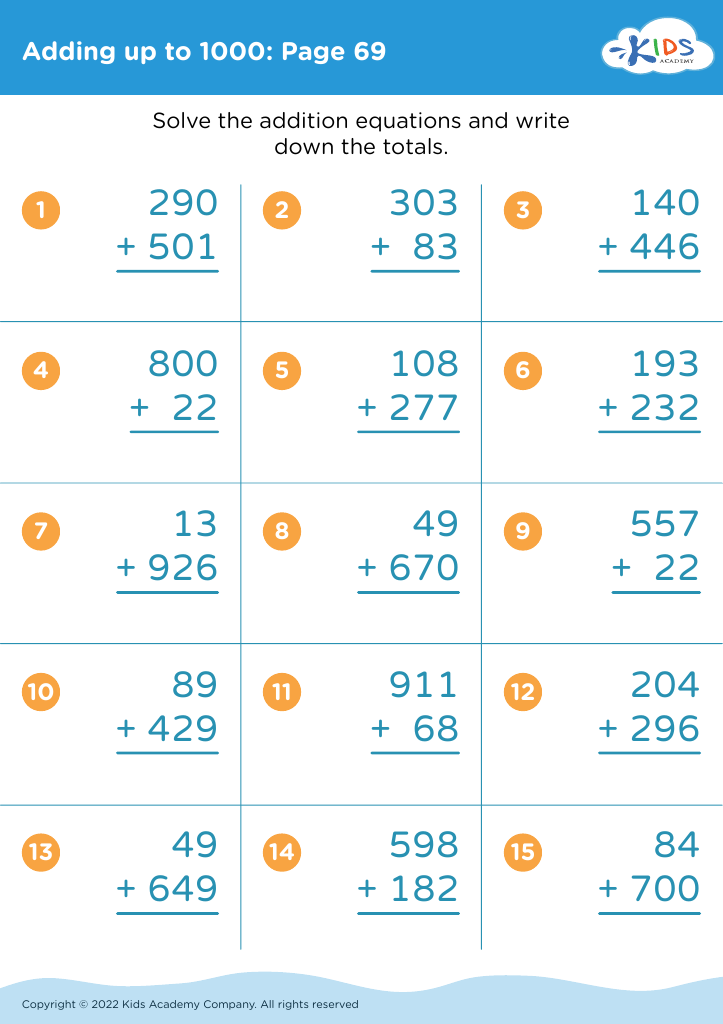
Adding up to 1000: Page 69

Adding up to 1000: Page 69

Adding up to 1000: Page 69
Worksheet
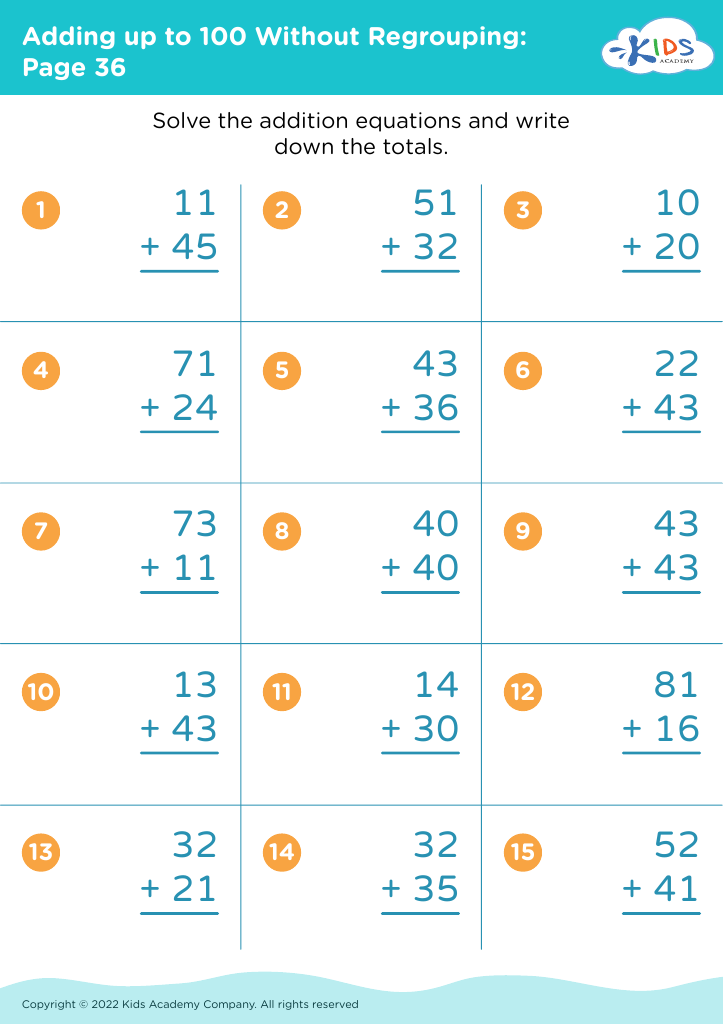
Adding up to 100 Without Regrouping: Page 36
Worksheet
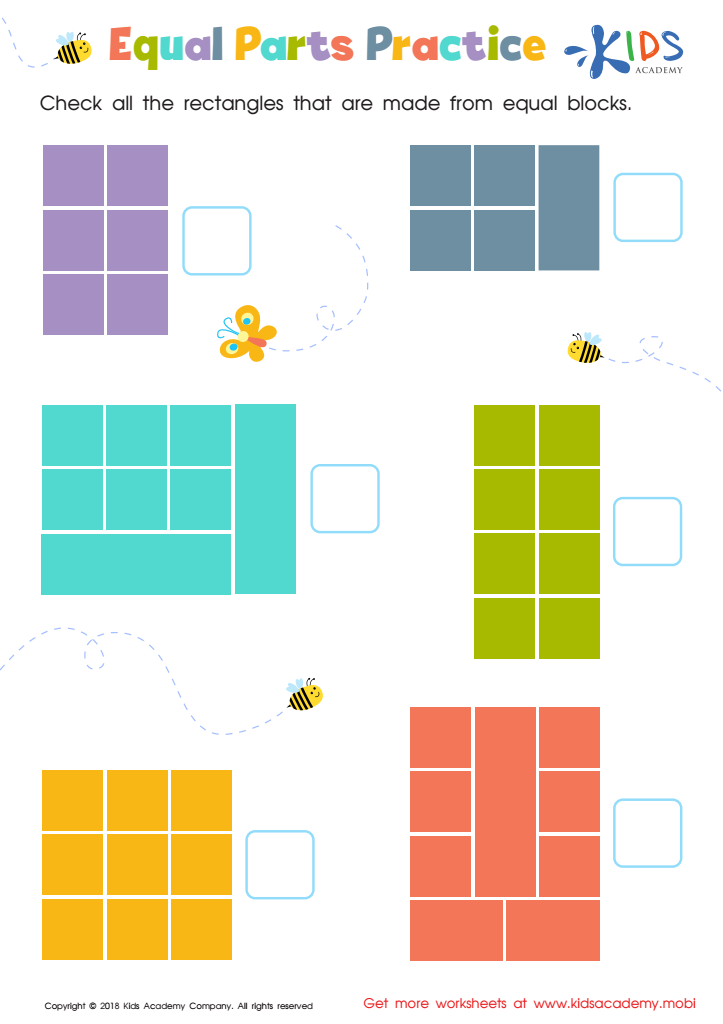
Equal Parts Practice Worksheet
Equal Parts Practice Worksheet
This worksheet checks your child's knowledge of halves and equal pieces. Have them go through the rectangles and check those made up of equal blocks. Your kids should be able to tell which parts are equal and which are not after the exercise.
Equal Parts Practice Worksheet
Worksheet
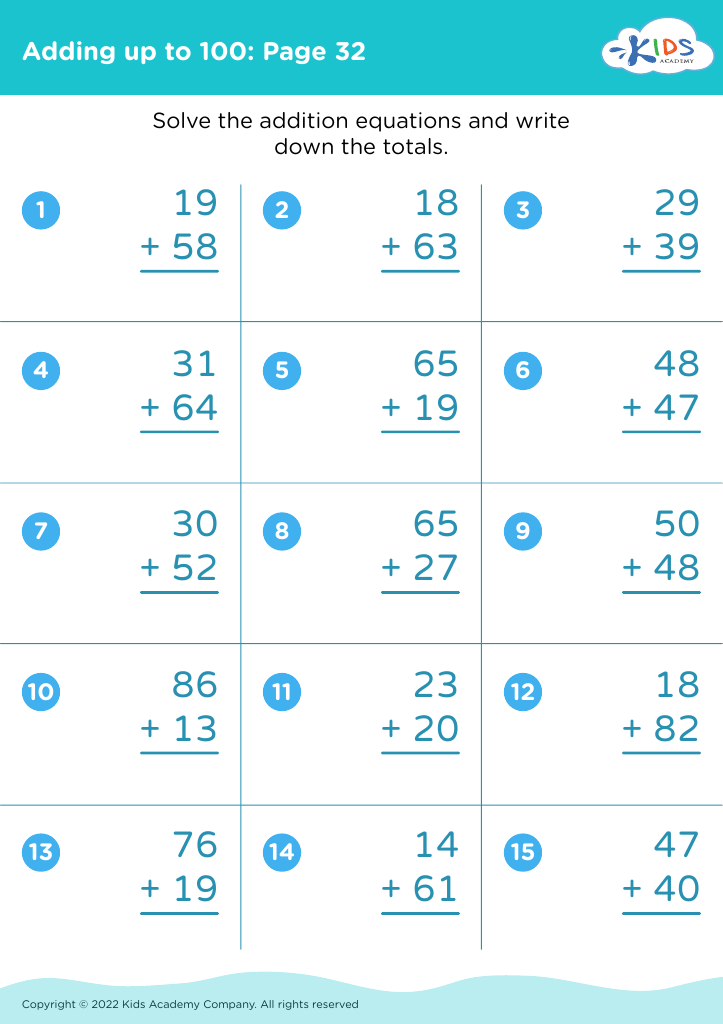
Adding up to 100: Page 32

Adding up to 100: Page 32

Adding up to 100: Page 32
Worksheet
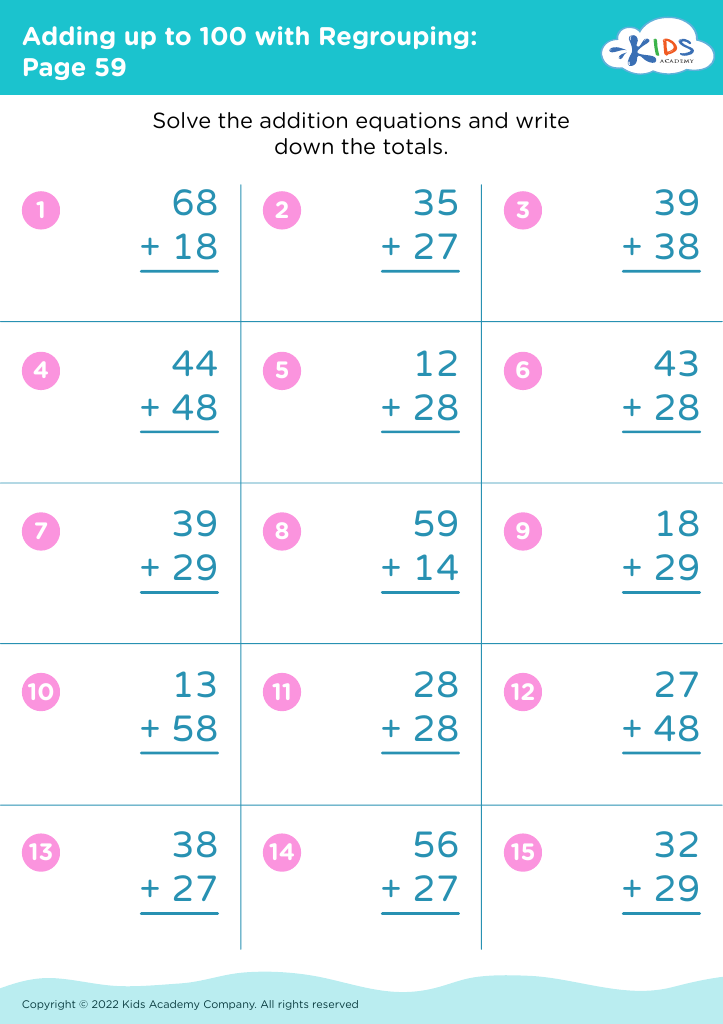
Adding up to 100 with Regrouping: Page 59
Worksheet
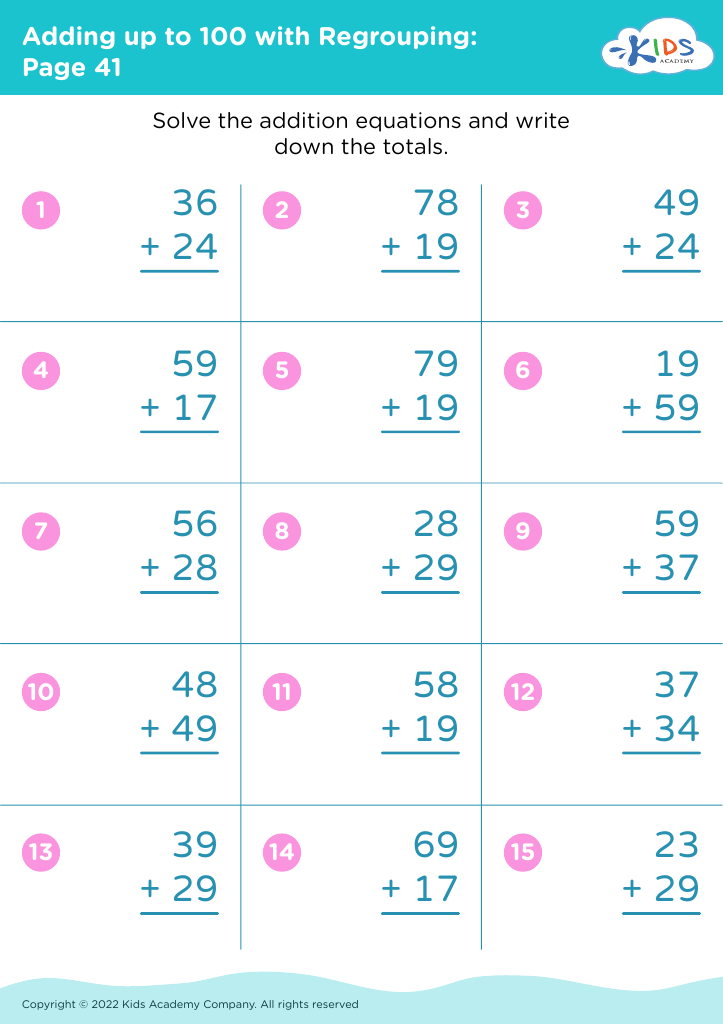
Adding up to 100 with Regrouping: Page 41
Worksheet
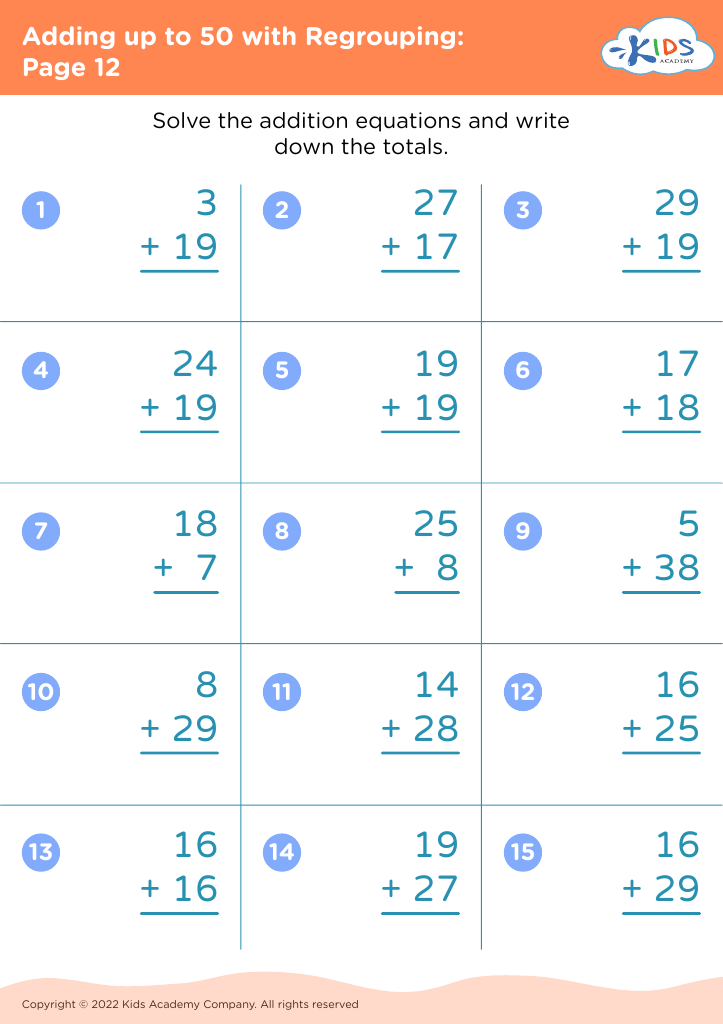
Adding up to 50 with Regrouping: Page 12
Worksheet
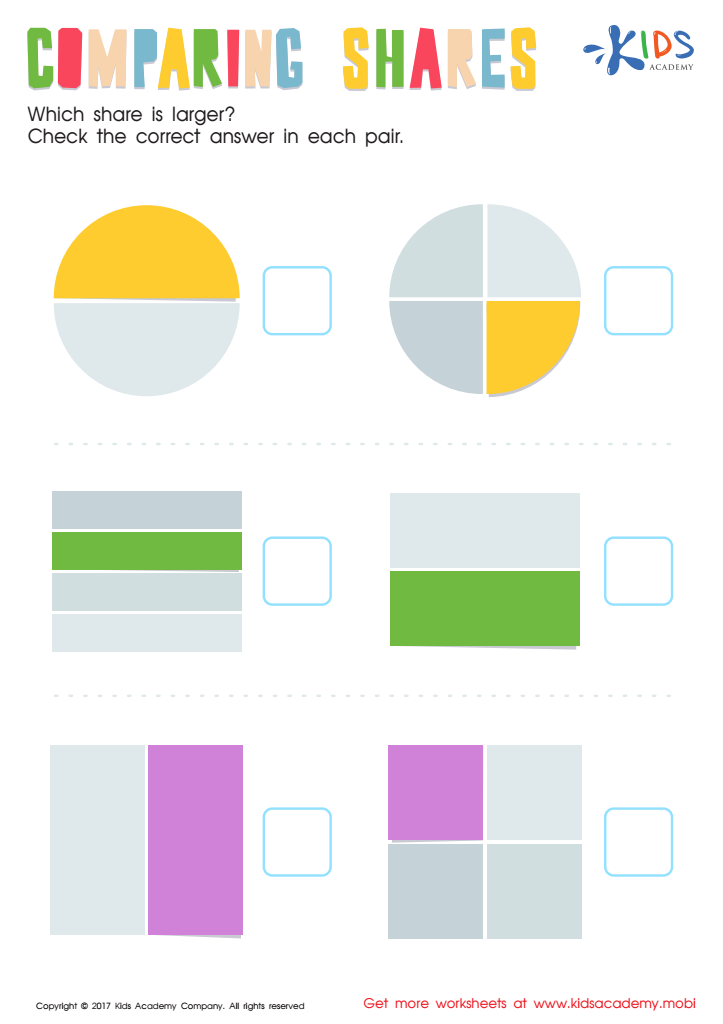
Comparing Shares Worksheet
Comparing Shares Worksheet
Can your students identify and draw shapes correctly? If so, this exercise may be too easy. For those who are still learning, extra help may be needed. The worksheet requires students to select which shape is larger in each pair; circles and squares are included.
Comparing Shares Worksheet
Worksheet
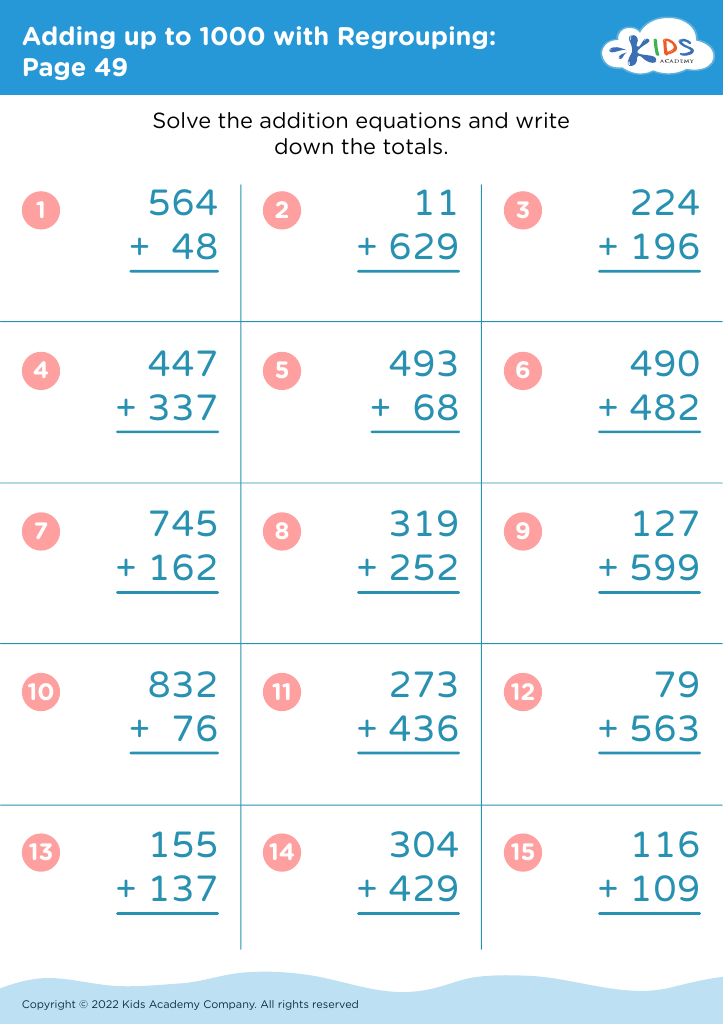
Adding up to 1000 with Regrouping: Page 49
Worksheet
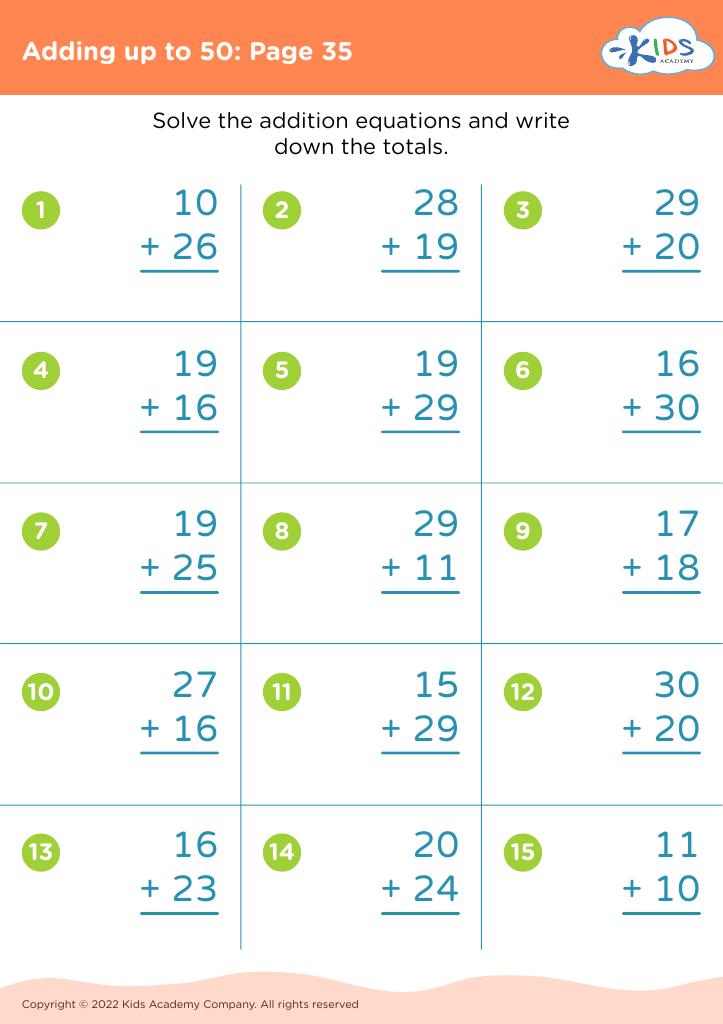
Adding up to 50: Page 35

Adding up to 50: Page 35

Adding up to 50: Page 35
Worksheet
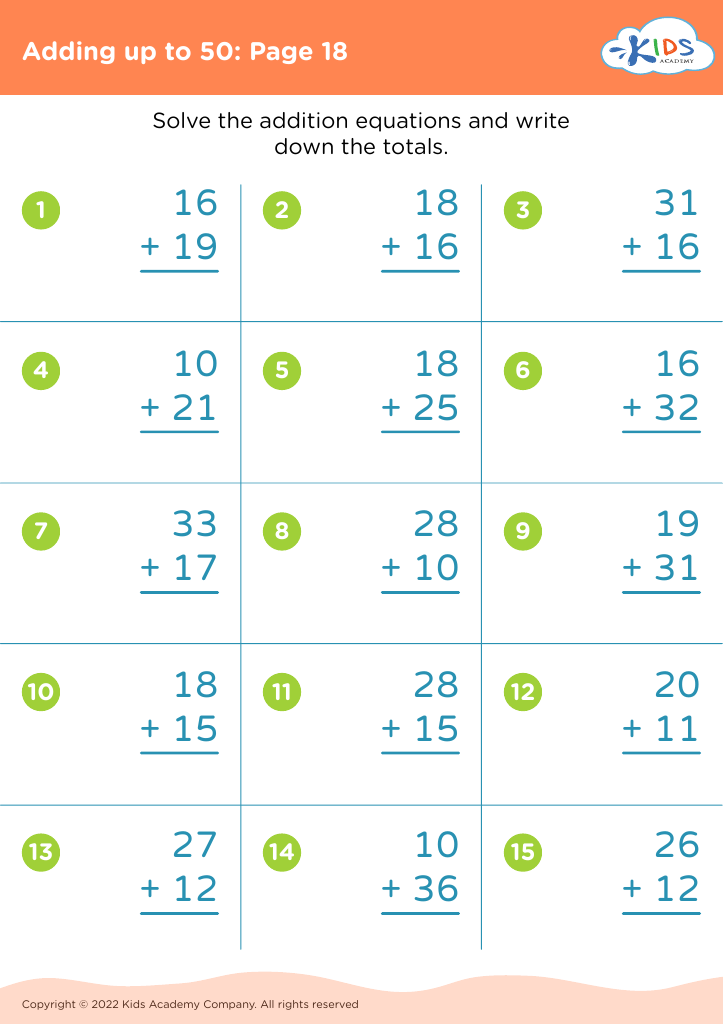
Adding up to 50: Page 18

Adding up to 50: Page 18

Adding up to 50: Page 18
Worksheet
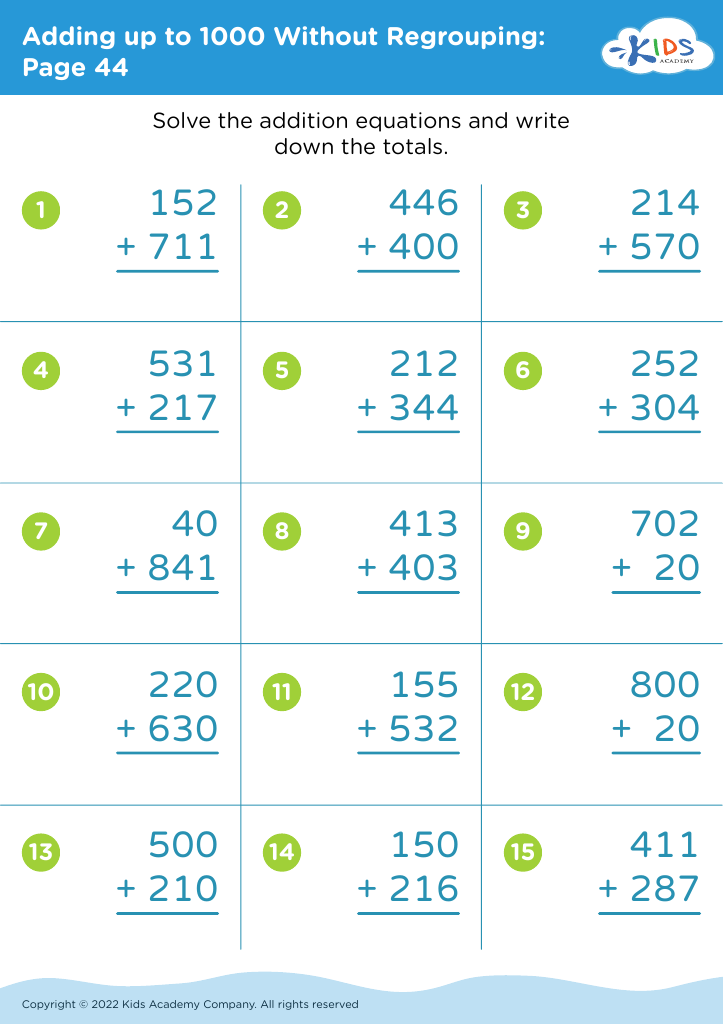
Adding up to 1000 Without Regrouping: Page 44
Worksheet
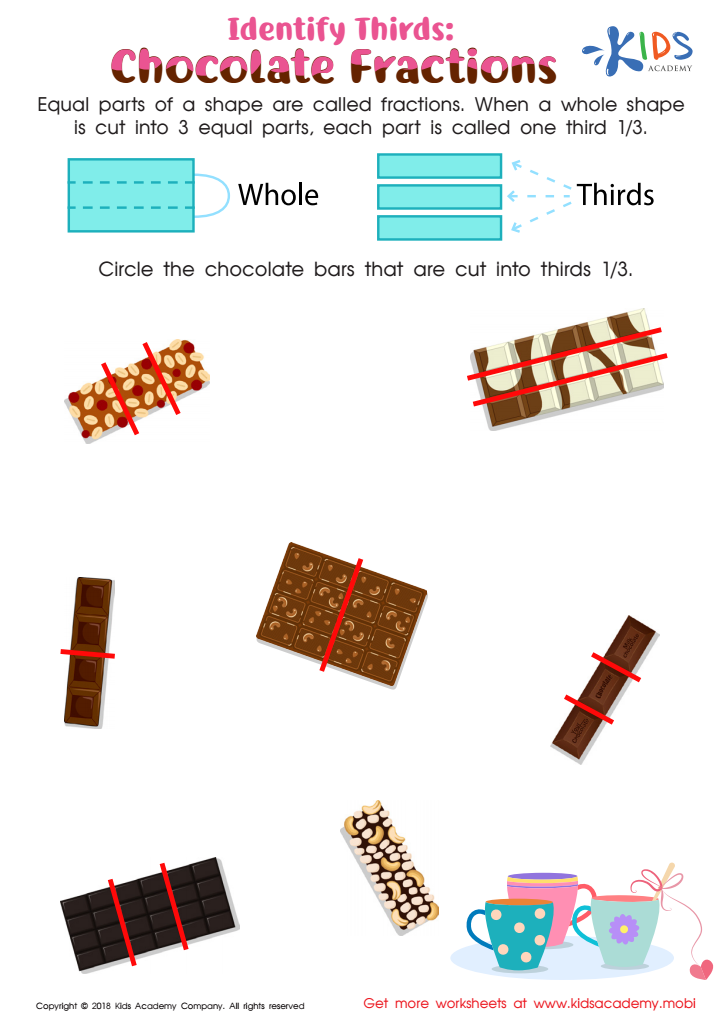
Identify Thirds: Chocolate Fractions Worksheet
Identify Thirds: Chocolate Fractions Worksheet

Divide shapes into equal parts and explain fractions to your child. Show them a worksheet with pictures of chocolate bars cut into thirds (1/3) and ask them to circle them.
Identify Thirds: Chocolate Fractions Worksheet
Worksheet
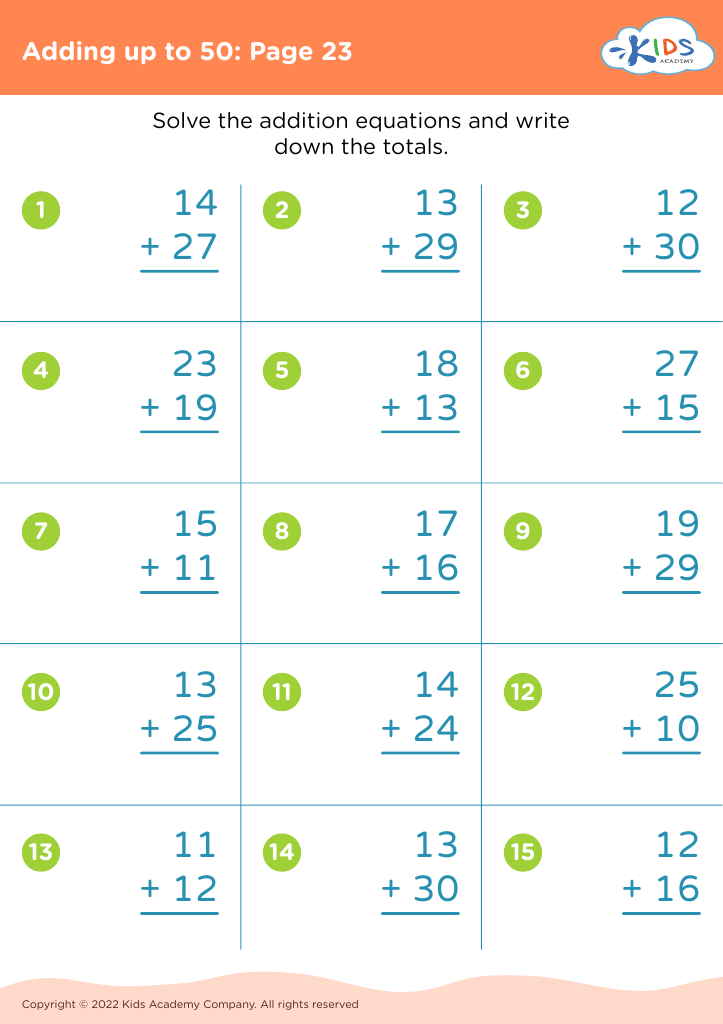
Adding up to 50: Page 23

Adding up to 50: Page 23

Adding up to 50: Page 23
Worksheet
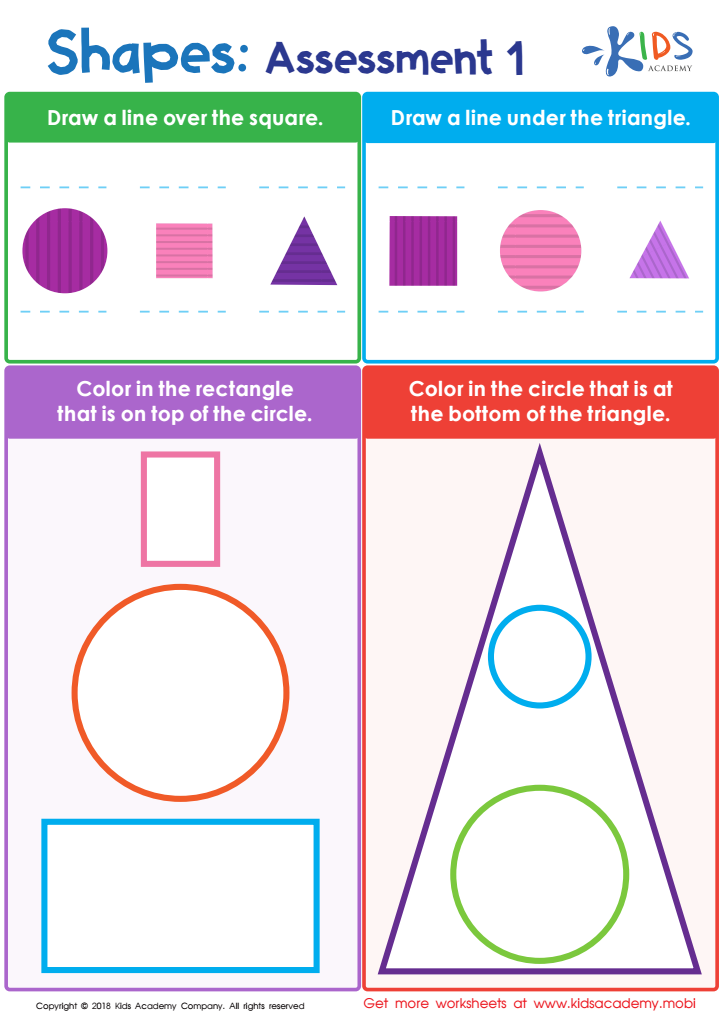
Shapes: Assessment 1 Worksheet


Shapes: Assessment 1 Worksheet

Test your students' understanding of the four basic shapes - circle, square, triangle and rectangle - with this assessment worksheet. Get them to draw a line over or under the shape indicated in the directions to show they can identify it correctly.
Shapes: Assessment 1 Worksheet

Worksheet


Understanding fractions at an early age is crucial for children's mathematical development and later success in more advanced math concepts. For parents and teachers, emphasizing fractions with young learners, ages 3-8, provides a foundation for numerical literacy. Integrating fractions into their learning journey enhances cognitive abilities such as logical thinking, reasoning, and problem-solving.

Early exposure to fractions helps children grasp the idea of parts making up a whole, which is essential for various real-world tasks including cooking, time management, and sharing equally. Furthermore, fractions are embedded in more advanced math topics like ratios, percentages, and algebra. By ensuring a solid grasp of fractions, we pave the way for smoother progression through such topics and minimize learning gaps.

Introducing fractions through play, engaging hands-on activities, and visual aids can make the math concept relatable and enjoyable. This approach not only demystifies fractions but also instills a positive attitude towards math. As fractions convey foundational numeric relationships, understanding them equips children with confidence and fluency in math, fortifying their future academic and everyday life experiences.

Ultimately, emphasizing fractions in early education sets up children for success, building a strong mathematical foundation and fostering key life skills that are valuable now and in innumerable future endeavors.