Understanding Math Concepts Math Worksheets for Ages 3-8
3 filtered results
-
From - To
Unlock your child's potential with our "Understanding Math Concepts" worksheets designed for ages 3-8. These engaging, age-appropriate resources help young learners build a strong foundation in essential math skills. From counting and number recognition to basic operations and problem-solving, our worksheets make learning fun and interactive. Each activity is crafted to foster critical thinking and enhance comprehension, allowing children to explore math concepts at their own pace. With colorful illustrations and a variety of exercises, your little ones will love practicing their math skills while developing confidence. Start their math journey today and watch them thrive in an exciting learning environment!
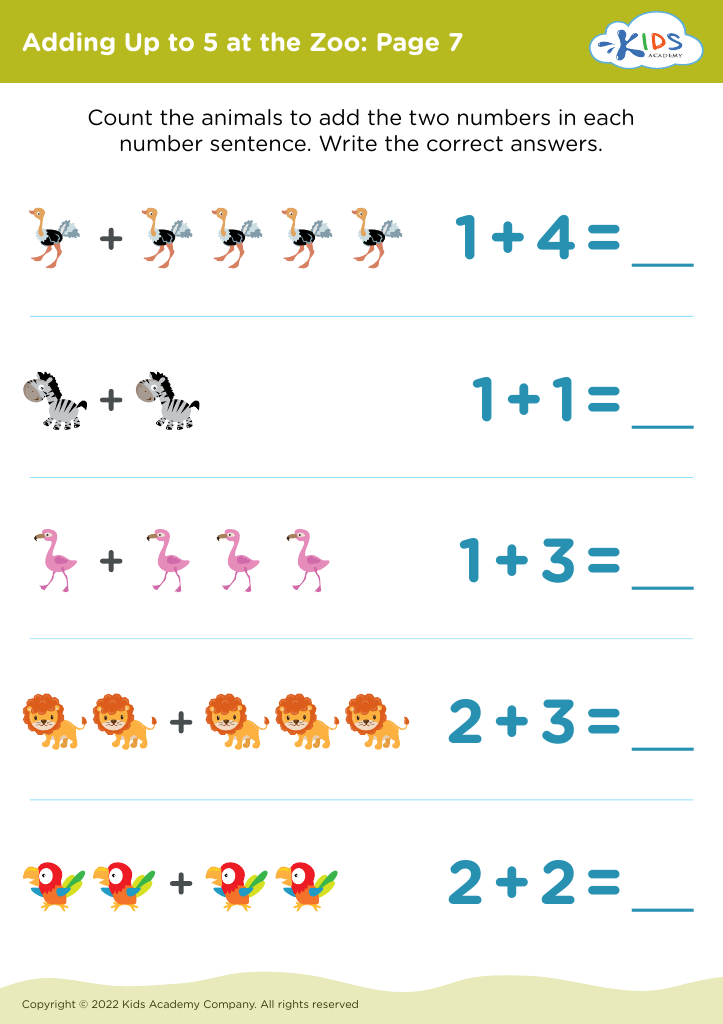
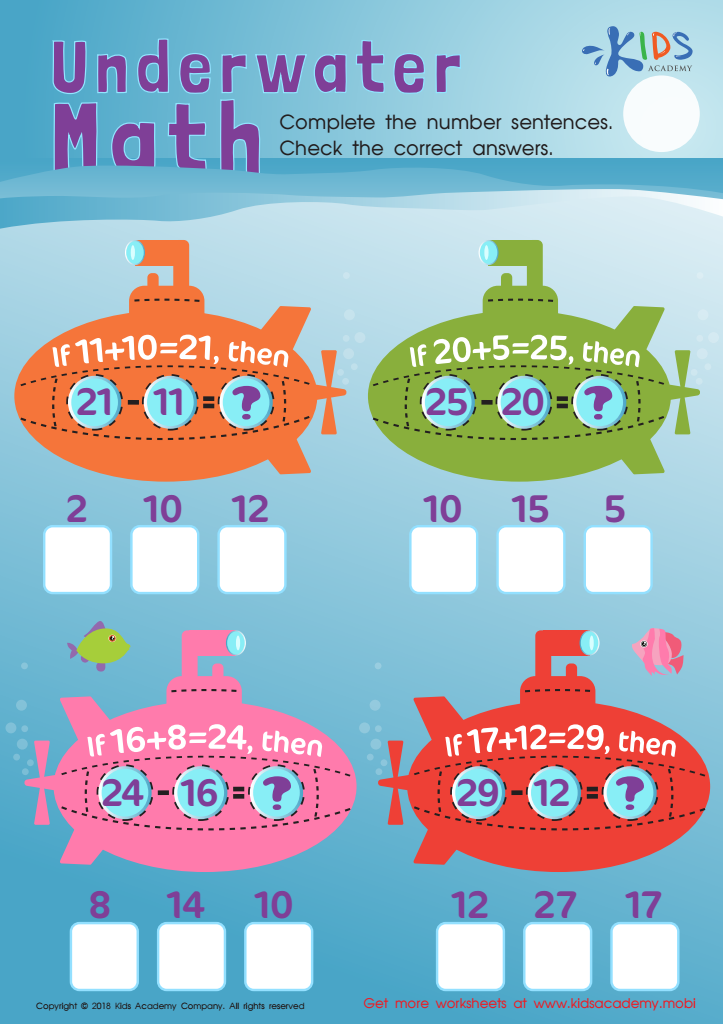
Addition and Subtraction: Underwater Math Worksheet
 Assign to My Students








Understanding math concepts for children ages 3-8 is crucial for their cognitive and academic development. At this formative stage, children build a foundation for critical thinking and problem-solving skills. Parents and teachers play a vital role in nurturing this understanding.
Firstly, early grasp of math concepts enhances children's ability to recognize patterns, shapes, and quantities, fundamentally enhancing their overall cognitive skills. This foundational knowledge paves the way for more advanced mathematical concepts later, preventing learning gaps that can hinder progress in school.
Moreover, integrating math learning into everyday activities makes it fun and engaging. Simple activities, like counting toys, measuring ingredients while cooking, or exploring shapes during play, can promote a positive attitude toward math. When children see math as a part of their daily lives, they’re more likely to enjoy and excel in it.
Additionally, early math skills contribute to overall academic success, as they correlate closely with literacy, science, and even social skills. Parents and teachers who prioritize understanding math concepts foster an environment that values learning, encouraging children to become confident learners equipped to tackle challenges beyond early education. Hence, investing in math understanding is vital for a child’s holistic development.








