Understanding measurements Math Worksheets for Ages 3-8 - Page 2
26 filtered results
-
From - To
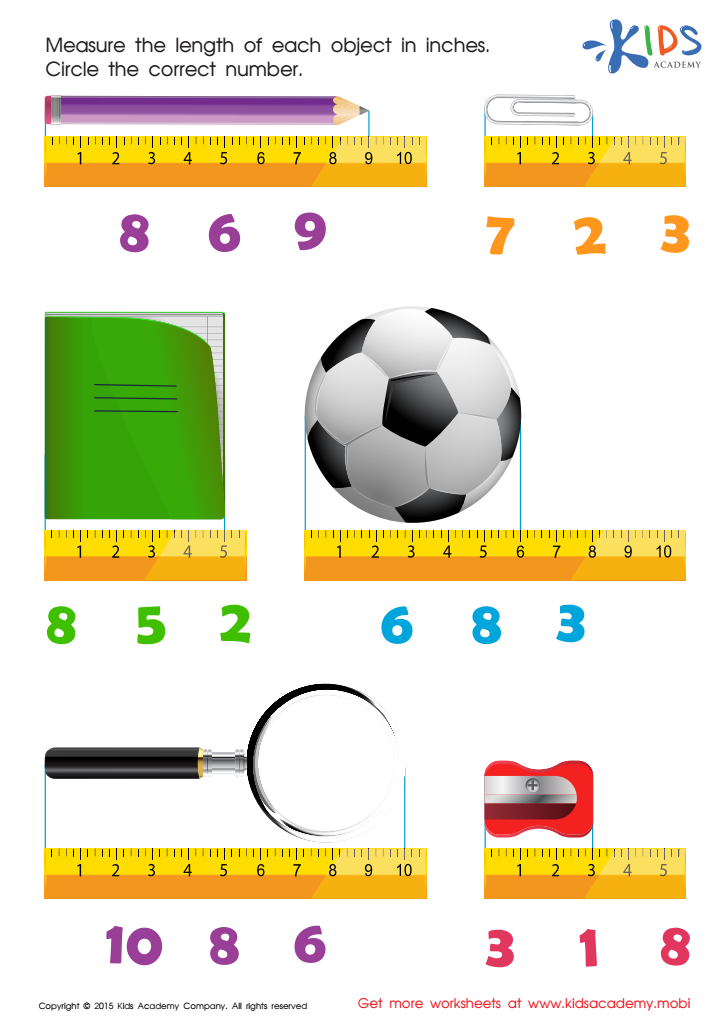
Learning measuring objects in inches Worksheet
 Assign to My Students
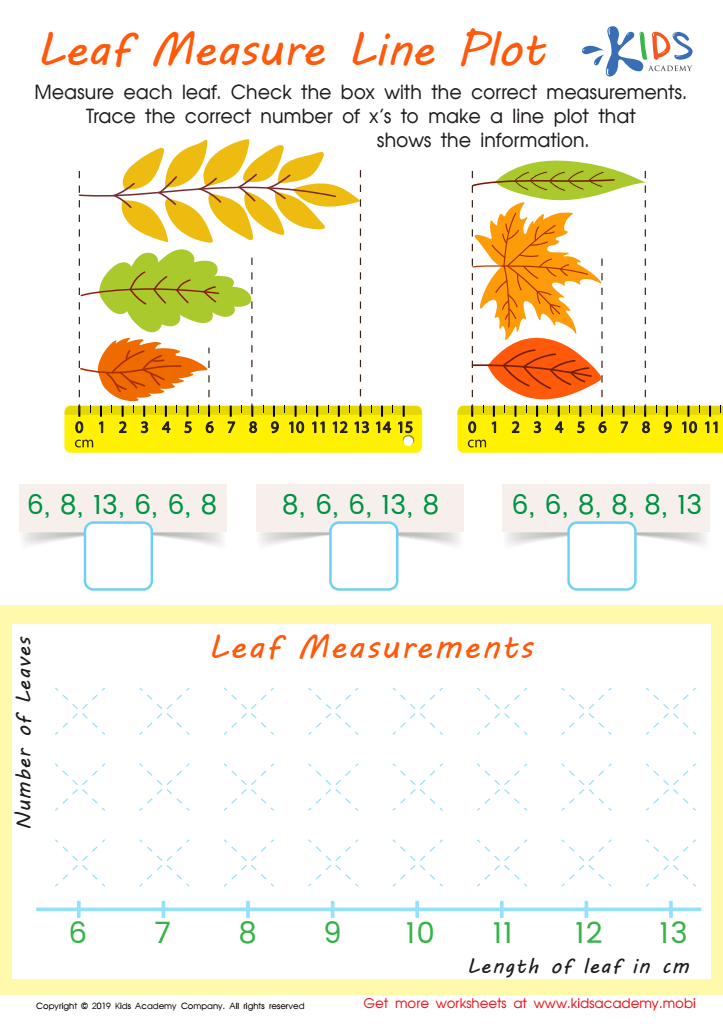
Leaf Measure Line Plot Worksheet






Understanding measurements in math for children ages 3-8 is crucial for their cognitive development and everyday functioning. At this foundational stage, children are curious about the world around them, and measurement helps them make sense of it. Introducing concepts like length, weight, volume, and time fosters critical thinking and problem-solving skills.
For parents and teachers, focusing on measurement teaches children to quantify relationships between objects and compare different attributes. This understanding lays the groundwork for more advanced math skills needed in later years, such as addition and subtraction, geometry, and data analysis.
Additionally, measurement skills extend beyond mathematics; they are applicable in real-world contexts like cooking, shopping, and even understanding time management. This practical application reinforces learning and keeps children engaged.
Moreover, engaging in measurement fosters occurrences of hands-on learning through activities like cooking, building, or even gardening. These experiences enhance a child's motivation to explore and discover, nurturing a lifelong appreciation for learning.
Ultimately, by prioritizing measurement in early education, parents and teachers equip children with essential skills that not only boost academic success but also prepare them for everyday challenges in real life.








