
Understanding shapes Math Worksheets for Ages 3-8
5 filtered results
Difficulty Level
Grade
Age
-
From - To
Subject
Activity
Standards
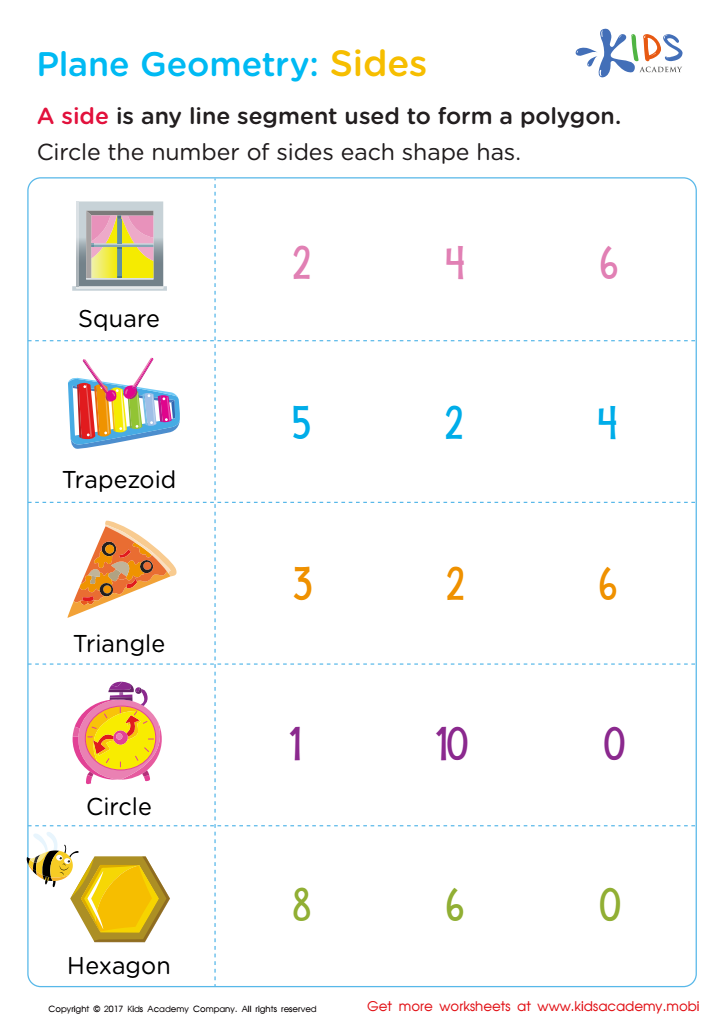
Discover the joy of learning with our "Understanding Shapes" math worksheets, designed for children aged 3-8. These engaging and interactive worksheets help young learners identify, compare, and categorize shapes in a fun and supportive environment. Featuring colorful illustrations and age-appropriate activities, our resources make shape learning an enjoyable experience. Perfect for home or classroom use, these worksheets build essential foundational math skills while fostering creativity and critical thinking. Use them to enhance your child's understanding of circles, squares, triangles, and more. Start your child's adventure in geometry today and watch their confidence and skills grow!
Favorites
With answer key
Interactive
 Assign to My Students
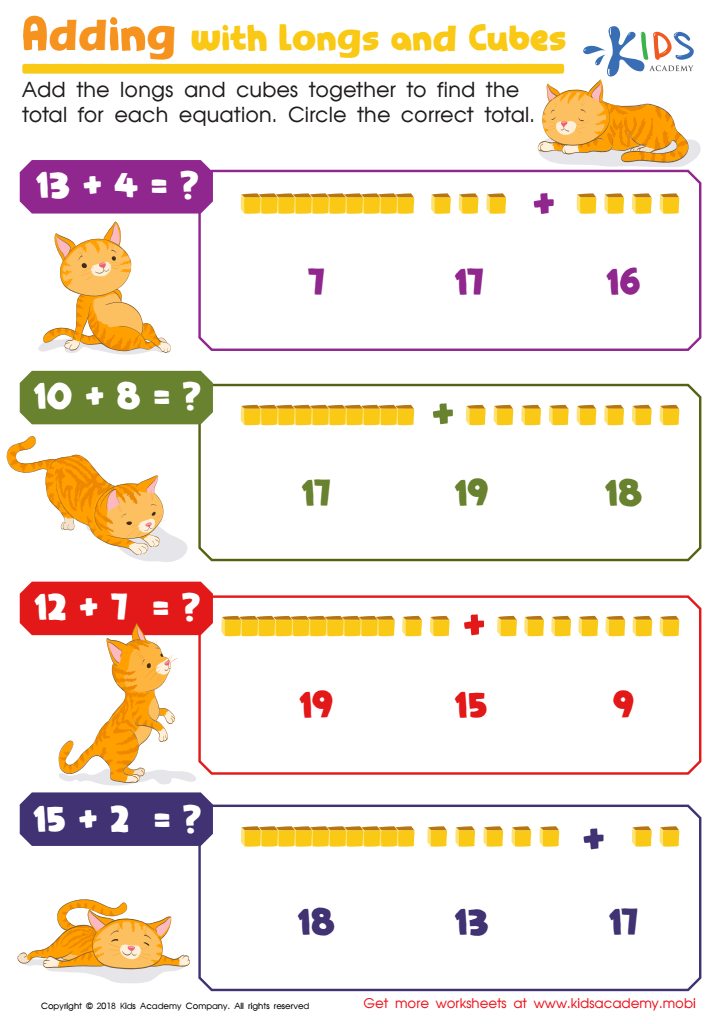
Adding With Longs and Cubes Worksheet
Math might not be your child's favorite, but they must master it to advance. If they're having difficulties or don't like it, use this worksheet to make it easier. Have them add longs and cubes together to find the total for each question, then circle the correct answer. This exercise can help make math experiences better.
Adding With Longs and Cubes Worksheet
Worksheet
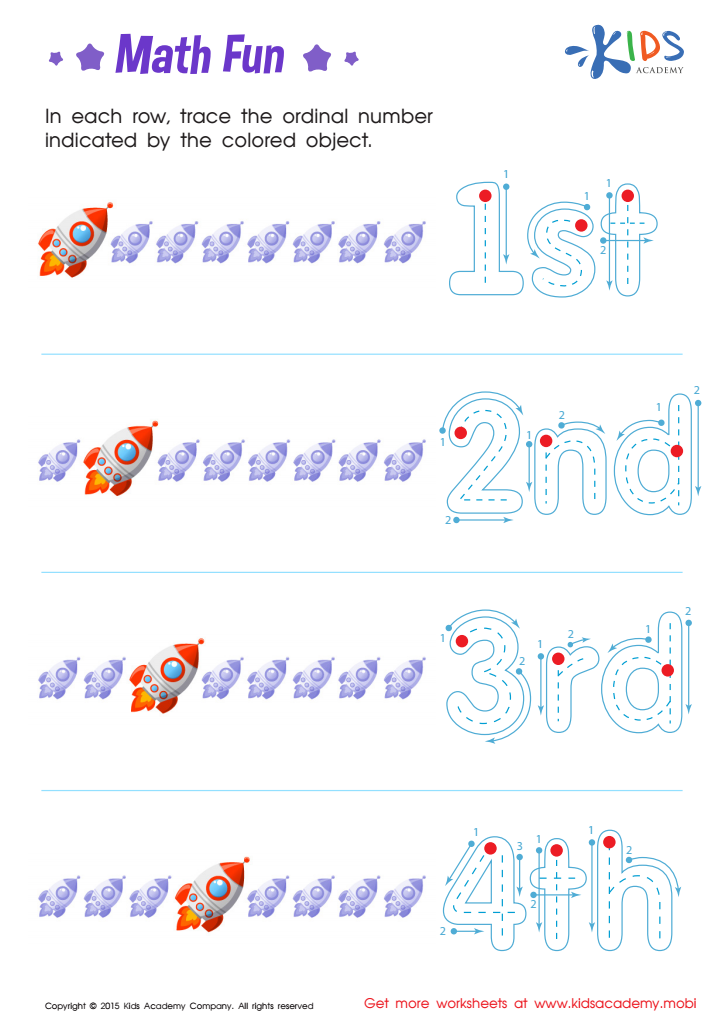
Ordinal Numbers: Math Fun Worksheet
Have fun learning ordinal numbers with our spaceship worksheet! Kids learn best while having fun and with repetition. Featuring vibrant spaceships, your child will understand placement, recognize and write ordinal numbers, and make connections. Understanding ordinal numbers leads to more advanced math concepts. Get your math whiz ready for preschool with our addition/subtraction worksheets! Have fun learning ordinal numbers and master them in no time!
Ordinal Numbers: Math Fun Worksheet
Worksheet
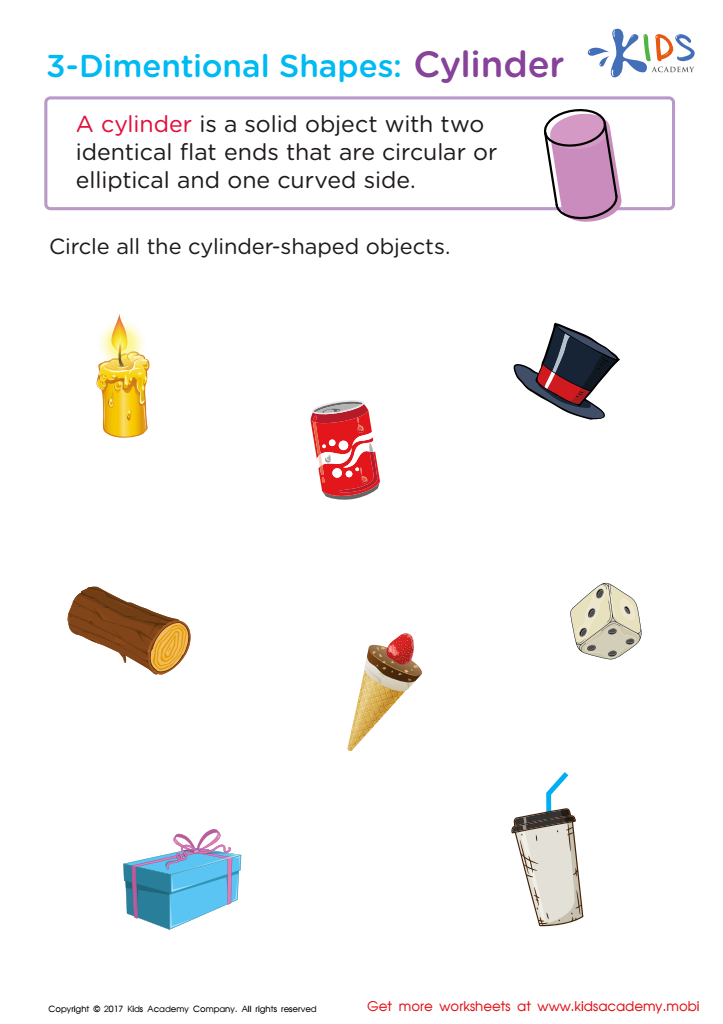
Three–Dimensional Shapes: Cylinder Worksheet
Introduce your toddler to geometry and 3D cylinders with this printable and watch their knowledge grow. It will help them recognize, define, and identify cylinders, as well as differentiate between 3D objects.
Three–Dimensional Shapes: Cylinder Worksheet
Worksheet
Join Kids Academy for Free
Who is primarily going to use this learning content?







Understanding shapes is a fundamental aspect of early mathematics education for children ages 3-8, and it's crucial for several reasons. Firstly, shape recognition lays the groundwork for spatial awareness, which helps children understand their environment and navigate it effectively. Recognizing shapes such as circles, squares, and triangles enhances their ability to categorize and organize objects, fostering cognitive skills.
Moreover, early exposure to shapes cultivates problem-solving abilities as children begin to identify relationships and patterns among different shapes. Engaging with shapes also supports language development, allowing children to describe their characteristics and different dimensions, enriching their vocabulary.
Shapes also form the basis for complex mathematical concepts introduced later, such as geometry. By understanding shapes at a young age, children build confidence in tackling advanced math as they progress in their education.
Additionally, the integration of shapes into play-based learning nurtures creativity and critical thinking skills. Whether it’s through arts and crafts, games, or outdoor activities, recognizing and manipulating shapes encourages children to explore and experiment.
Ultimately, investing time in shape recognition and understanding today will yield future benefits in children's academic journey, social interactions, and real-world problem-solving skills.








