Understanding times tables Math Worksheets for Ages 3-8
6 filtered results
-
From - To
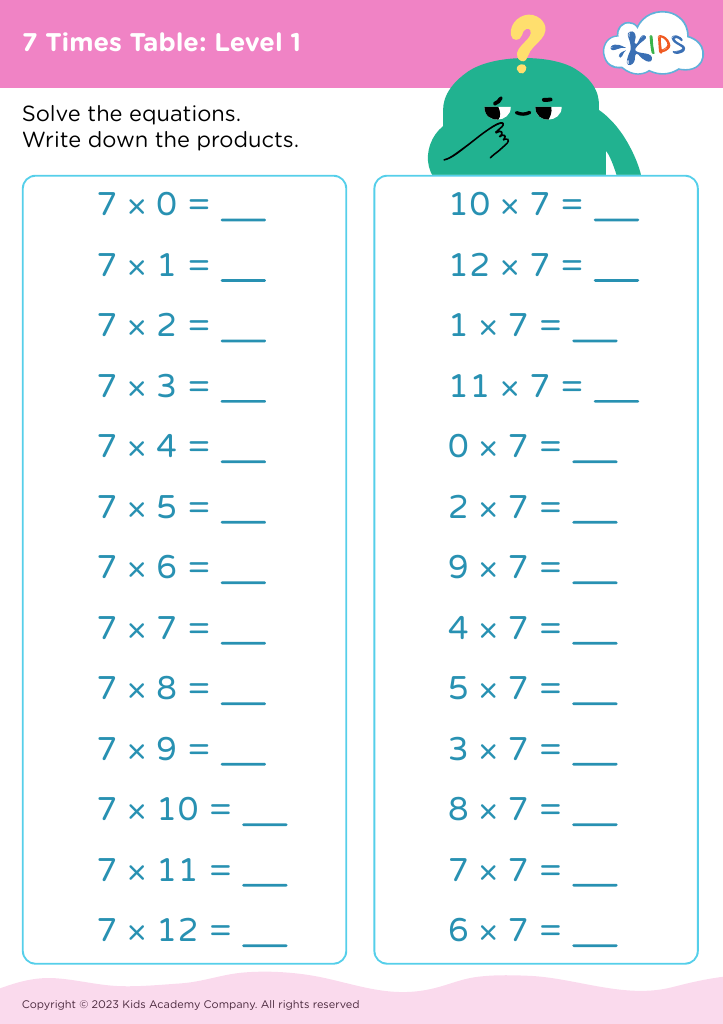
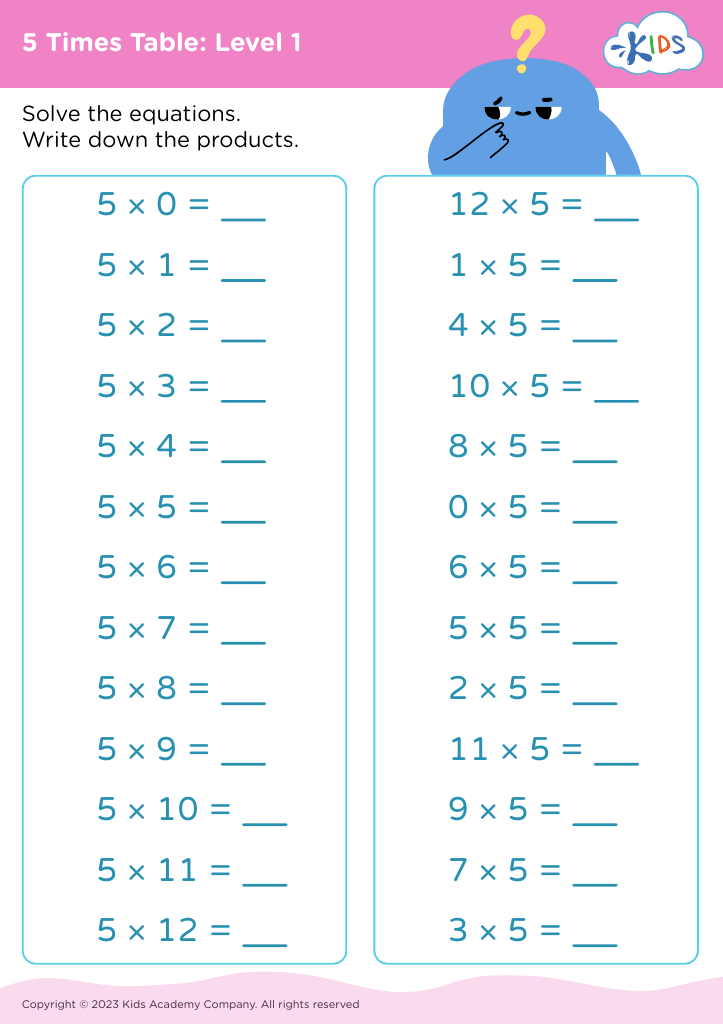
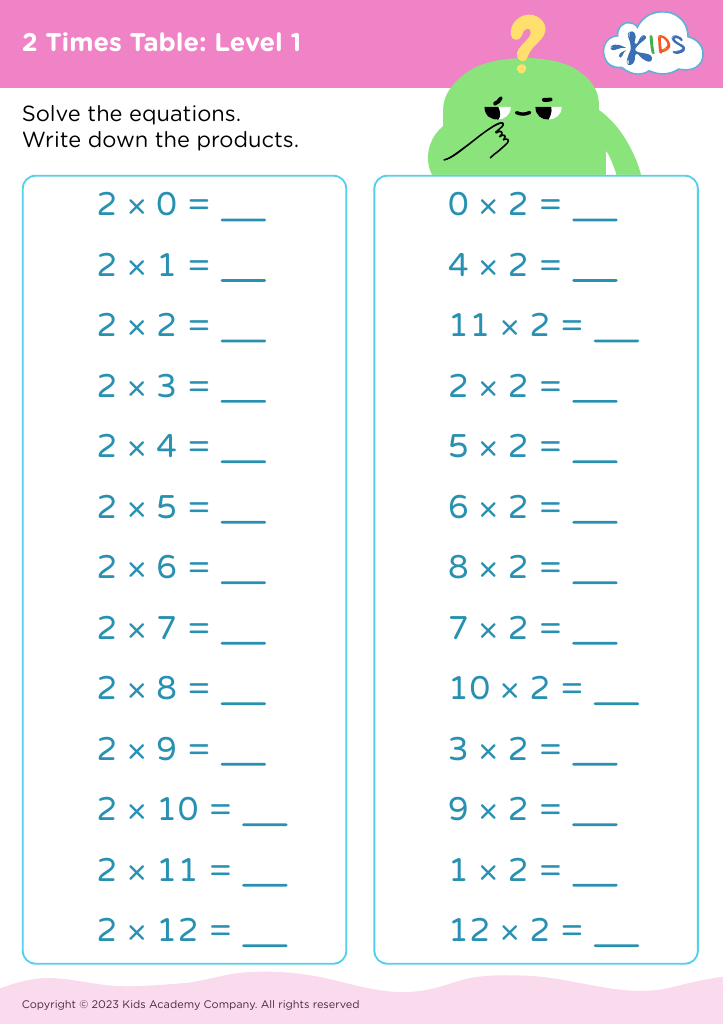
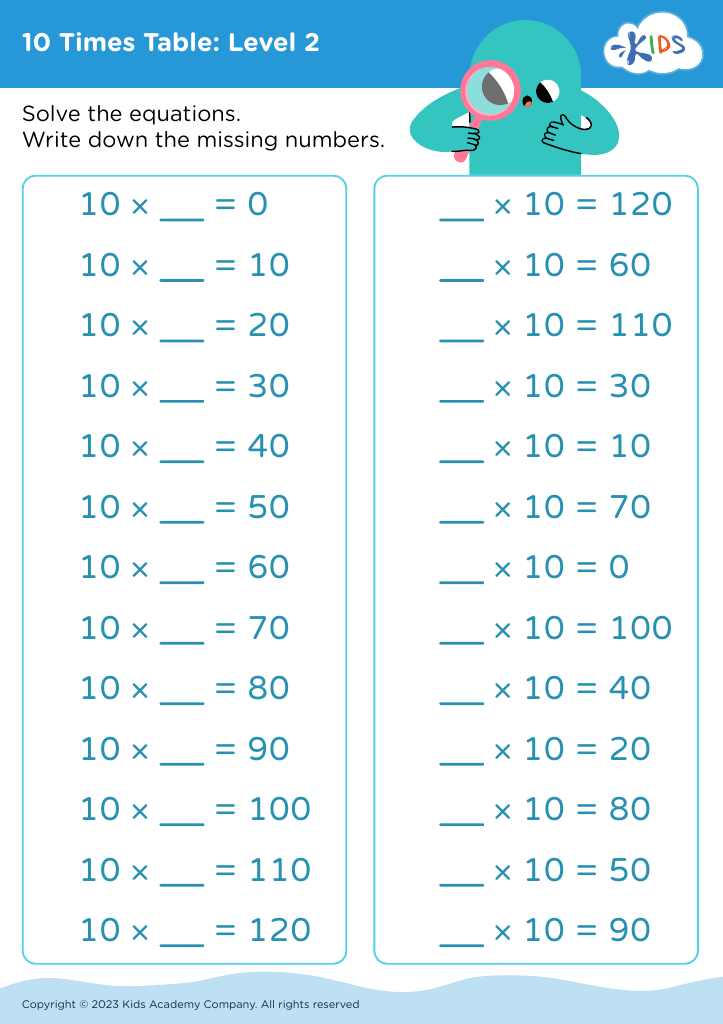
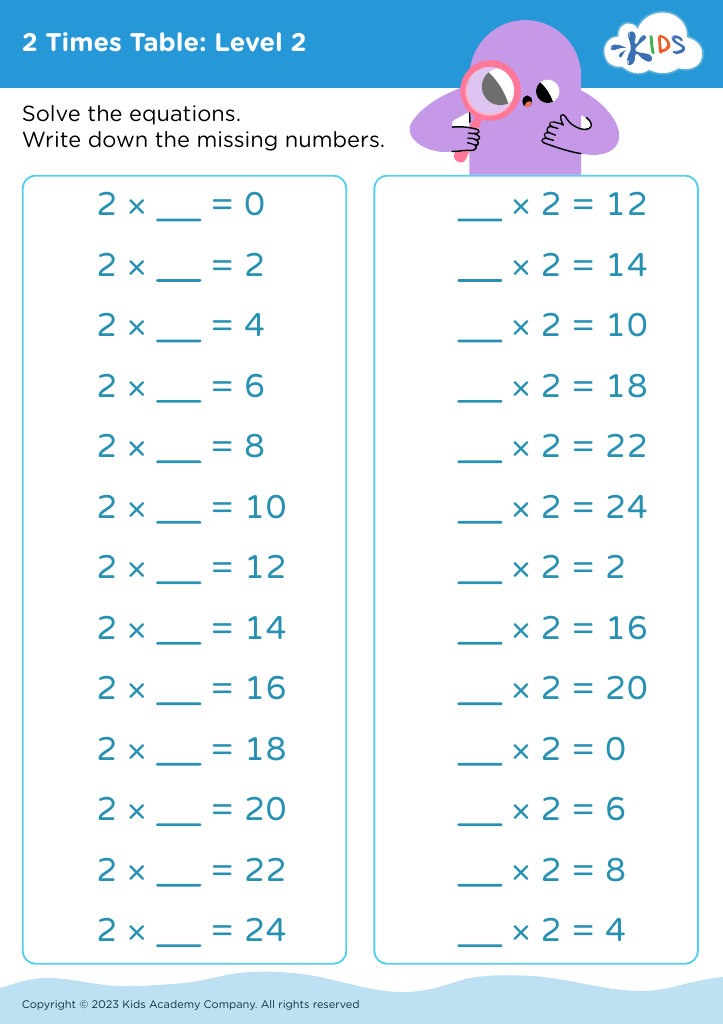
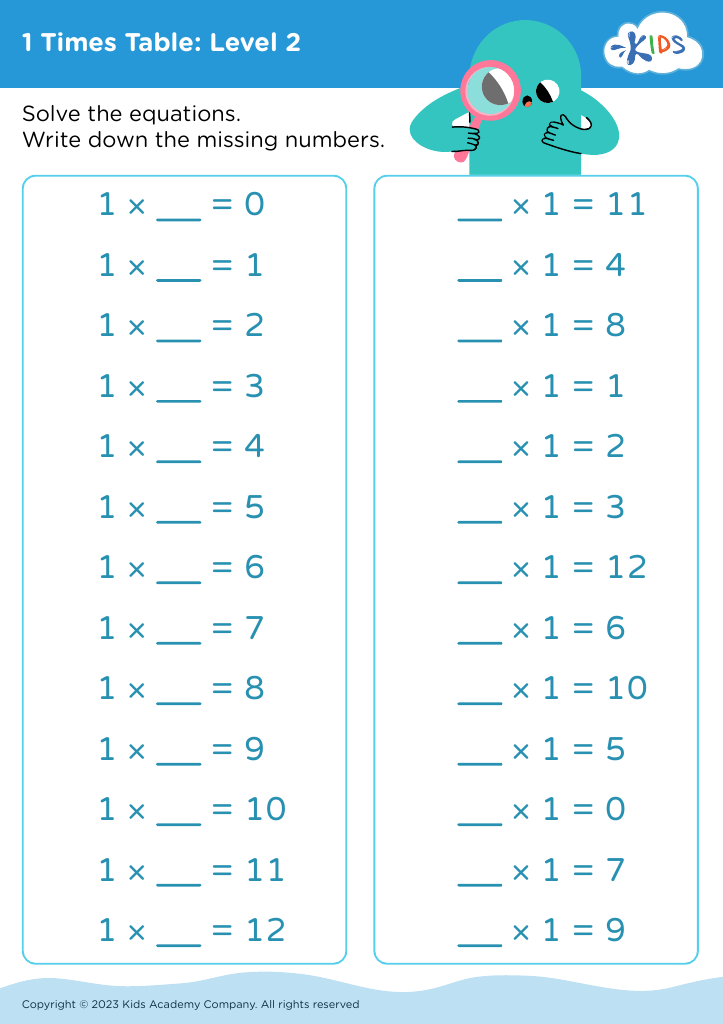
Unlock your child's potential with our "Understanding Times Tables Math Worksheets" designed specifically for children ages 3-8. Our engaging and colorful worksheets help young learners grasp essential multiplication concepts through fun and interactive activities. These resources cater to varying skill levels, ensuring that each child can learn at their own pace. By practicing with our worksheets, children will build a strong mathematical foundation, boost their confidence, and develop crucial problem-solving skills that will aid them throughout their educational journey. Equip your little ones with the knowledge they need for future success in math with our easy-to-follow times tables worksheets!






.jpg)

Understanding times tables is essential for children aged 3-8 as it lays a critical foundation for their mathematical understanding and overall cognitive development. At this age, children begin to grasp basic arithmetic concepts, and having a solid understanding of multiplication equips them for more complex math as they advance in their education. Mastering times tables enhances number sense, enabling students to visualize and manipulate numbers effectively.
Furthermore, learning times tables fosters problem-solving abilities. Recognizing patterns in multiplication can help young learners make sense of math in relatable terms, boosting their confidence. This confidence is crucial, as a positive attitude towards math can deter future math anxiety or aversion.
For parents and teachers, emphasizing the importance of times tables supports collaboration in reinforcing learning at home and school. Engaging children in fun, interactive games and activities can make mastering multiplication enjoyable, making it easier for them to commit these facts to memory.
Ultimately, a strong grasp of multiplication not only supports future academic success in mathematics but also develops critical thinking skills essential for everyday life, creating a well-rounded educational experience. Encouraging children at this early stage is key to fostering lifelong learners excited about math.








