
Hand-eye Coordination Matching Worksheets for Ages 3-8
3 filtered results
Difficulty Level
Grade
Age
-
From - To
Subject
Activity
Standards
Enhance your child's development with our Hand-eye Coordination Matching Worksheets for Ages 3-8. Expertly designed to improve visual tracking, fine motor skills, and cognitive abilities, these engaging worksheets feature a variety of fun, educational activities tailored to young learners. Kids will enjoy matching shapes, patterns, and colors while sharpening their focus and precision. Perfect for home or classroom use, our printable resources are an excellent way to support foundational learning stages. Build confidence and capability in your child today with our easy-to-use, interactive matching worksheets!
Favorites
With answer key
Interactive
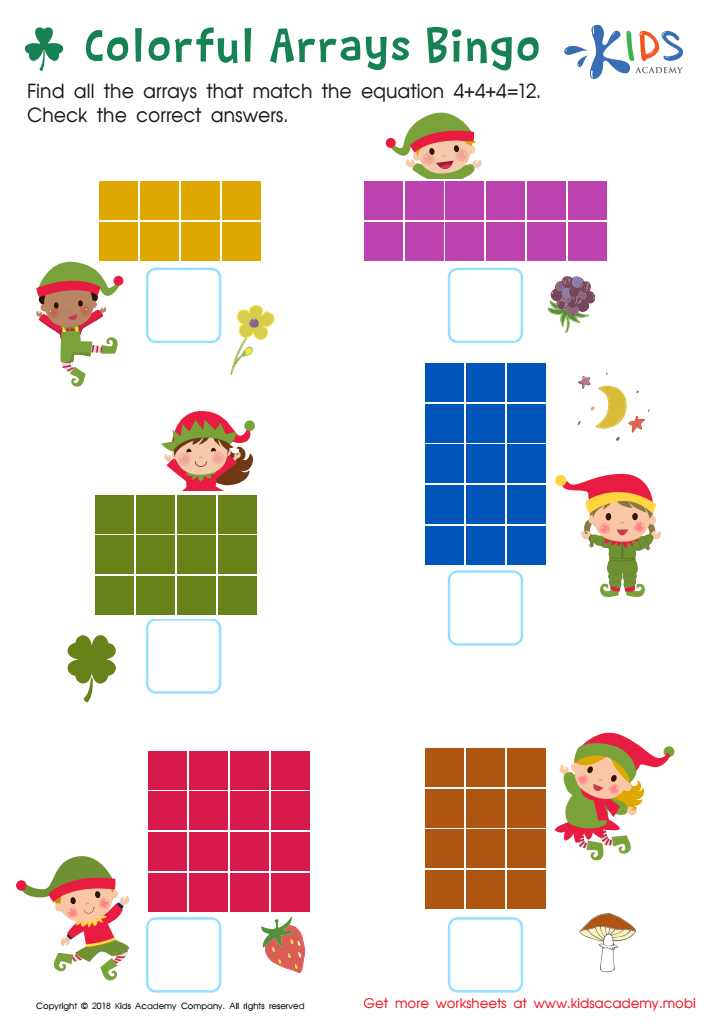
Colorful Arrays Bingo Worksheet
This worksheet stimulates thinking about arrays and how to represent them. Instruct students to count the 6 arrays and find which ones sum up to 12. Ask them to check the answers for accuracy.
 Assign to My Students
Colorful Arrays Bingo Worksheet
Worksheet
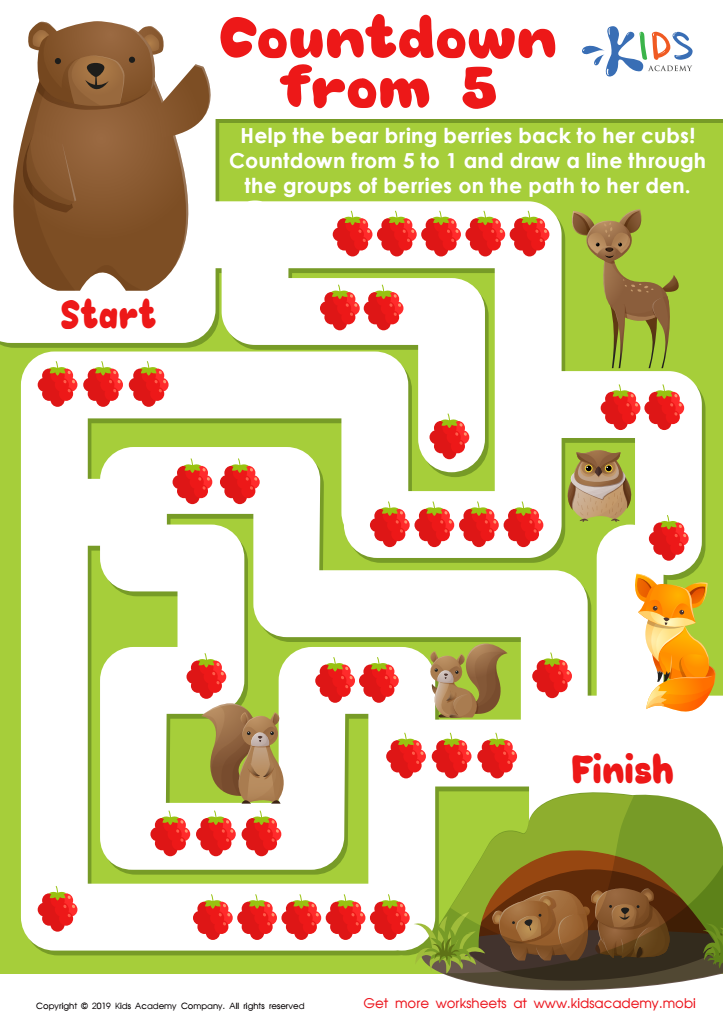
Countdown from 5 Worksheet
Encourage your kids to help Mama Bear find her way to her den! Ask them to count down from 5 to 1 and draw a line through the groups of berries on the path. Point them to the picture of the friendly bears. A fun and safe way to enjoy these cute animals!
Countdown from 5 Worksheet
Worksheet
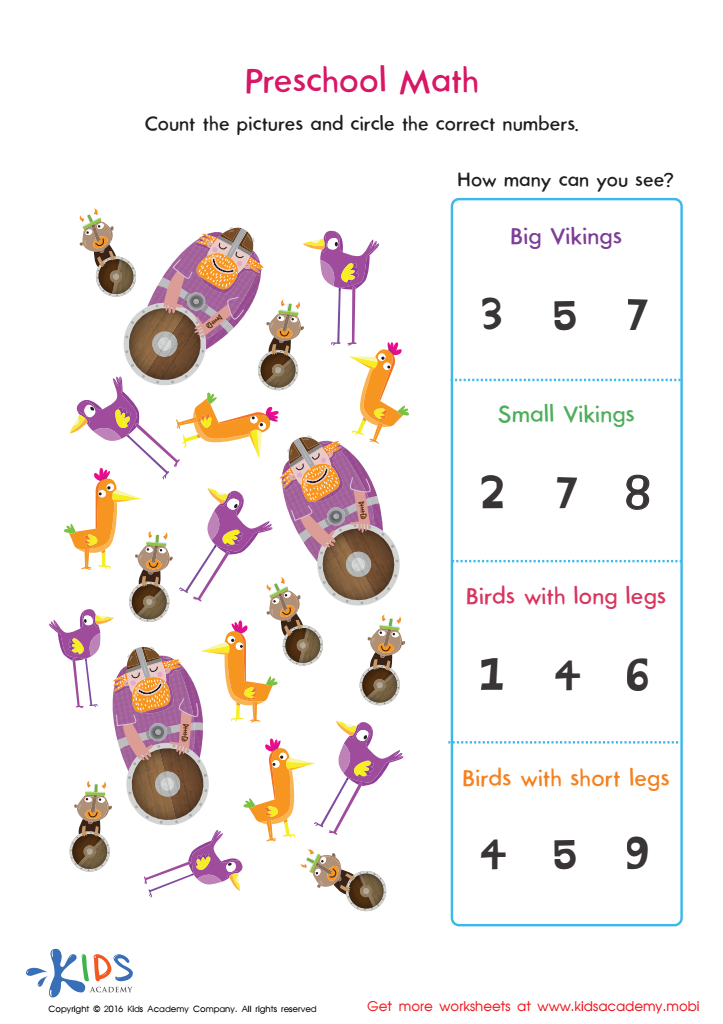
Counting Worksheet: Preschool Math
Worksheet
Join Kids Academy for Free
Who is primarily going to use this learning content?








Hand-eye coordination is a crucial developmental skill for children ages 3-8, forming the foundation for various academic and daily life activities. Parents and teachers should prioritize hand-eye coordination because it directly influences a child's ability to perform tasks that require synchronization between vision and hand movements. For instance, activities such as writing, cutting with scissors, catching a ball, or using a computer mouse depend on proficient hand-eye coordination.
By focusing on these skills early, you can significantly improve fine motor abilities, crucial for writing and manipulating small objects. Enhanced hand-eye coordination aids in smoother and more efficient performance of routine tasks, boosting a child’s confidence and independence. Practicing these skills also fosters cognitive development. When children engage in activities that require coordination, they simultaneously hone their problem-solving abilities, spatial awareness, and concentration.
Moreover, these coordinated activities can be fun and engaging for young learners, promoting an overall positive attitude towards learning. Activities like puzzles, building blocks, and interactive games combine play with purposeful developmental benefits. Early intervention and continuous practice can identify potential developmental delays and address them sooner, ensuring children have the strategies and support they need to succeed in school and beyond.
Investing time in developing hand-eye coordination sets a vital foundation for lifelong skills, making everyday tasks more manageable and less frustrating while paving the way for academic and personal growth.








