Basic measurement skills Measurement Worksheets for Ages 3-8
3 filtered results
-
From - To
Boost your child's understanding of basic measurement skills with our engaging worksheets, tailored for ages 3-8. Designed to make learning fun, these printables introduce children to the concepts of length, weight, and volume through interactive activities. Each worksheet is crafted to enhance critical thinking and problem-solving abilities, building a solid foundation in math. Perfect for early learners, the colorful and easy-to-follow exercises help kids grasp essential measurement concepts at their own pace. Support your child's academic growth with our comprehensive collection of measurement worksheets, fostering confidence and curiosity in young minds.
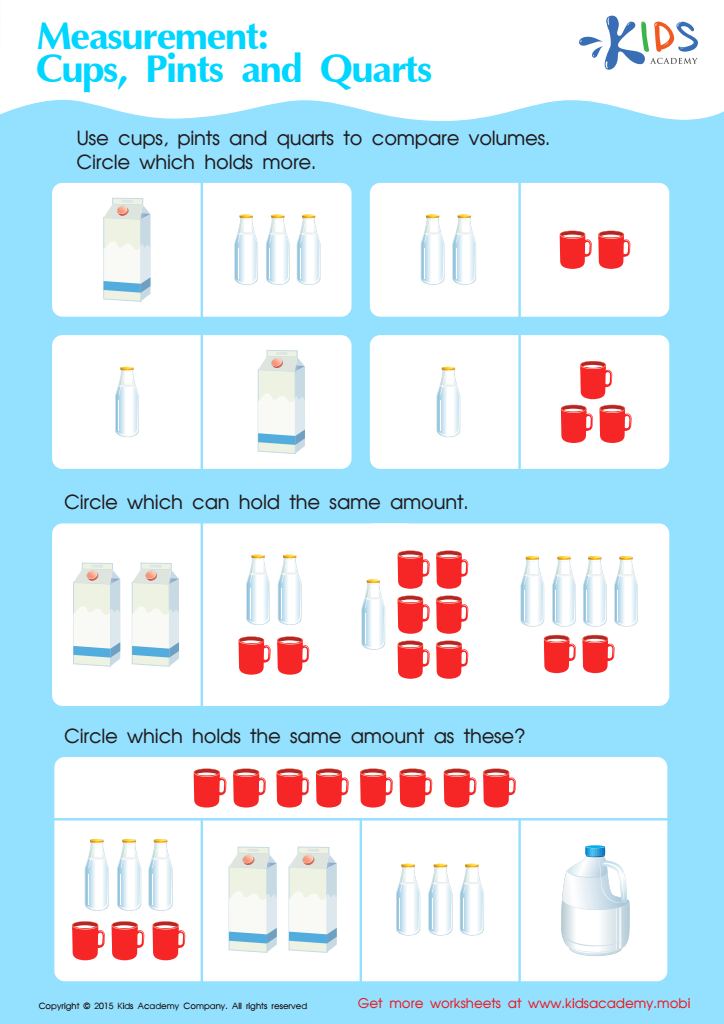
Measurement: Compare Volumes Worksheet
 Assign to My Students
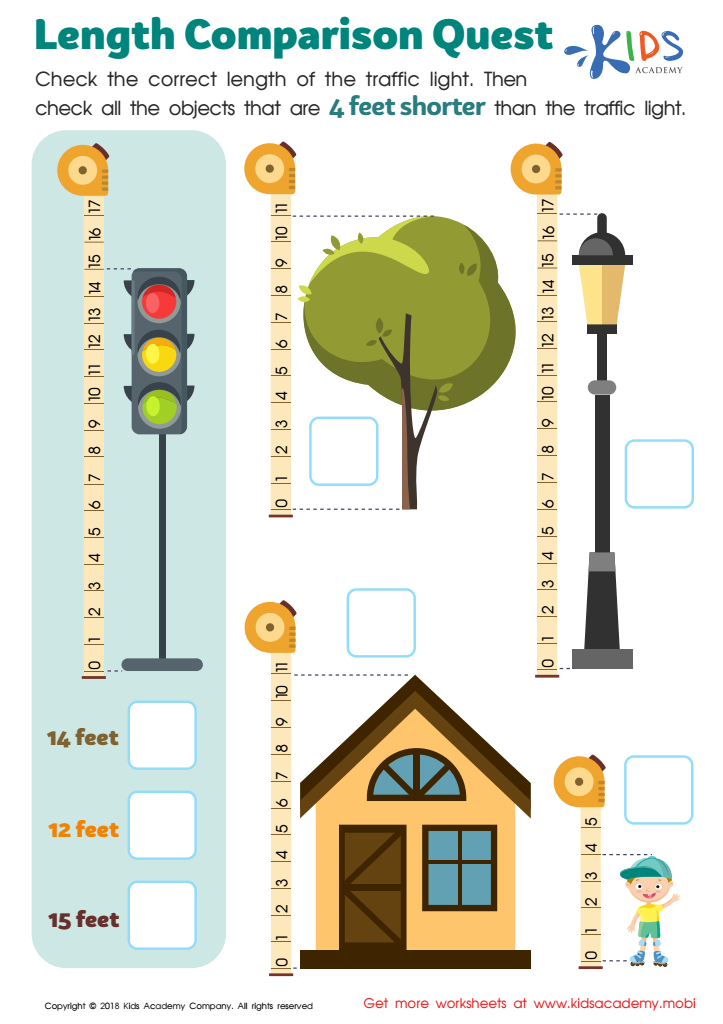
Length Comparison Quest Worksheet
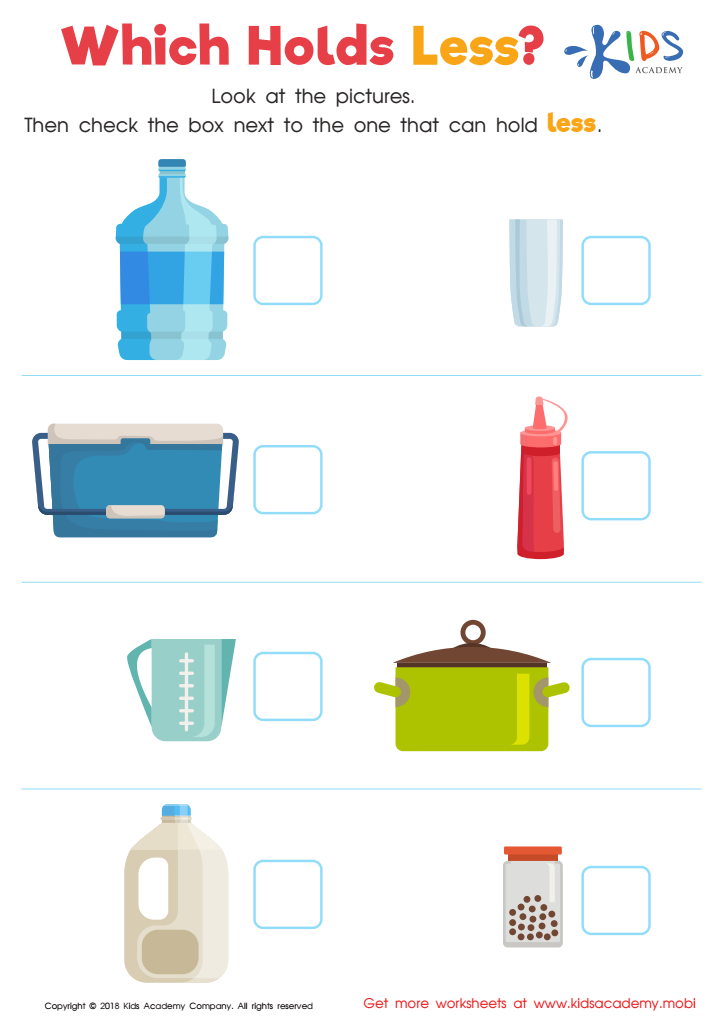
Which Holds Less? Worksheet








Basic measurement skills are fundamental building blocks for young learners aged 3-8, essential for both academic success and day-to-day life. Parents and teachers should prioritize the development of these skills for several important reasons.
First, measurement activities, such as comparing lengths, weights, and volumes, foster critical thinking and problem-solving abilities. These activities help children understand and engage with the world around them. Early hands-on experiences with measurement concepts enhance spatial awareness and lay the groundwork for more complex math skills, such as geometry and algebra.
Secondly, understanding measurements helps children become proficient in various subjects such as math, science, and even art. Skills like estimating and using standard units apply to a wide range of situations, like cooking, building, and crafting, all of which contribute to a well-rounded education.
Furthermore, early competency in measurement boosts self-esteem and confidence in young learners. When children grasp basic measurement concepts, they feel more secure in their abilities and less intimidated by more advanced math topics later on. This positive foundation can foster a lifelong interest in STEM (Science, Technology, Engineering, and Mathematics) fields.
Lastly, measurement skills are important for practical daily tasks, from following a recipe to organizing their personal space. By instilling these fundamental skills early, parents and teachers equip children with the tools they need for both academic and personal success.








