
Number Recognition Measurement Worksheets for Ages 3-8
5 filtered results
Difficulty Level
Grade
Age
-
From - To
Subject
Activity
Standards
Boost your little one's math skills with our engaging Number Recognition Measurement Worksheets, designed specifically for children aged 3-8. These worksheets blend fun activities with educational value, helping young learners identify numbers while exploring measurement concepts. With vibrant illustrations and age-appropriate exercises, kids will eagerly practice counting, tracing, and recognizing numbers through hands-on experiences. Perfect for both classroom and at-home learning, our worksheets make early math both enjoyable and accessible. Equip your child with essential foundational skills in a friendly, interactive way. Download our Number Recognition Measurement Worksheets today to inspire confidence and competence in your child's math journey!
Favorites
With answer key
Interactive
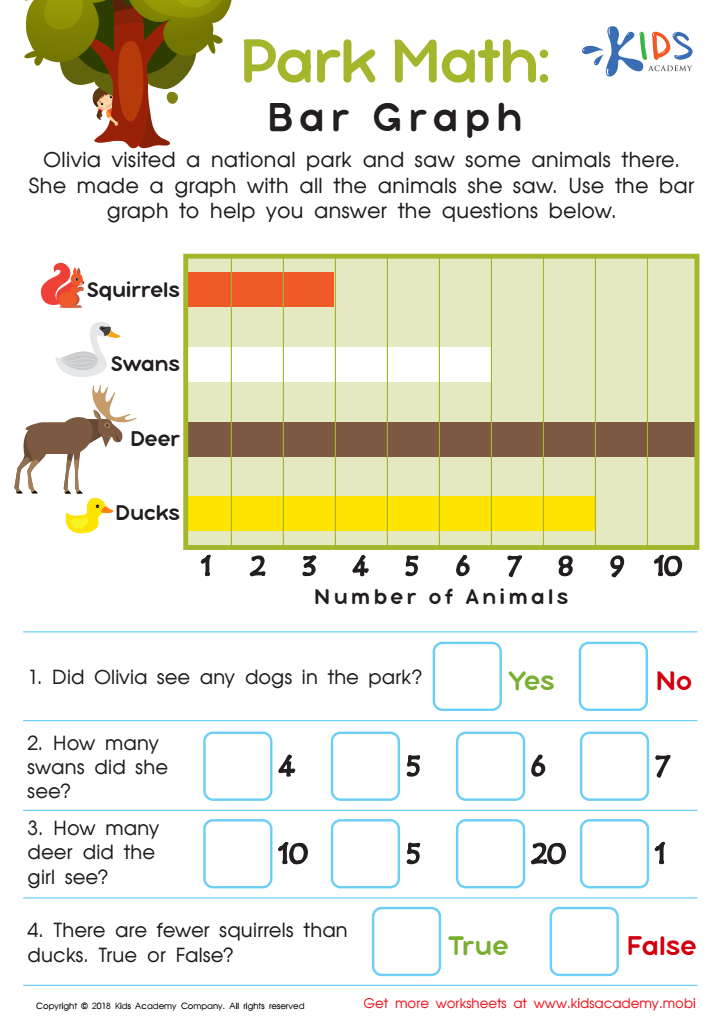
Park Math: Bar Graph Worksheet
Do your children love the park? Ask them to tell you some of their favorite animals. Then, have them look at Olivia's graph. She visited a National Park and recorded all the animals she saw. Use the graph to answer the questions given.
 Assign to My Students
Park Math: Bar Graph Worksheet
Worksheet
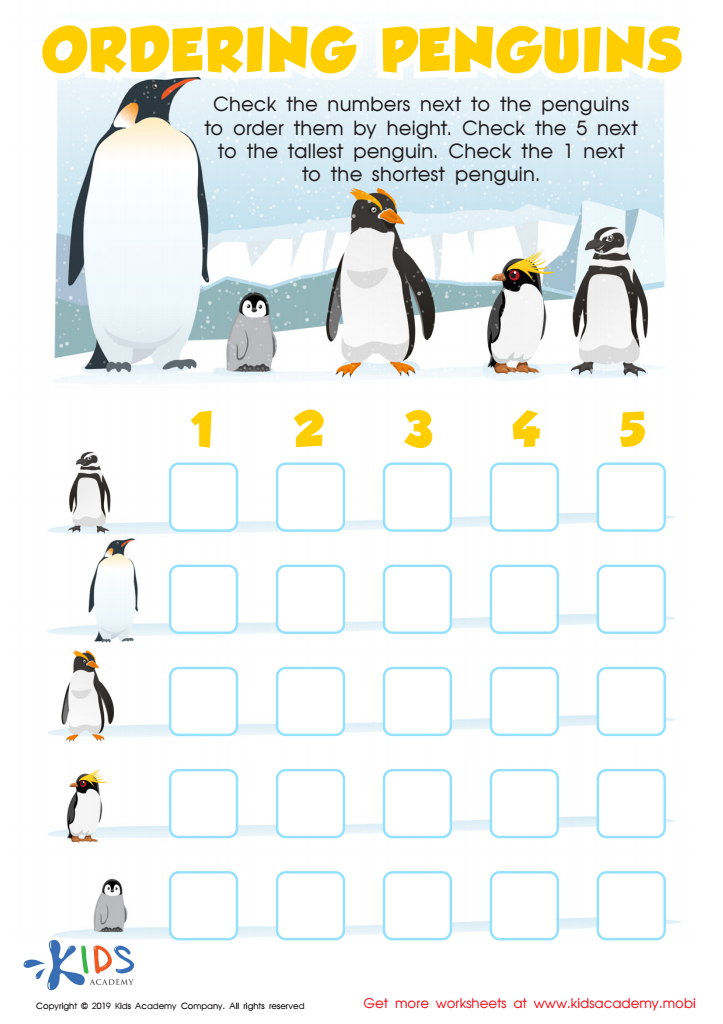
Ordering Penguins Worksheet
Check photos of penguins with your kids, then help them order by height. Tallest gets a 5, shortest gets a 1. Learn cool facts while having fun!
Ordering Penguins Worksheet
Worksheet
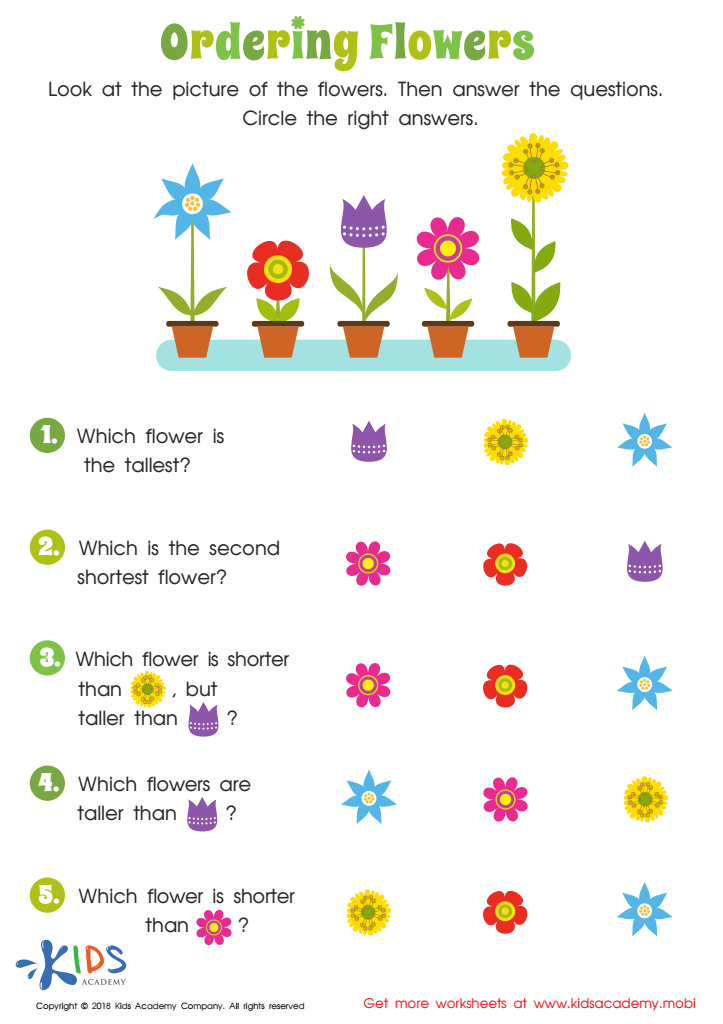
Ordering Flowers Worksheet
Preschoolers can start learning measurement with visuals! This worksheet uses colorful flowers of different heights. Ask your learner to observe the flowers, then help them compare/answer which is taller/shorter. It's an easy way for them to begin learning about measurement.
Ordering Flowers Worksheet
Worksheet
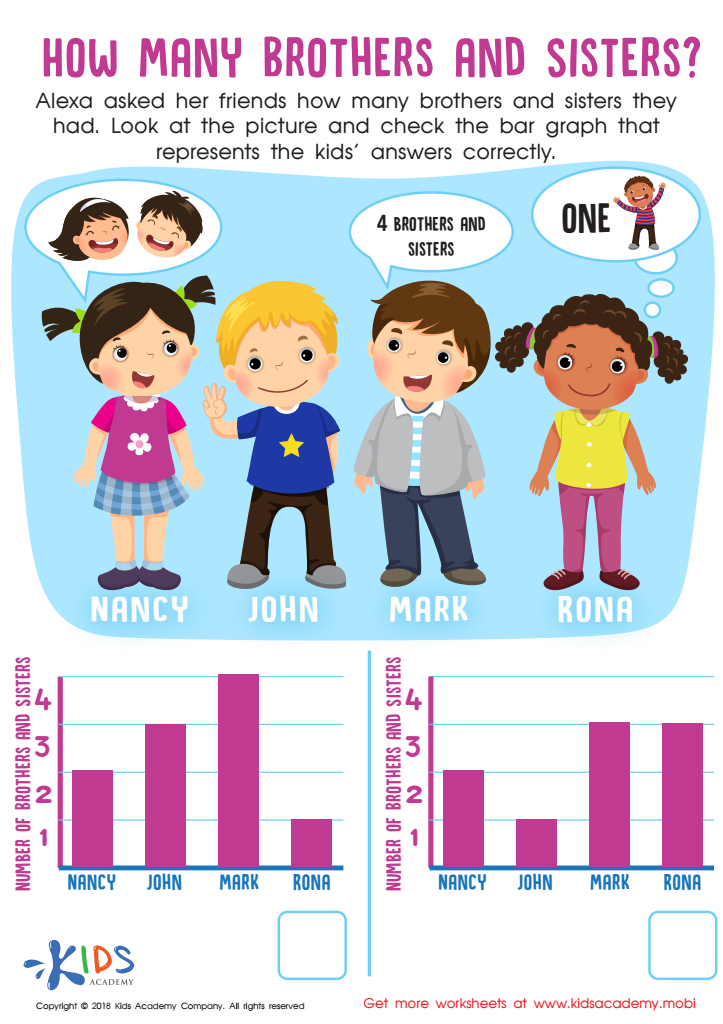
How Many Brothers and Sisters? Worksheet
With this worksheet, Alexa has asked her friends how many siblings they have. Have your child look at the picture and use it to answer the bar graph correctly. Can they tell you how many siblings their friends have? See if they can get it right!
How Many Brothers and Sisters? Worksheet
Worksheet
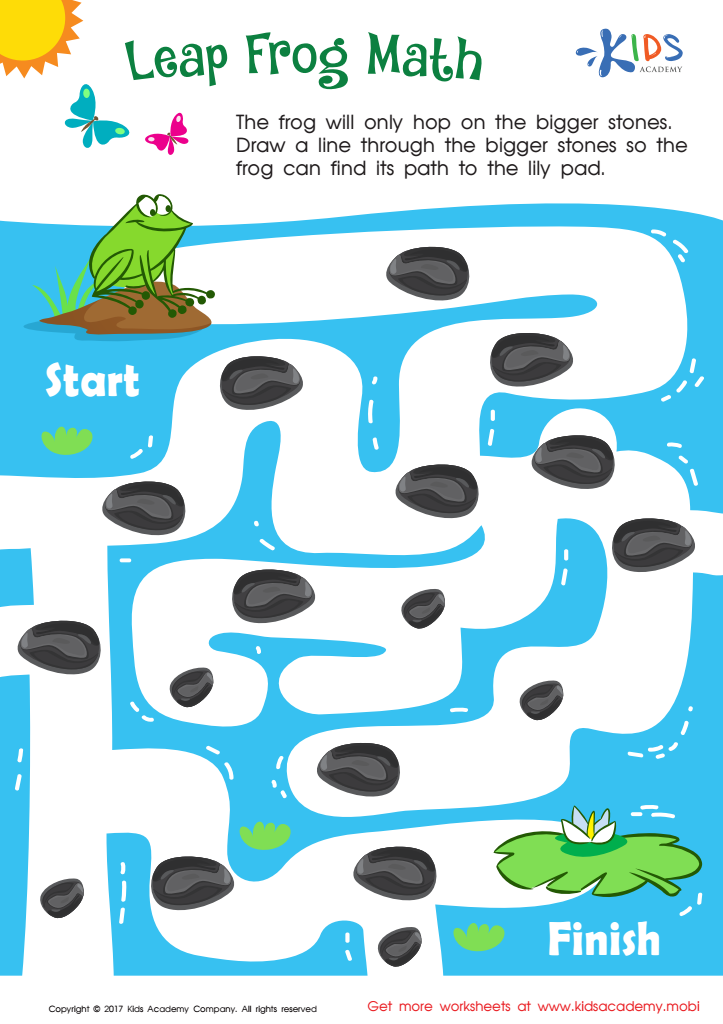
Math Puzzle Worksheet
Kids will use their math skills to help the frog get through the maze by selecting the larger stones. Perfect for kindergarteners, it develops the ability to identify size differences.
Math Puzzle Worksheet
Worksheet
Join Kids Academy for Free
Who is primarily going to use this learning content?








Number recognition is vital for children aged 3-8 as it forms the foundation of their mathematical understanding. During these early years, children are naturally curious and eager to learn, making it an ideal time to introduce basic concepts of numbers. Recognizing numbers enables children to make connections between their everyday experiences and mathematical ideas, which fosters critical thinking skills.
Parents and teachers should prioritize number recognition because it promotes cognitive development and enhances problem-solving abilities. It empowers children to understand quantity, order, and basic operations, all of which are essential for later mathematical success. Effective number recognition contributes to informal math skills that are important in real-life situations, such as counting objects, telling time, and handling money.
Additionally, developing number recognition provides children with a sense of achievement and boosts their confidence in mathematics. It lays the groundwork for more advanced concepts introduced in later grades, reducing future learning gaps.
Moreover, integrating number recognition into everyday activities allows parents and teachers to make learning engaging and fun. By prioritizing this foundational skill, adults can better prepare children to navigate the world of math, paving the way for academic success and fostering a positive attitude towards learning.








