
Reading comprehension Measurement Worksheets for Ages 3-8
5 filtered results
Difficulty Level
Grade
Age
-
From - To
Subject
Activity
Standards
Enhance your child's reading skills with our Reading Comprehension Measurement Worksheets designed for ages 3-8. These engaging worksheets provide a fun and effective way for young learners to develop key comprehension skills while exploring concepts of measurement. Each activity promotes critical thinking through age-appropriate stories and relatable scenarios, making learning both enjoyable and meaningful. Ideal for parents and educators, our worksheets support various learning styles and help children grasp essential vocabulary and context clues. Encourage your child’s love for reading and strengthen their understanding of measurements, ensuring they build a solid foundation for future academic success. Start your reading adventure today!
Favorites
With answer key
Interactive
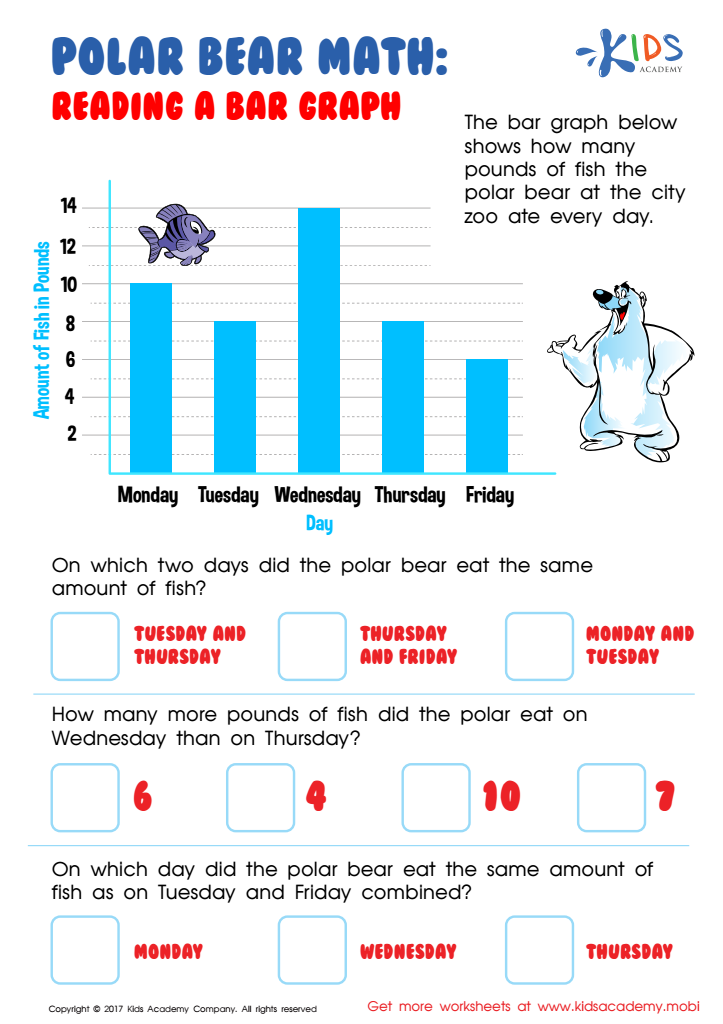
Reading Bar Graph Worksheet
Take your child north to practice data reading with a polar bear friend! This worksheet challenges 3rd graders to interpret data on a graph and solve related math problems.
 Assign to My Students
Reading Bar Graph Worksheet
Worksheet
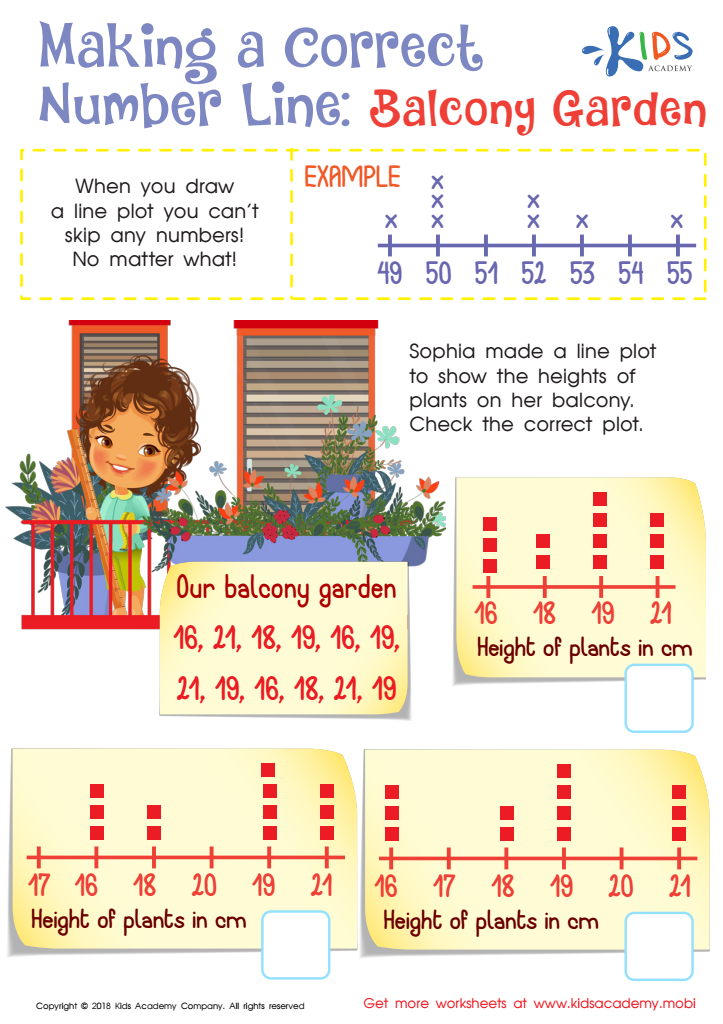
Making a Correct Number Line: Balcony Garden Worksheet
Teach your child to draw and identify a line plot with this worksheet. Have them help Sophia check her plot for the heights of plants in her balcony, ensuring no numbers are skipped. Line plots are a great way to quickly organize information and an essential skill your child needs.
Making a Correct Number Line: Balcony Garden Worksheet
Worksheet
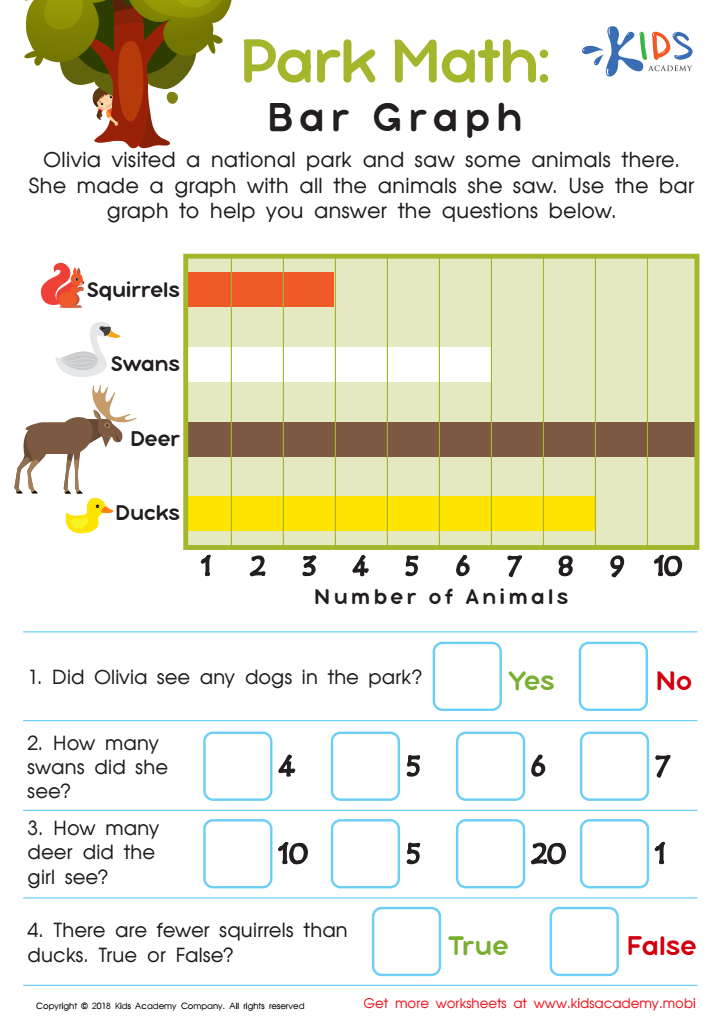
Park Math: Bar Graph Worksheet
Do your children love the park? Ask them to tell you some of their favorite animals. Then, have them look at Olivia's graph. She visited a National Park and recorded all the animals she saw. Use the graph to answer the questions given.
Park Math: Bar Graph Worksheet
Worksheet
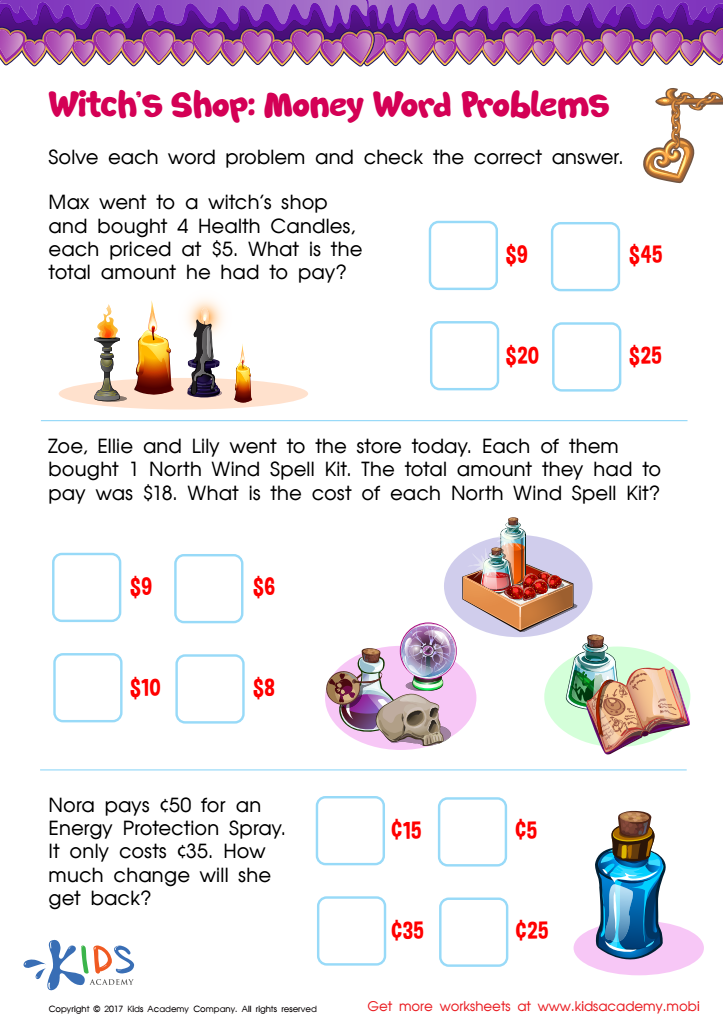
Money Word Problems Printable
Boost your 3rd grader's math skills with money word problems. This worksheet takes them to a witch's shop for a fun way to practice multiplication and division.
Money Word Problems Printable
Worksheet
How Many Brothers and Sisters? Worksheet
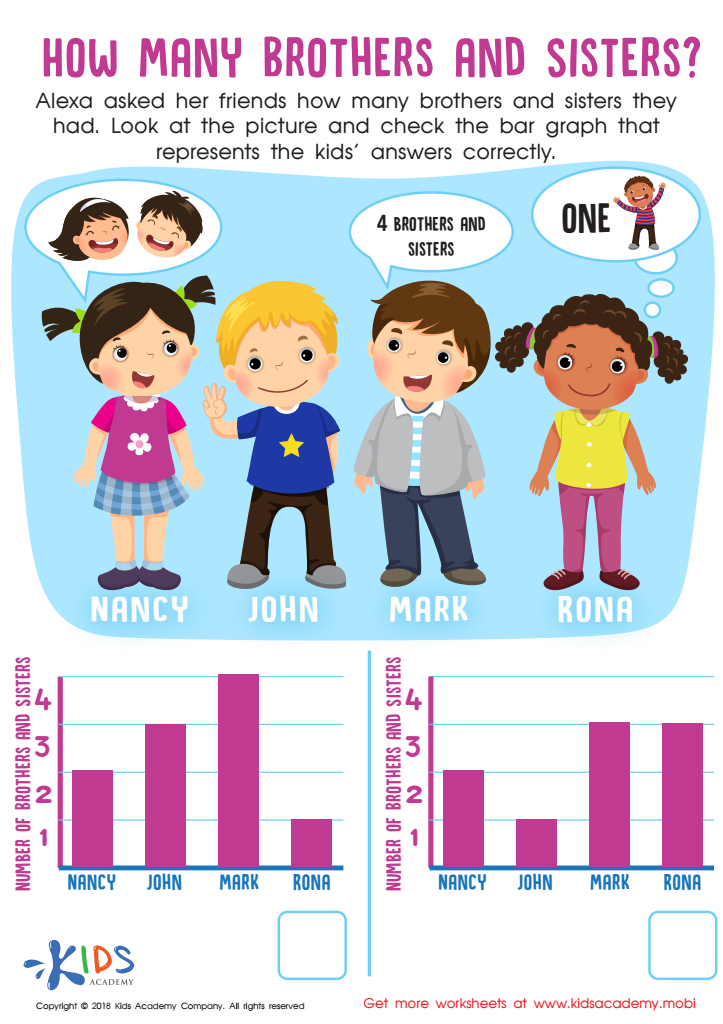
With this worksheet, Alexa has asked her friends how many siblings they have. Have your child look at the picture and use it to answer the bar graph correctly. Can they tell you how many siblings their friends have? See if they can get it right!
How Many Brothers and Sisters? Worksheet
Worksheet
Join Kids Academy for Free
Who is primarily going to use this learning content?








Reading comprehension measurement for children aged 3-8 is crucial for several reasons. First, it provides insights into a child's understanding of spoken and written language, which is fundamental for academic success. Early reading skills are closely linked to future literacy abilities, making it essential for parents and teachers to monitor progress at this stage.
Additionally, reading comprehension measures can help identify children who may need extra support. By recognizing early difficulties, educators can implement targeted interventions, ultimately bridging gaps in learning before they widen. These assessments also guide instruction, enabling teachers to adapt their teaching strategies to meet diverse learning needs and interests.
For parents, being involved in their child's reading journey fosters a positive learning environment at home. When caregivers understand their child's reading strengths and weaknesses, they can choose appropriate books and activities that support growth. Furthermore, developing strong reading comprehension skills enhances critical thinking and fosters a lifelong love for reading, which is vital in today's information-rich society.
In summary, measuring reading comprehension during early childhood is essential for identifying needs, guiding instruction, and laying the foundation for a successful educational experience, ensuring children become proficient, confident readers.








