Spatial awareness Measurement Worksheets for Ages 3-8
3 filtered results
-
From - To
Enhance your child's spatial awareness with our engaging Spatial Awareness Measurement Worksheets designed for ages 3-8. These fun and interactive worksheets promote essential skills such as understanding shapes, directions, and object relationships. Perfect for homes and classrooms, our resources help young learners develop critical thinking and problem-solving abilities through enjoyable activities. Each worksheet features colorful visuals and age-appropriate challenges that cater to various learning styles. Foster a strong foundation in mathematics and geometry while sparking creativity and exploration. Dive into our collection today and watch your child thrive as they navigate the exciting world of spatial awareness!
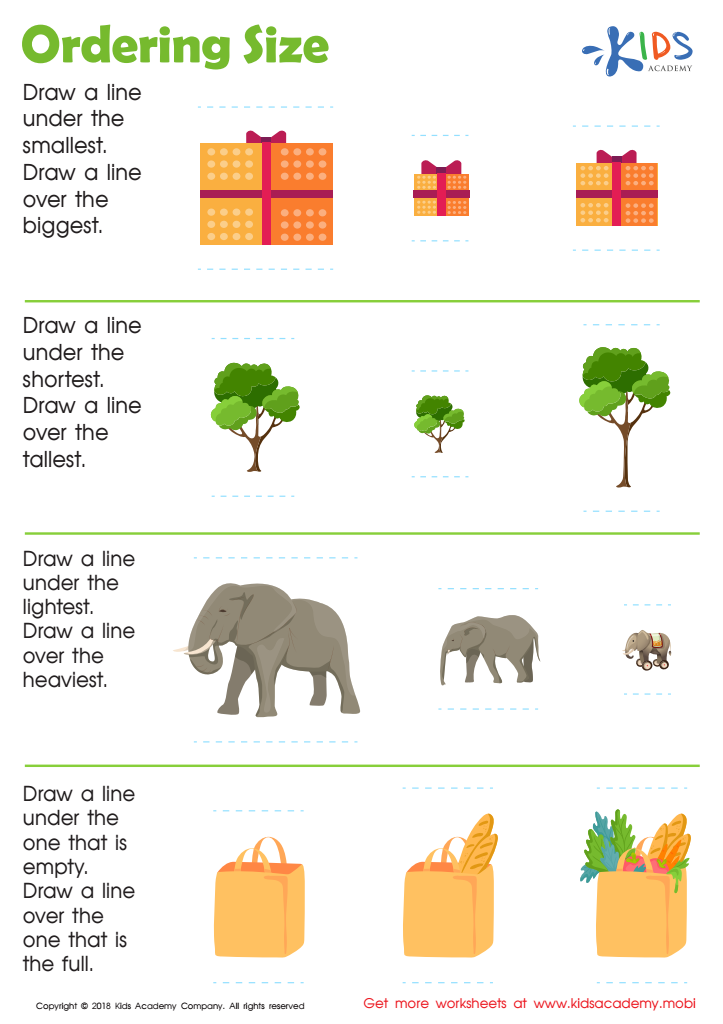
Ordering Size Worksheet
 Assign to My Students
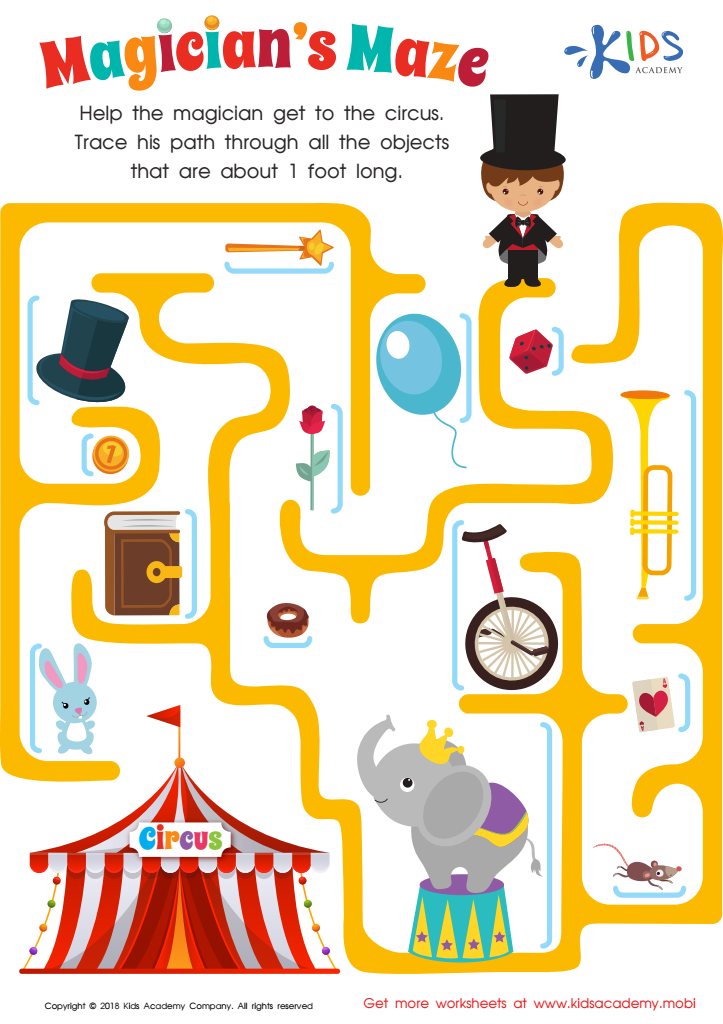
Estimating Length: Magician's Maze Worksheet
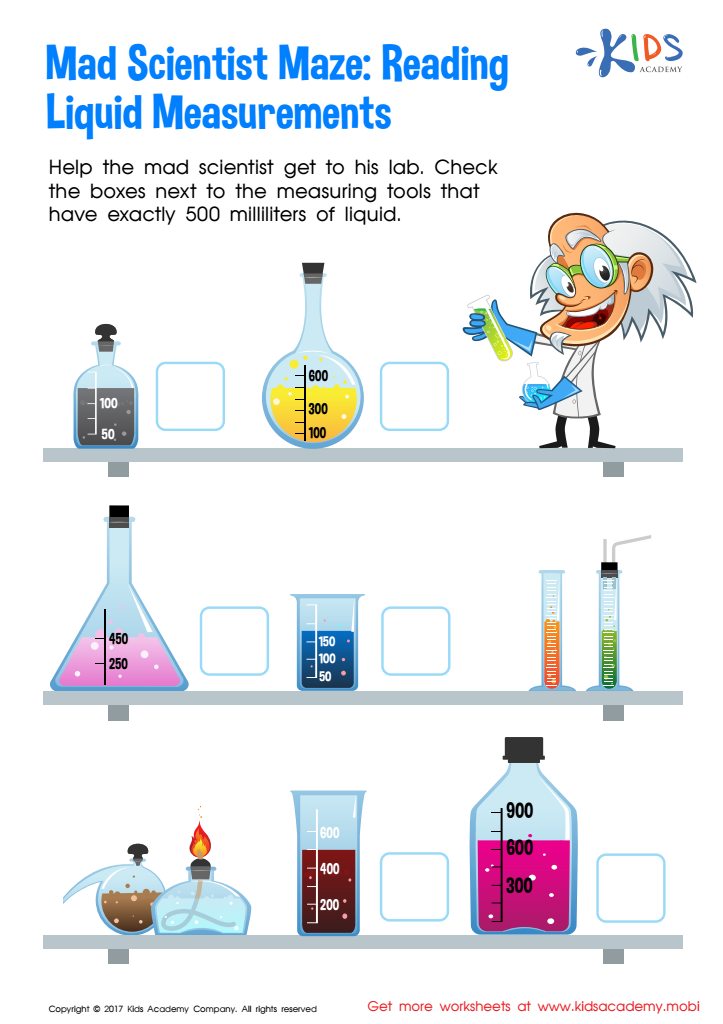
Reading Liquid Measurement Worksheet








Spatial awareness is a critical developmental skill that significantly impacts children's ability to understand and interact with the world around them, especially between the ages of 3 to 8. This skill involves recognizing and navigating the space around them, which lays the groundwork for other academic skills, such as mathematics, reading, and science. Parents and teachers should prioritize spatial awareness measurement because it is foundational for problem-solving, critical thinking, and cognitive development.
Children with strong spatial awareness can better visualize relationships between objects, understand geometry concepts, and improve their ability to read maps or graphs. These abilities contribute to greater success in STEM (science, technology, engineering, and mathematics) areas, which are increasingly important in today's world. Additionally, spatial awareness influences gross and fine motor skills, essential for activities ranging from playing sports to writing.
By monitoring spatial awareness, parents and teachers can identify children needing additional support or enrichment activities tailored to them. Engaging in activities that bolster spatial awareness – such as puzzle-making, building blocks, and interactive games – can stimulate learning and development. Ultimately, fostering spatial awareness helps prepare children for a variety of academic and life challenges, enhancing their overall growth and success.








