Multiplication practice Mixed Times Tables Worksheets for Ages 3-8
9 filtered results
-
From - To
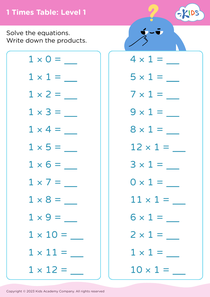
Welcome to our "Multiplication Practice Mixed Times Tables Worksheets" designed for children aged 3-8. Our engaging and interactive worksheets make learning multiplication fun and effective for young learners. These resources include a variety of problems that cover different times tables, allowing kids to enhance their math skills at their own pace. Ideal for use in the classroom or at home, these worksheets foster a solid foundation in multiplication while nurturing critical thinking and problem-solving abilities. Encourage your child’s confidence in math with our colorful, themed worksheets that make practicing multiplication an enjoyable experience. Start the journey to math mastery today!
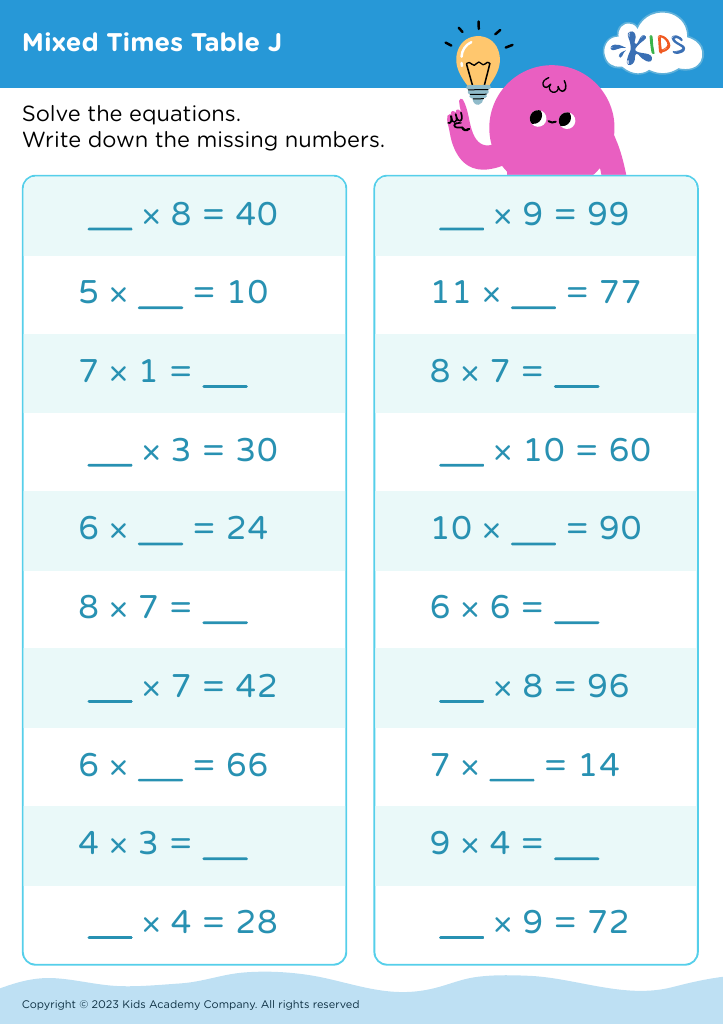
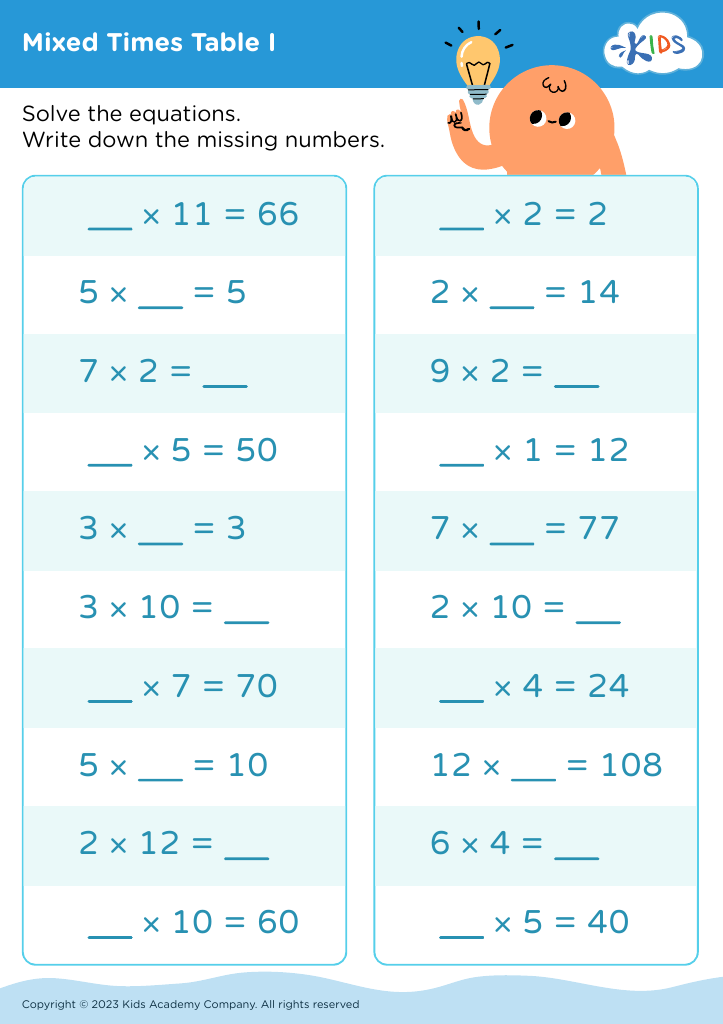
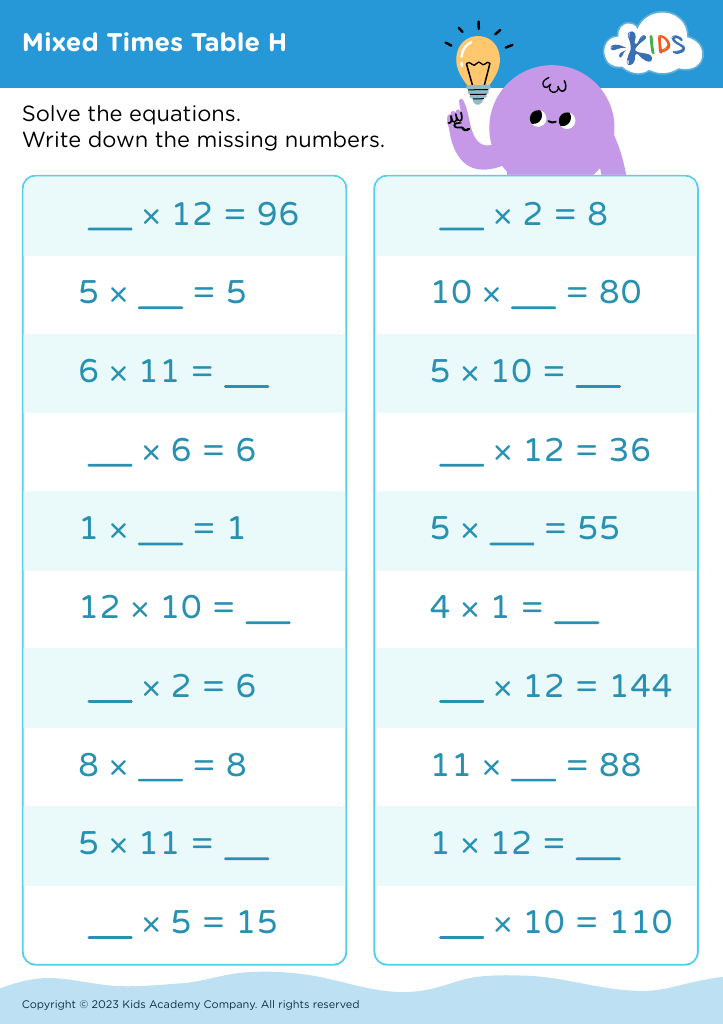
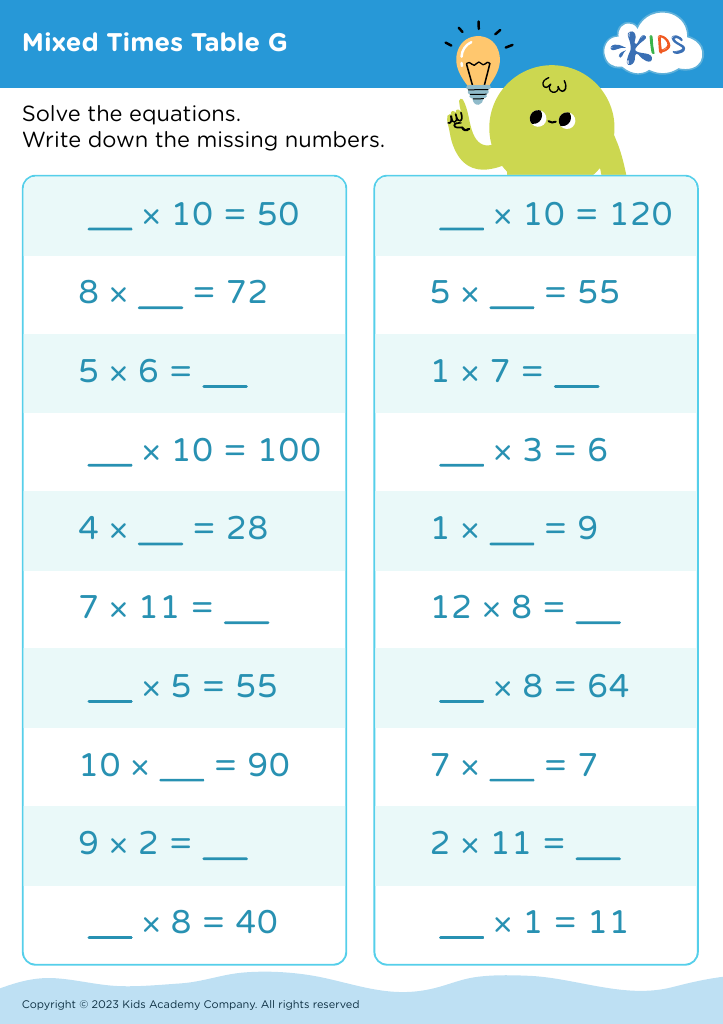
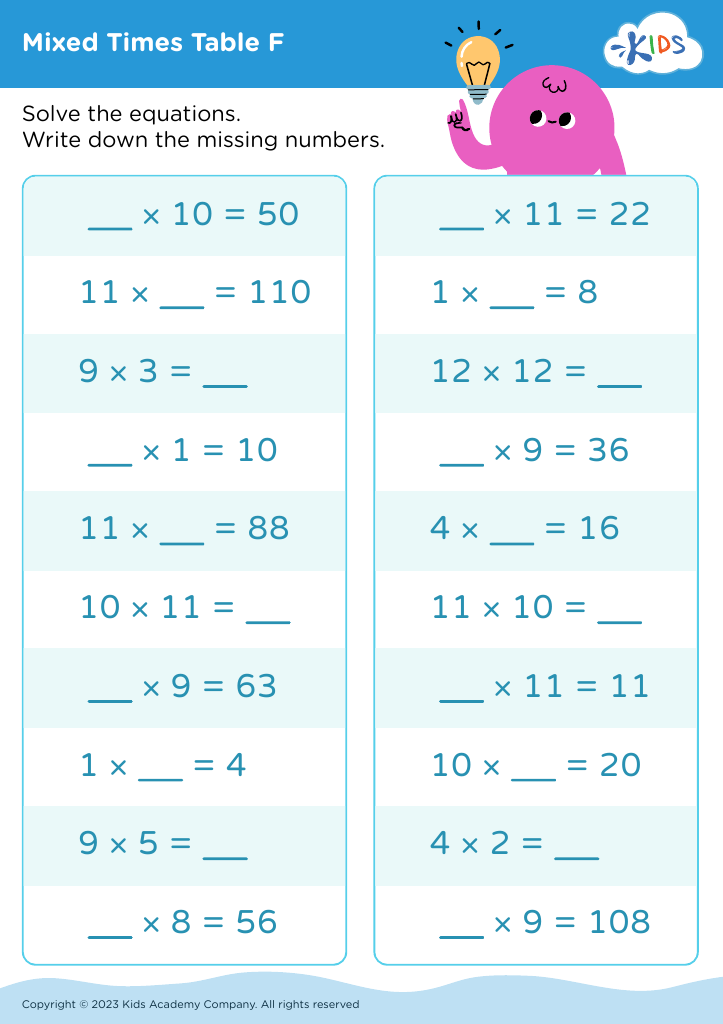
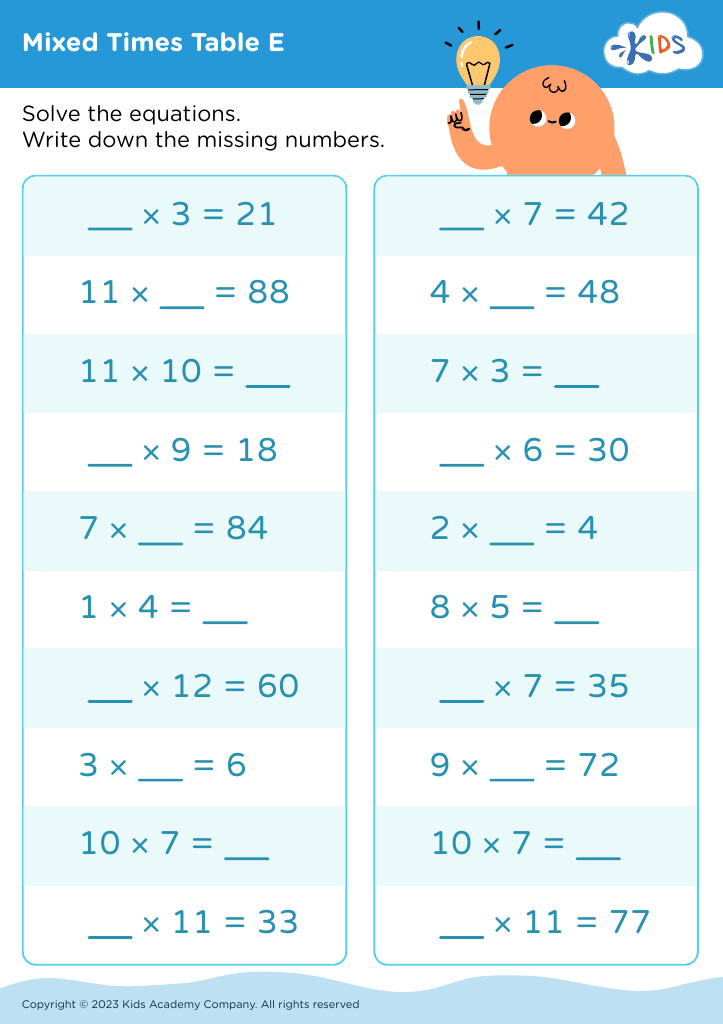
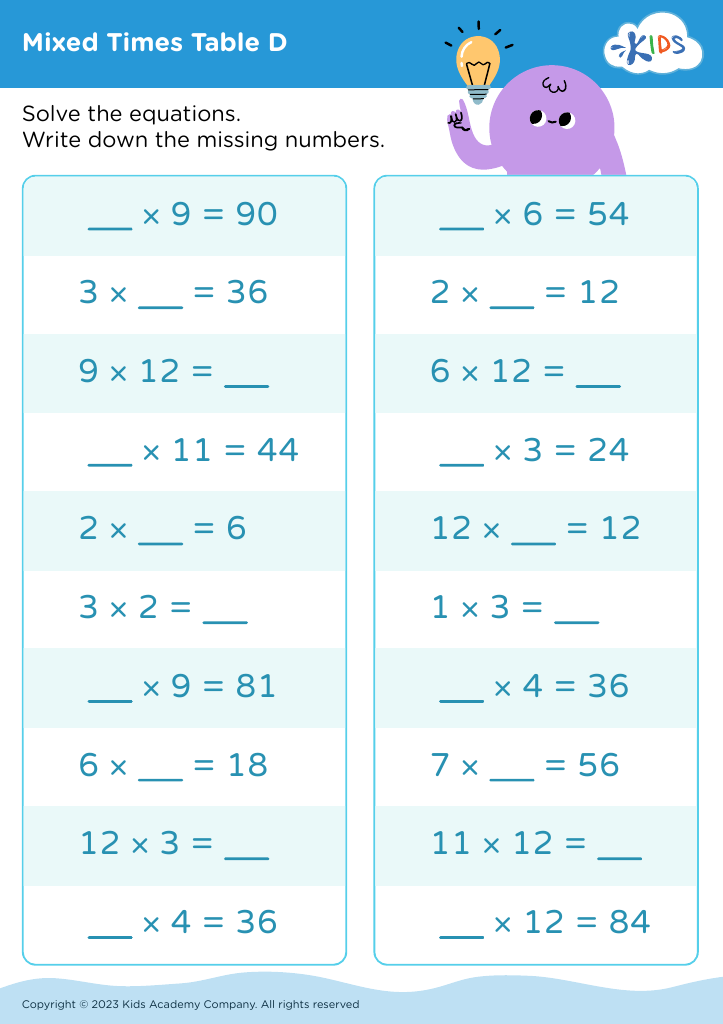
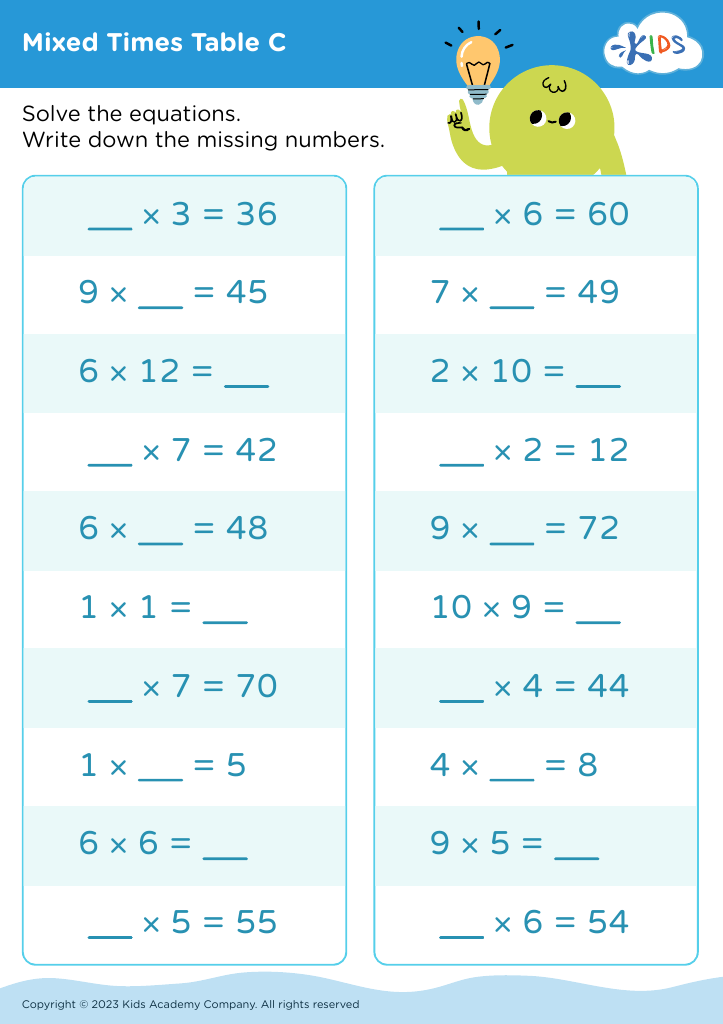
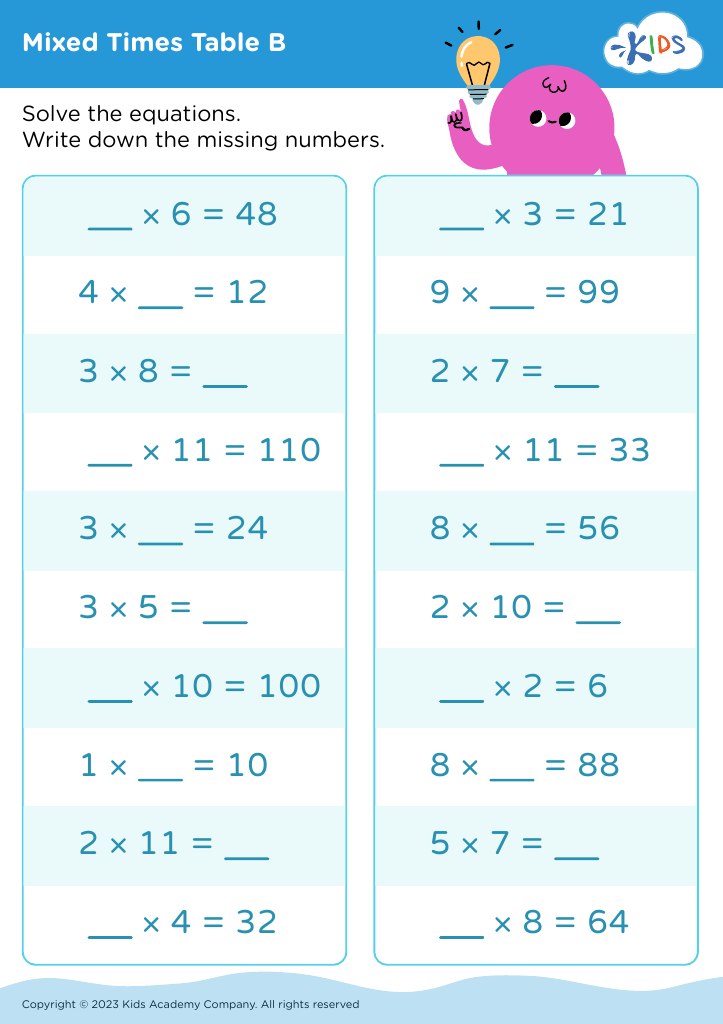


Practicing mixed times tables is crucial for children aged 3-8 as it lays a solid foundation for their mathematical skills. Early exposure to multiplication concepts promotes number fluency, helping children understand the relationship between addition and multiplication. This understanding is vital for their future learning in mathematics where these concepts intertwine.
Engaging in multiplication practice encourages cognitive development. Children improve their memory as they learn different times tables, fostering problem-solving skills and critical thinking. It also enhances their confidence in handling numbers, which positively impacts their overall attitude towards math.
For parents and teachers, facilitating this practice addresses different learning styles. Fun games and interactive activities make learning multiplication enjoyable, encouraging sustained interest. Moreover, math is integrated into real-world scenarios like shopping or cooking, making the learning process relatable.
Furthermore, mastering multiplication fosters independence and prepares children for more complex mathematical operations they will encounter in later grades. This early focus builds a sense of achievement and competence, essential traits for lifelong learners. In summary, caring about multiplication practice equips young learners with skills that have significant implications for their future academic success.