Number Recognition Multiplication Worksheets for Ages 3-8
4 filtered results
-
From - To
Discover our Number Recognition Multiplication Worksheets designed specifically for children aged 3-8. Perfectly tailored to develop foundational math skills, these engaging activities combine number identification with early multiplication concepts. Each worksheet is crafted to make learning fun while reinforcing important skills such as counting, pattern recognition, and basic arithmetic. Kids will love the imaginative, colorful layouts that turn learning into a playful adventure. Boost your child's confidence and set the stage for future math success with our expertly designed worksheets. Ideal for preschoolers, kindergarteners, and early elementary students looking to master multiplication.
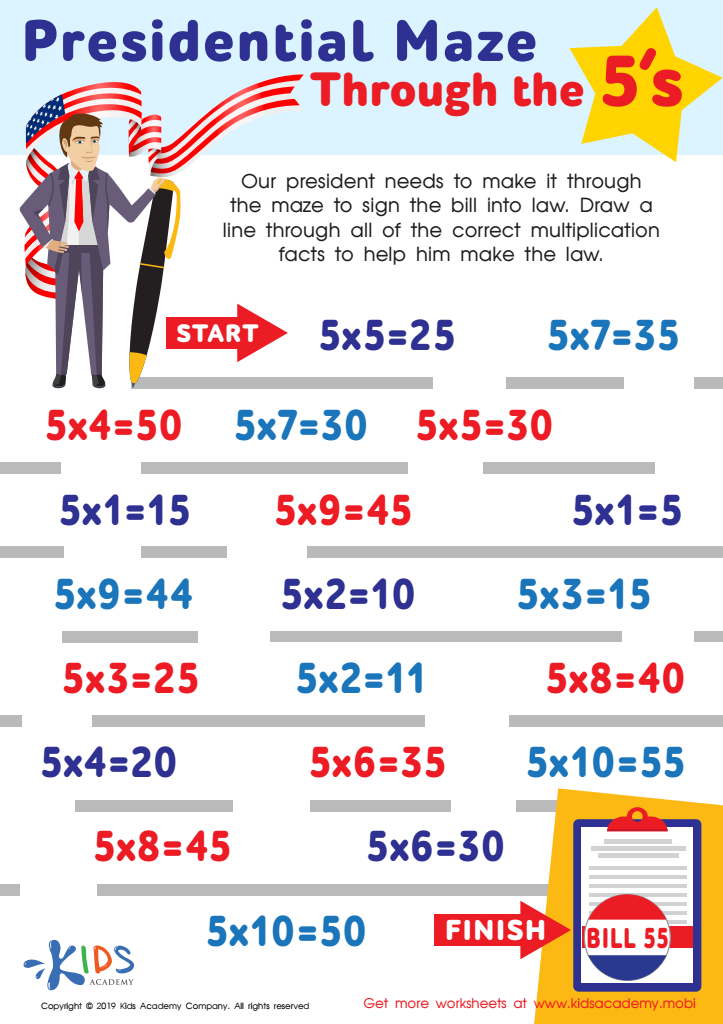
Presidential Maze Through the 5’s Worksheet
 Assign to My Students
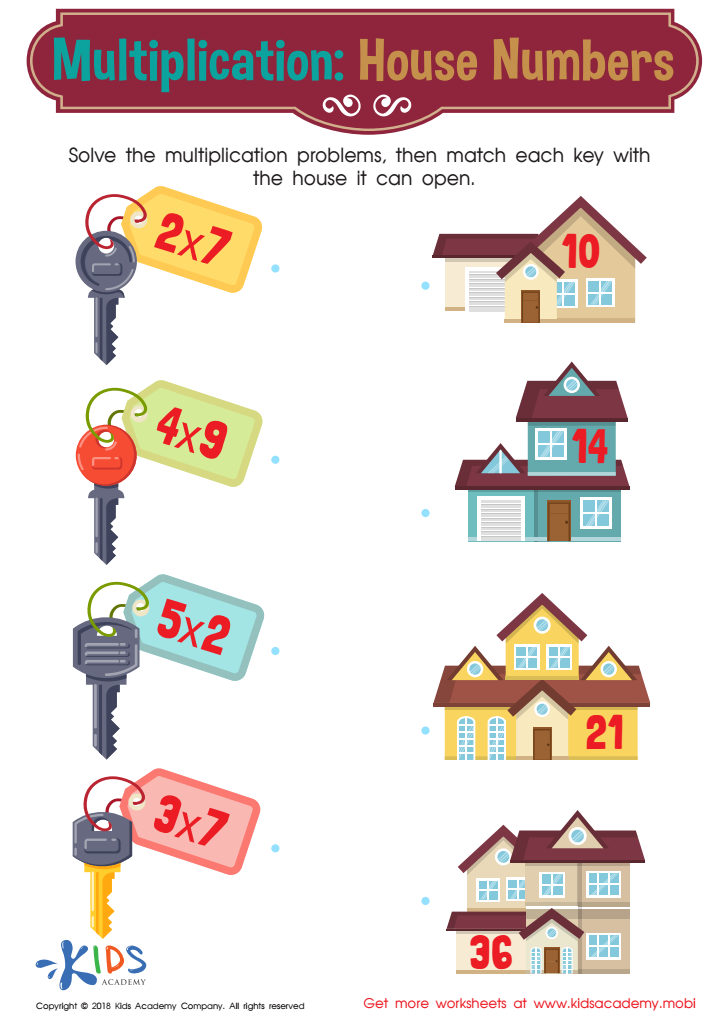
House Numbers Worksheet
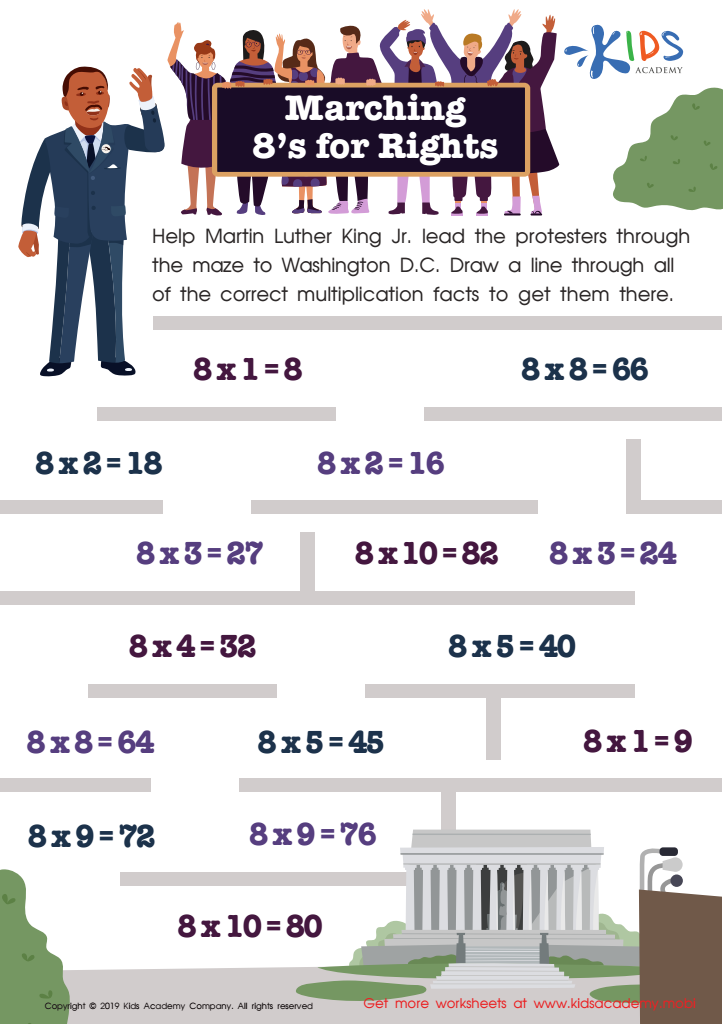
Marching 8’s for Rights Worksheet
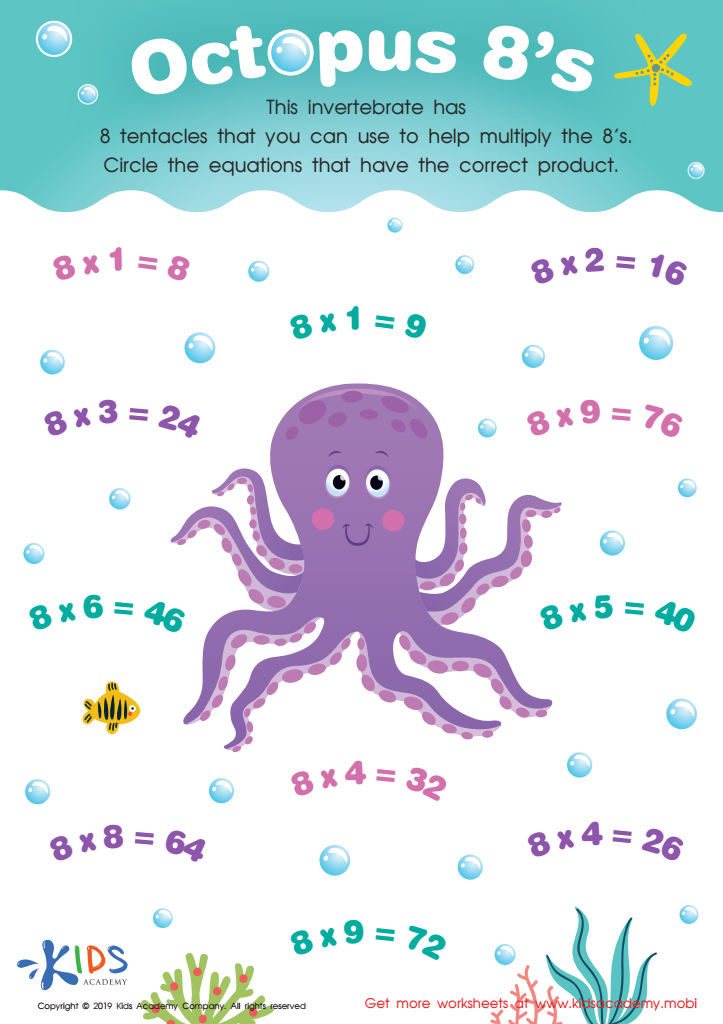
Octopus 8’s Worksheet








Number recognition multiplication skills are foundational for young children, especially those between the ages of 3 and 8, as they lay the groundwork for more advanced mathematical concepts and everyday decision-making. During this critical period, children's brains are most receptive to new information, and early exposure to multiplication can help enhance their cognitive development, problem-solving skills, and logical reasoning.
For parents and teachers, nurturing these skills means actively participating in guiding the child's educational journey. By ensuring children grasp fundamental number recognition and basic multiplication concepts, they set the stage for later success in math and other subjects. Multiplication, a cornerstone of arithmetic, leads to an understanding of complex operations such as division, fractions, and algebra. It bolsters confidence and analytical thinking, encouraging children to tackle challenges persistently.
Additionally, early mathematical competency promotes everyday skills like telling time, handling money, and understanding patterns, which are essential for real-life tasks. Engaging children through playful activities and incorporating practical examples helps maintain their interest and makes learning enjoyable, fostering a positive attitude towards math. Therefore, parents and teachers should prioritize number recognition multiplication to support holistic development and future achievements in a myriad of academic and life areas.








