Number Recognition Numbers up to 100 Worksheets for Ages 3-8 - Page 2
27 filtered results
-
From - To
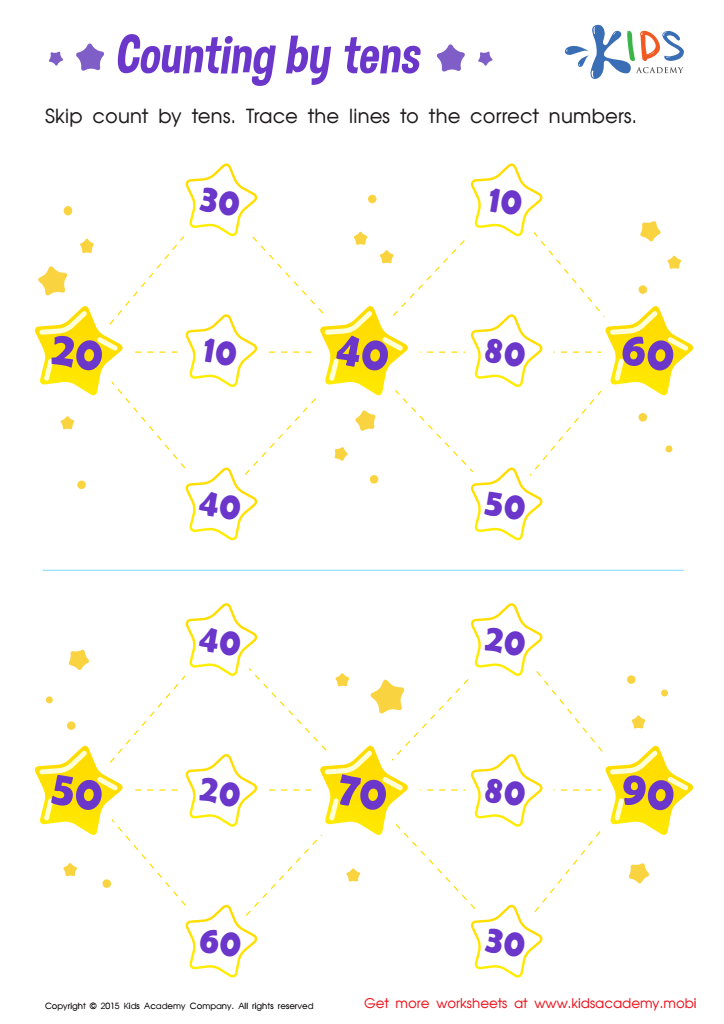
Learn Dozens: Counting by Tens Printable
 Assign to My Students
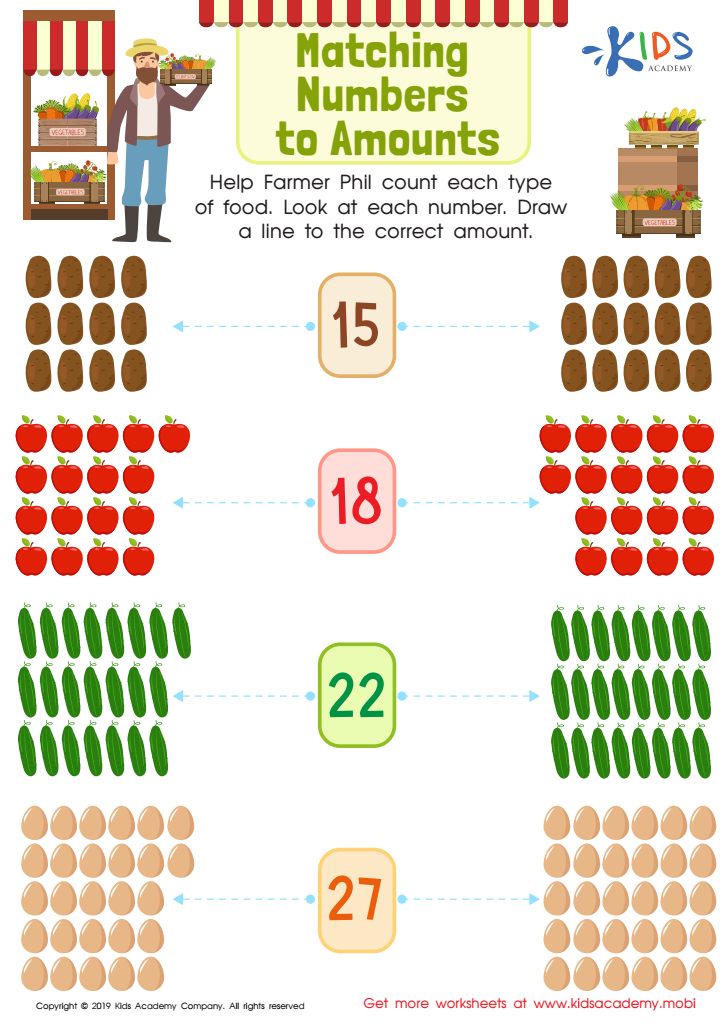
Matching Numbers to Amounts Worksheet

Counting on the City Skyline: Dot-to-Dot Worksheet








Number recognition is a foundational skill critical for children aged 3-8, laying the groundwork for their mathematical development. Parents and teachers should care about this skill because it influences a child’s overall academic success and everyday life.
Firstly, early number recognition helps children understand basic math concepts. Recognizing numbers up to 100 allows them to learn counting, grouping, and eventually, addition and subtraction. This builds confidence in their abilities as they progress through educational milestones. Without these skills, children may struggle with more advanced math concepts later on.
Secondly, number recognition enhances cognitive development. It helps with memory, attention span, and problem-solving skills. Moreover, being familiar with numbers fosters a positive relationship with mathematics, reducing anxiety associated with the subject.
Thirdly, in real-life situations, number recognition aids children in tasks such as telling time, managing money, and measuring ingredients in cooking, which are essential skills learned during early childhood.
Lastly, engaging parents and teachers in fostering number recognition through games, books, and everyday activities strengthens the home-school connection, ensuring a comprehensive learning experience for children. This collaborative approach maximizes their opportunities for growth and success in mathematics and beyond.