Cognitive Development Subtraction Worksheets for Ages 3-8
5 filtered results
-
From - To
Discover our engaging Cognitive Development Subtraction Worksheets designed for children aged 3-8, tailored to enhance both mathematical and cognitive skills. Incorporating visually appealing graphics and age-appropriate challenges, these worksheets help youngsters grasp the fundamental concepts of subtraction while boosting critical thinking. Our expertly crafted activities ensure that learning subtraction becomes an enjoyable experience, promoting confidence and school readiness. Perfect for parents and teachers alike, our resources support varied learning styles and are adaptable to both classroom and home settings. Start empowering young minds with our comprehensive collection of subtraction worksheets, fostering a strong foundation in early math development.
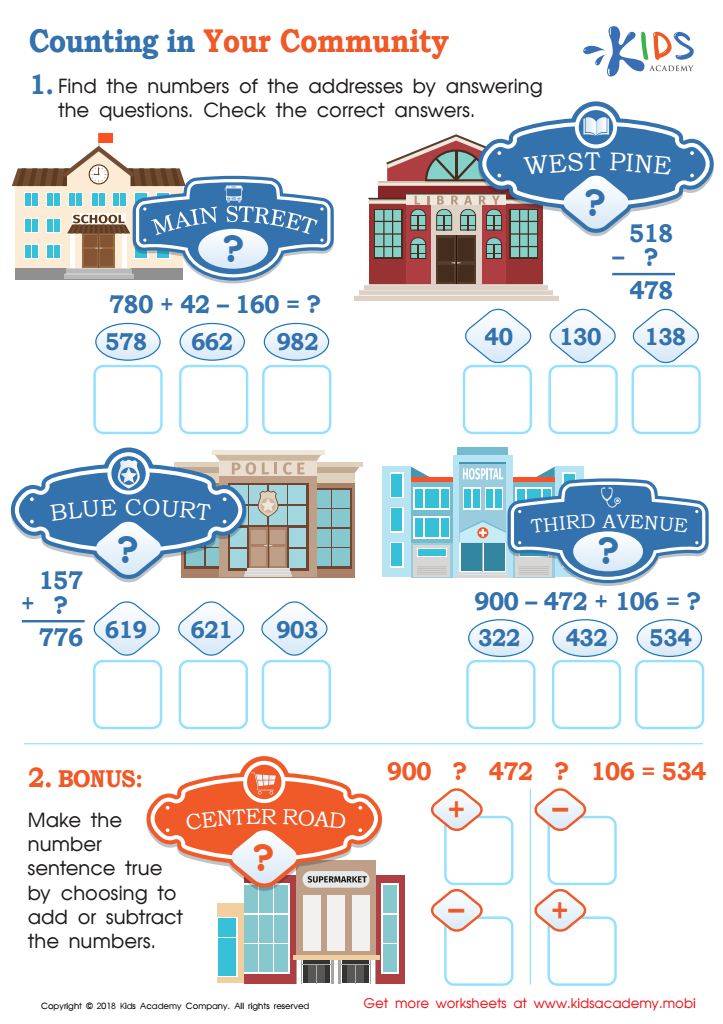
Counting in Your Community Worksheet
 Assign to My Students
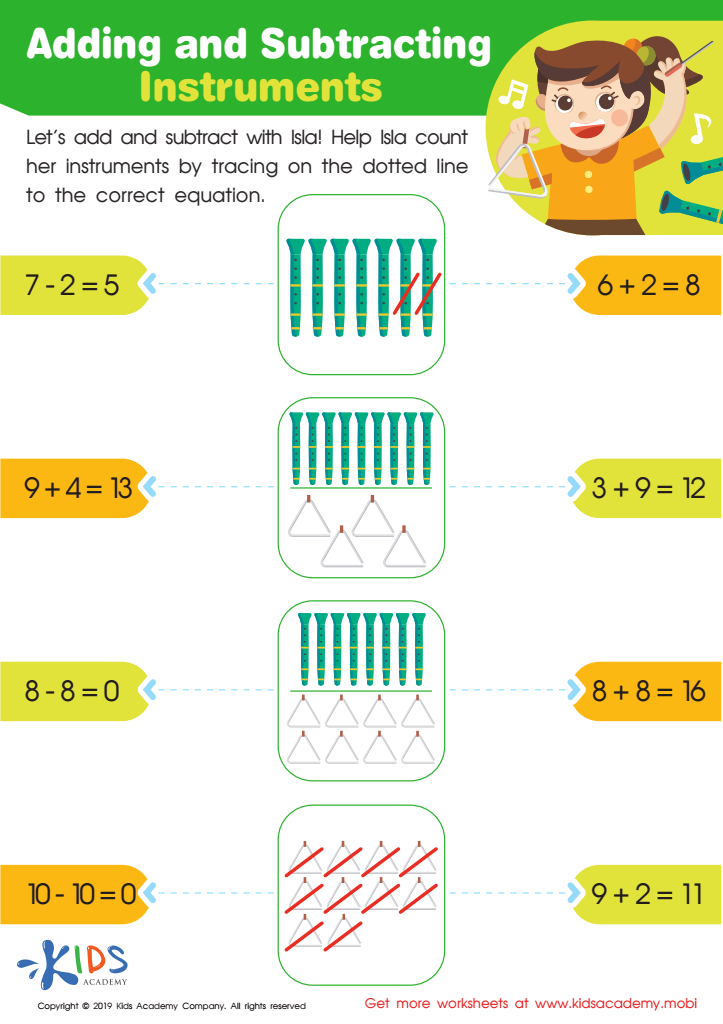
Adding and Subtracting: Instruments Worksheet
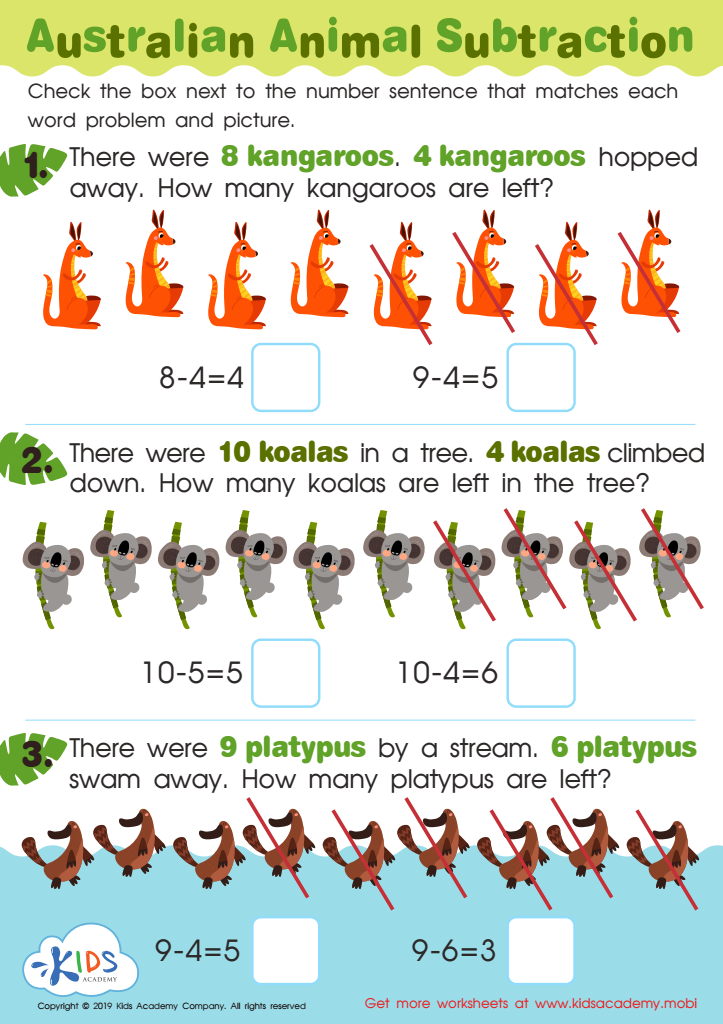
Australian Animal Subtraction Worksheet
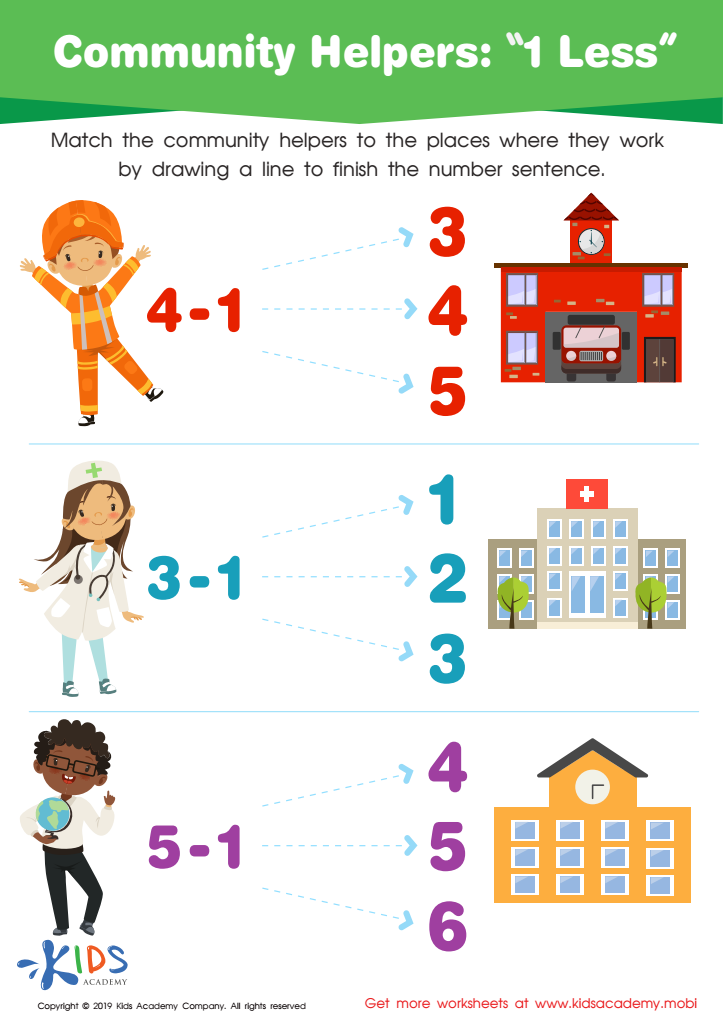
Community Helpers: 1 less Worksheet
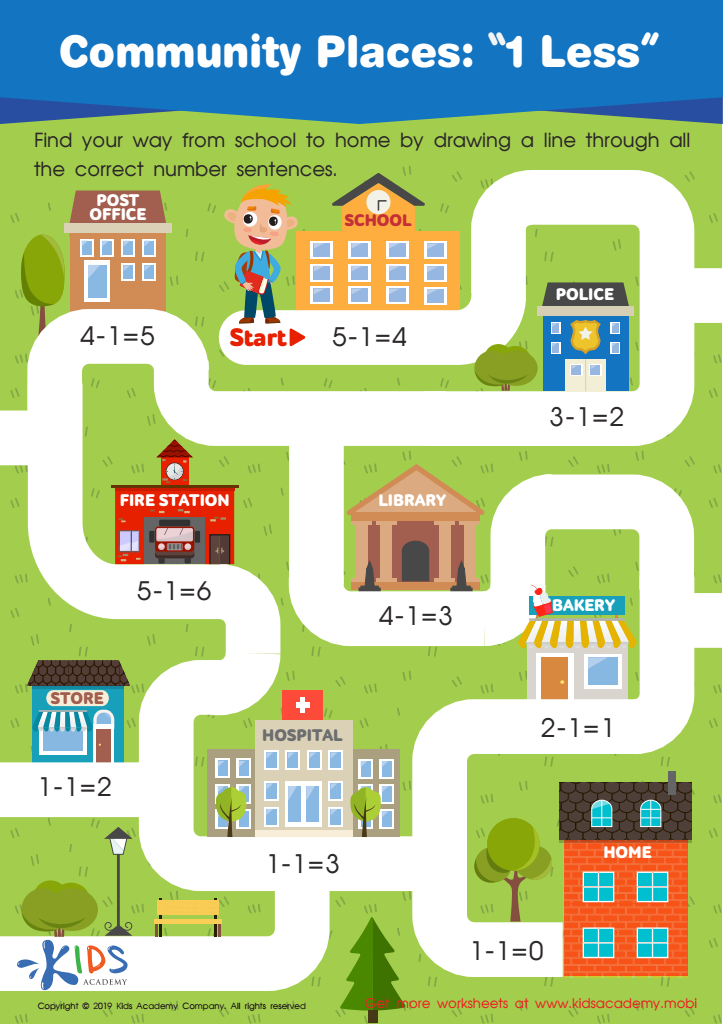
Community Places: 1 Less Worksheet








Cognitive development, particularly the ability to understand and perform subtraction, is a crucial foundational skill for young children aged 3 to 8. This stage is marked by significant brain development, where children's cognitive abilities expand rapidly. Subtraction is more than just a mathematical operation; it encourages logical thinking, problem-solving, and critical reasoning—skills essential both in academics and in everyday life.
When parents and teachers focus on helping children develop subtraction skills, they are facilitating the development of cognitive processes such as memory, attention, and analytical thinking. Subtraction teaches children about the concept of 'taking away' or 'difference,' which helps them understand changes within sets and comparisons—a fundamental aspect of understanding the world around them.
Early mastery of subtraction aids in smoother progression to more complex mathematical concepts, reducing math anxiety in later years. Additionally, subtraction activities can be engaging and enjoyable, which promotes a positive attitude towards learning. Interactive experiences with subtraction, such as using physical objects or stories, make abstract concepts tangible and relatable.
Thus, by prioritizing cognitive development through subtraction, parents and teachers lay down a solid foundation for academic success, foster a nurturing learning environment, and help cultivate critical life skills, ensuring that children gain the confidence and ability to excel.








