Mathematical reasoning Subtraction Worksheets for Ages 3-8
6 filtered results
-
From - To
Discover the ideal tool to enhance your child's mathematical reasoning skills with our Subtraction Worksheets for ages 3-8. Crafted to align with early learning standards, these printable worksheets engage young learners through age-appropriate subtraction exercises designed to build a strong numerical foundation. By integrating fun illustrations and interactive activities, our worksheets make mastering the basics of subtraction both educational and enjoyable. Empower your child to develop critical thinking and problem-solving skills as they transition smoothly from simple to more complex subtraction tasks. Equip your child for future math success with our expertly designed subtraction resources.
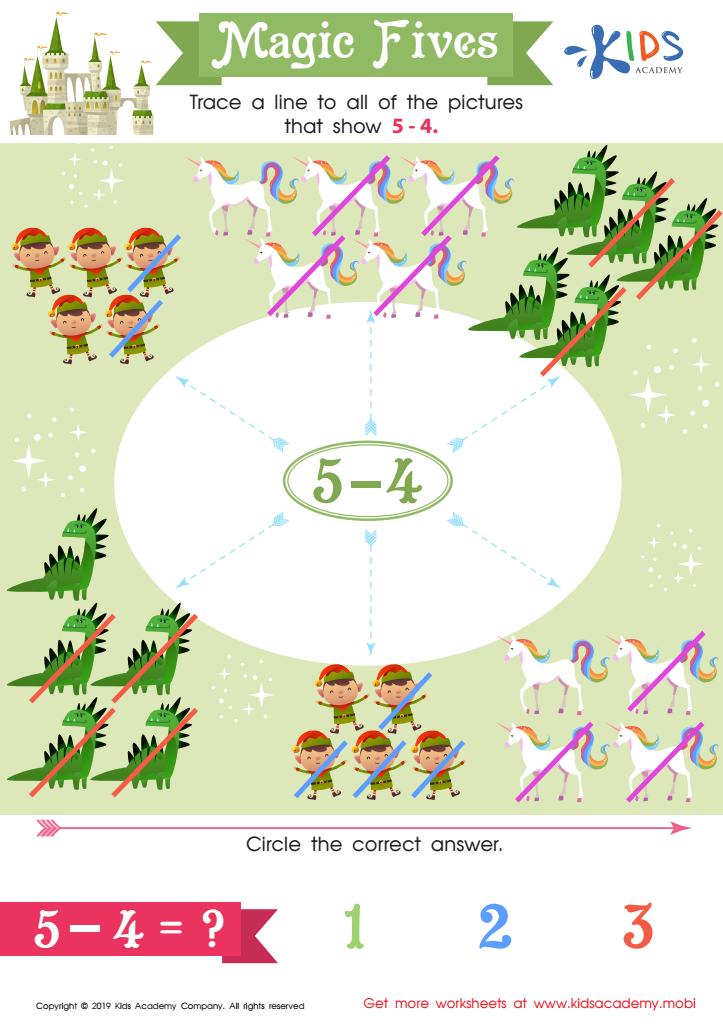
Magic Fives Worksheet
 Assign to My Students
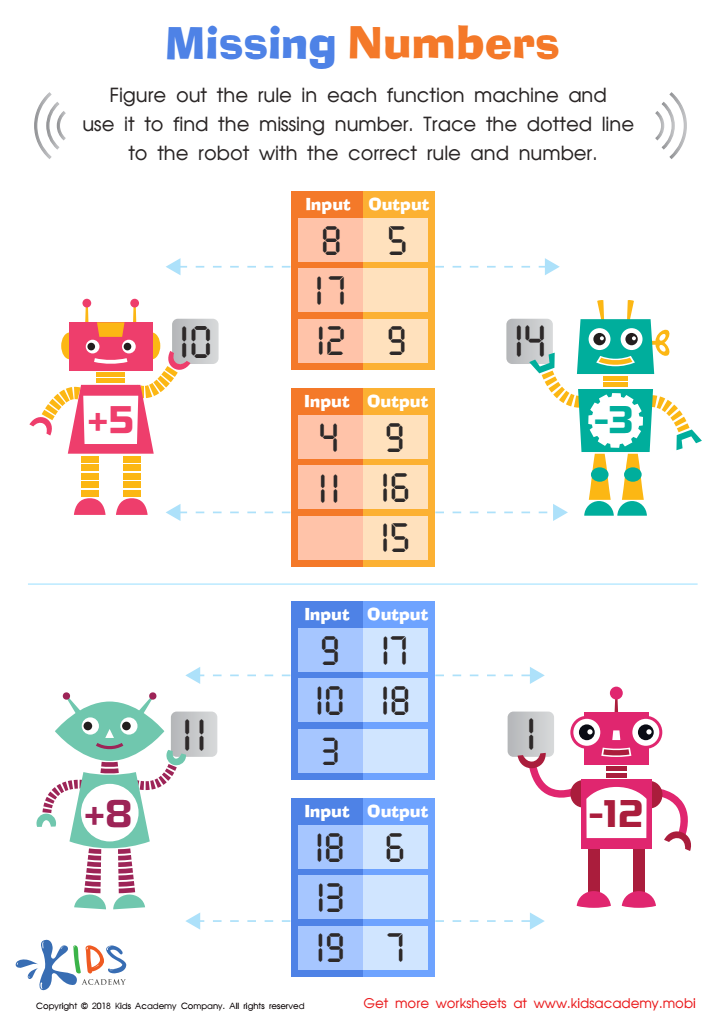
Missing Numbers Worksheet
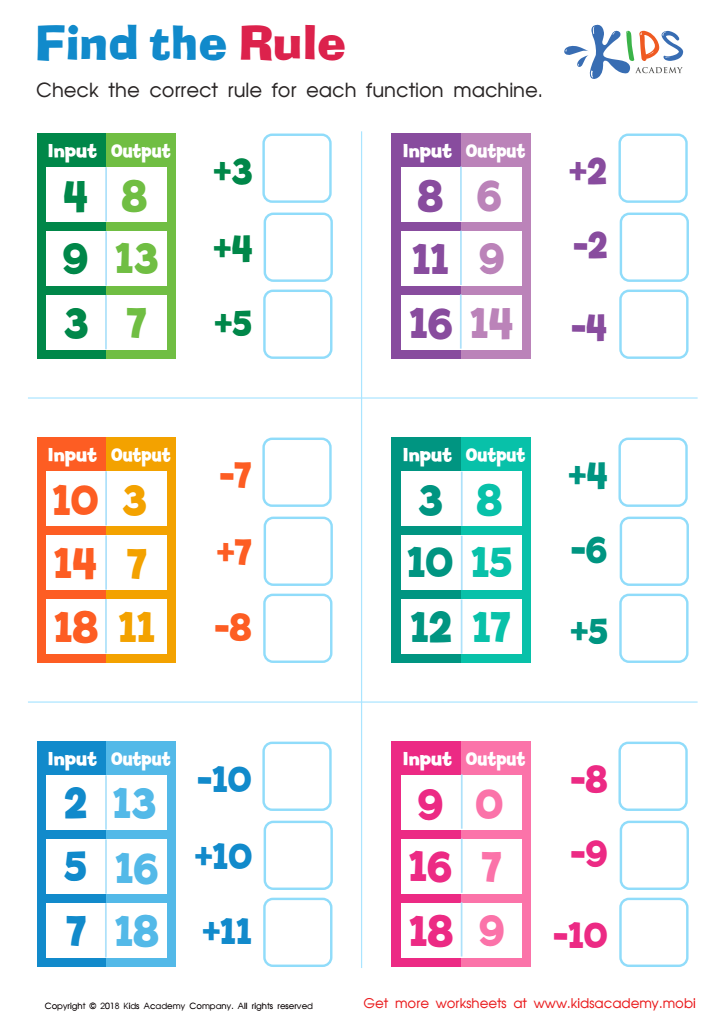
Find the Rule Worksheet
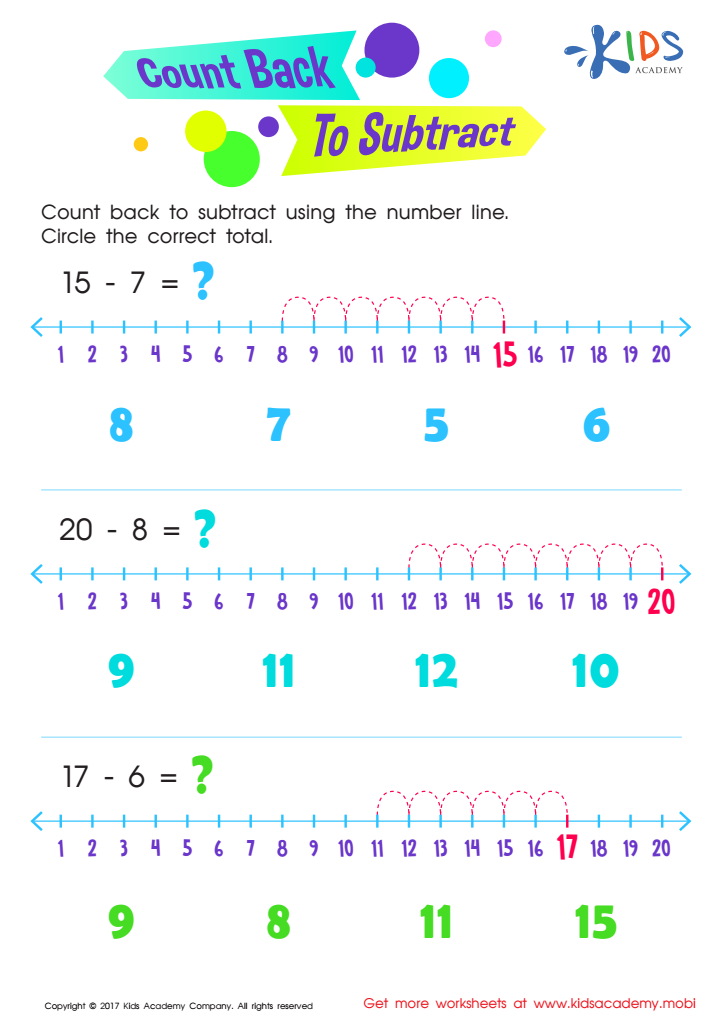
Count Back to Subtract Substraction Worksheet
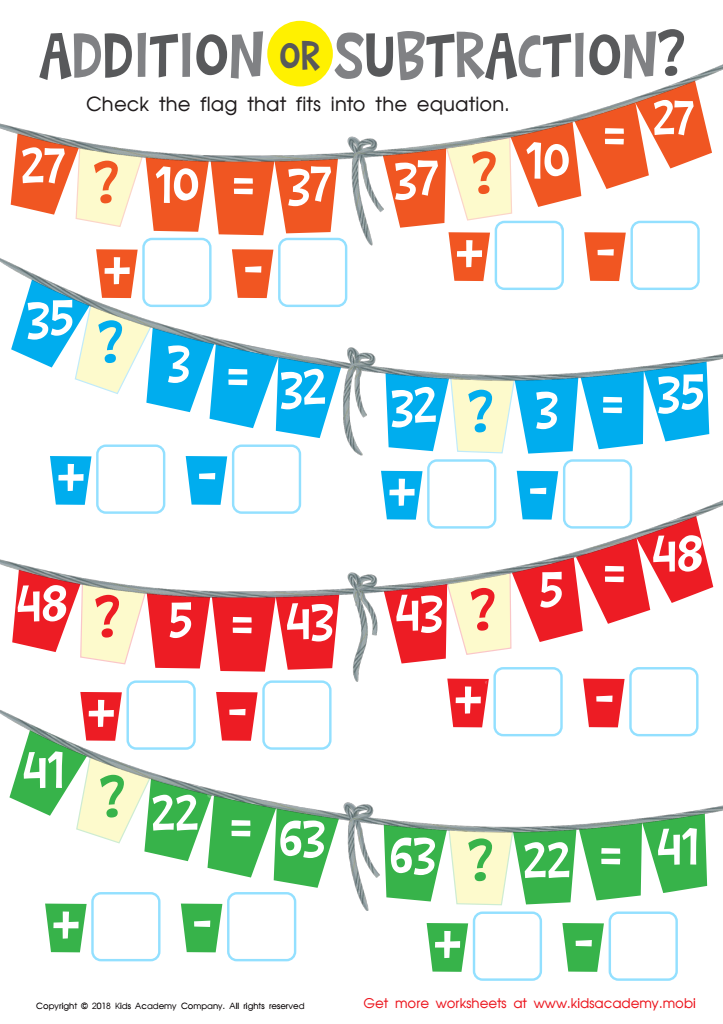
Addition or Subtraction? Worksheet
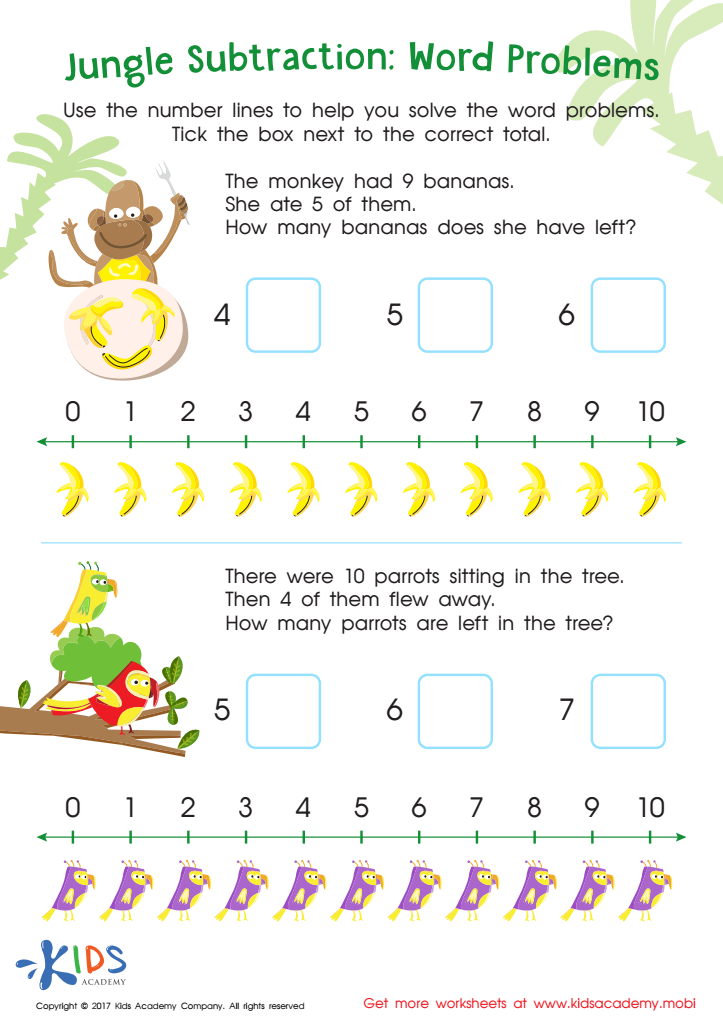
Jungle Subtraction Word Problems Substraction Worksheet








Mathematical reasoning, specifically subtraction, is a critical foundational skill for children ages 3-8. This early exposure sets the stage for understanding more complex mathematical concepts and real-world problem-solving. During these formative years, children's brains are highly receptive to learning patterns, structures, and logic; mastering subtraction helps to solidify these essential mathematical principles.
Subtraction is more than just taking away numbers; it enhances logical thinking, pattern recognition, and cognitive development. Through subtraction, children learn about differences, which is fundamental to comprehending concepts such as distance, time, and quantity. Additionally, engaging with subtraction problems boosts children's self-confidence and resilience as they learn to tackle challenges and correct mistakes.
Moreover, mathematical reasoning in subtraction is directly tied to literacy skills. Explaining their thought processes, whether verbally or in writing, reinforces language development. As children talk about how and why they subtracted certain amounts, they build crucial communication skills that benefit their overall academic progress.
Investing time and resources in nurturing subtraction skills prepares young learners for success in STEM fields, enhances their critical thinking, and equips them with the necessary tools to navigate daily life. Early intervention in mathematical education builds a strong cognitive framework that fosters lifelong learning and curiosity. Parents and teachers play a pivotal role in this developmental stage, providing support and encouragement that can lead to enduring mathematical proficiency and enthusiasm.








