Multiplication practice Times Tables Worksheets for Ages 3-8 - Page 2
33 filtered results
-
From - To
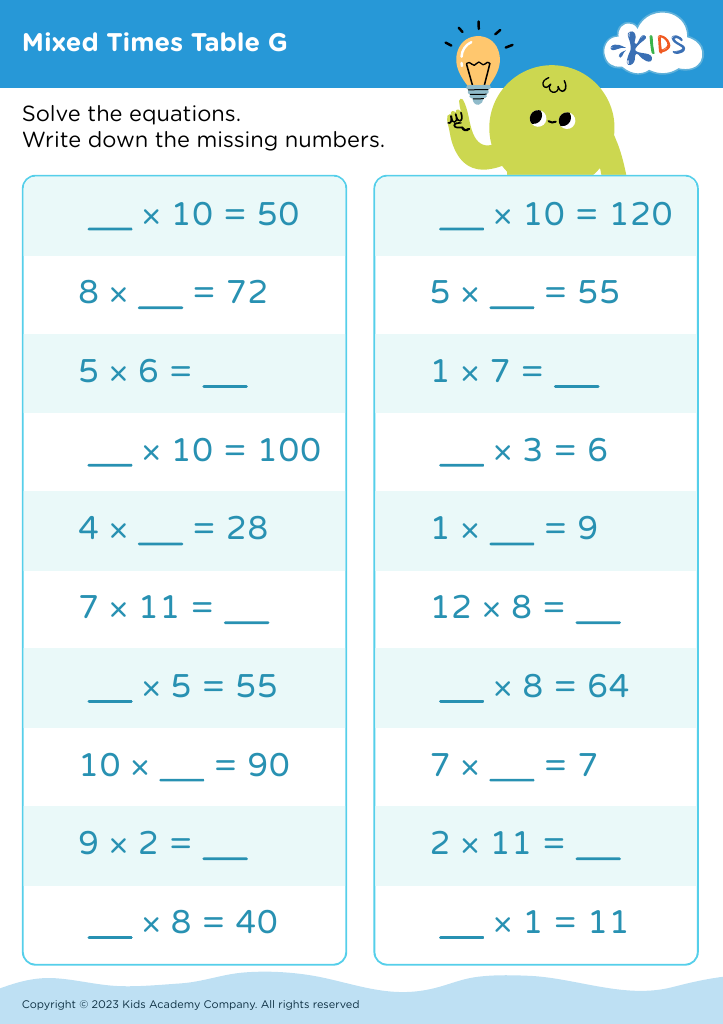
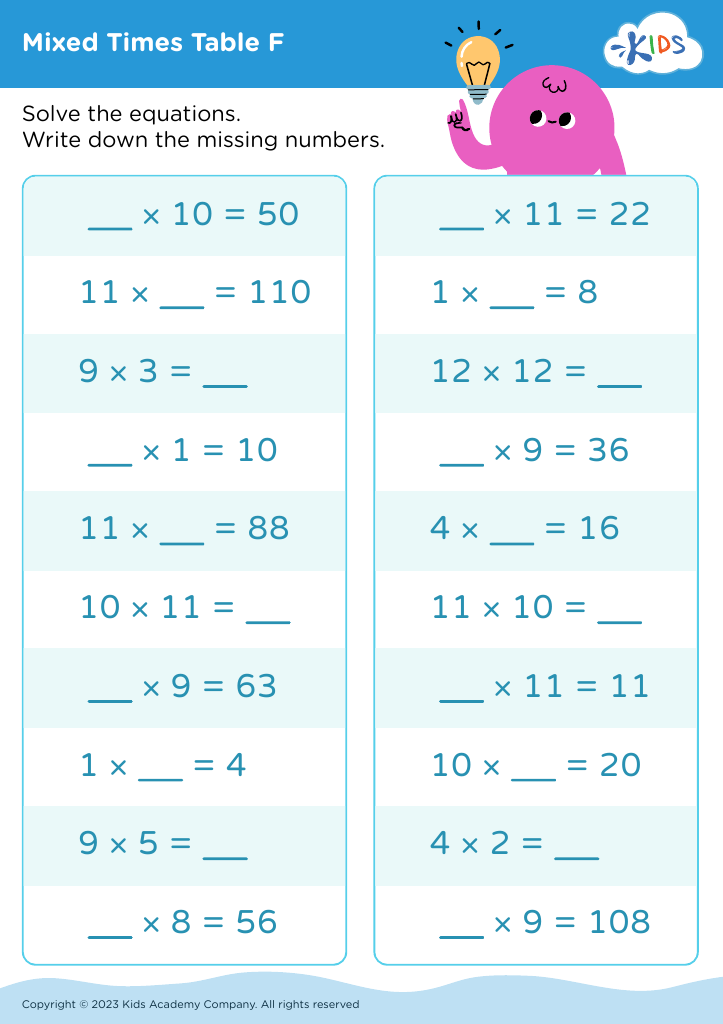
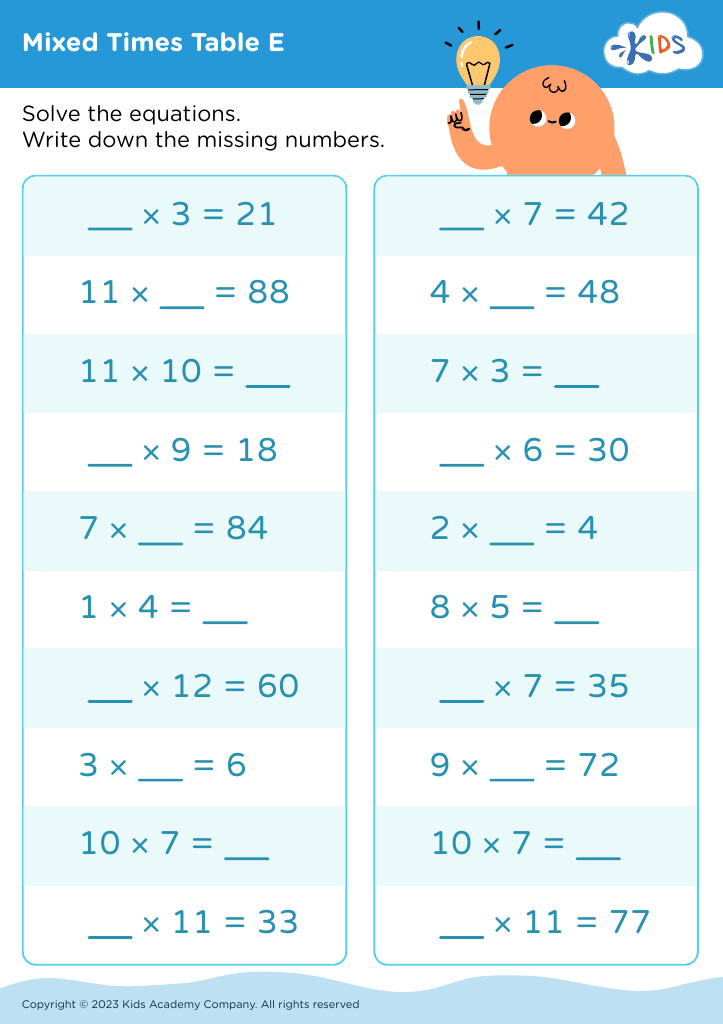
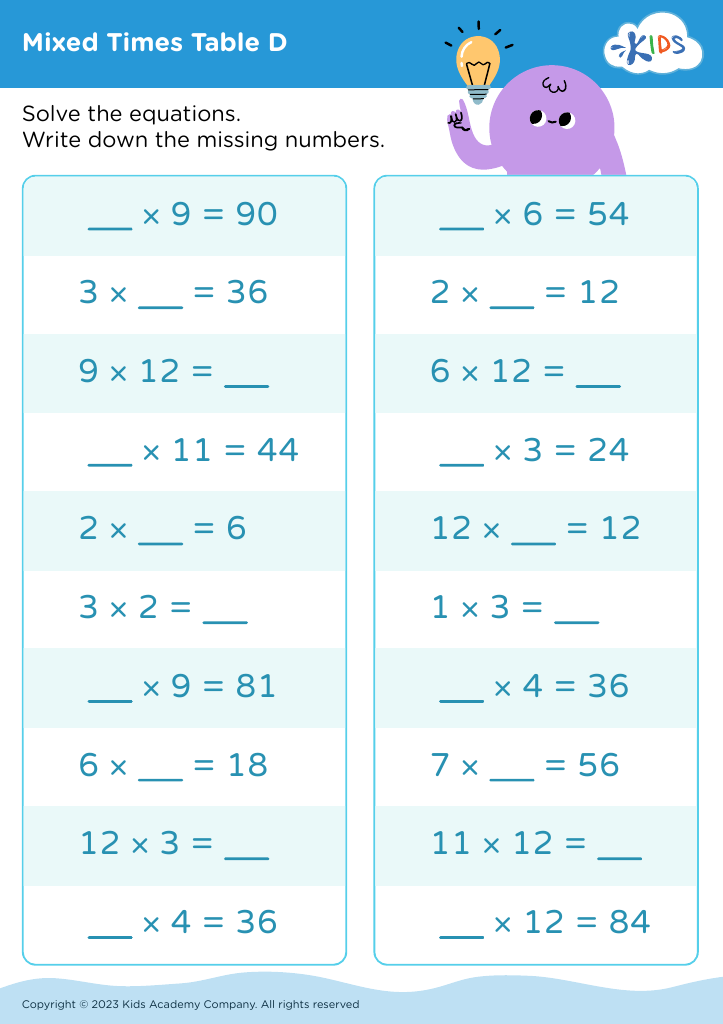
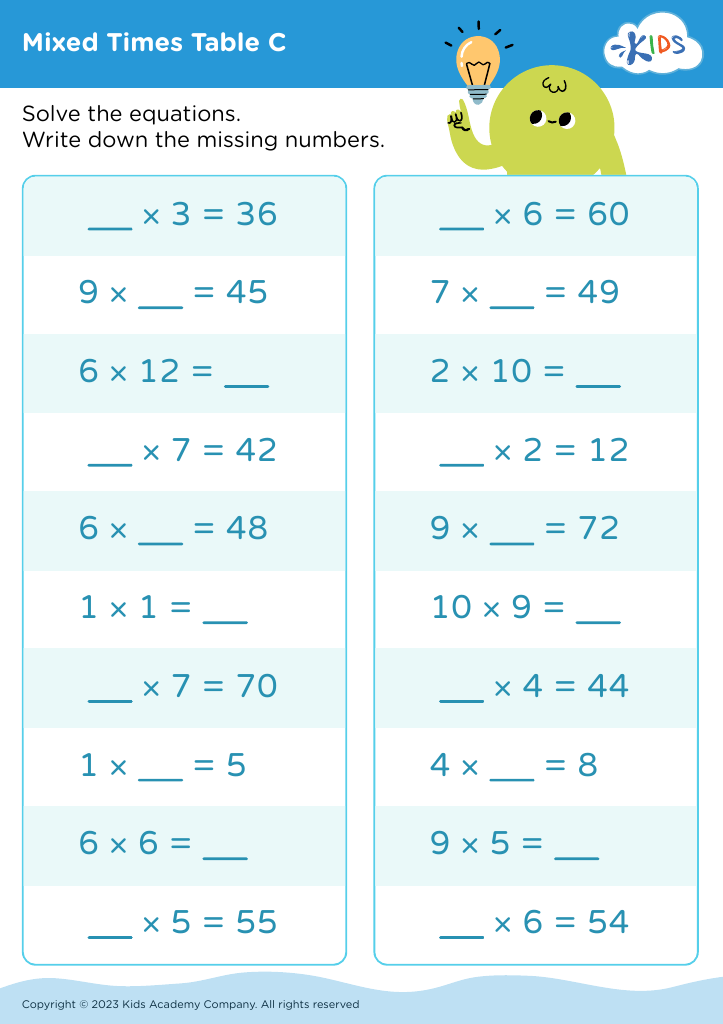
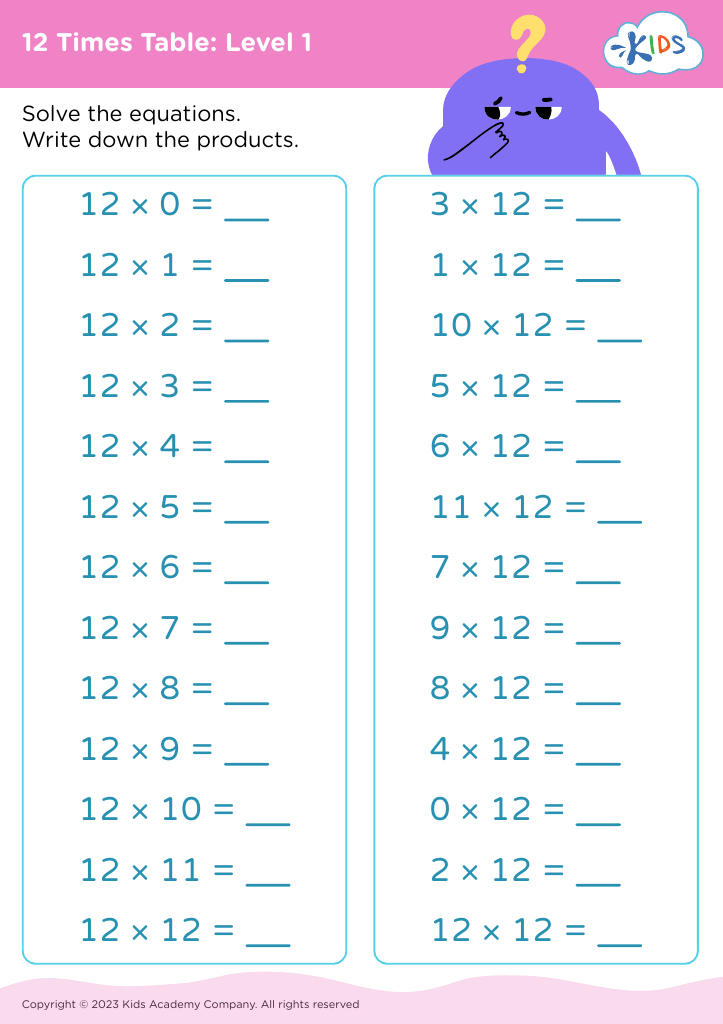
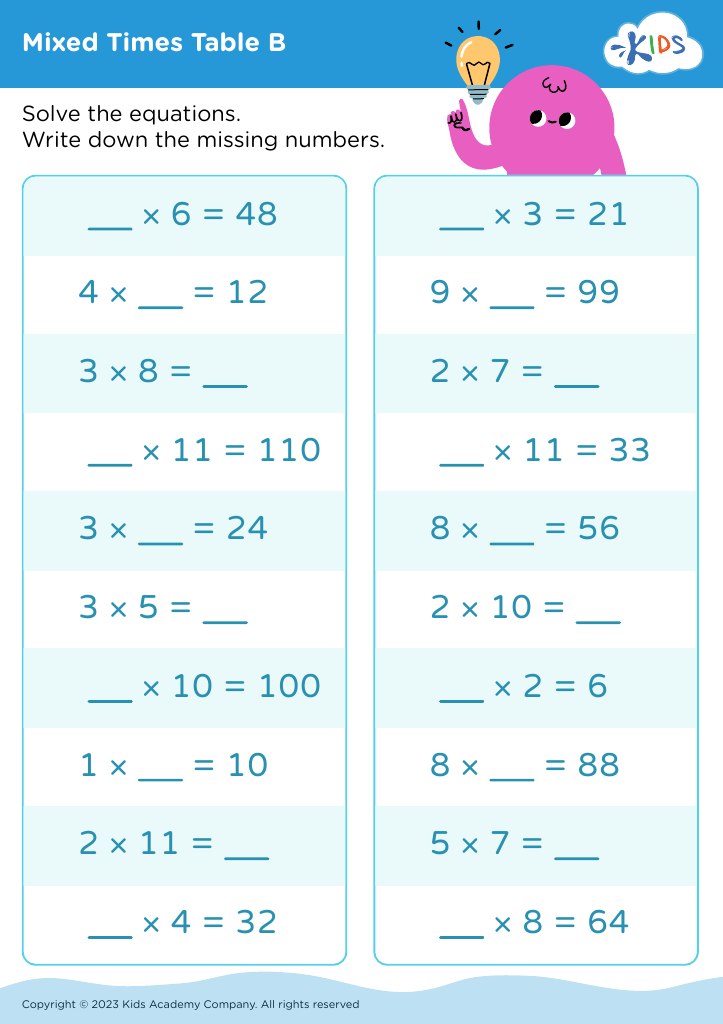
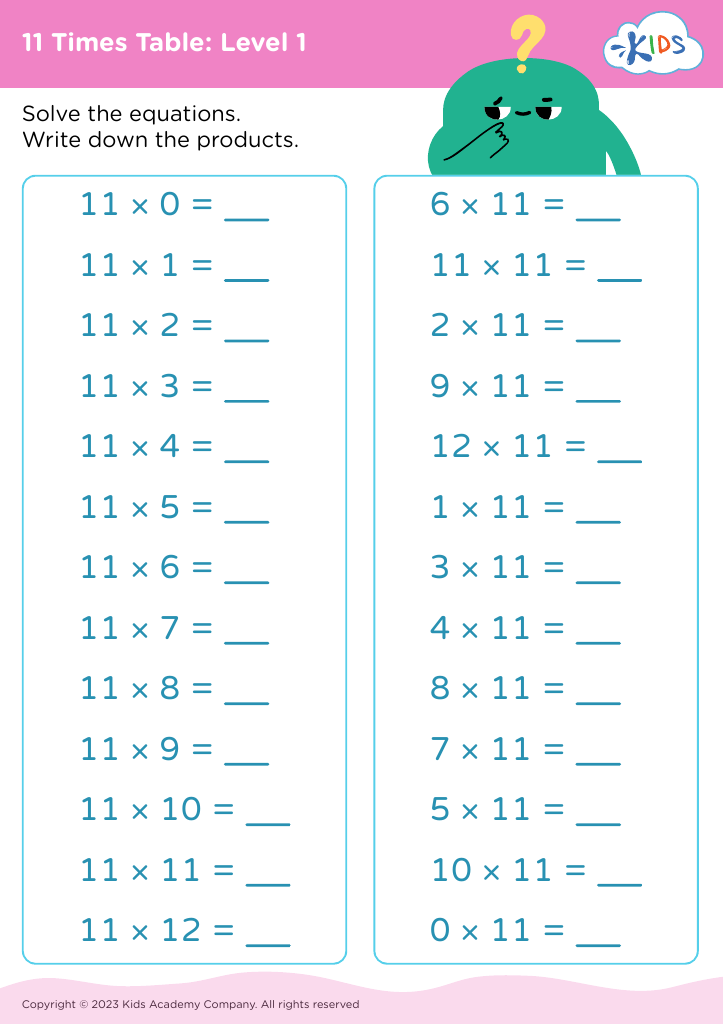
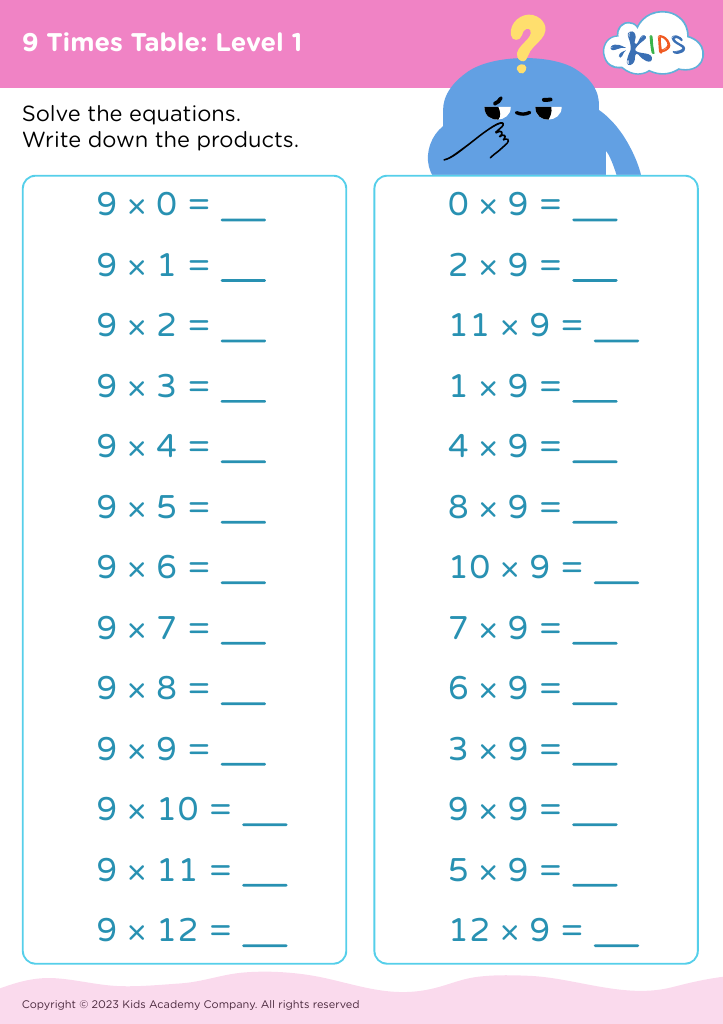





Multiplication practice, particularly with times tables, is crucial for children ages 3-8 as it lays the foundation for their future mathematical understanding. Mastering multiplication not only helps students develop numeracy skills but also enhances cognitive abilities such as memory and problem-solving. Early practice with times tables reinforces number patterns and relationships, allowing children to recognize that multiplication is a form of repeated addition.
For parents and teachers, promoting multiplication fluency at this stage aids in building confidence and competence in math, crucial for academic success. Engaging young learners with fun activities or games makes multiplication enjoyable, turning what can be a daunting task into an entertaining learning experience. Consistent practice establishes a strong numerical base, and as children progress in their education, this fluency will enable them to tackle higher-level math concepts with ease, such as division, fractions, and algebra.
Furthermore, as children develop their multiplication skills, they gain a sense of accomplishment, fostering a positive attitude towards math, which is vital for lifelong learning. Investing in multiplication practice during these formative years can thus significantly benefit children's overall academic journeys and help minimize math anxiety in the future.








