Enhancing Reading Comprehension Building Vocabulary Worksheets for Ages 3-8
4 filtered results
-
From - To
Unlock the power of reading with our "Enhancing Reading Comprehension Building Vocabulary Worksheets" designed for children aged 3-8. These interactive worksheets promote literacy by enhancing word recognition and comprehension skills. Through engaging activities, kids will expand their vocabulary and strengthen their understanding of stories. Our thoughtfully crafted resources cater to various learning styles, ensuring every child can thrive. Explore creative exercises, word games, and imaginative prompts that make learning enjoyable and effective. Perfect for parents, teachers, and educators, these worksheets are an ideal tool to cultivate a love for reading and support lifelong learning. Start your child's literacy journey today!
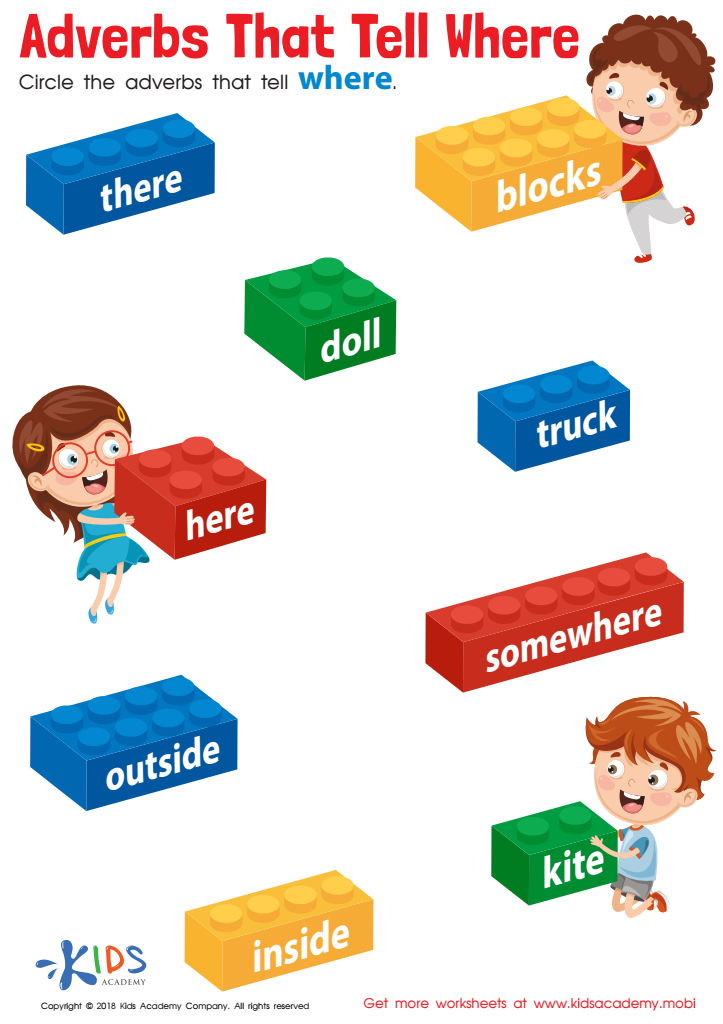
Adverbs That Tell Where Worksheet
 Assign to My Students











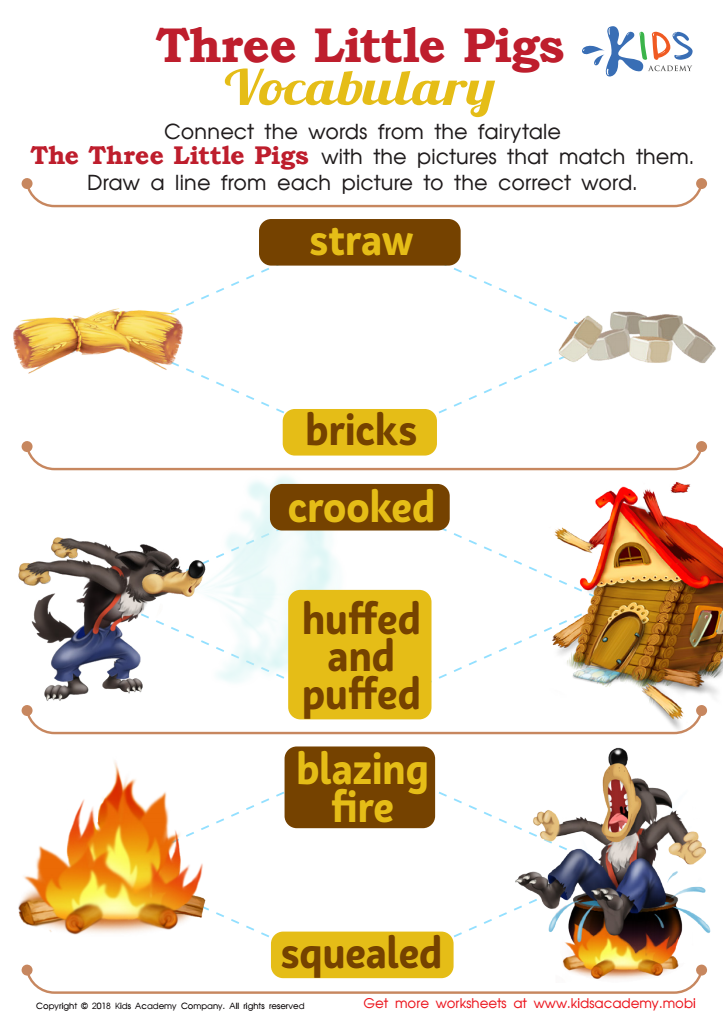
Three Little Pigs Vocabulary Worksheet
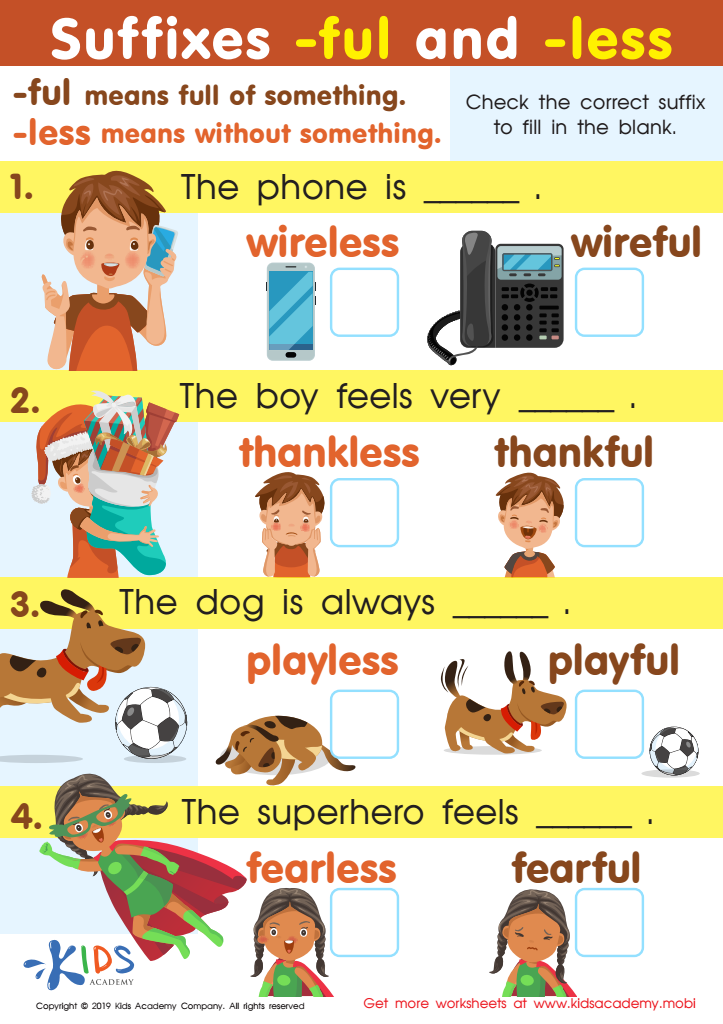
Suffixes –ful and –less Worksheet
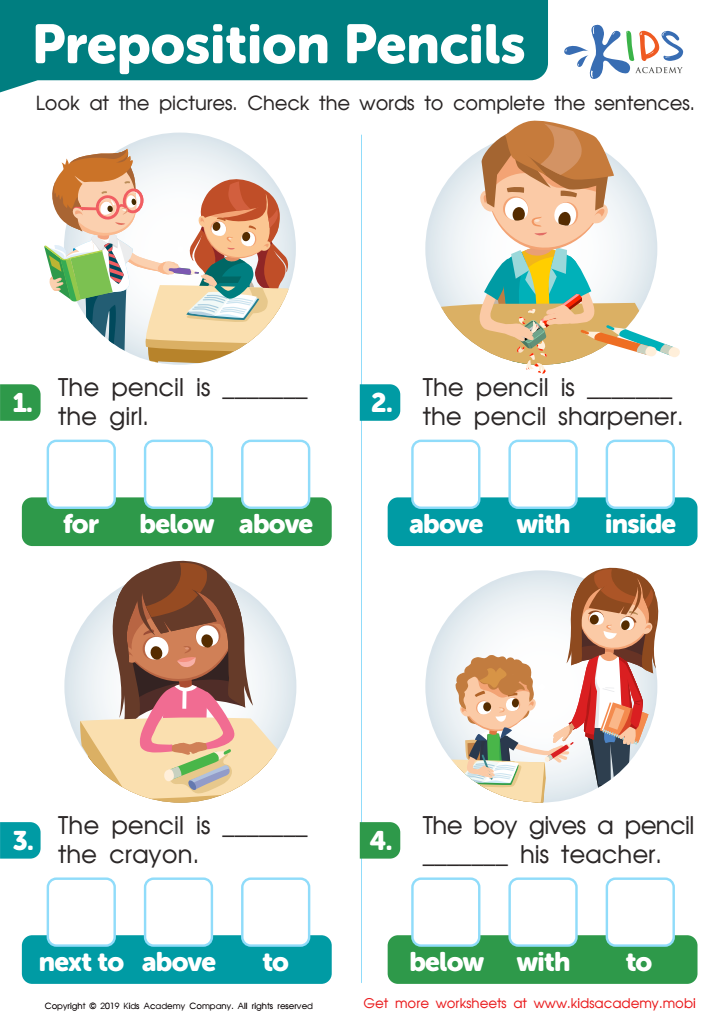
Preposition Pencils Worksheet








Enhancing reading comprehension and building vocabulary for children aged 3-8 is crucial for their cognitive and academic development. At this age, children are laying the foundation for their literacy skills, which are vital for their future learning and overall success. A rich vocabulary enables young learners to express themselves clearly, understand complex concepts, and make connections across subjects, fostering critical thinking.
Reading comprehension is equally important, as it ensures that children can not only decode words but also grasp their meanings within context. This skill is essential for academic achievement; children who struggle with comprehension may find it difficult to keep up in school, leading to frustration and disengagement. Early exposure to a wide range of vocabulary through reading, conversations, and interactive activities can spark curiosity and engage children in their learning.
Moreover, nurturing these skills at a young age instills a love for reading and inquiry, encouraging lifelong learning habits. Parents and teachers play a vital role in this process by creating an environment rich in language, offering diverse reading materials, and engaging children in discussions. Ultimately, prioritizing reading comprehension and vocabulary development sets children on a path to educational success and personal growth.








