Fine Motor Skills Building Vocabulary Worksheets for Ages 3-8 - Page 2
25 filtered results
-
From - To
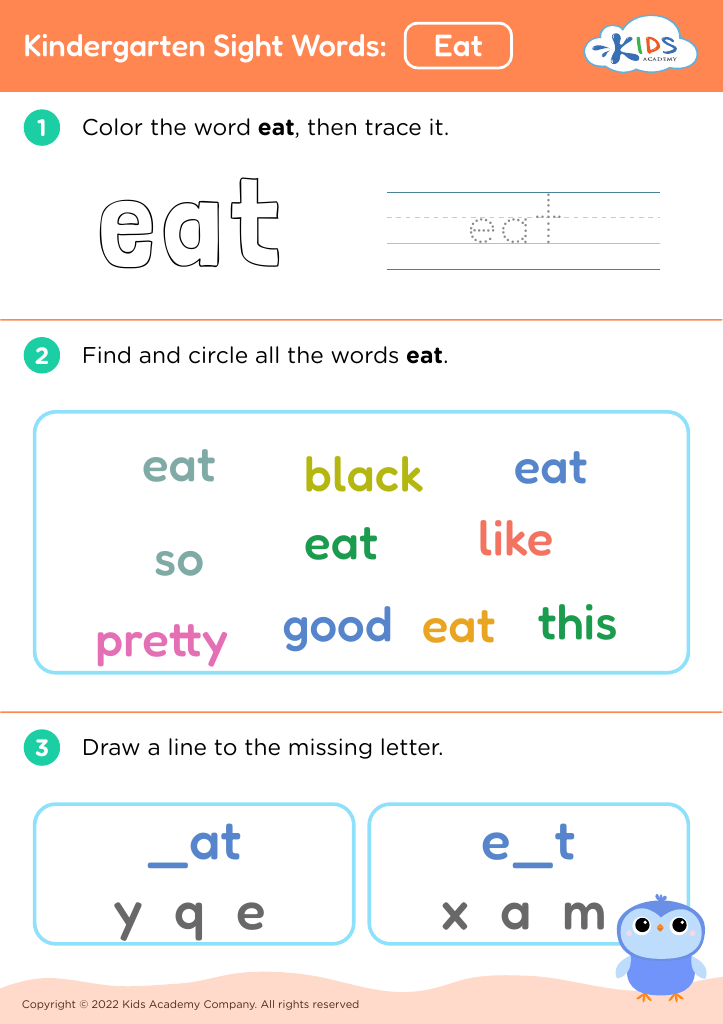



















Fine motor skills are crucial for children's overall development and significantly impact their learning experiences. For children aged 3-8, these skills involve the coordination of small muscles in the hands and fingers, which are essential for tasks like writing, buttoning clothes, and using scissors. Building fine motor skills enhances children's independence and confidence as they navigate daily activities.
Furthermore, fine motor development is directly linked to vocabulary acquisition. When children engage in activities that promote fine motor skills—like drawing, coloring, and manipulating small objects—they simultaneously expand their cognitive abilities. These activities encourage articulation of new words and concepts as children describe their actions or the items they are using. For instance, while playing with playdough or building blocks, children learn words related to shapes, textures, and spatial relationships.
Parents and teachers should prioritize fine motor skills and vocabulary development in their play and educational activities, fostering a supportive environment for children to explore and express themselves. By embedding vocabulary building in fine motor tasks, they not only enhance children's physical dexterity but also enrich their language development, setting a strong foundation for future learning. Ultimately, nurturing these skills is vital for a child's overall growth and academic success.








