
Grammar practice Building Vocabulary Worksheets for Ages 3-8
3 filtered results
Difficulty Level
Grade
Age
-
From - To
Subject
Activity
Standards
Our "Grammar Practice Building Vocabulary Worksheets for Ages 3-8" are thoughtfully designed to boost your child’s vocabulary and grammar skills through engaging activities. These worksheets cater to young learners, with vibrant illustrations and age-appropriate exercises that make learning fun and effective. Each worksheet focuses on key grammar concepts, helping children to sharpen their language skills as they progress. Ideal for preschool through early elementary students, our resources facilitate foundational language development, enhancing their communication and comprehension abilities. Foster a love for reading and writing in your little ones with our expertly crafted grammar practice worksheets designed specifically for ages 3-8.
Favorites
With answer key
Interactive
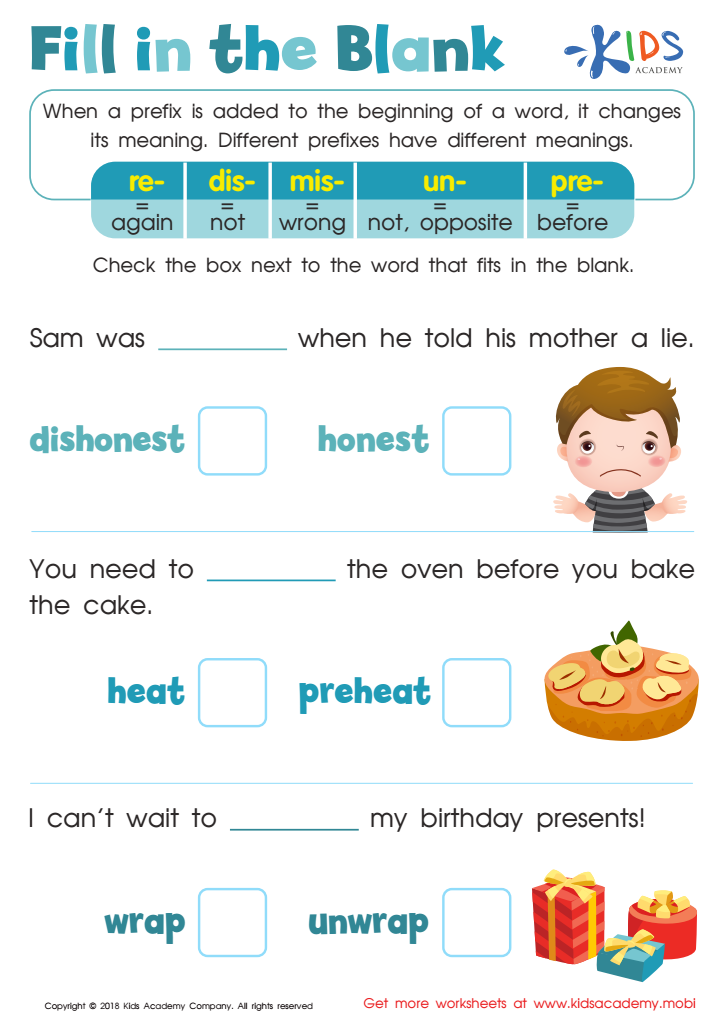
Reading: Fill in the Blank Worksheet
Students can practice understanding the meaning of common prefixes with this worksheet. They read sentences and pick the correct word with the appropriate prefix to complete it. Downloadable and a great addition to reading and vocabulary resources, this helps improve comprehension with mastery of the skill!
 Assign to My Students
Reading: Fill in the Blank Worksheet
Worksheet











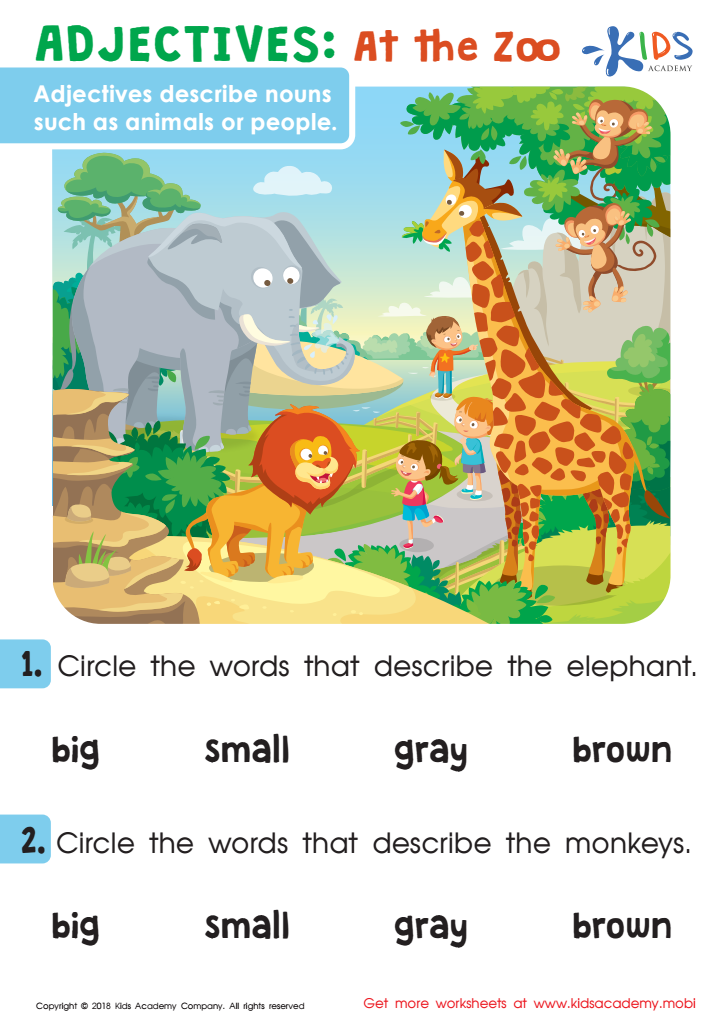
Adjectives: At The Zoo Worksheet
Take your kids to the zoo and ask them about their favorite activities and animals. This worksheet is a great way for kids to learn about adjectives. Explain that adjectives describe nouns like people or animals (e.g. big, tall, dark). Look at the printout with your kids and help them circle words that describe the animals in the picture.
Adjectives: At The Zoo Worksheet
Worksheet
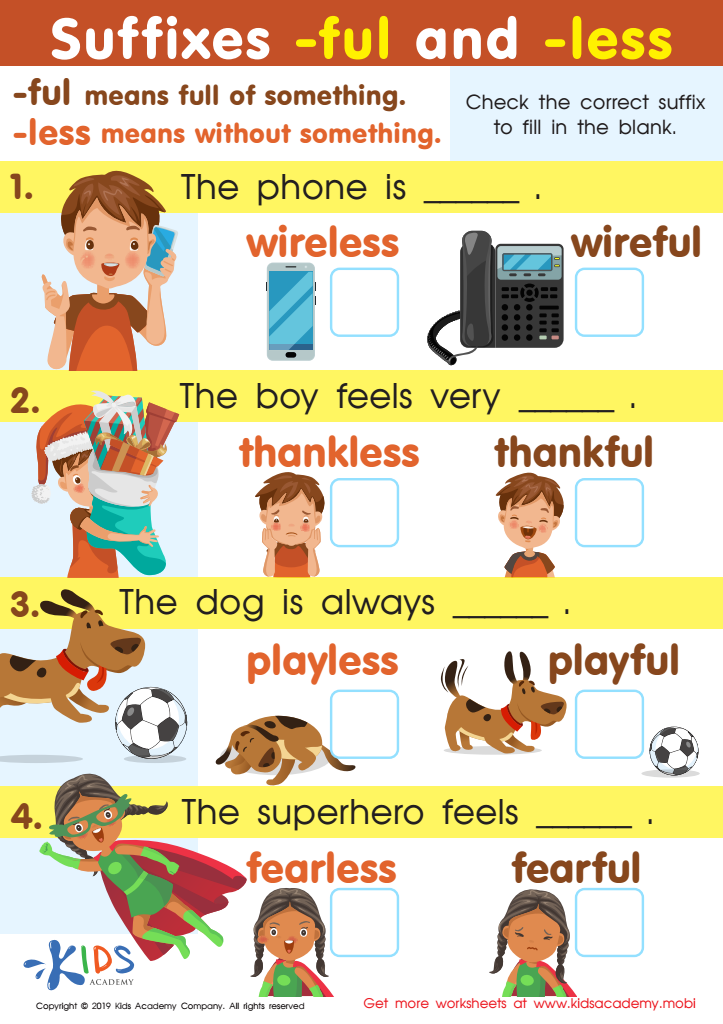
Suffixes –ful and –less Worksheet
Before you start this worksheet, make sure your kids know about suffixes. Explain that they're added to the end of words to change their meaning. In the worksheet, kids will learn about the suffixes –ful and –less. Look at the sentences in the picture with them, and help them to choose the right one for each blank.
Suffixes –ful and –less Worksheet
Worksheet
Join Kids Academy for Free
Who is primarily going to use this learning content?



.jpg)




Parents and teachers should prioritize grammar practice and building vocabulary for children aged 3-8 because these foundational skills are crucial for their overall language development, cognitive growth, and academic success. During these early years, children are highly receptive to learning and acquiring new information, marked by rapid brain development.
Grammar practice introduces young learners to the basic rules and structures of language. Understanding grammar enhances their ability to construct coherent sentences, communicate effectively, and develop strong reading and writing skills. As children grasp grammar rules, they become more capable of expressing their thoughts clearly, which bolsters their confidence and improves their social interactions.
Building vocabulary, on the other hand, enriches children’s language comprehension and usage. A diverse vocabulary empowers children to better understand stories, follow instructions, and articulate their ideas. This broad vocabulary forms the bedrock for academic learning as students encounter new and more complex words across various subjects.
Furthermore, early mastery of grammar and vocabulary positively impacts future educational achievements. Children who have strong language skills from an early age often exhibit greater success in school, showing improved performance in reading, writing, and critical thinking tasks.
In summary, grammar practice and vocabulary building in early childhood set the stage for effective communication, academic progress, and lifelong learning, making it a vital focus for parents and teachers.








