Improve vocabulary Building Vocabulary Worksheets for Ages 3-8
5 filtered results
-
From - To
Enhance your child's language skills with our "Improve Vocabulary Building Worksheets" designed specifically for ages 3-8. These engaging worksheets are crafted to expand vocabulary through fun and interactive activities. Kids will enjoy exploring new words with colorful illustrations and simple exercises tailored to their developmental stage. Our resources focus on everyday vocabulary, ensuring that children can relate to and effectively use their new words in real-life contexts. By fostering a love for language, our worksheets encourage learning through play, enhancing reading comprehension and communication skills early on. Help your child grow their vocabulary and confidence in reading today!
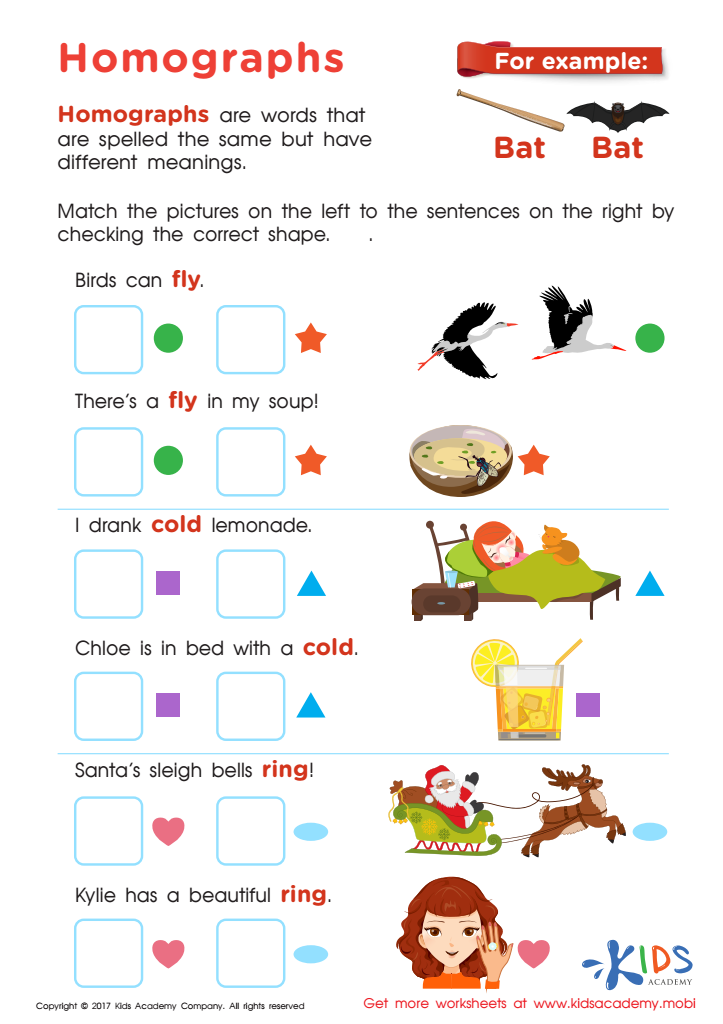
Homographs Free Printable Worksheet
 Assign to My Students











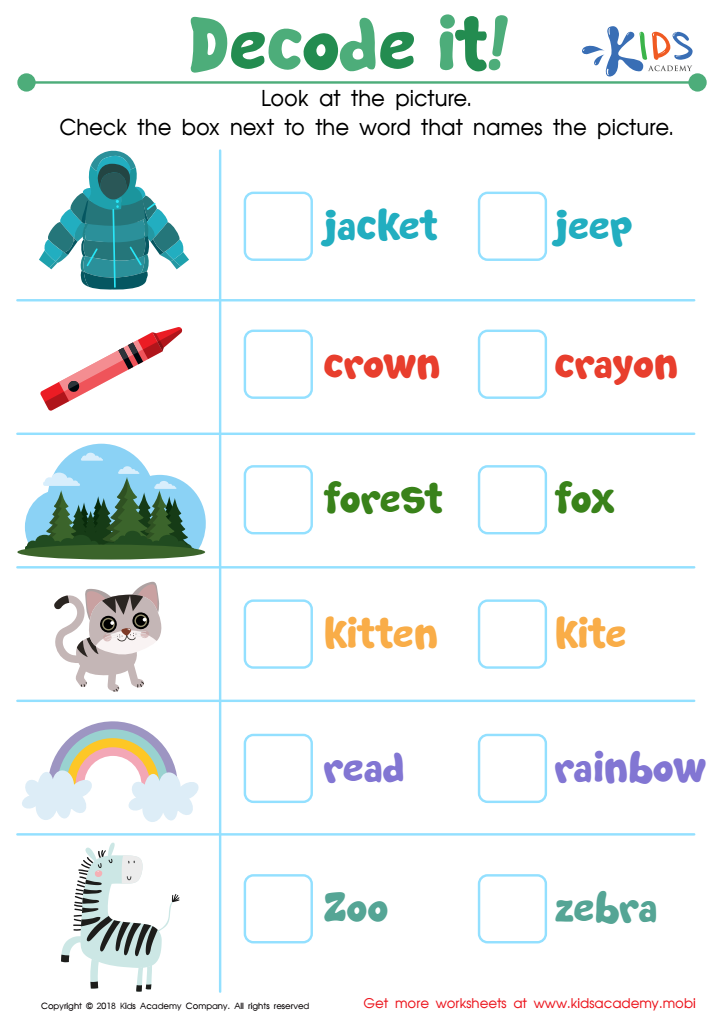
Reading: Decode It Worksheet
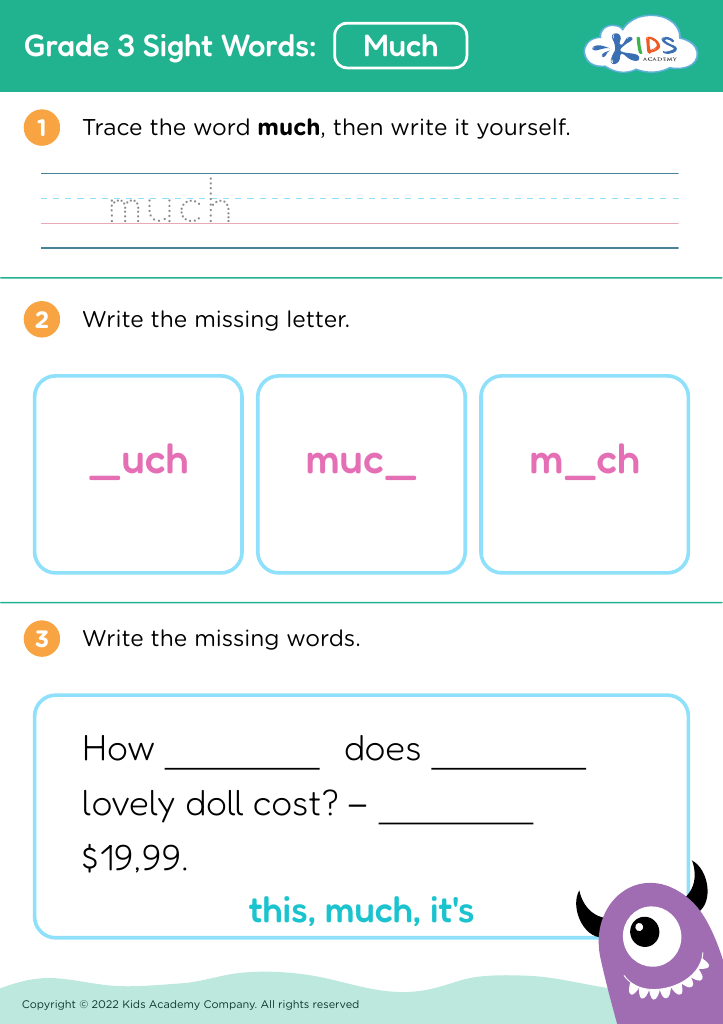
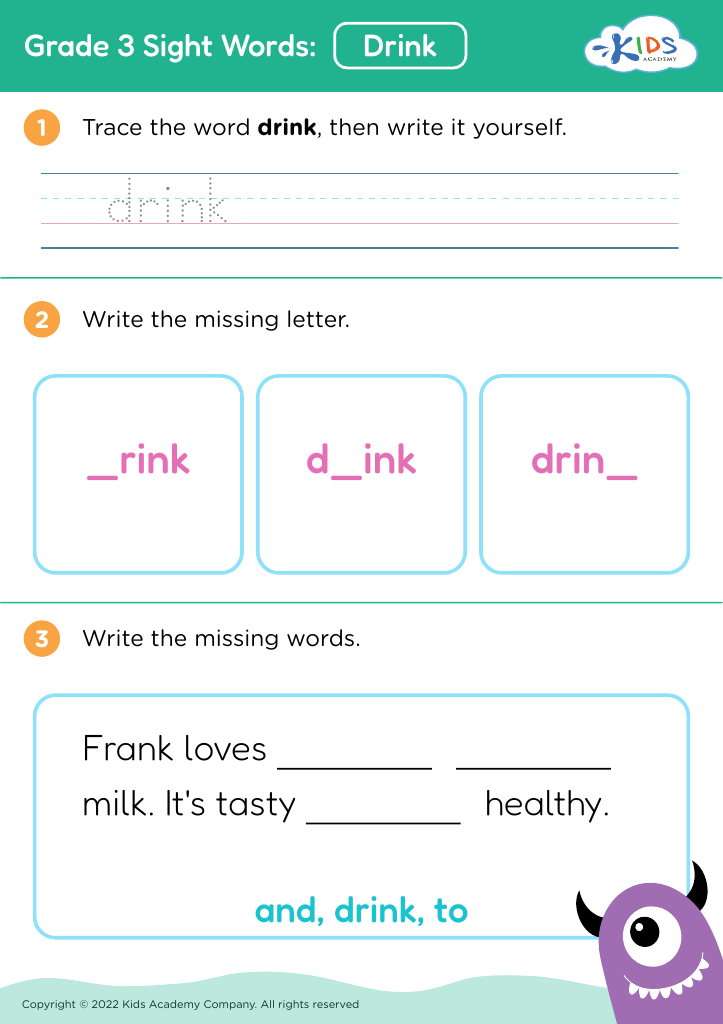



.jpg)



Building vocabulary for children aged 3-8 is crucial for their cognitive, social, and academic development. Strong vocabulary skills enhance a child's ability to express themselves, understand complex ideas, and engage in meaningful conversations. At this age, children are rapidly processing language and learning new concepts; thus, it is the perfect time to enrich their vocabulary.
Research shows that a larger vocabulary correlates with better reading comprehension and writing skills later in life. When children can articulate their thoughts and feelings, they become more confident communicators, which positively influences their social interactions and emotional well-being. Moreover, in an educational setting, a robust vocabulary allows children to participate more actively in discussions, ask questions, and explore topics deeply, all of which are integral to lifelong learning.
Parents and teachers play a vital role in vocabulary enhancement by providing enriched language experiences, including reading together, engaging in conversation, and introducing new words through games and everyday activities. By prioritizing vocabulary development, caregivers help children build a strong foundation for future academic achievement and success in life. Investing in a child’s vocabulary is ultimately investing in their potential for growth, learning, and emotional intelligence.








