Filters

8 filtered results

Clear all filters
Favorites
With answer key
Interactive

8 filtered results

Difficulty Level

Grade


Discover our engaging Logical Reasoning Building Vocabulary Worksheets designed for ages 3-8! These worksheets are perfect for young learners looking to enhance their vocabulary and critical thinking skills through playful activities. By combining fun illustrations and interactive exercises, children will improve their ability to think logically while expanding their word knowledge. Parents and educators can use these resources to encourage problem-solving, comprehension, and creative expression. With varying levels of difficulty, these printable worksheets cater to diverse learning styles and ensure that children remain excited about their educational journey. Start fostering a solid vocabulary foundation while nurturing logical reasoning skills today!

Check out this FREE Trial Lesson on Building Vocabulary for age 3-8!

Understand and Use Interrogative (Question) Words

Favorites
With answer key
Interactive
  • 3-8
  • Logical Reasoning
  • Building Vocabulary
What Is It? Worksheet

What Is It? Worksheet

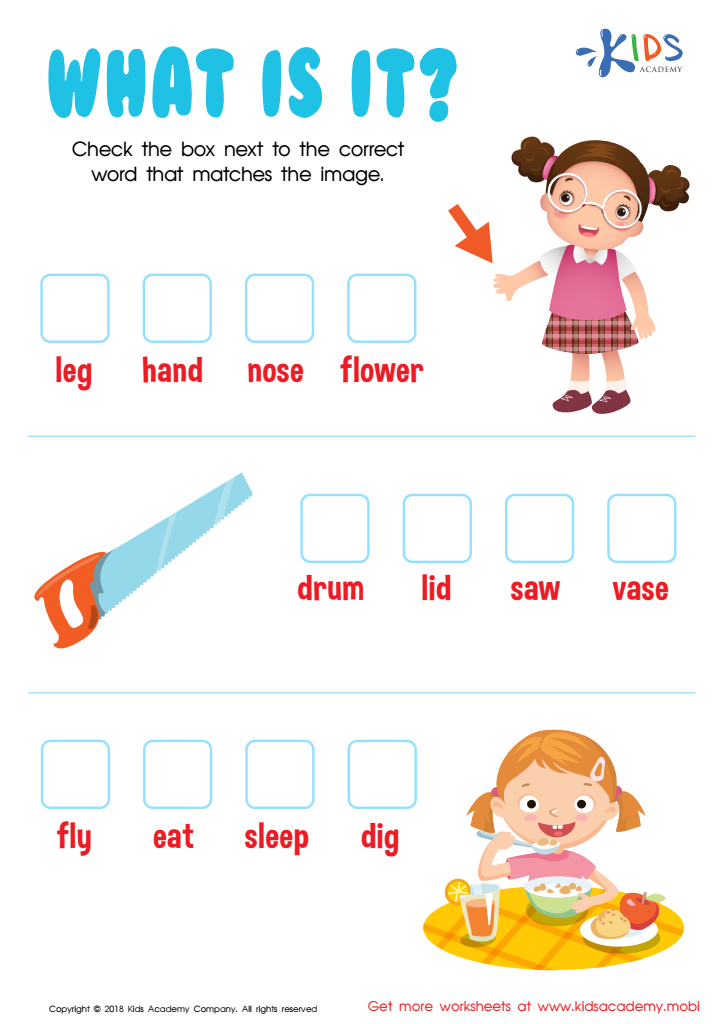
Test your kids' object recognition skills with this worksheet. Have them identify each picture, then check the box next to the correct word. Point to the image and ask your child what it is; then help them select the correct answer. It's a great way to see how well they can recognize objects from pictures.
What Is It? Worksheet
Worksheet
Which Doesn't Belong? Worksheet

Which Doesn't Belong? Worksheet

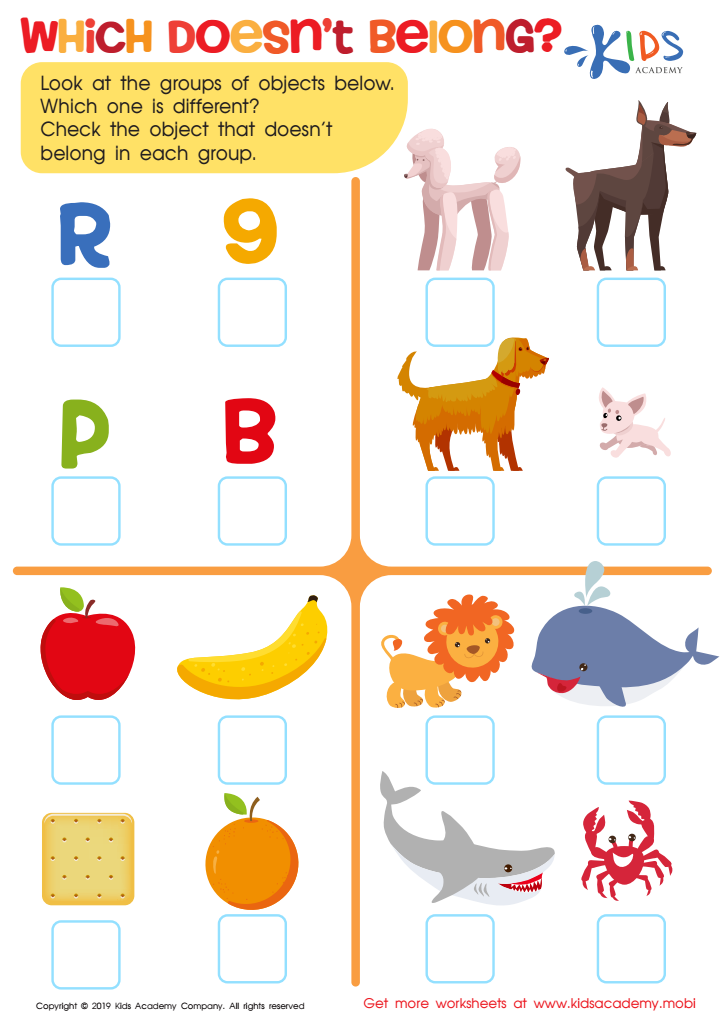
This engaging worksheet helps preschoolers recognize similar and different attributes of common words, using brightly-colored pictures. They analyze the items in each category and check off what is different. For extra practice, have them explain their reasoning verbally! Sorting and classifying are important skills to learn.
Which Doesn't Belong? Worksheet
Worksheet
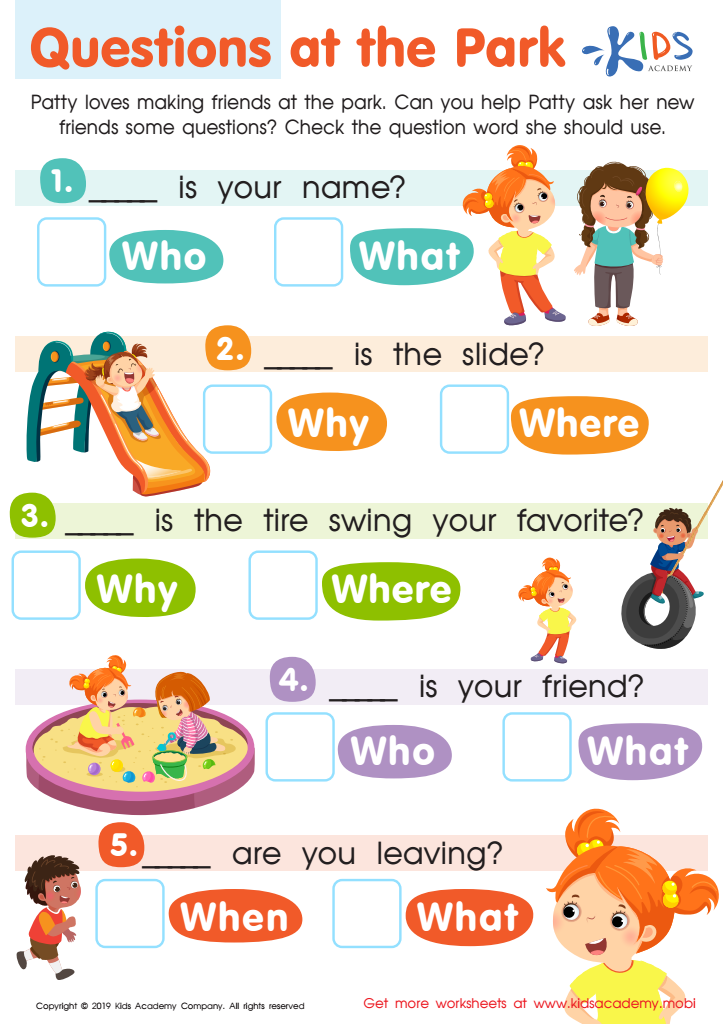
Questions at the Park Worksheet

Questions at the Park Worksheet

Parks are great for fun! Kids can play, run and be as loud as they want! Ask them what their favorite activities are. If they love making friends, like Patty in this worksheet, help them practice their question words to get to know their new pals better.
Questions at the Park Worksheet
Worksheet
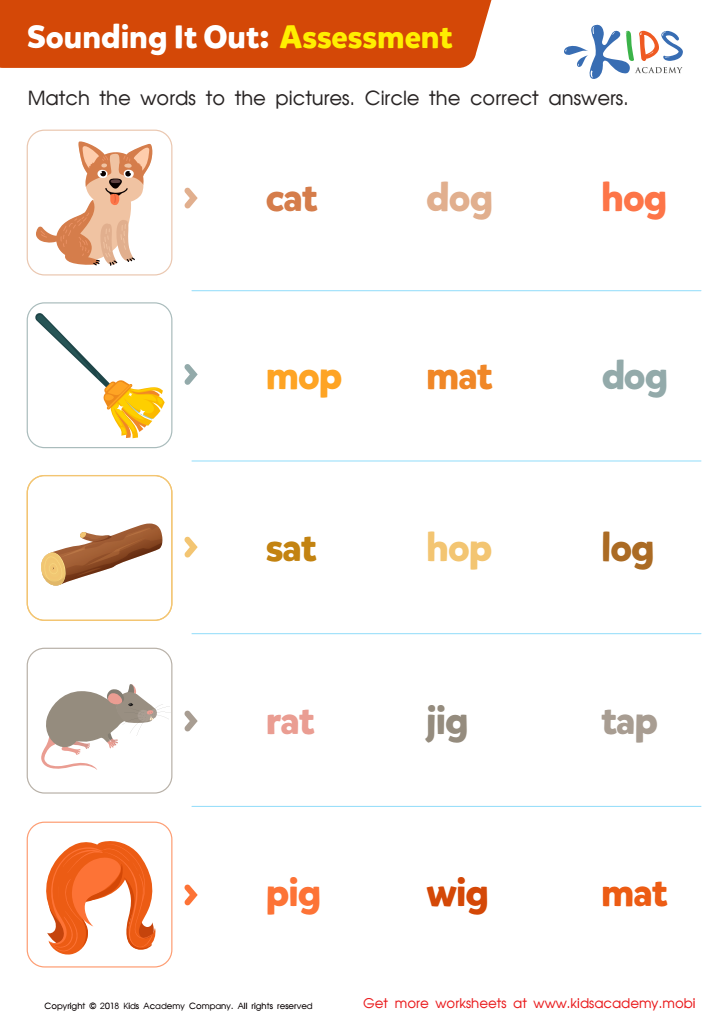
Sounding it Out: Assessment Worksheet

Sounding it Out: Assessment Worksheet

Give your little learner a fun challenge with this downloadable worksheet! With pictures to guide them, have them name the images and then sound out the words in the same row. Be careful though, as they all contain the same amount of similarly sounding letters. Once the correct word has been found, have them circle it!
Sounding it Out: Assessment Worksheet
Worksheet
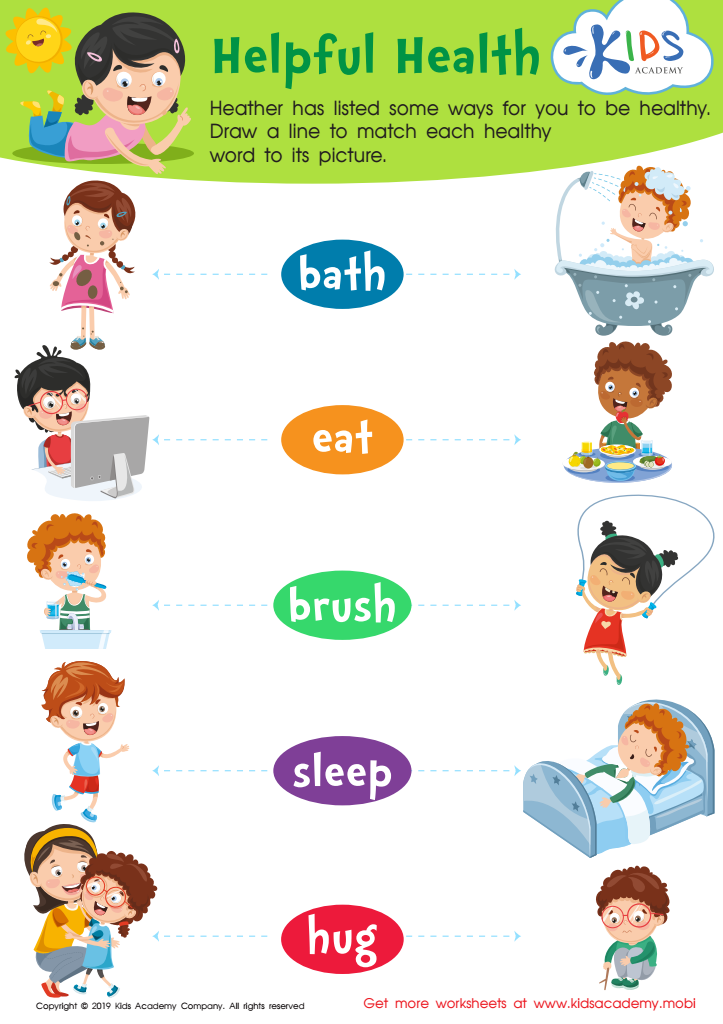
Helpful Health Worksheet

Helpful Health Worksheet

Kids can learn healthy habits with this free worksheet! With their pal Heather, they'll trace lines to connect health words with pictures like brushing teeth, hugging, and getting enough sleep. It's a great way to help young ones understand healthy activities.
Helpful Health Worksheet
Worksheet
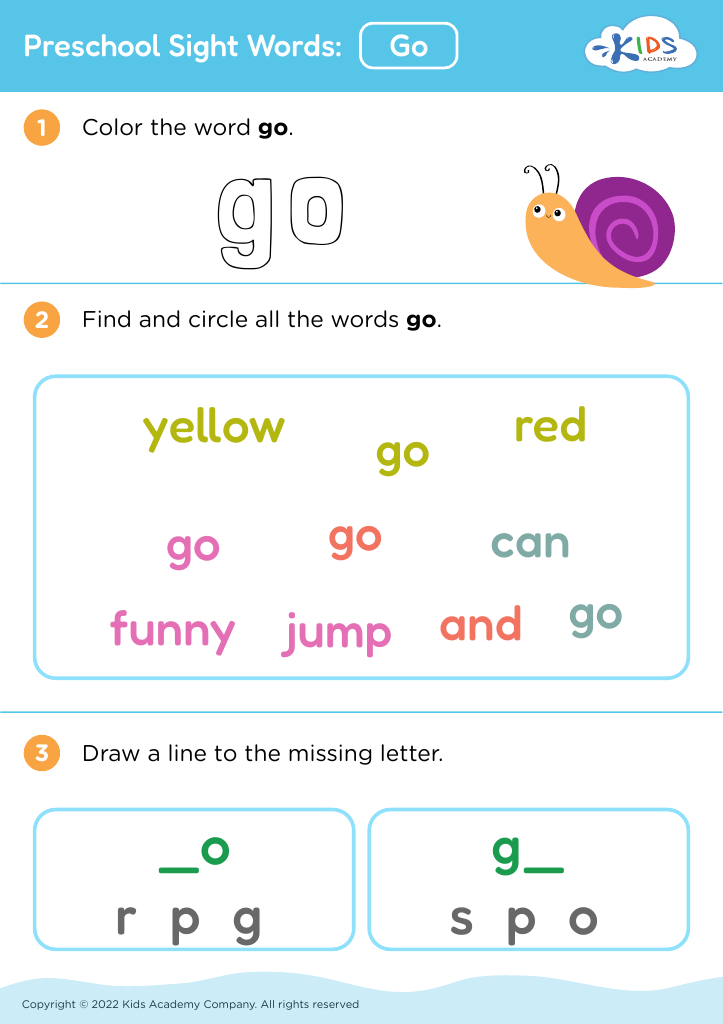
Preschool Sight Words: Go

Preschool Sight Words: Go

Preschool Sight Words: Go
Worksheet
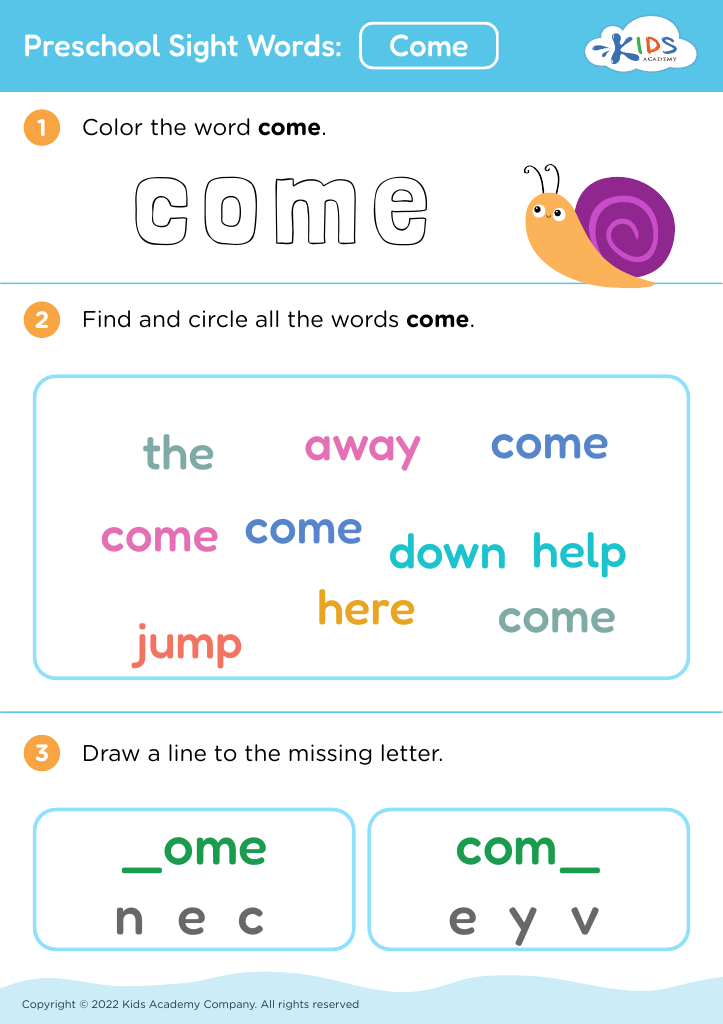
Preschool Sight Words: Come

Preschool Sight Words: Come

Preschool Sight Words: Come
Worksheet
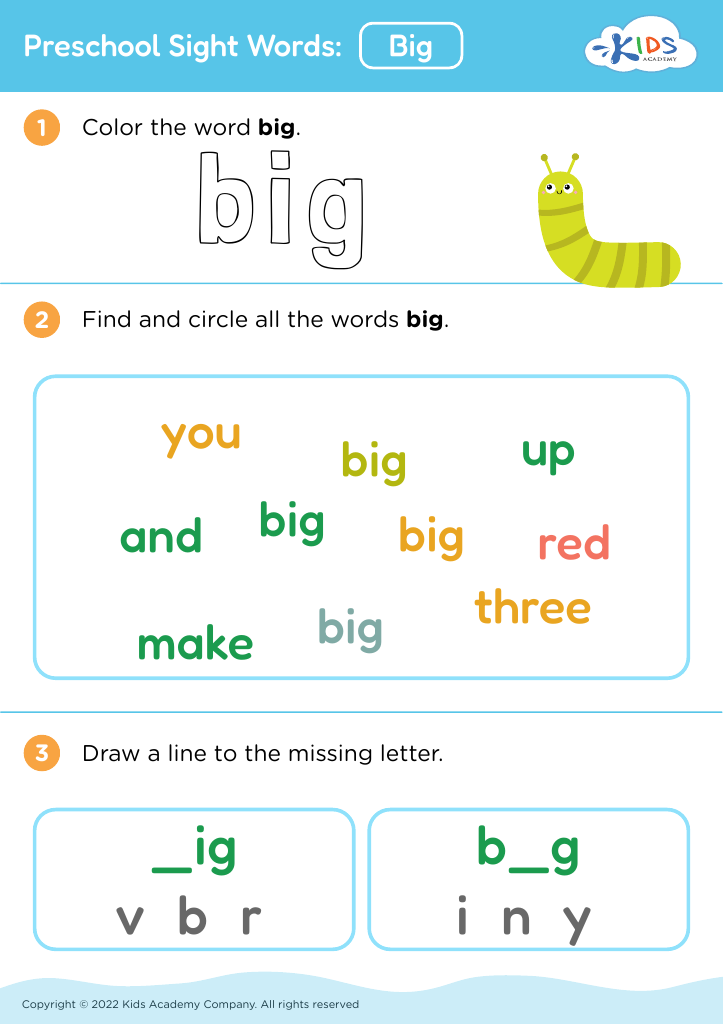
Preschool Sight Words: Big

Preschool Sight Words: Big

Preschool Sight Words: Big
Worksheet


Logical reasoning and vocabulary development are critical components of early childhood education, particularly for children aged 3-8. These skills lay the foundation for successful learning and cognitive development. First, logical reasoning enhances critical thinking– it allows children to connect ideas, make predictions, and solve problems. When children learn to think logically, they become more adept at understanding complex concepts later on.

Similarly, a rich vocabulary is essential for effective communication and comprehension. Children with strong vocabulary skills are better able to express their thoughts and understand instructions, which can positively impact their social interactions and academic performance. Furthermore, vocabulary is closely linked to reading skills. The more words a child knows, the easier it is for them to decode sentences, engage with texts, and develop a love for reading.

Parents and teachers should be proactive in fostering both logical reasoning and vocabulary building through engaging activities, such as puzzles, storytelling, and interactive games. These educational experiences not only promote cognitive skills but also make learning enjoyable. Ultimately, nurturing these areas during formative years will lead to well-rounded individuals who excel academically and socially, setting the stage for lifelong success.