Motor skills development Building Vocabulary Worksheets for Ages 3-8
3 filtered results
-
From - To
Enhance your child's learning experience with our "Motor Skills Development Building Vocabulary Worksheets" designed specifically for ages 3-8. These engaging worksheets not only foster vocabulary growth but also support essential motor skills enhancement through fun and interactive activities. Ideal for early learners, each worksheet combines creative exercises that promote hand-eye coordination and fine motor skills while introducing new words and concepts. From tracing letters to completing puzzles, children will enjoy a holistic learning approach that builds confidence and prepares them for future academic success. Discover a world of language and movement—perfect for home or classroom learning!
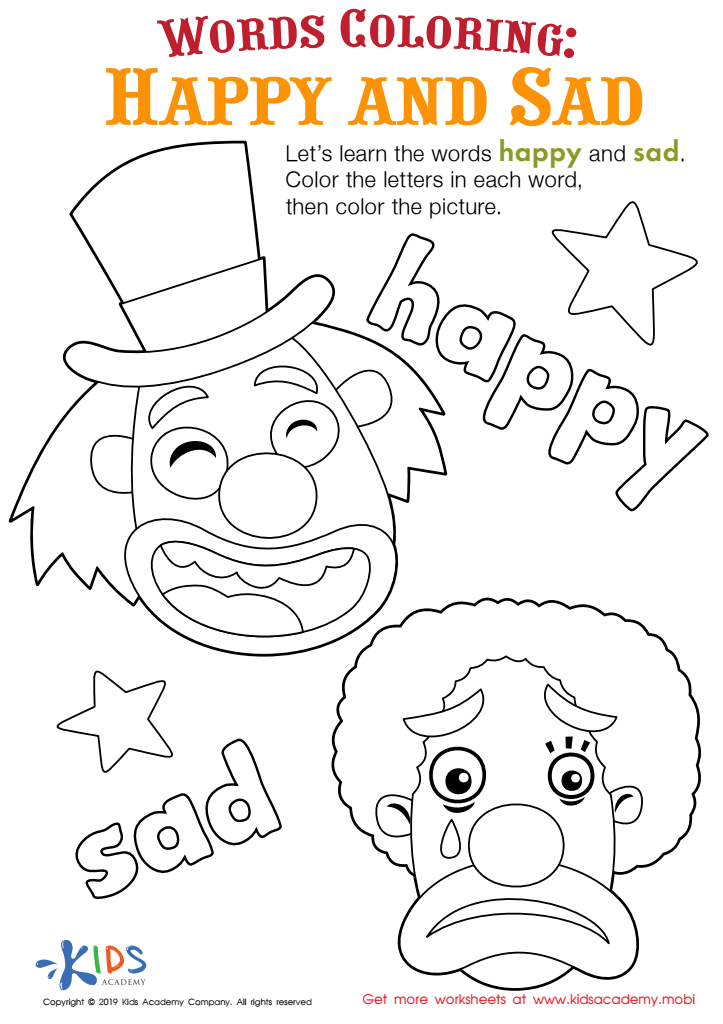
Happy and Sad Words Coloring Worksheet
 Assign to My Students











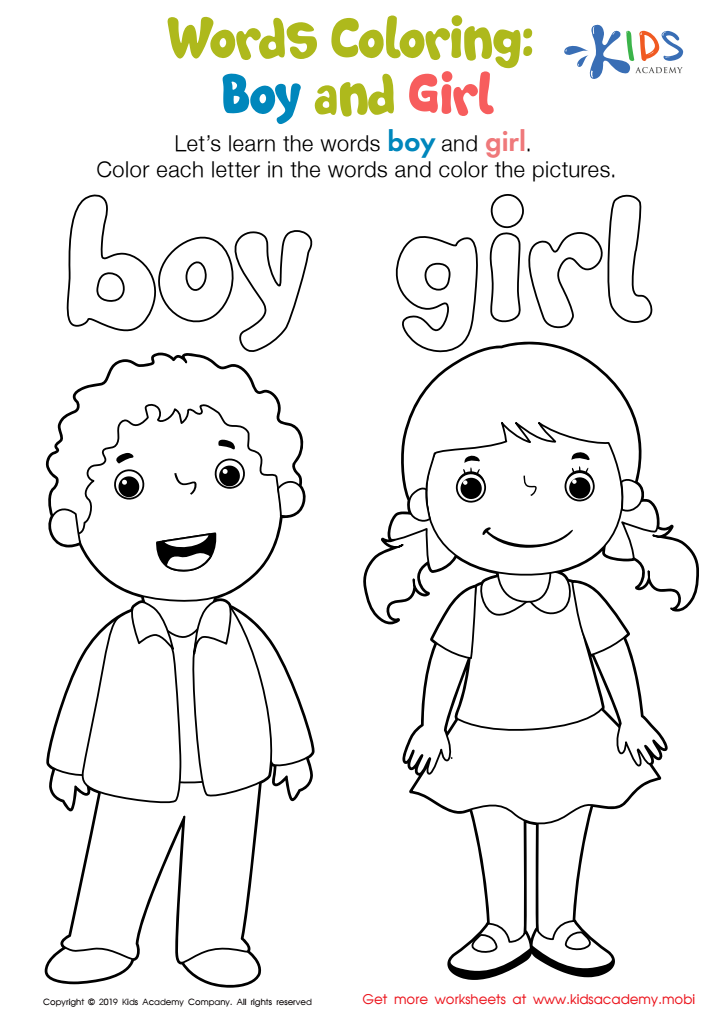
Boy and Girl Words Coloring Worksheet
Assign to My Students
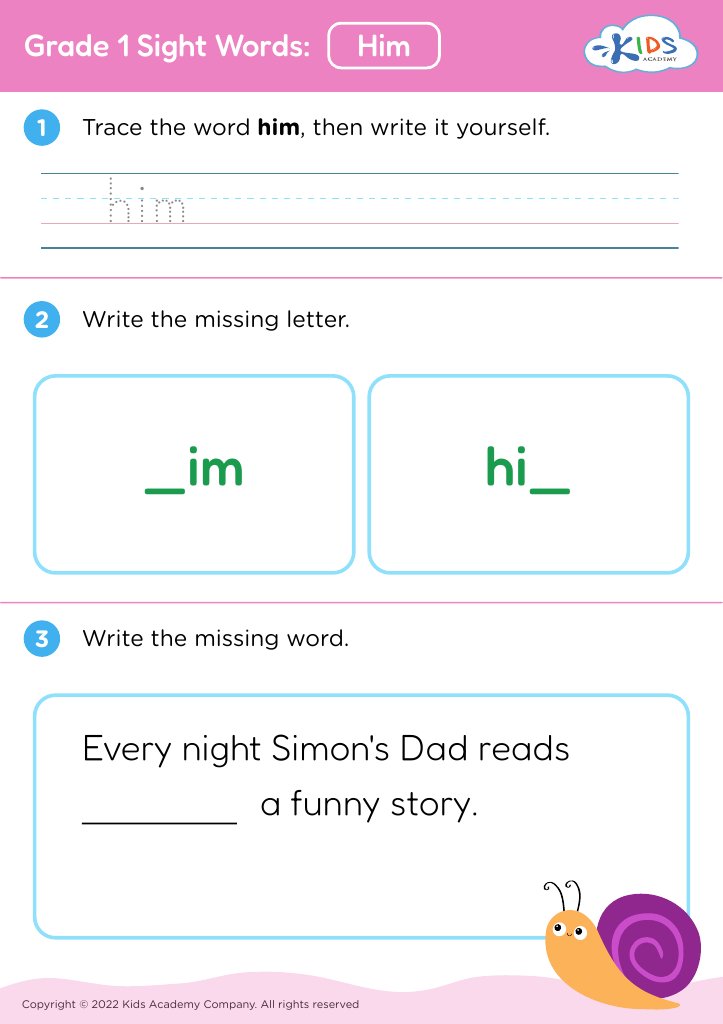








Motor skills development and vocabulary building are crucial for children aged 3-8 as they form the foundation for lifelong learning and self-expression. Fine and gross motor skills are essential for daily activities, helping children gain confidence and independence, whether it's buttoning a shirt, drawing a picture, or playing a sport. As children refine their motor skills, they also enhance their cognitive abilities, leading to improved problem-solving and spatial awareness.
On the other hand, developing vocabulary during these formative years is equally vital. A rich vocabulary allows children to express their thoughts, emotions, and ideas more effectively. It fuels their imagination, enhances their reading comprehension, and facilitates communication with peers and adults. When teachers and parents engage in activities that promote language development—like storytelling or interactive games—they help spark curiosity and creativity.
Furthermore, children who have strong motor skills and vocabulary are more equipped to handle social interactions, enhancing their emotional intelligence and fostering positive relationships. This dual focus not only sets the stage for academic success but also supports a child's overall growth and well-being, making it imperative for caregivers to prioritize these areas in their developmental activities.








