Phonics recognition Building Vocabulary Worksheets for Ages 3-8
5 filtered results
-
From - To
Enhance your child's reading skills with our Phonics Recognition Building Vocabulary Worksheets, designed specifically for ages 3-8. Ideal for early learners, these engaging worksheets help children master phonics, laying a solid foundation for vocabulary development. Children will enjoy a variety of activities that promote letter sounds, blending, and decoding skills, making learning both fun and effective. Each worksheet is crafted to support diverse learning styles, empowering kids to expand their vocabulary while boosting their confidence. Perfect for home or classroom use, our resources provide a valuable tool in fostering a love for reading and building essential literacy skills. Start your child’s journey today!
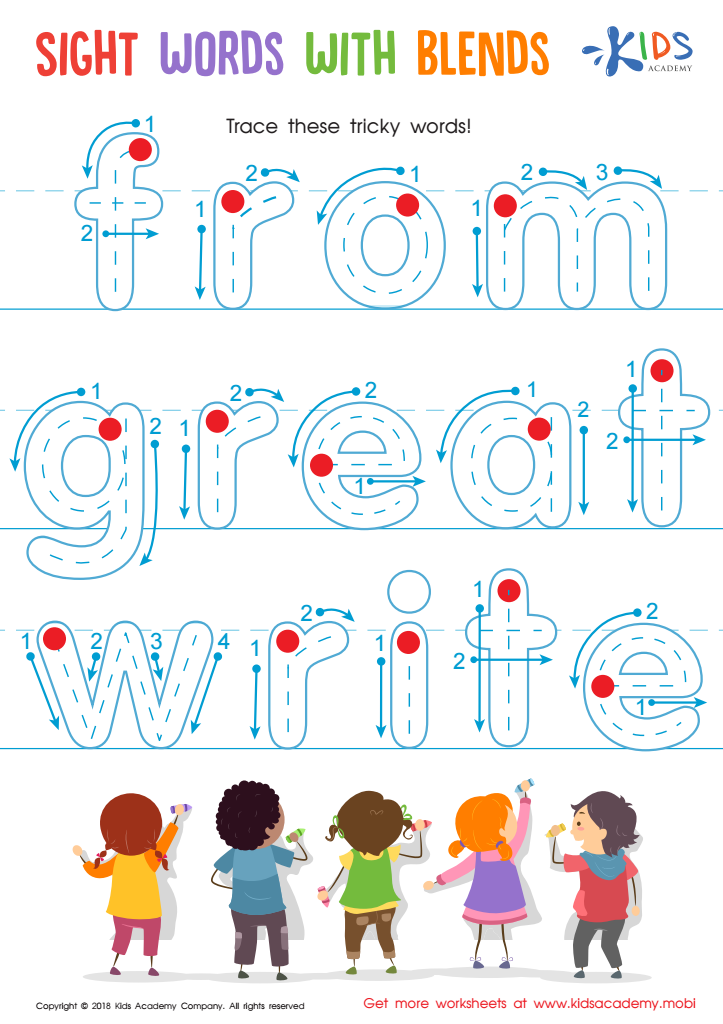
Sight Words with Blends Worksheet
 Assign to My Students











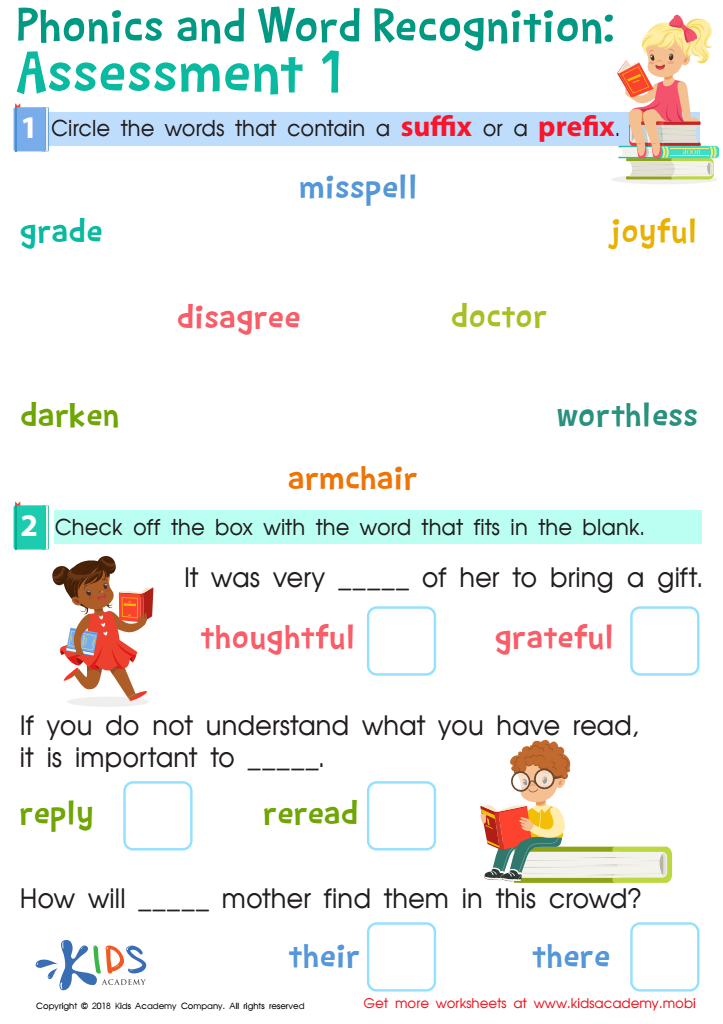
Phonics and Word Recognition: Assessment 1 Worksheet
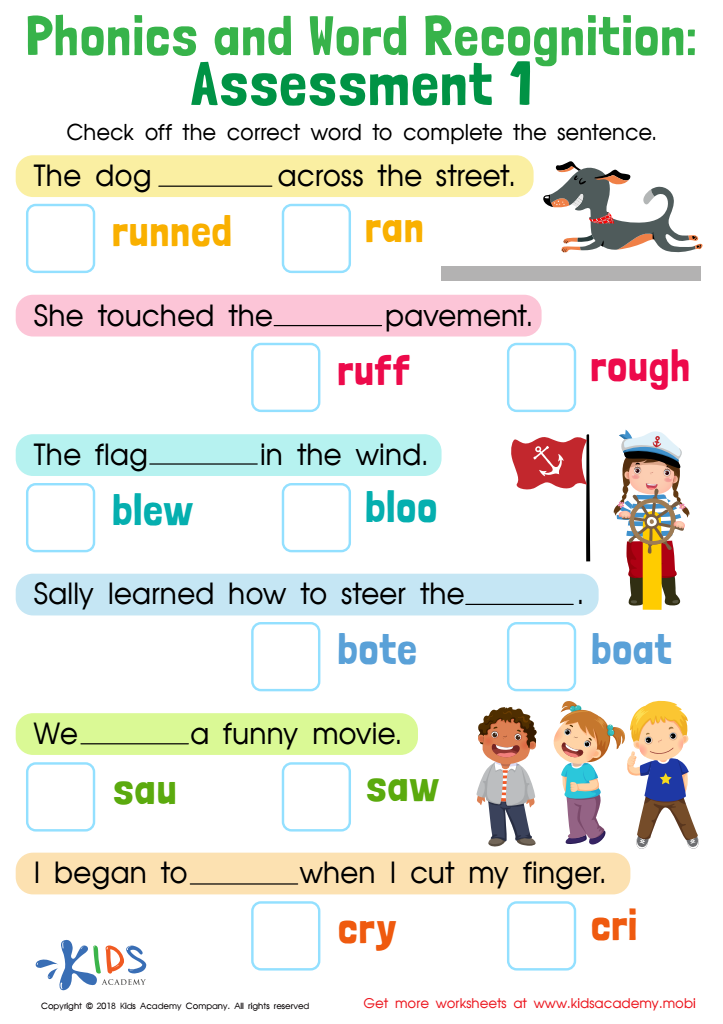
Phonics and Word Recognition: Assessment 1 Worksheet
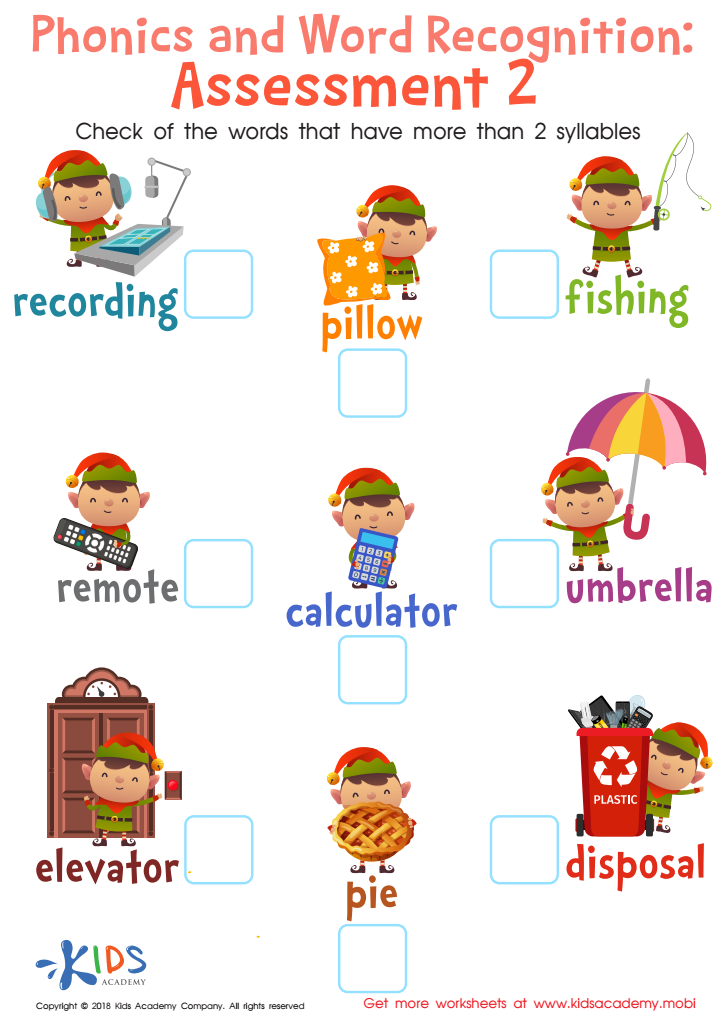
Phonics and Word Recognition: Assessment 2 Worksheet
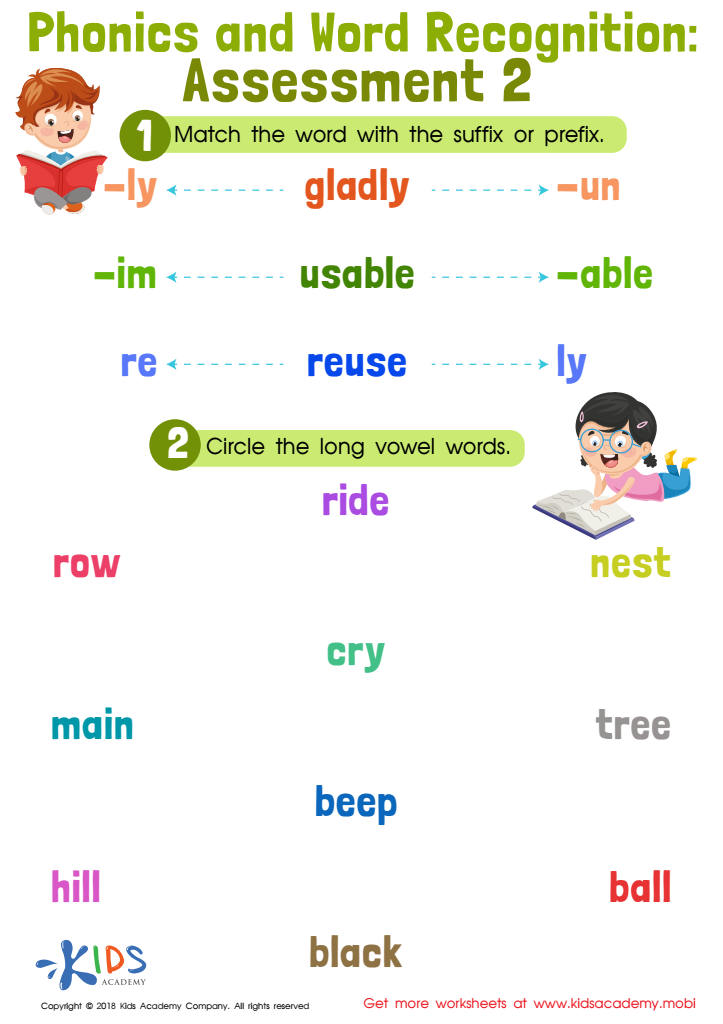
Phonics and Word Recognition: Assessment 2








Phonics recognition and vocabulary building are crucial components of early literacy for children aged 3-8. Understanding phonics—the relationship between letters and sounds—empowers young learners to decode words independently, laying the foundation for reading fluency. Parents and teachers should care because proficiency in phonics enhances students' ability to read confidently, fostering a love for reading that promotes academic success.
Moreover, a rich vocabulary is essential for effective communication and comprehension. Engaging children in conversations, reading aloud, and encouraging them to express their thoughts fuels vocabulary development, which extends beyond individual words to encompass broader language skills. Children with a solid vocabulary are better equipped to understand complex texts and participate in discussions, ultimately leading to improved literacy outcomes.
Additionally, early literacy skills correlate strongly with later academic achievement. By nurturing phonics recognition and vocabulary from an early age, parents and teachers play a vital role in establishing a child's learning trajectory. Investing in these foundational skills is not just about reading—it's about building confidence, critical thinking, and a lifelong love of learning, which are essential for children's overall development. Therefore, prioritizing phonics and vocabulary is an invaluable gift to children's futures.








