
Reading Skills Building Vocabulary Worksheets for Ages 3-8
7 filtered results
Difficulty Level
Grade
Age
-
From - To
Subject
Activity
Standards
Unlock the joy of reading with our "Reading Skills Building Vocabulary Worksheets" designed for children ages 3-8. These engaging, interactive worksheets help young learners enhance their vocabulary, improve comprehension, and develop a love for reading. Tailored to various skill levels, our resources include fun exercises like matching words, filling in the blanks, and recognizing sight words. Each worksheet is crafted to stimulate critical thinking and creativity, making learning enjoyable and effective. Foster your child's reading confidence and academic success with our comprehensive tools, perfect for preschool, kindergarten, and early elementary levels. Explore our collection today and set the foundation for lifelong reading skills!
Favorites
With answer key
Interactive
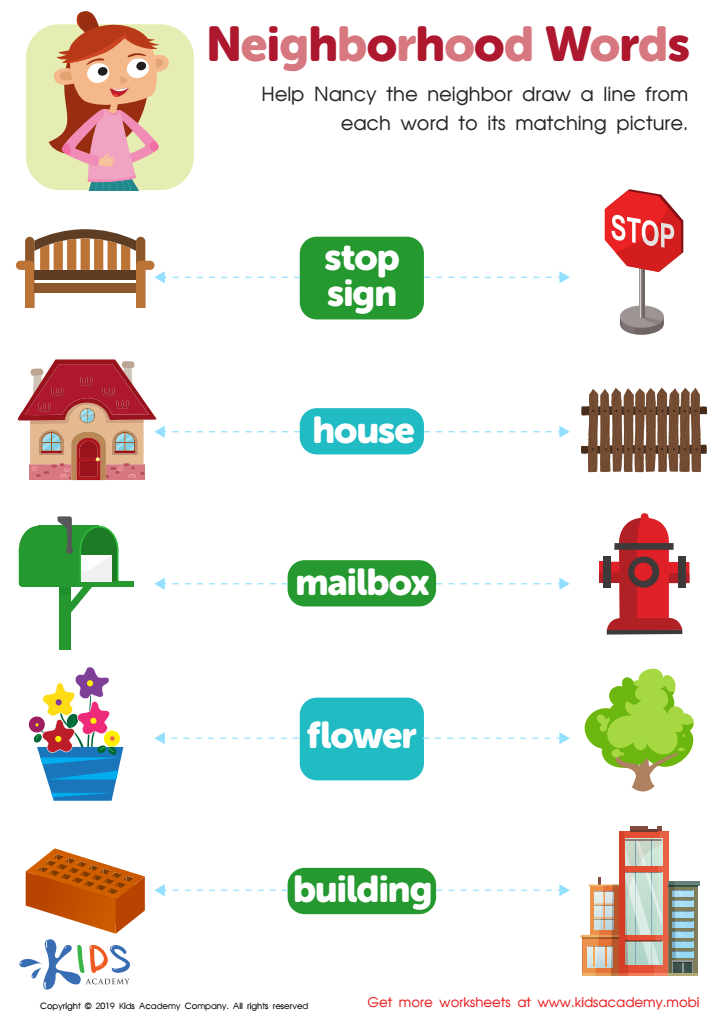
Neighborhood Words Worksheet
Help preschoolers develop life skills and familiarize them with words and concepts with this worksheet! It'll also boost their fine motor skills as they trace lines to match pictures with the words. They'll learn new words and feel more confident in their reading.
 Assign to My Students
Neighborhood Words Worksheet
Worksheet











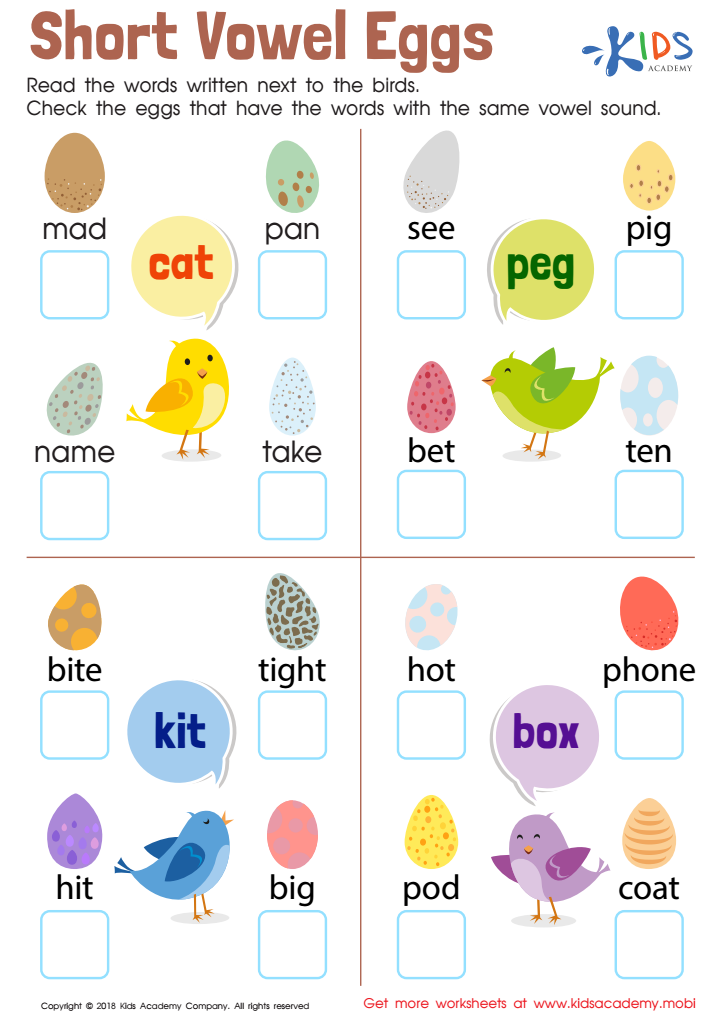
Short Vowel Eggs Worksheet
Your students will love helping these birdies pick the short vowel eggs! Have them read the words in the thought bubbles, then check off the boxes with the same short vowel sounds. The bright colors of this free Worksheet will draw them in and get them practicing their vowels!
Short Vowel Eggs Worksheet
Worksheet
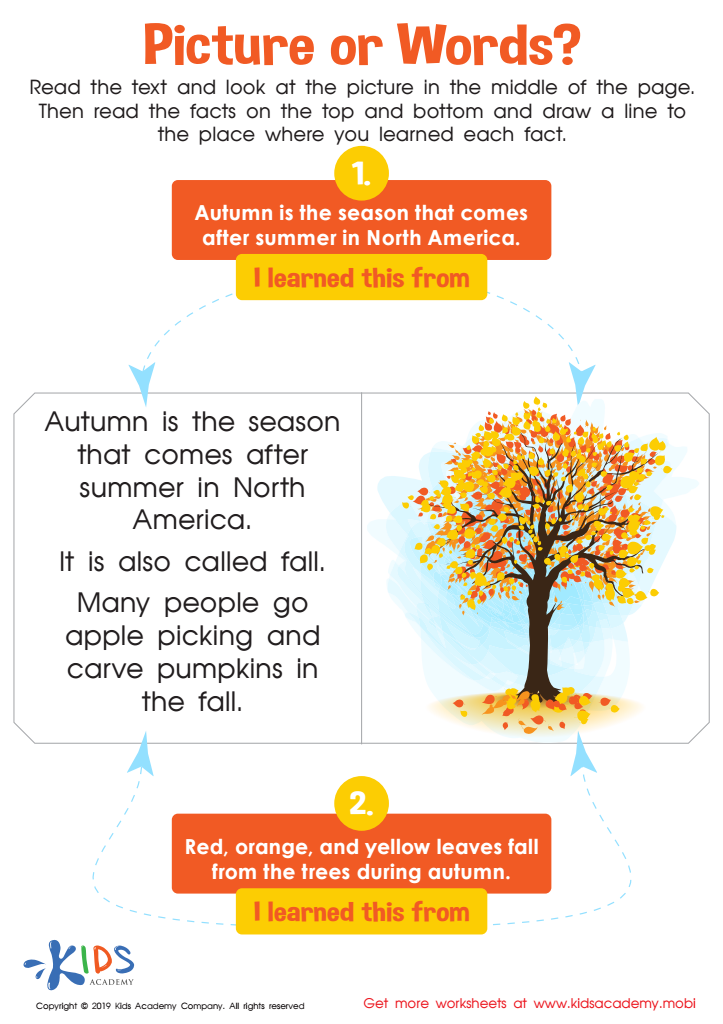
Picture Words Worksheet
Pictures are key for early reading skills. Remind children to use all resources when reading passages to understand meaning. With the free PDF, kids can learn through pictures & words, then answer questions based on what they learned. This hits home that all info in text is valuable, pics included!
Picture Words Worksheet
Worksheet
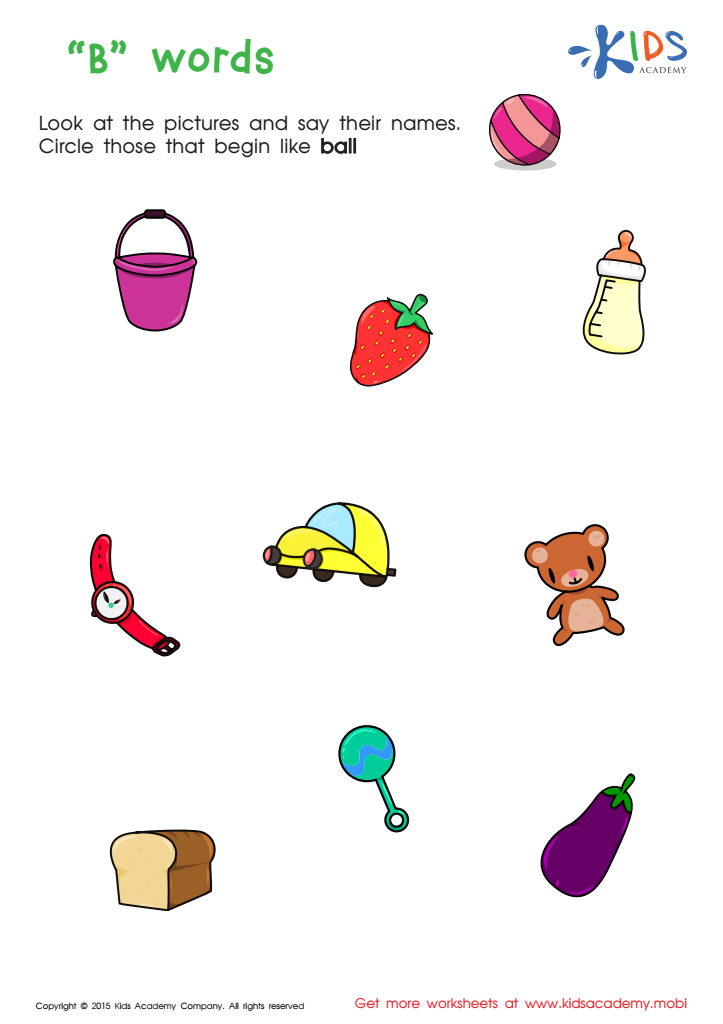
First Words Worksheet
Want to help your preschooler learn to read and write? Start with this 'B' words printable worksheet. It will help your child match pictures to the letters they know, sound out words, and build literacy. Once they understand the concept, they can start sounding out words and building reading skills.
First Words Worksheet
Worksheet
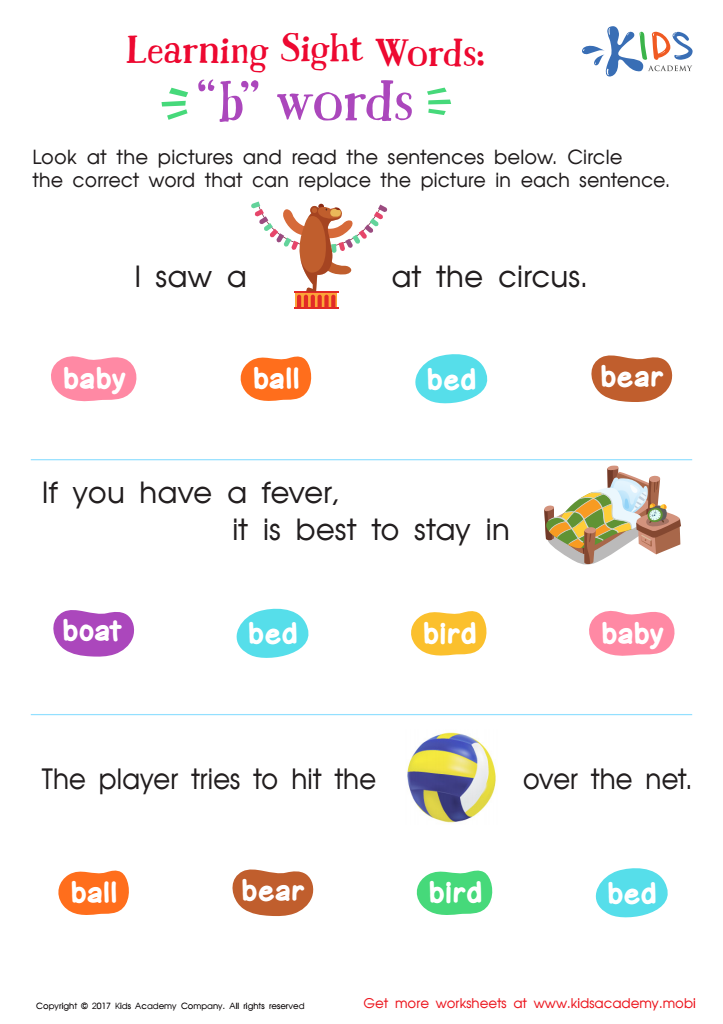
"B" Words Printable Sight Words Worksheet
Kids will learn sight words quickly with this fun worksheet! "B" Words offers guided practice with simple sentences and pictures. Build your child's reading confidence with this helpful worksheet and watch them become a master!
"B" Words Printable Sight Words Worksheet
Worksheet
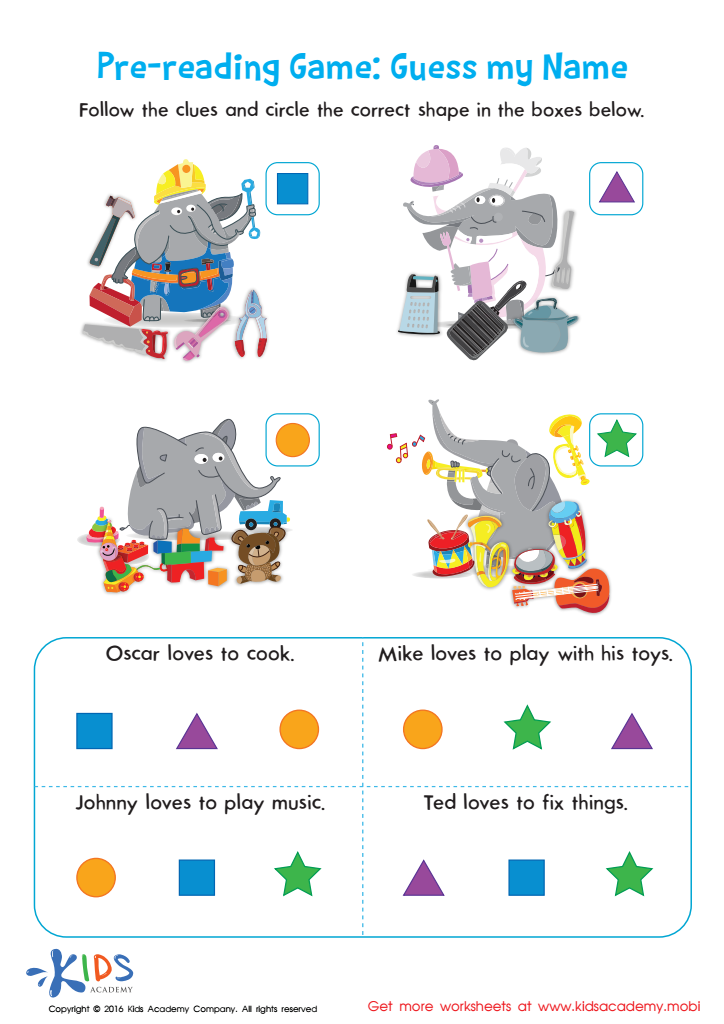
Pre Reading Worksheet Guess My Name
Guess My Name is a fun way to practice inference skills.
Guess My Name is a fun pre-reading game to help your child practice drawing inferences from clues. With colorful illustrations, they'll use clues to match each elephant with its sentence and sharpen their inference skills.
Pre Reading Worksheet Guess My Name
Worksheet
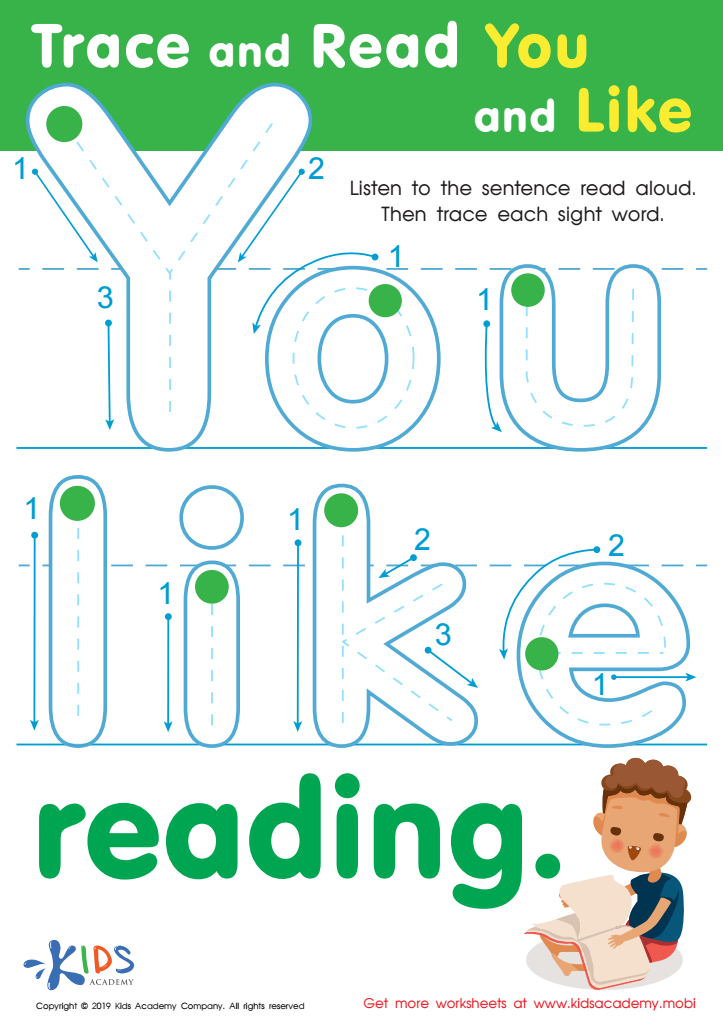
Trace Read You Like Worksheet
Sight words help children become confident and fluent readers. This free worksheet encourages success with basic 'you' and 'like' words. Writing them with traceable lines and green dots shows motion and builds sight word vocabulary. Help your child master the basics and boost their reading progress!
Trace Read You Like Worksheet
Worksheet
Join Kids Academy for Free
Who is primarily going to use this learning content?








Building vocabulary through reading skills is crucial for children aged 3-8, as it lays the foundation for lifelong learning and academic success. During these formative years, children's brains are exceptionally receptive to language acquisition. Introducing diverse vocabulary through reading not only enriches their linguistic abilities but also enhances their comprehension and critical thinking skills.
When parents and teachers engage with children by reading aloud, discussing stories, and encouraging conversations, they foster an environment conducive to language development. Children naturally assimilate new words and phrases, allowing them to express thoughts and ideas more effectively. A robust vocabulary empowers children to understand and interact with their world, making them more confident communicators.
Moreover, building vocabulary is linked to improved literacy skills, as children with extensive word knowledge excel in reading and writing. They perform better academically and are better equipped to tackle complex subjects in the future. Additionally, strong reading skills can ignite a lifelong passion for learning, critical for personal and professional growth. Therefore, prioritizing vocabulary development must be a communal effort by parents and educators to ensure children have the skills needed to succeed in school and beyond.








