
Spelling Skills Building Vocabulary Worksheets for Ages 3-8
4 filtered results
Difficulty Level
Grade
Age
-
From - To
Subject
Activity
Standards
Discover our engaging Spelling Skills Building Vocabulary Worksheets designed specifically for children ages 3-8! These printable activities provide young learners with fun and effective ways to enhance their spelling abilities while expanding their vocabulary. Each worksheet encourages creativity and critical thinking, making learning enjoyable and effective. Perfect for both classroom and at-home use, our resources cater to different skill levels and learning styles. Support your child’s literacy journey by fostering essential spelling knowledge that will lay the foundation for future academic success. Explore our collection today and watch your child's confidence in reading and writing soar!
Favorites
With answer key
Interactive
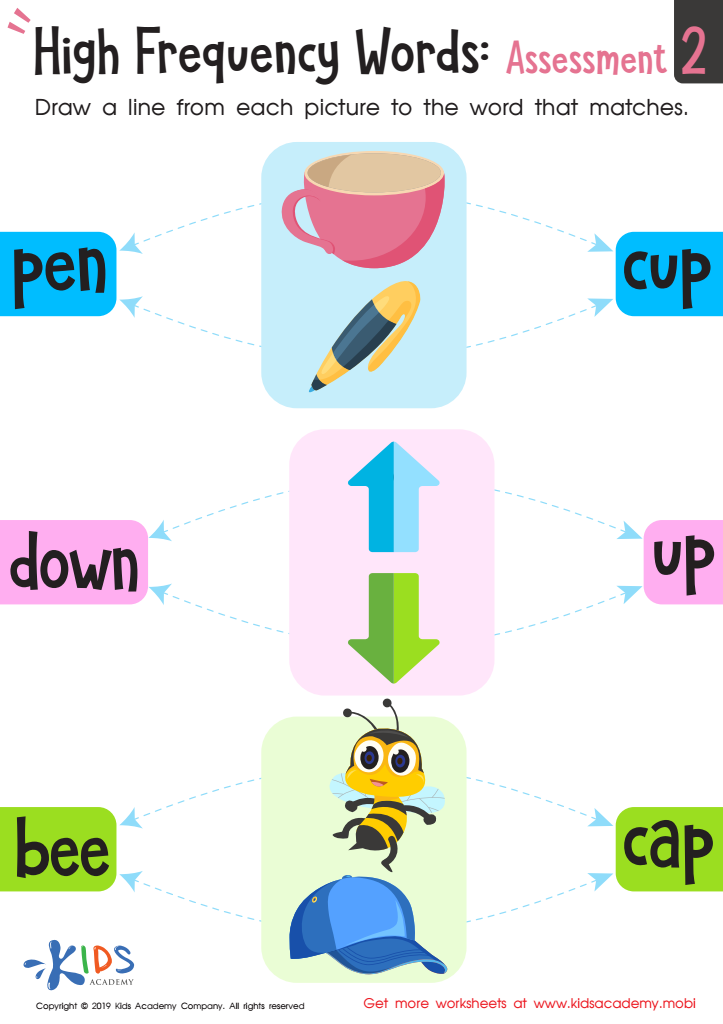
High Frequency Words: Assessment 2 Worksheet
Having knowledge of high frequency words can make emergent readers stronger and boost comprehension. This free assessment worksheet uses traceable lines to connect the picture to its corresponding words, allowing them to feel successful. It's a great way to reinforce high frequency words with familiar imagery.
 Assign to My Students
High Frequency Words: Assessment 2 Worksheet
Worksheet











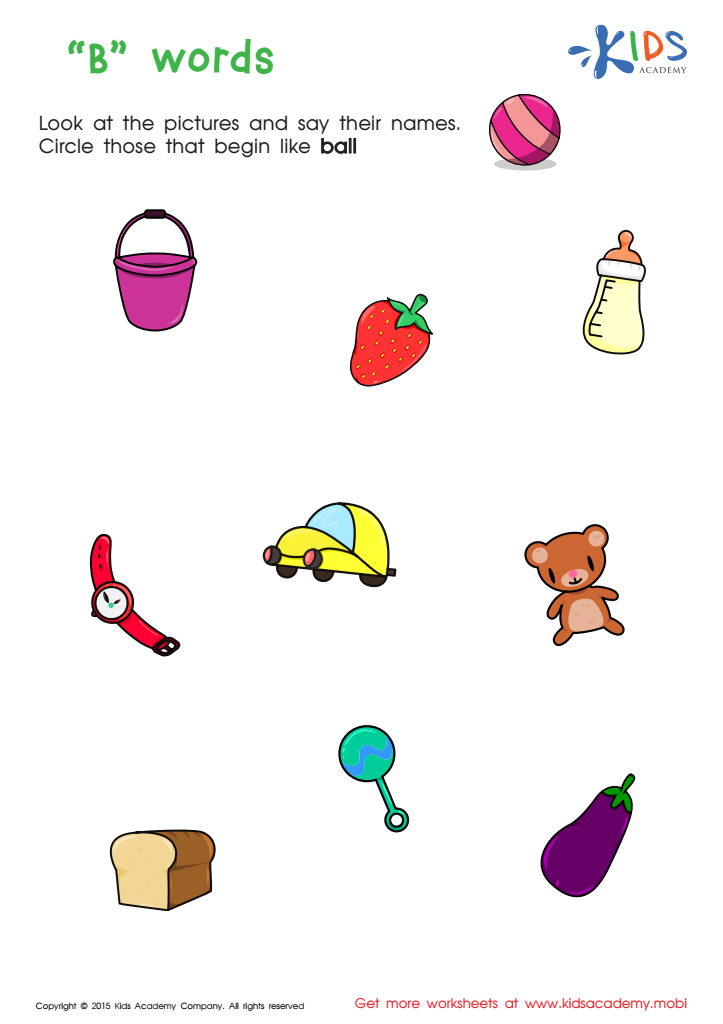
First Words Worksheet
Want to help your preschooler learn to read and write? Start with this 'B' words printable worksheet. It will help your child match pictures to the letters they know, sound out words, and build literacy. Once they understand the concept, they can start sounding out words and building reading skills.
First Words Worksheet
Worksheet
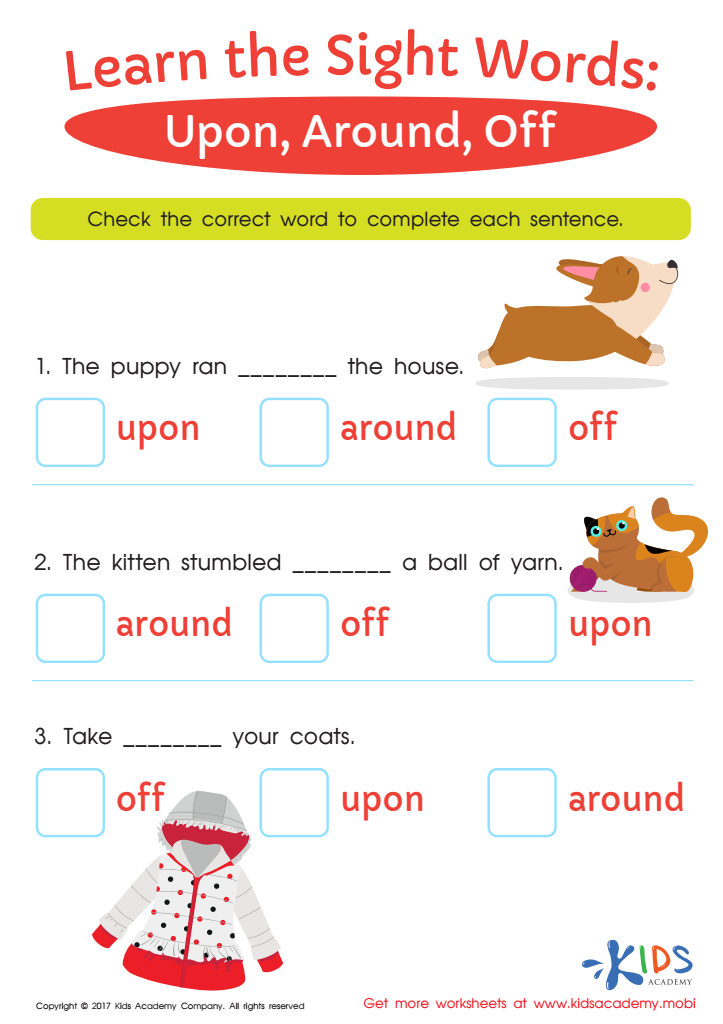
Upon, Around, Off Sight Words Worksheet
Assist your child in mastering prepositions by printing off this worksheet featuring three sight words: upon, around, off. Read the sentences aloud and use the illustrations to demonstrate the meaning of each. Your kid will soon master these words quickly.
Upon, Around, Off Sight Words Worksheet
Worksheet
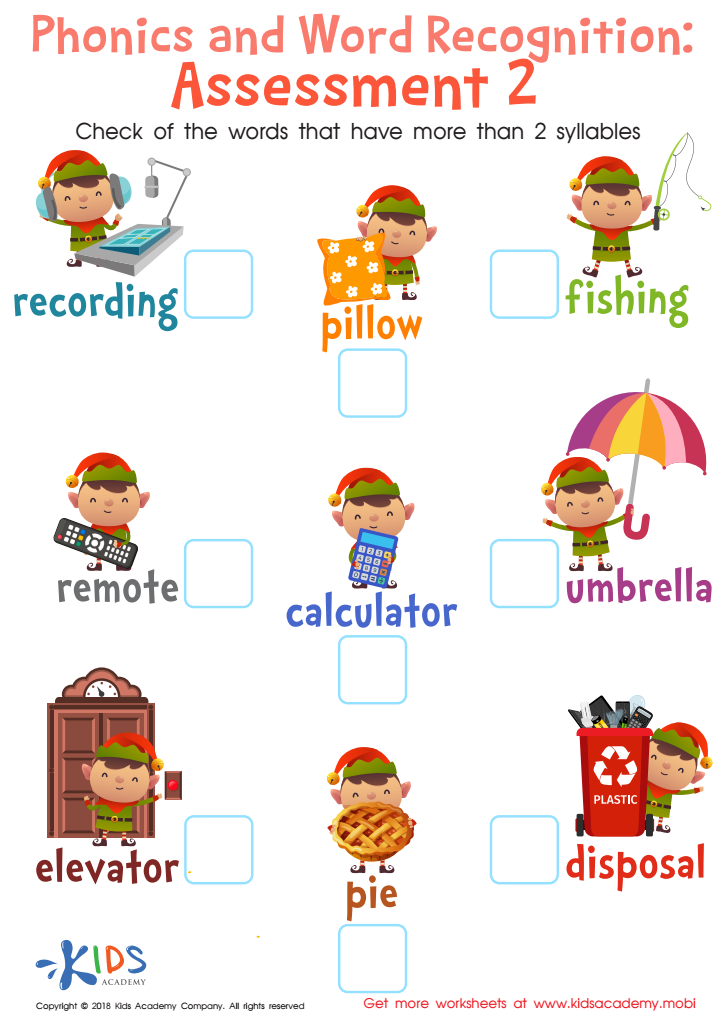
Phonics and Word Recognition: Assessment 2 Worksheet
Help your kids learn proper pronunciation by counting syllables. Most words they'll encounter have 1-3 syllables, making them simple to say. Have them repeat the words in your worksheet after you. Focus on longer words with more than two syllables.
Phonics and Word Recognition: Assessment 2 Worksheet
Worksheet
Join Kids Academy for Free
Who is primarily going to use this learning content?







.jpg)
Building spelling skills and vocabulary from ages 3 to 8 is crucial for several reasons. Firstly, this period is a critical developmental stage where children are like sponges, absorbing language and literacy nuances. By focusing on spelling, parents and teachers equip children with the foundational tools necessary for effective communication. Strong spelling skills enhance reading proficiency, making it easier for children to decode words, thereby boosting their confidence and foster a love for reading.
Furthermore, a robust vocabulary enhances cognitive ability and academic performance across all subjects. When children can articulate their thoughts and understand a diverse range of words, they are better prepared to engage in classroom discussions, comprehend texts, and express themselves clearly. This skill set also assists in social interactions, helping them to build relationships with peers and adults. In a world increasingly reliant on technology and communication, being able to spell and use a rich vocabulary prepares children for future academic and career opportunities.
Finally, a focus on vocabulary and spelling in early childhood lays the groundwork for lifelong learning. The skills cultivated during these formative years promote critical thinking, creativity, and problem-solving abilities—essential traits for success in whatever path they choose. Prioritizing these skills in early education is an investment in a child's future.








