Understanding prefixes Building Vocabulary Worksheets for Ages 3-8
3 filtered results
-
From - To
Enhance your child’s vocabulary with our engaging "Understanding Prefixes" worksheets tailored for ages 3-8! These printable activities are designed to make learning fun and effective, helping young learners grasp the concept of prefixes effortlessly. Our worksheets offer a variety of exercises that clarify how adding a prefix changes a word’s meaning, boosting reading comprehension and language skills. Perfect for early learners, these resources foster confidence in reading and writing. Start your child’s journey to mastering prefixes today with Kids Academy’s expertly crafted worksheets, ensuring a strong vocabulary foundation for future academic success.
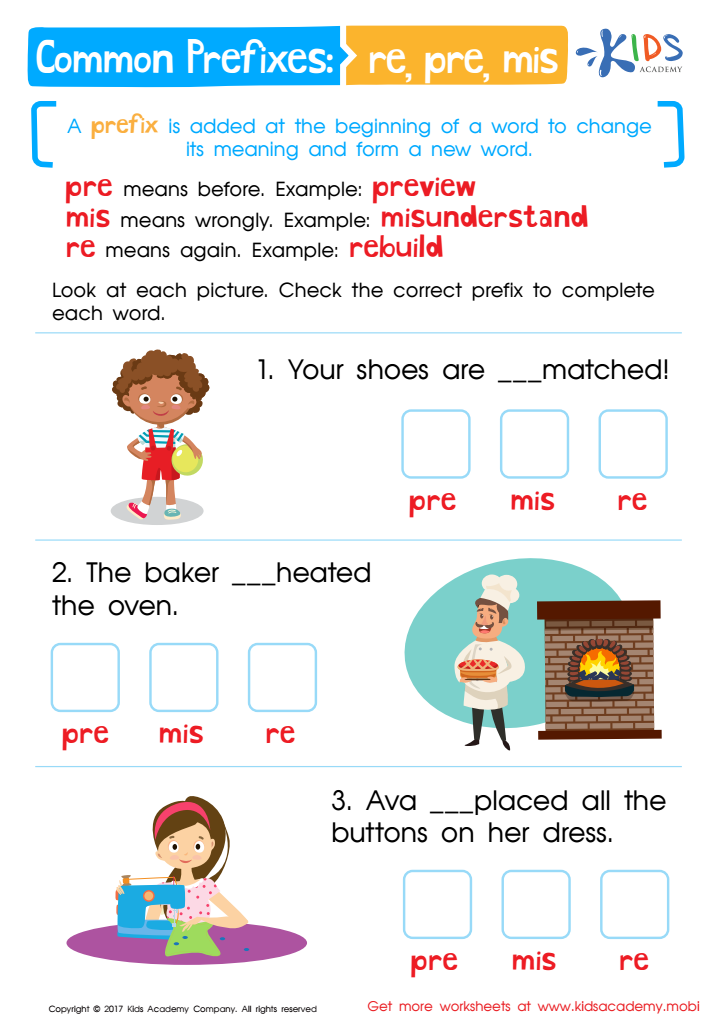
Common Prefixes Worksheet: RE, PRE, MIS
 Assign to My Students











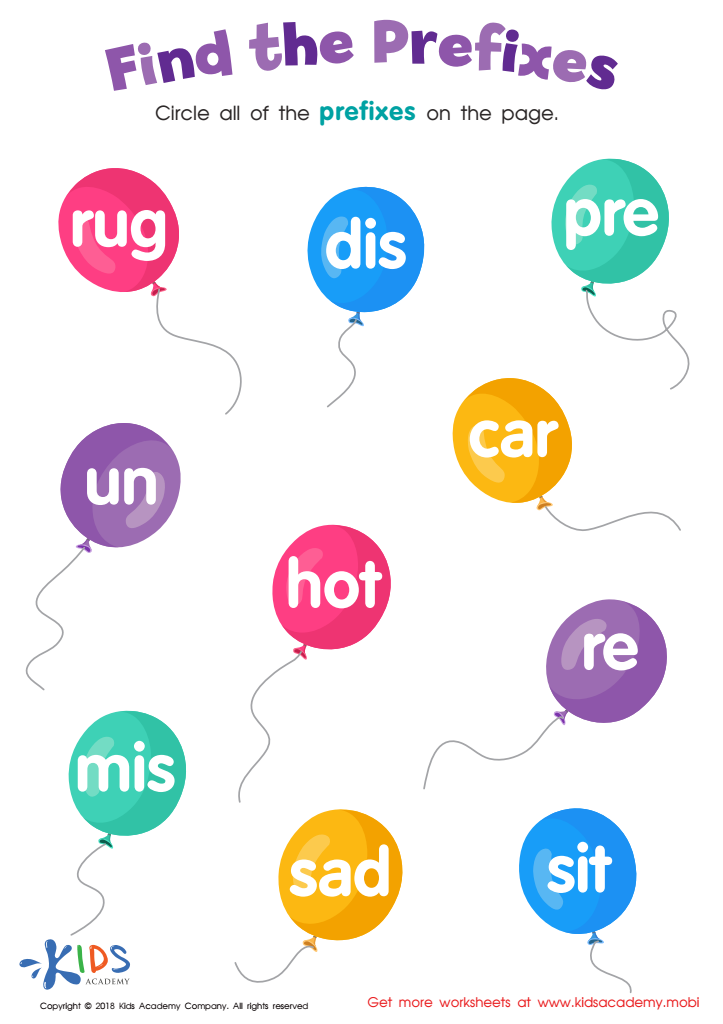
Reading: Find the Prefixes Worksheet
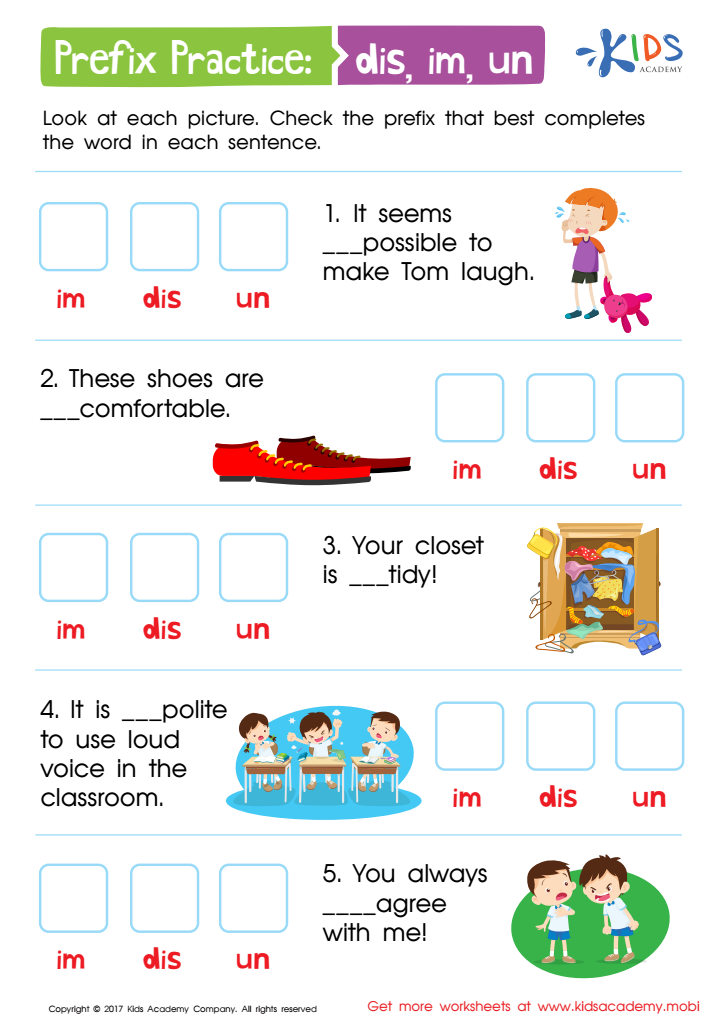
Prefix Practice Worksheet: DIS, IM, UM








Understanding prefixes is a crucial component of building vocabulary for children aged 3-8. At this developmental stage, children's brains are highly receptive and adaptable, making it an ideal time to introduce foundational language concepts. Prefixes, which are added to the beginning of words to alter their meaning, help children decode and understand new words they encounter. This enhances their reading comprehension and expressive abilities.
Learning prefixes can arm children with tools to figure out the meaning of unfamiliar words. For example, understanding that "un-" suggests a negative state can help them grasp that "unfinished" means "not finished." This knowledge expands their vocabulary without needing to memorize individual word meanings through rote learning.
Furthermore, an early grasp of prefixes fosters critical thinking and pattern recognition, skills invaluable across all areas of learning. It empowers children to infer meanings, anticipate content in texts, and bolster their confidence in speaking and writing.
Teachers and parents have a pivotal role in cultivating these skills through playful and engaging activities that introduce prefixes. By weaving this awareness naturally into everyday conversations and reading sessions, they can support optimal language development, setting a strong foundation for lifelong learning. Enthusiastic, early engagement with language will inevitably lead to stronger literacy skills, academic success, and effective communication.








