Understanding prepositions Reading Worksheets for Ages 3-8
6 filtered results
-
From - To
Discover engaging preposition reading worksheets designed for children aged 3-8. Our interactive activities help little learners master directional words like "in," "on," "under," and more. With a blend of colorful illustrations and fun exercises, kids gain a foundational understanding of prepositions that will enhance their reading and comprehension skills. Perfect for early readers, our worksheets foster both learning and interest. Parents and teachers can utilize these resources to ensure young minds grasp essential language concepts. Let's make learning prepositions exciting and enjoyable, building confident readers from an early age. Explore our comprehensive selection today!
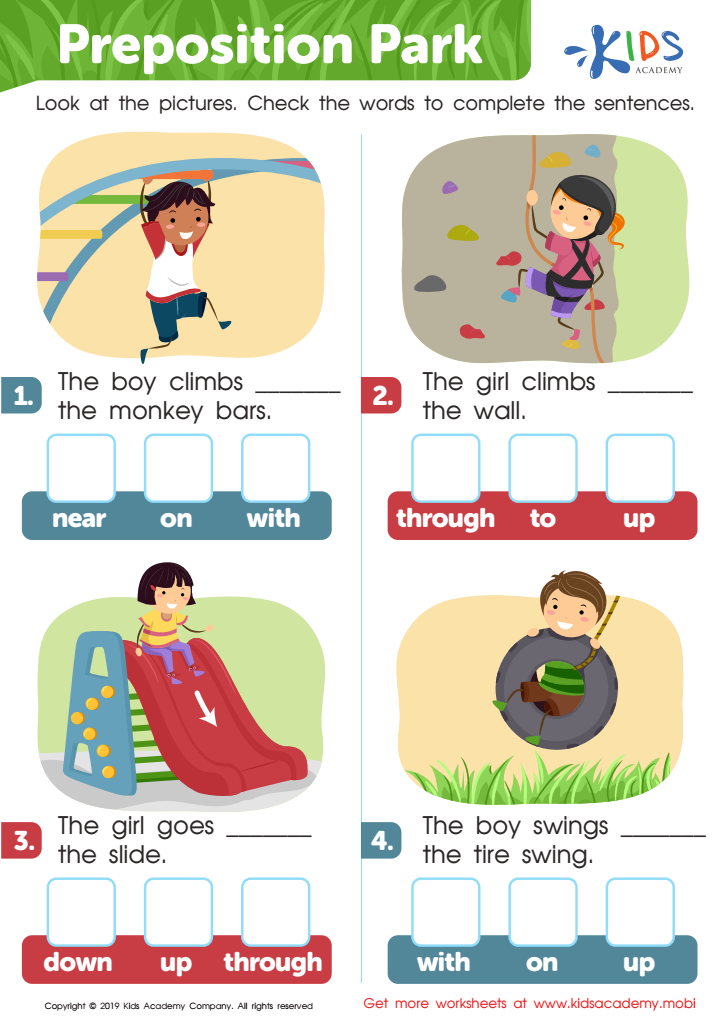
Preposition Park Worksheet
 Assign to My Students
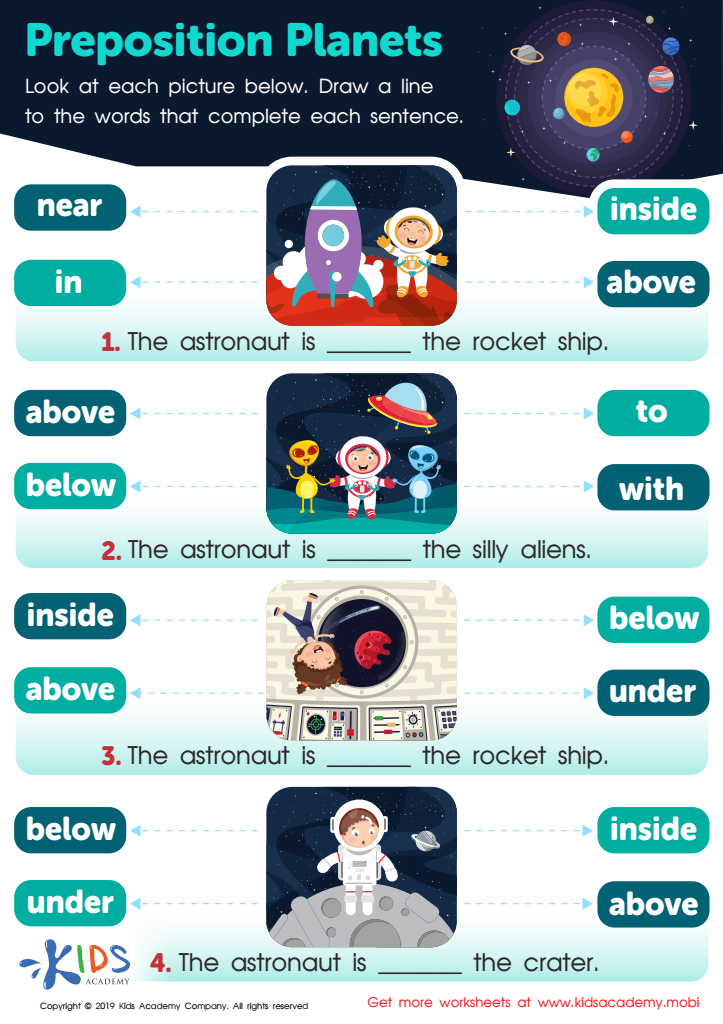
Preposition Planets Worksheet
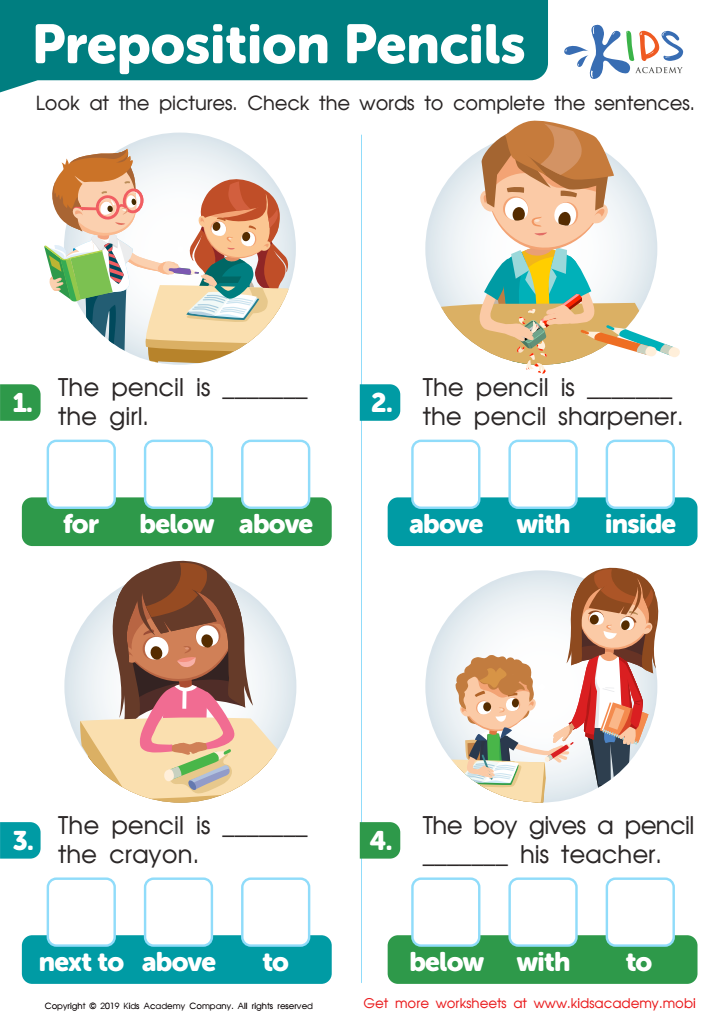
Preposition Pencils Worksheet
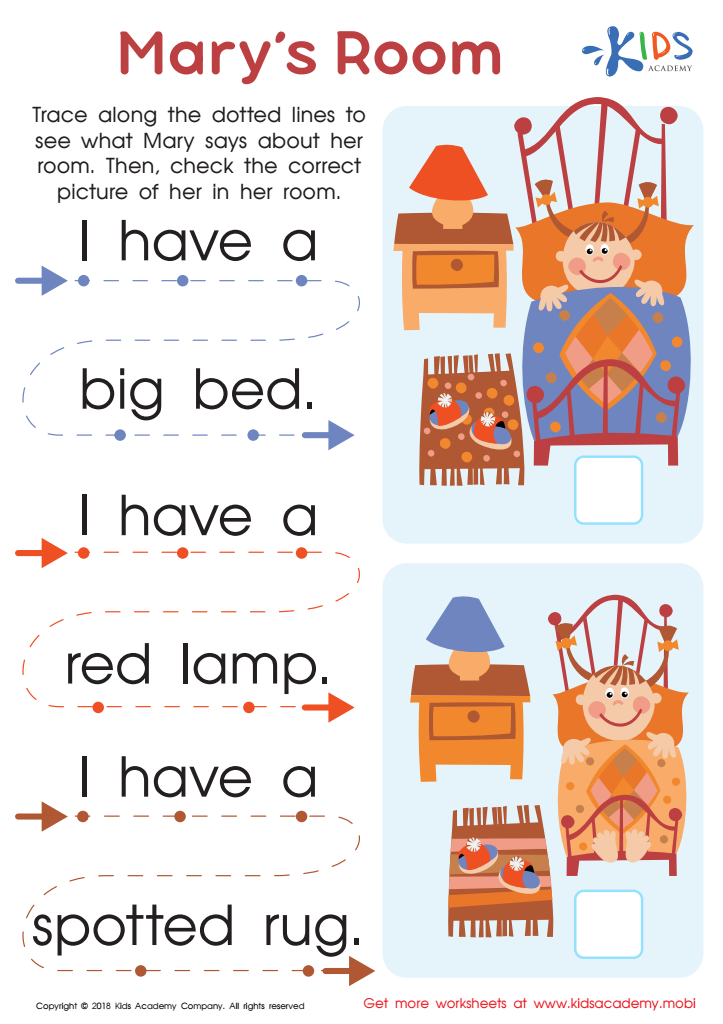
Mary's Room Worksheet








Understanding prepositions is crucial for young children ages 3-8 because it lays the foundation for effective communication and cognitive development. Prepositions are words that indicate relationships between objects, people, and places, such as "in," "on," "under," and "beside." Mastering these concepts helps children follow directions more accurately and articulate their own thoughts clearly.
At this developmental stage, children are building their vocabulary and grasping fundamental grammar rules. Prepositions play a key role in sentence structure, allowing kids to learn how to form more complex sentences. This, in turn, enhances their overall language skills, including both spoken and written communication.
Moreover, understanding prepositions aids in spatial awareness and navigation in their environment. When a child comprehends that "the toy is under the table," they can better manage their surroundings and interact more confidently with the world around them.
Teachers and parents should place emphasis on this aspect of learning because it not only supports academic growth but also bolsters self-esteem and social skills. Through engaging activities such as storytelling, play-based learning, and targeted reading materials, children can absorb these concepts naturally and joyfully, setting a strong linguistic and cognitive foundation for future learning endeavors.








