Answering questions Reading Fiction Worksheets for Ages 3-8
3 filtered results
-
From - To
Discover our engaging "Answering Questions Reading Fiction Worksheets" tailored for young learners aged 3-8! These interactive worksheets are designed to enhance comprehension skills by encouraging children to think critically about the stories they read. Each worksheet prompts kids to answer enjoyable questions about characters, plots, and settings, fostering a deeper connection to literature. Ideal for parents and educators, these resources seamlessly blend fun with learning, helping children articulate their thoughts and develop a love for reading. Visit our site to explore the variety of worksheets that make reading enjoyable while nurturing essential literacy skills for young minds!
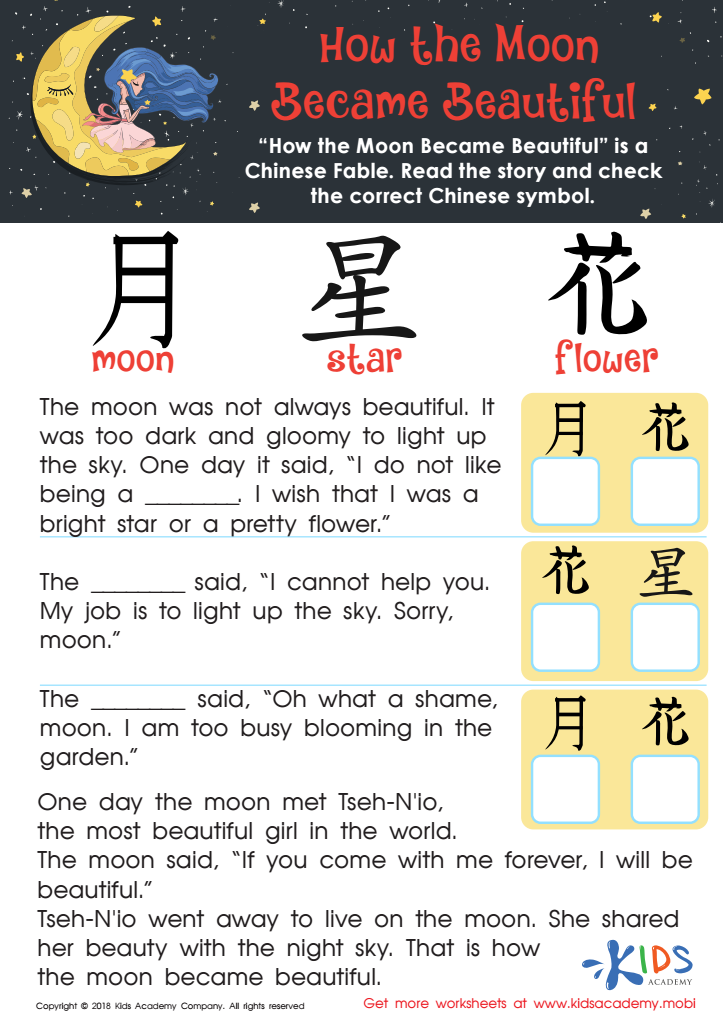
How the Moon Became Beautiful Worksheet
 Assign to My Students
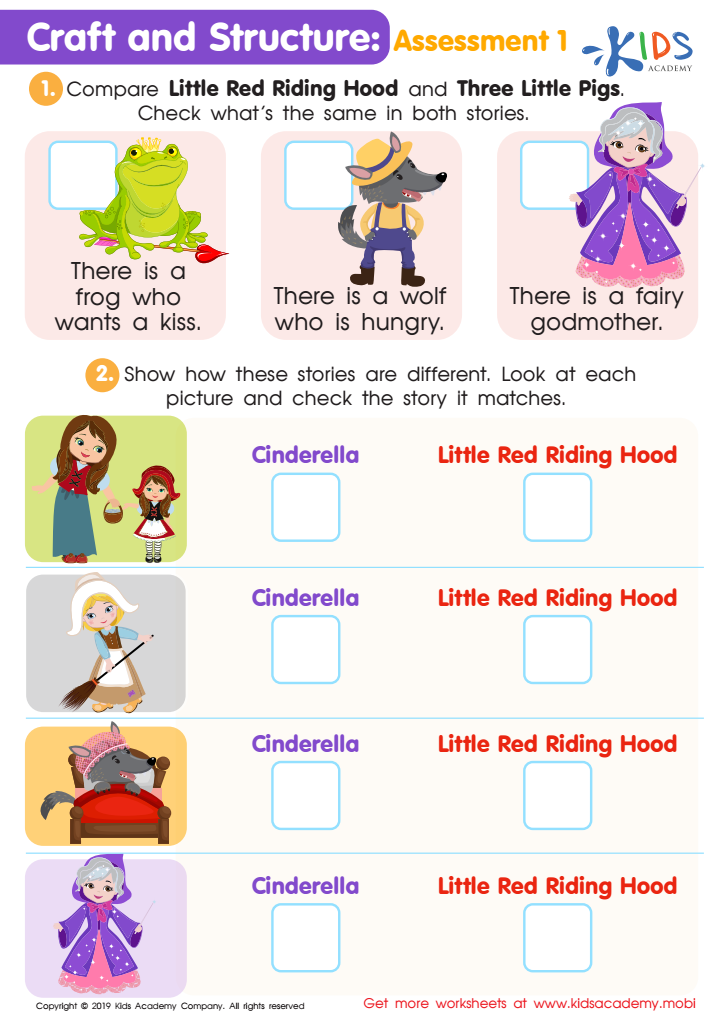
Craft and Structure: Assessment 1 Worksheet
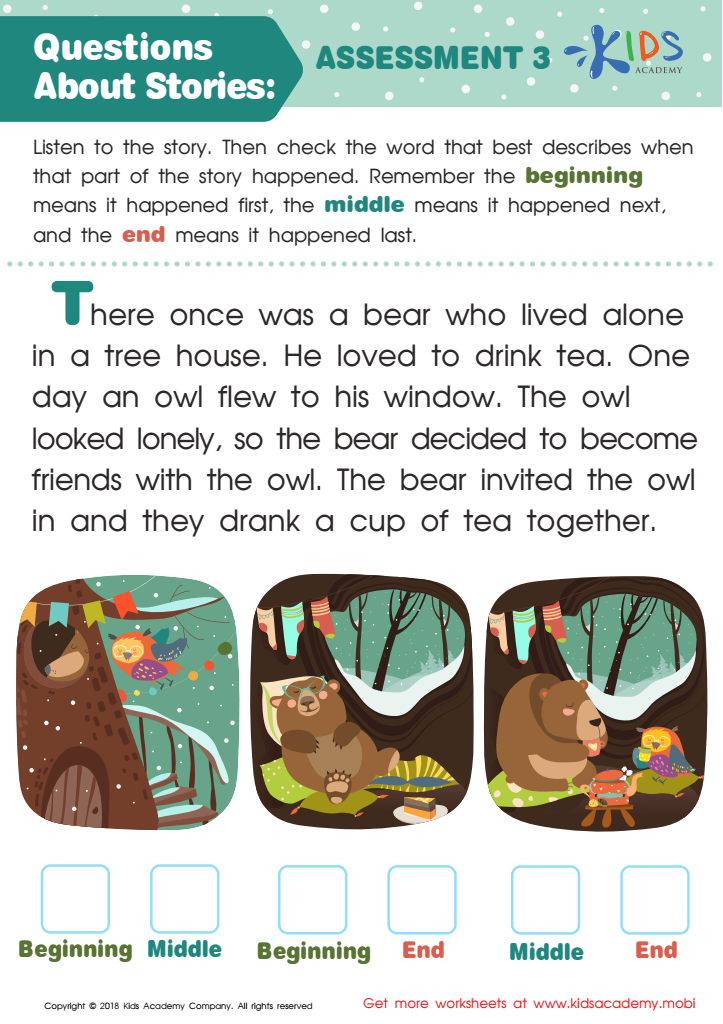
Questions About Stories: Assessment 3 Worksheet


.jpg)




Parents and teachers should prioritize answering questions while reading fiction to children aged 3-8 for several compelling reasons. First, this age group is naturally curious, and their questions reflect an eagerness to understand the world around them. Engaging with their inquiries nurtures critical thinking skills and promotes cognitive development.
Furthermore, discussing stories enhances comprehension. When adults answer questions about characters, plots, and settings, children learn to make connections and develop their interpretation abilities. This interactive approach not only bolsters their understanding but also fosters a love for reading, which is essential for lifelong learning.
Reading fiction also encourages emotional intelligence; stories often explore complex feelings and moral dilemmas. By discussing these themes and answering questions, parents and teachers help children navigate their emotions and cultivate empathy.
Lastly, answering questions while reading strengthens the bond between adult and child. This interactive shared experience not only instills a joy for storytelling but also builds trust and communication skills. By investing time to engage with children during reading, adults significantly contribute to essential developmental milestones that shape their academic success and emotional well-being.








