Identifying story elements Reading Fiction Worksheets for Ages 3-8
4 filtered results
-
From - To
Introducing our "Identifying Story Elements Reading Fiction Worksheets" tailored for ages 3-8! These engaging, age-appropriate activities help young readers recognize key story components such as characters, settings, and plots. By pinpointing these elements, children develop essential comprehension skills needed for their reading journey. Bright, child-friendly designs make learning fun, while varied exercises cater to different learning styles. Ideal for classroom or home use, these worksheets support early literacy development and foster a love for reading. Equip your child with the tools to unlock the world of stories and nurture their growth with our expertly crafted worksheets.
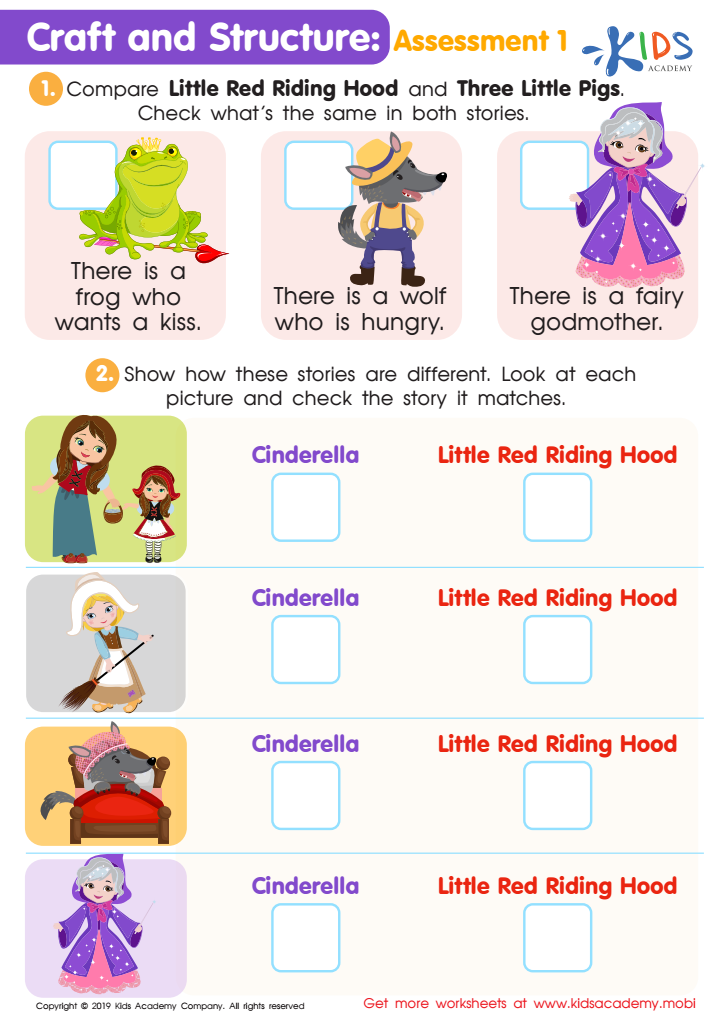
Craft and Structure: Assessment 1 Worksheet
 Assign to My Students
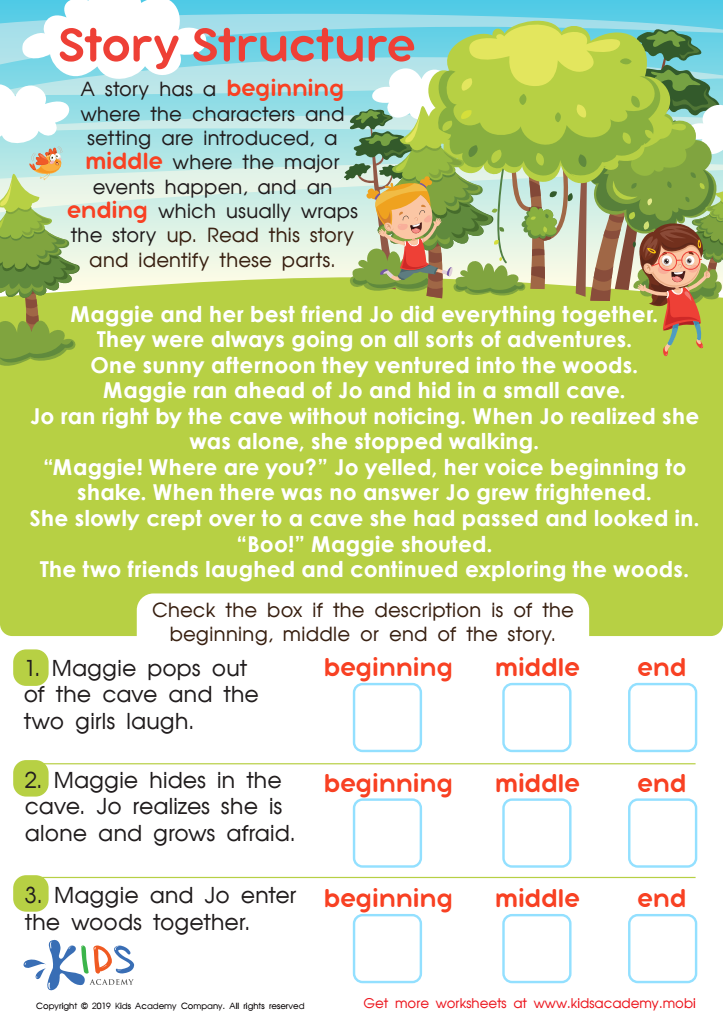
Story Structure Worksheet
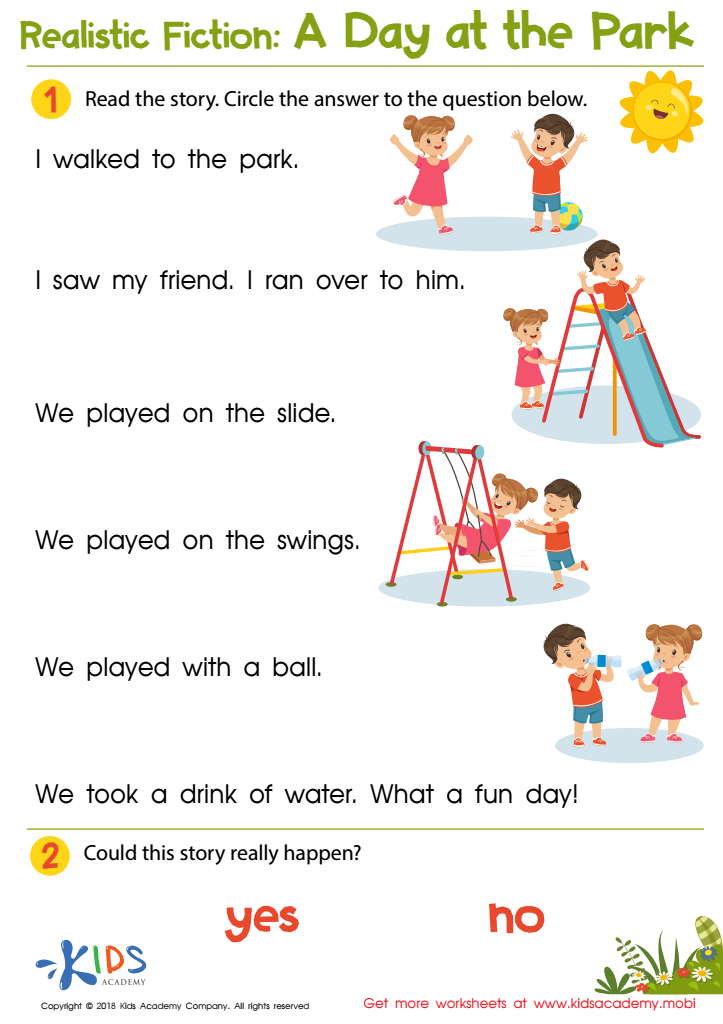
A Day at the Park Worksheet
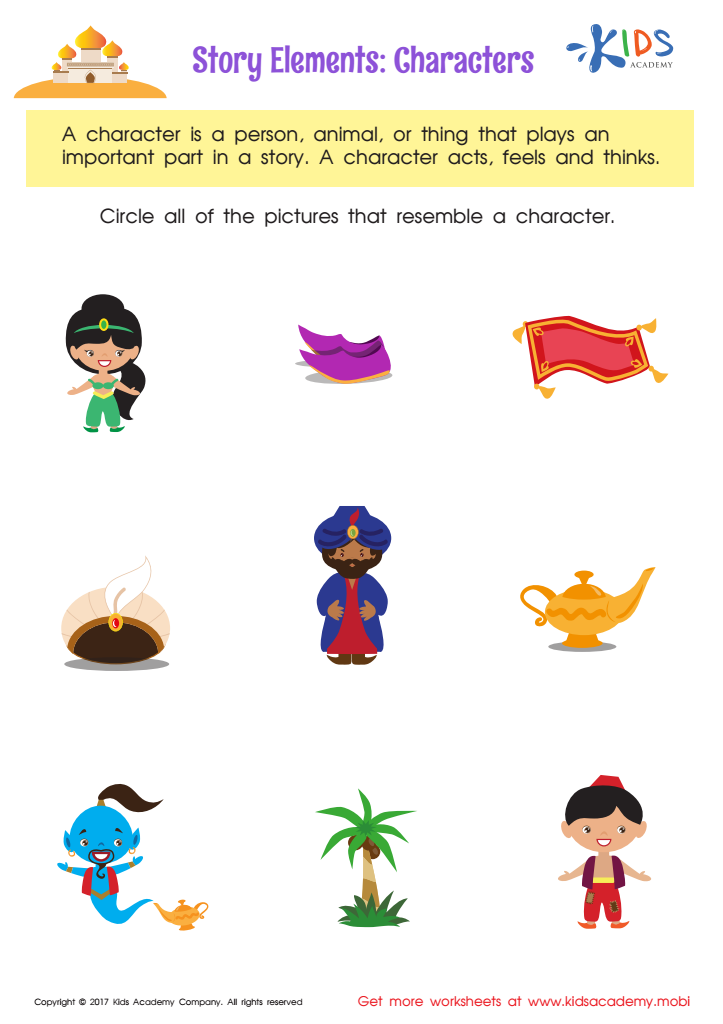
Story Elements Printable







Identifying story elements in fiction for young children aged 3-8 is crucial for several core reasons essential to their developmental and educational journey. Firstly, understanding story elements such as characters, settings, plots, problems, and solutions helps children enhance their comprehension skills. When children recognize these components, they grasp the structure of a story, making it more enjoyable and aiding their recall of details, which is vital for their memory development.
Secondly, discussing story elements fosters critical thinking. Young readers learn to analyze what is happening and why, which cultivates their ability to think logically and predict outcomes. These cognitive skills are foundational for future academic success and problem-solving abilities in various life contexts.
Thirdly, identifying story elements supports language acquisition. Engaging with different elements of the story encourages children to describe settings, discuss characters’ actions, and narrate events, promoting rich vocabulary usage and language proficiency.
Social and emotional growth is another important aspect. Through fiction, children encounter diverse perspectives and scenarios, helping them develop empathy and understand complex emotions. This empathy is fundamental for forming healthy social relationships.
In sum, identifying story elements enriches children’s reading experiences and lays the groundwork for essential life skills, making it a significant aspect of early education and parenting.








