Understanding Sequences Reading Fiction Worksheets for Ages 3-8
3 filtered results
-
From - To
Transform your little learner’s reading journey with our "Understanding Sequences Reading Fiction Worksheets for Ages 3-8." These expertly designed worksheets help young readers grasp the concept of sequencing events in a story, enhancing comprehension and critical thinking. Perfect for ages 3-8, our engaging exercises use beloved tales and vibrant illustrations to captivate children's imaginations while promoting essential literacy skills. Whether in the classroom or at home, these worksheets provide a fun, educational foundation that supports reading progress and a love for storytelling. Empower your child to recognize story patterns and order events confidently with our carefully crafted resources.
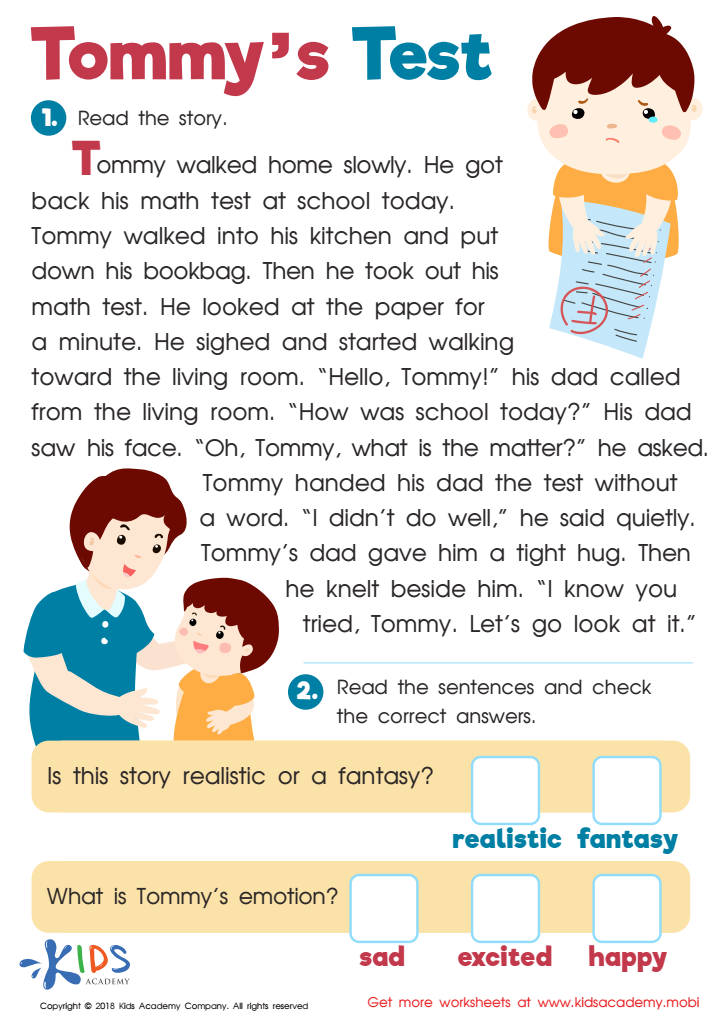
Tommys Test Worksheet
 Assign to My Students
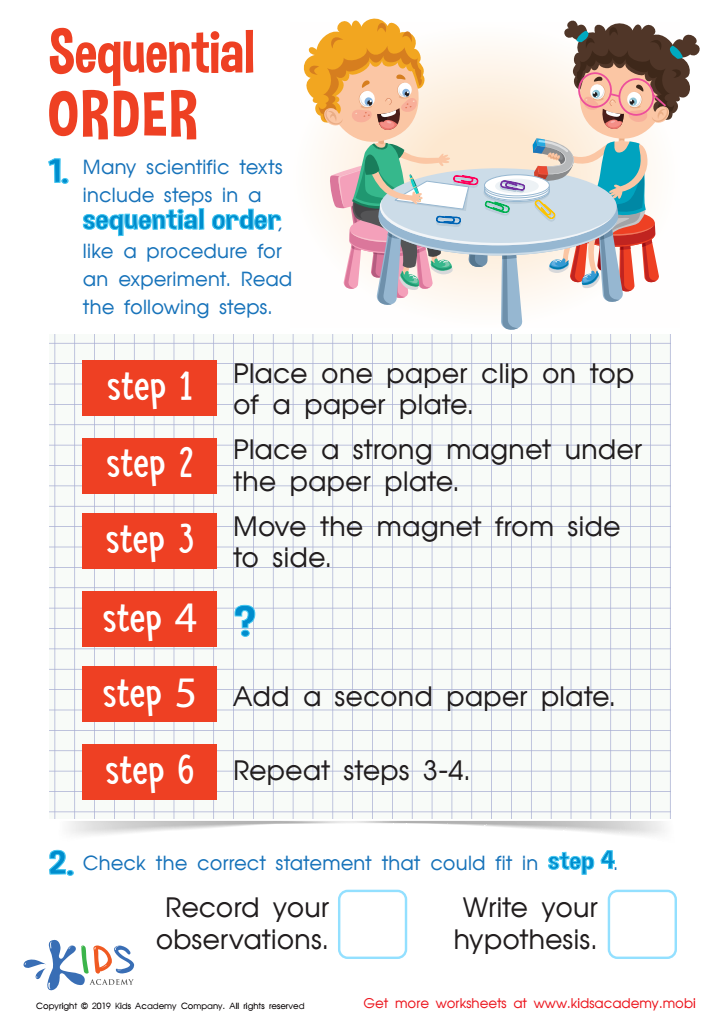
Sequencential Order Worksheet
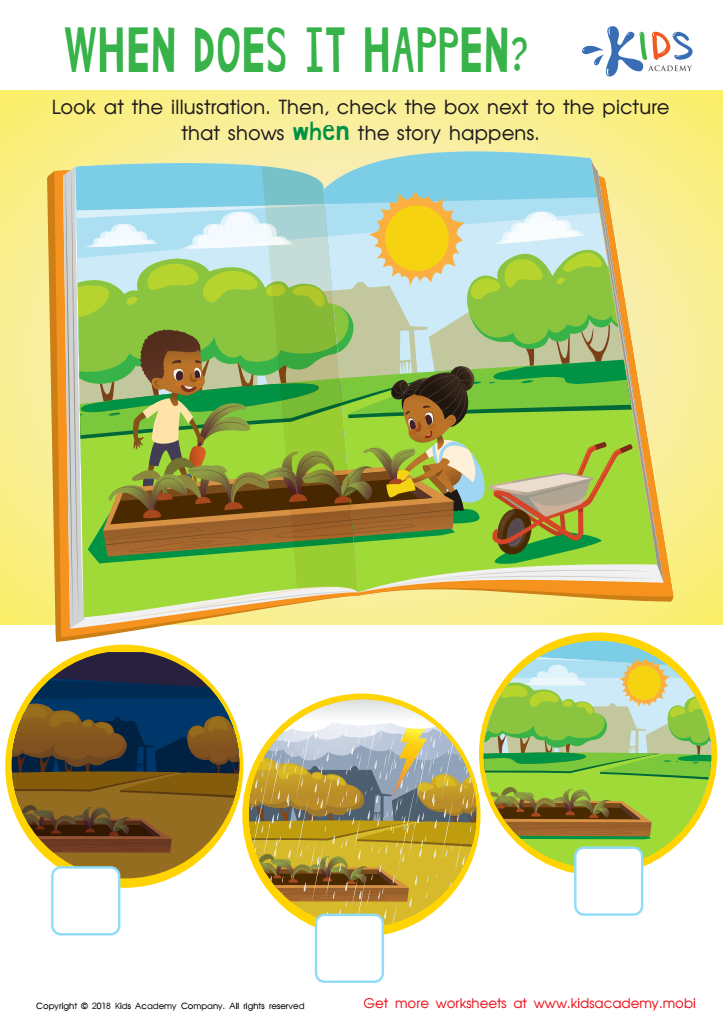
When Does It Happen? Worksheet




.jpg)



Understanding sequences while reading fiction is a foundational skill that parents and teachers should actively support in children aged 3-8. At this young age, children are developing crucial cognitive abilities, and learning to recognize sequences helps them make sense of stories and the world around them.
Firstly, comprehending sequences enhances children's reading comprehension. When kids can identify the beginning, middle, and end of a story, they understand the narrative's structure. This understanding aids in remembering details, predicting outcomes, and grasping the cause-and-effect relationships between events.
Secondly, recognizing sequences is essential for everyday life. It helps children follow routines, solve problems, and organize their thoughts logically. For example, knowing the order in which to dress, set a table, or follow steps in a game fosters independence and self-reliance.
Additionally, sequence recognition fosters critical thinking and analytical skills. Children learn to ask questions like "What happens next?" or "Why did this happen?" These inquiries build their curiosity and engagement with the material, making reading a more interactive and enjoyable experience.
Finally, early exposure to sequences lays the groundwork for future academic success. Strong reading and comprehension skills are fundamental for all learning areas. By nurturing these abilities early on, parents and teachers can set children on a path to lifelong learning and curiosity.








