Visual interpretation Reading Fiction Worksheets for Ages 3-8
5 filtered results
-
From - To
Introduce your young readers to the exciting world of visual interpretation with our Reading Fiction Worksheets, tailor-made for ages 3-8. Our engaging and colorful worksheets help children develop crucial skills such as understanding story elements, identifying characters, setting, and plot, and making connections between text and illustrations. By transforming reading into an interactive and visually stimulating experience, these worksheets foster a love for storytelling and enhance comprehension. Perfect for parents and educators, these resources support early literacy and spark imagination, paving the way for lifelong readers. Dive into a magical journey of reading and learning with Kids Academy!
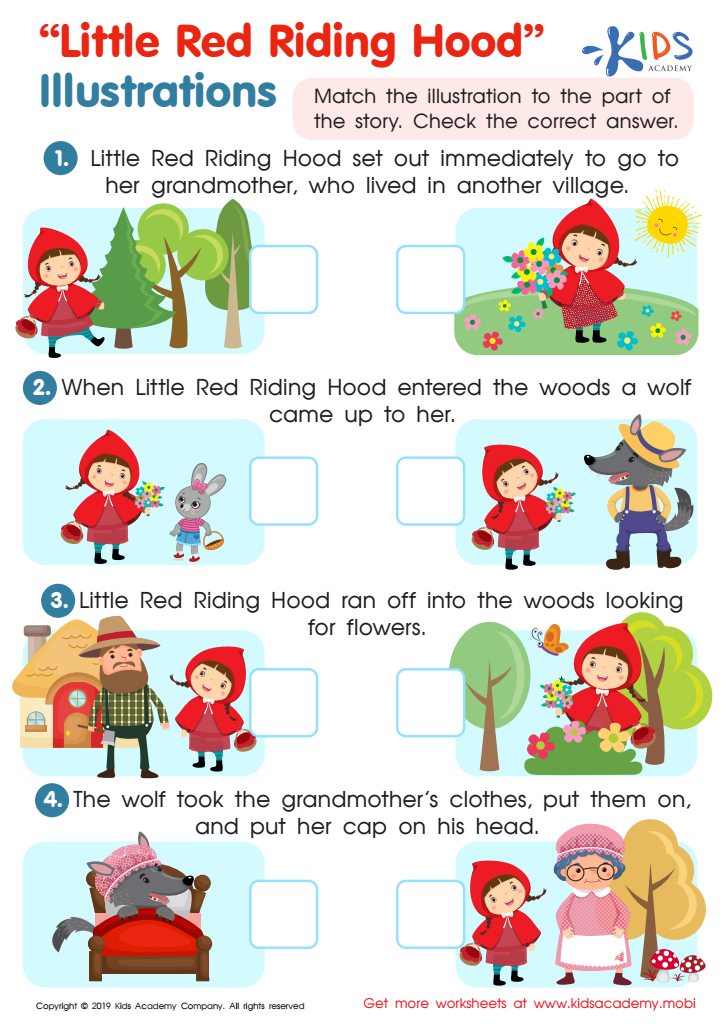
Little Red Riding Hood: Illustrations Worksheet
 Assign to My Students
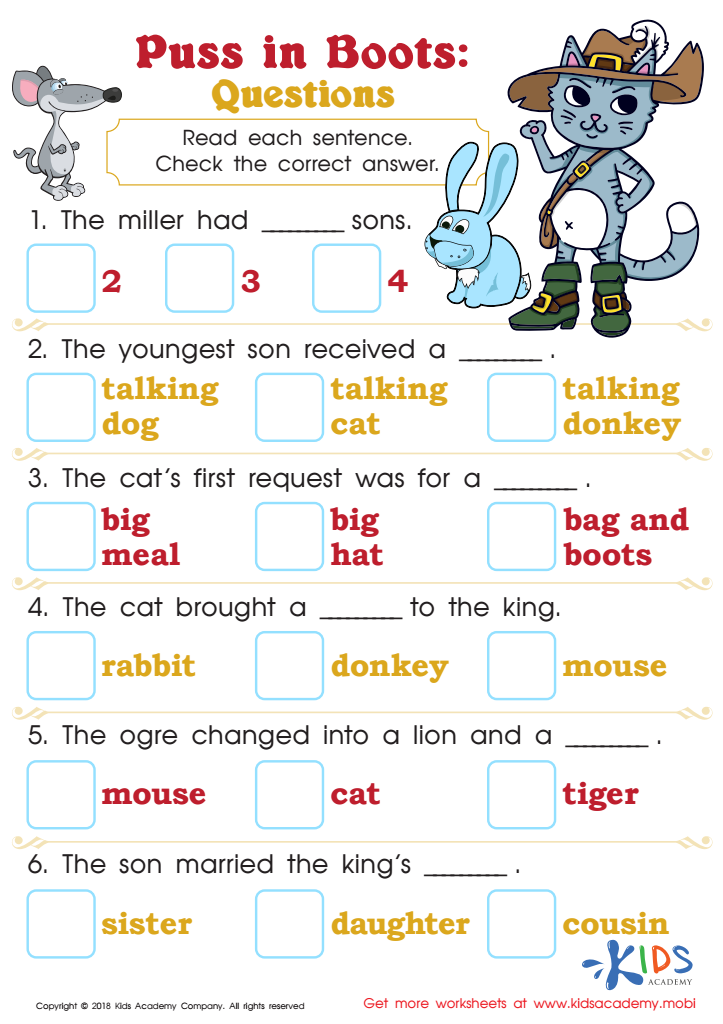
Puss in Boots: Questions Worksheet
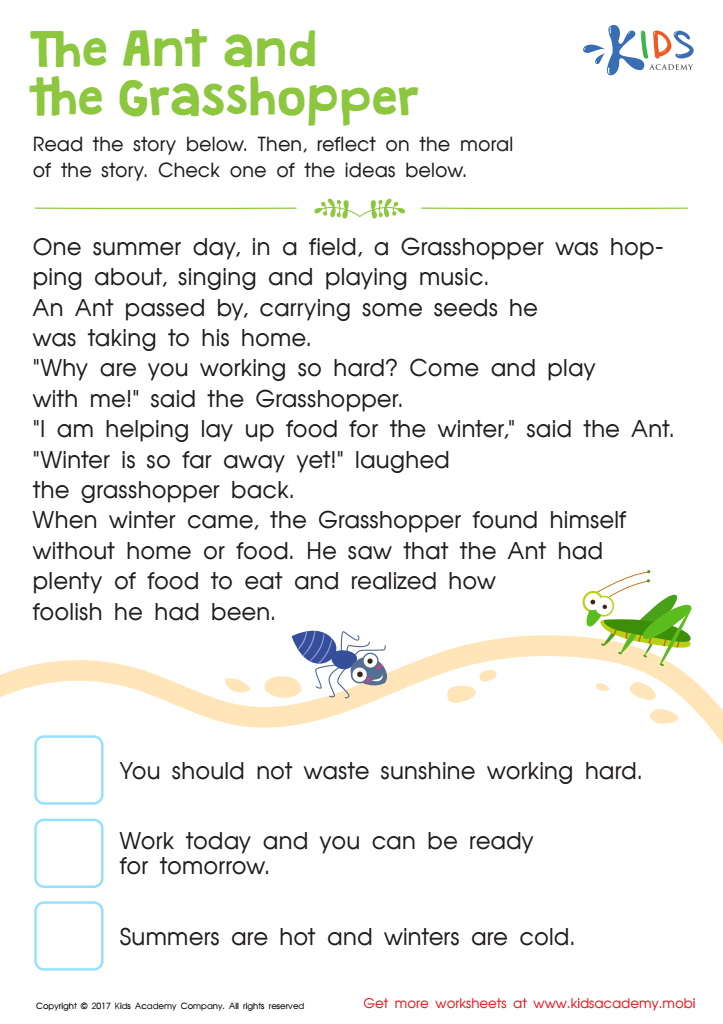
The Ant and The Grasshopper Printable
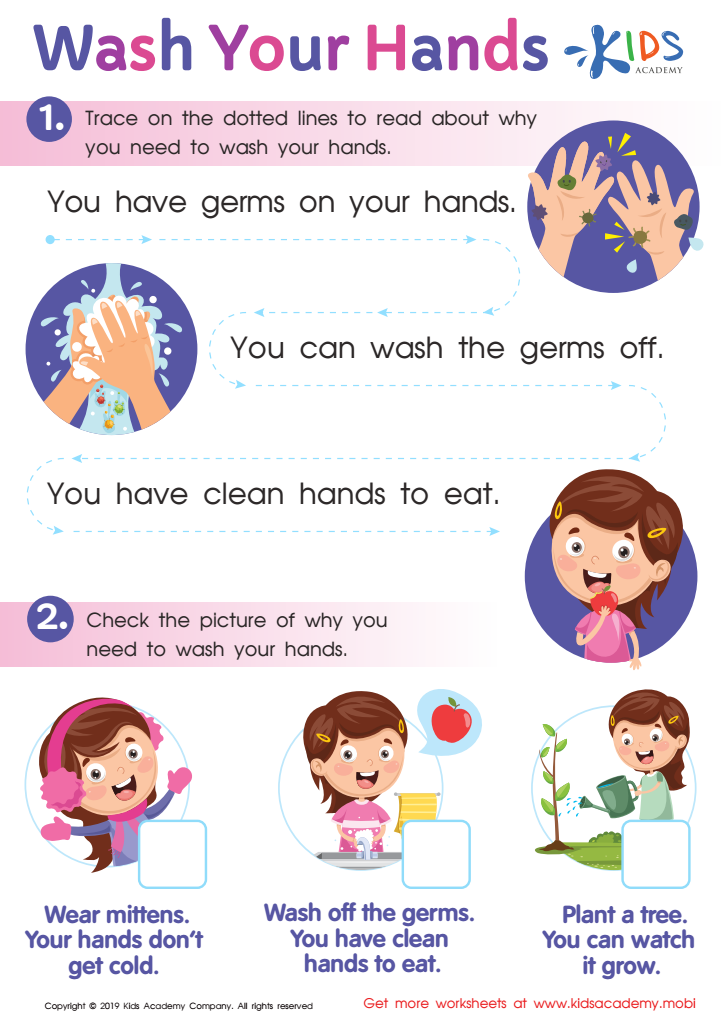
Wash Your Hands Worksheet
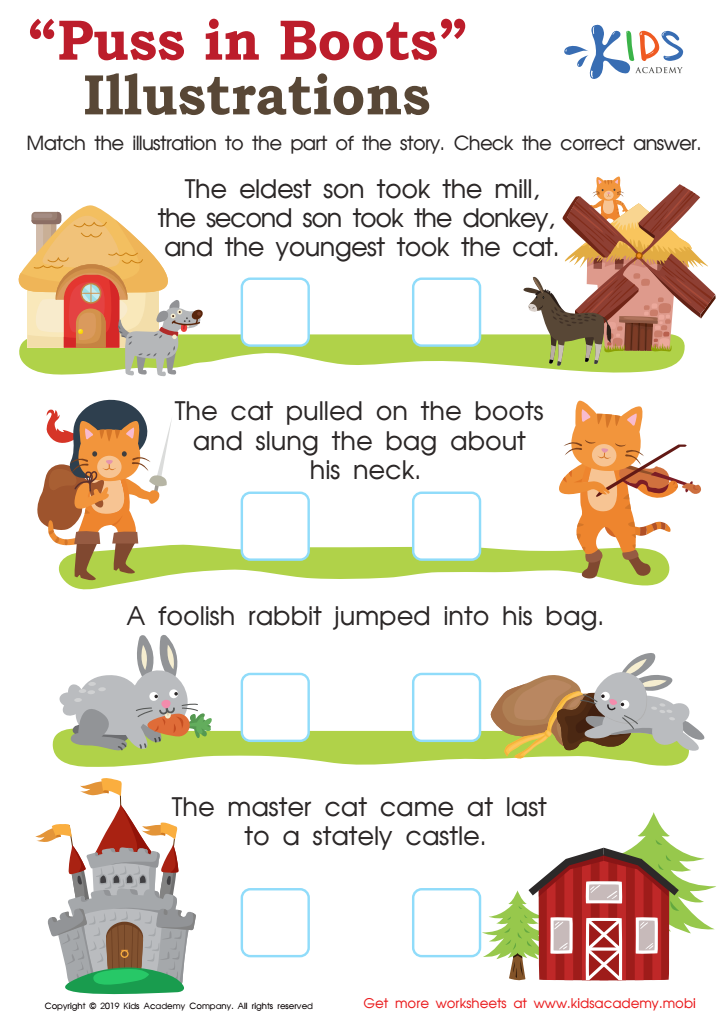
Puss in Boots Illustrations Worksheet






.jpg)

Visual interpretation in reading fiction is incredibly important for children aged 3-8 for several reasons. At this developmental stage, young minds are rapidly absorbing information and forming the foundational skills that will support all future learning. Pictures in storybooks are not only eye-catching but serve an educational purpose by providing concrete references that help children understand and engage with the text.
Firstly, visual aids enhance comprehension. When children see illustrations, they can make connections between the image and the words they hear or read. This bolsters their understanding of the storyline, plot, and characters. For young readers, who may struggle with textual comprehension alone, pictures provide additional context and clarity.
Secondly, visual storytelling boosts vocabulary acquisition. Exposure to an array of images and the written words that accompany them introduces children to new terms and concepts, fostering language development. This can lead to richer conversations between parents, teachers, and children, further enhancing linguistic skills.
Moreover, illustrations spark imagination and creativity. They invite children to explore beyond the literal meanings of words and envision possible worlds, characters, and scenarios, which cultivates creativity and visual thinking.
Finally, visual literacy is a crucial skill for the digital age. In a world dominated by screens and images, children need to learn how to interpret visuals effectively. Parents and teachers who emphasize visual interpretation in reading fiction empower children with skills that are essential for academic success and lifelong learning.








