Fraction Addition Sight Words Worksheets for Ages 3-8
4 filtered results
-
From - To
Enhance your child's math and reading skills with our "Fraction Addition Sight Words Worksheets" designed for ages 3-8. These engaging worksheets seamlessly blend fraction addition practice with essential sight word recognition, making learning both fun and educational. Each activity is crafted to promote critical thinking and improve comprehension, giving your young learner a head start in both math and literacy. Perfect for classroom use or home practice, these worksheets cater to different learning styles and abilities. Explore exciting exercises that will keep your child engaged, motivated, and confident in their learning journey.
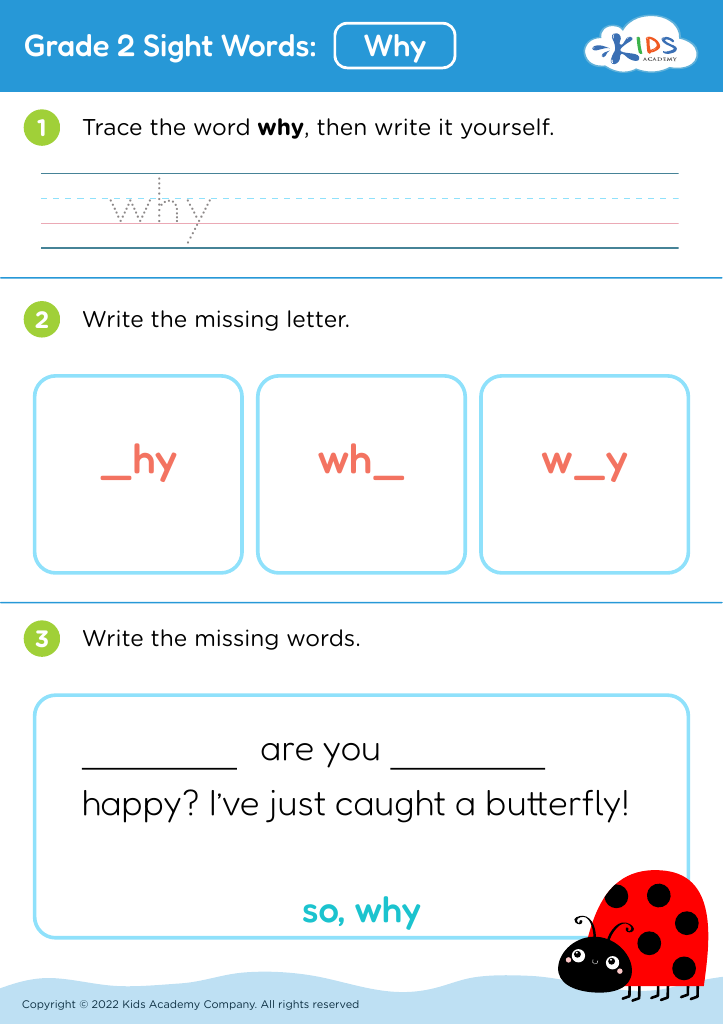
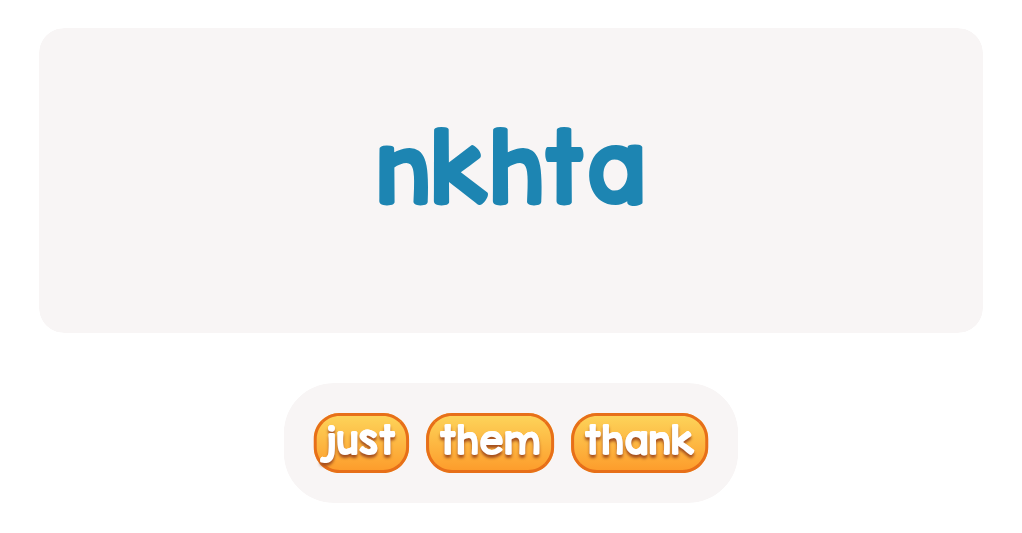







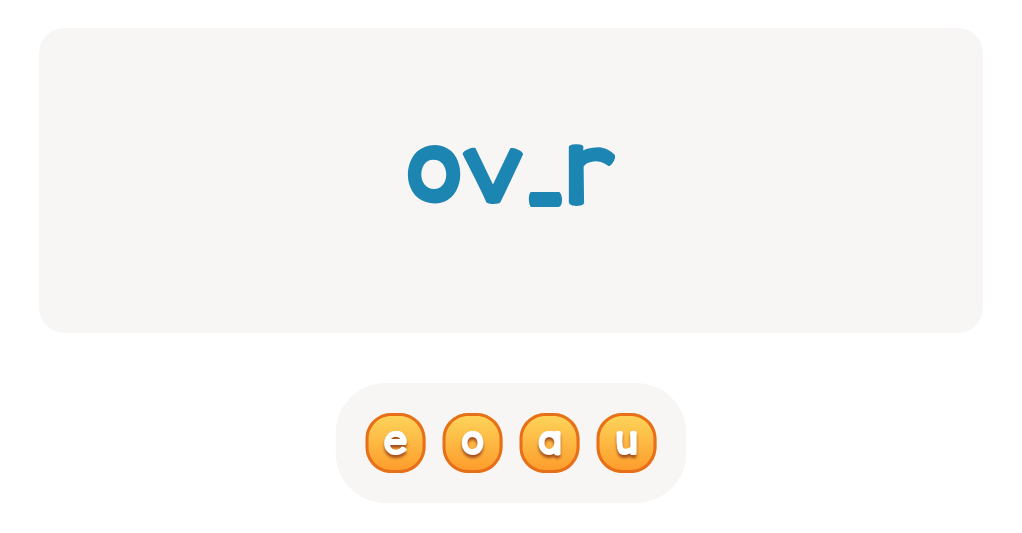
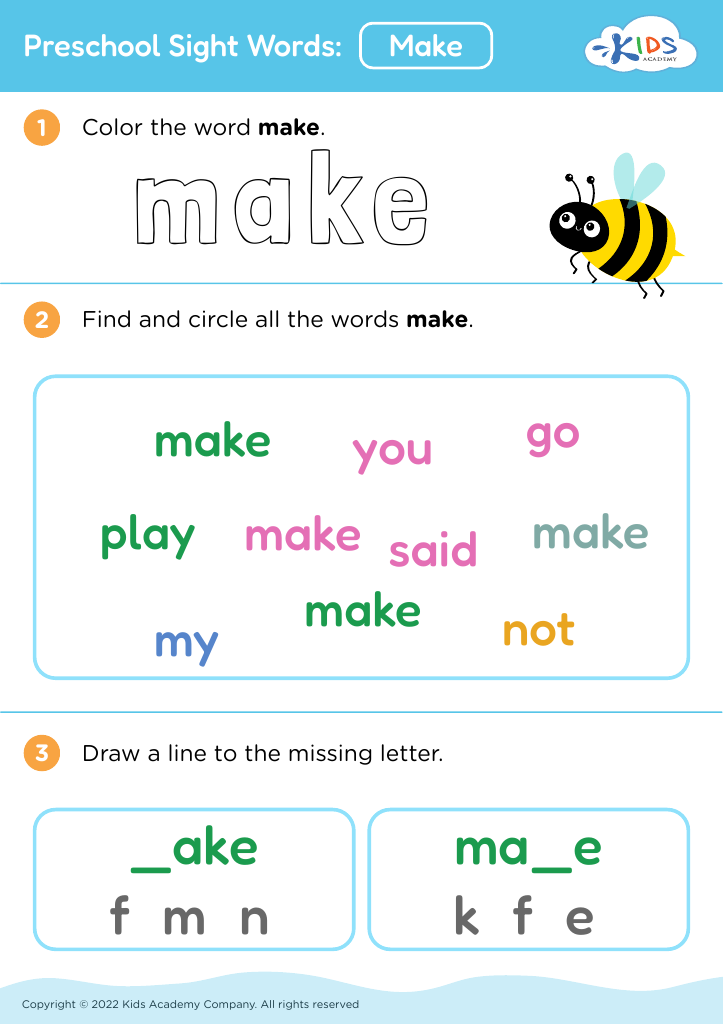
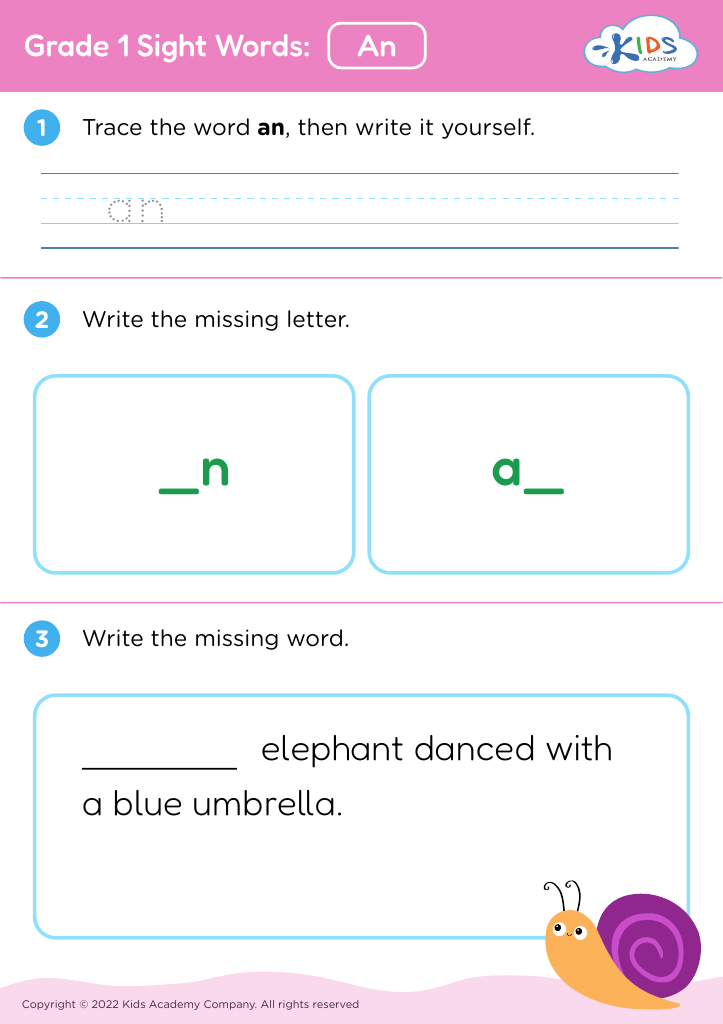
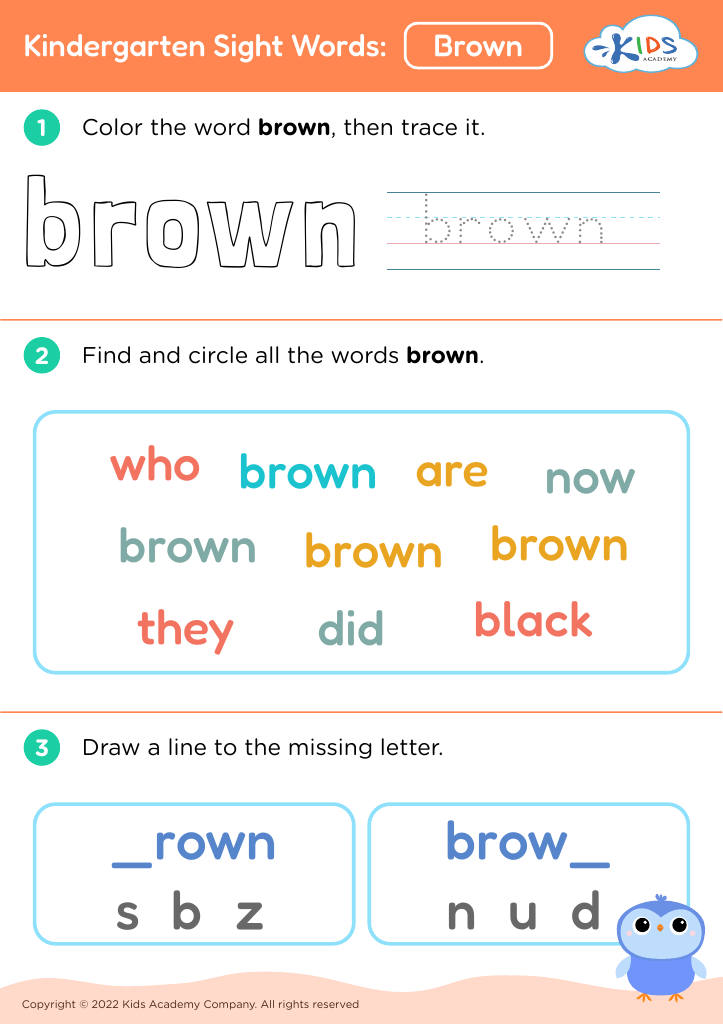








Parents and teachers should prioritize fraction addition and sight words for young children, ages 3-8, to lay a strong foundation for future academic success. This period is crucial as children's brains are rapidly developing, and early exposure to these concepts plays a significant role in cognitive growth and problem-solving skills.
Fraction addition introduces basic math concepts that encourage logical thinking and spatial awareness. By familiarizing children with fractions early on, they're better prepared for more complex mathematical problems encountered in later grades. Engaging children with fun activities, manipulatives, and visual aids makes learning fractions enjoyable, helping to instill a positive attitude towards math from an early age.
On the other hand, sight words are essential for reading fluency. These frequently occurring words aren’t easily decodable using phonics alone, so recognizing them by sight aids smoother, more rapid reading. Comprehending sight words increases children's confidence and motivates them to read more, which, in turn, enhances their vocabulary, comprehension, and overall language skills.
Incorporating fraction addition and sight words into curriculum and home activities ensures comprehensive development. By nurturing these skills early, parents and teachers set children up for academic success across all subjects, developing confident, curious learners and stronger, more capable individuals.