
Counting skills Animals Worksheets for Ages 3-8
3 filtered results
Difficulty Level
Grade
Age
-
From - To
Subject
Activity
Standards
Welcome to our "Counting Skills Animals Worksheets" designed for children ages 3-8! These engaging and educational printables help young learners practice counting with fun animal-themed exercises. Perfect for home or classroom use, our worksheets feature vibrant illustrations that capture children's imaginations while reinforcing essential math skills. Kids will love counting cute animals, matching numbers, and completing simple math puzzles. Supporting early development, these activities enhance number recognition, sequencing, and counting accuracy. Whether you're a parent, teacher, or caregiver, our animal counting worksheets are an excellent tool to make learning numbers an enjoyable adventure. Download and print today to start counting fun!
Favorites
With answer key
Interactive
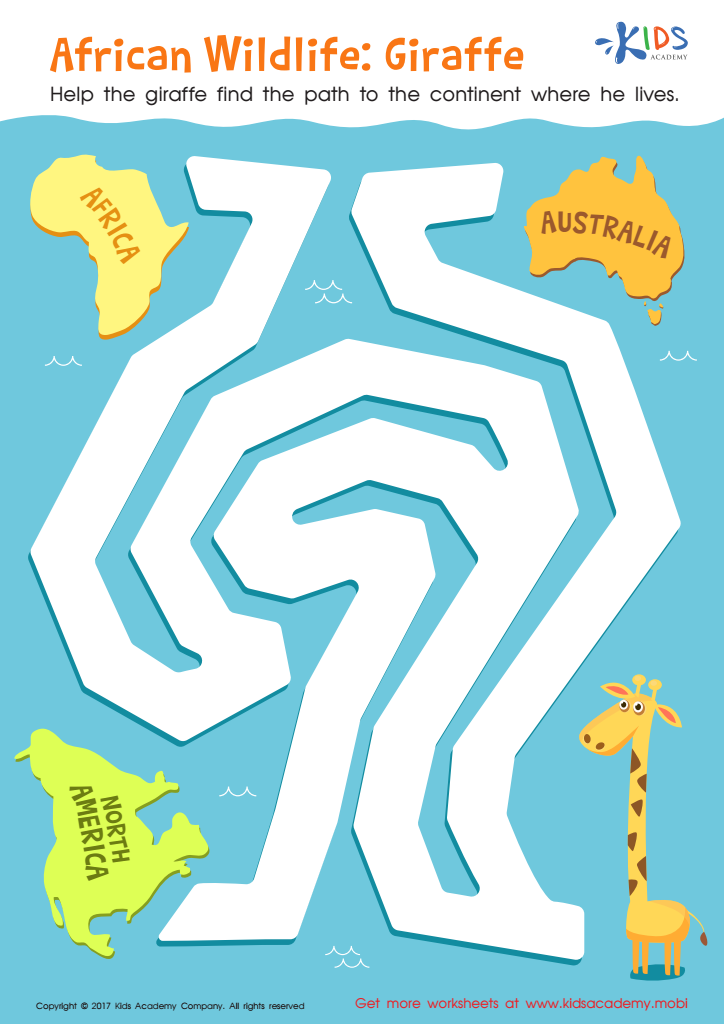
African Wildlife: Giraffe Worksheet
Help the giraffe get home! This African wildlife giraffe worksheet will boost your child's logical reasoning skills while they complete a maze to help the giraffe navigate choppy waters. Learn about different continents and their unique climates, practice problem solving and expand knowledge of the world and its habitats. Perfect for inspiring little learners!
 Assign to My Students
African Wildlife: Giraffe Worksheet
Worksheet
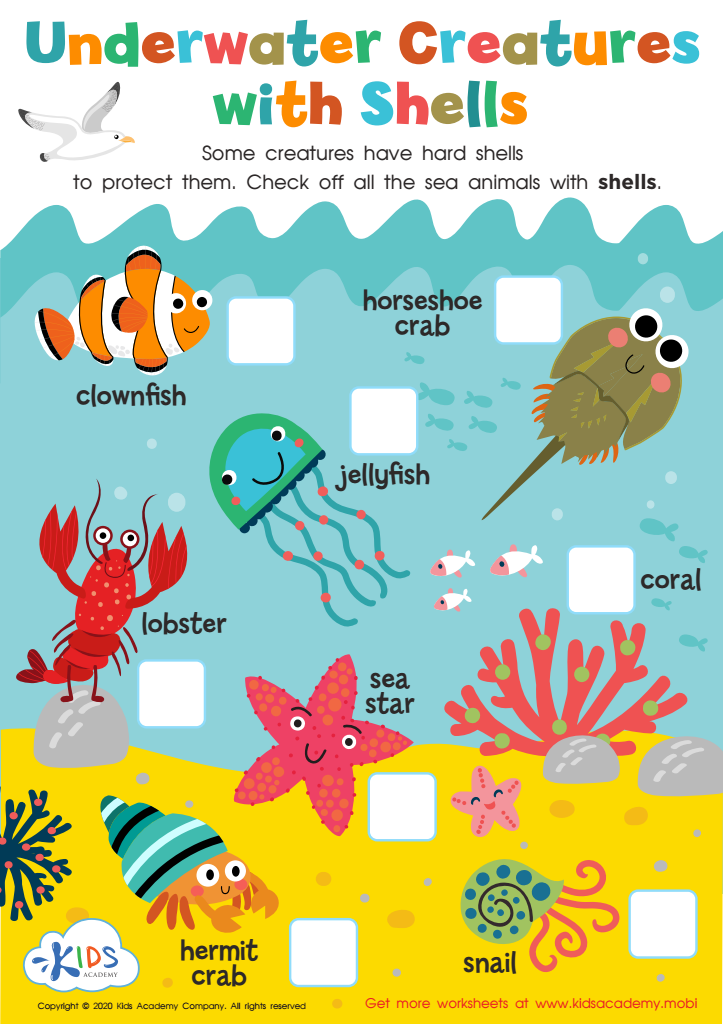
Underwater Creatures with Shells Worksheet
Teach your child about sea creatures with this vibrant PDF science worksheet! Comb through the colorful image to identify animals with shells; compare them to others and check them off. Let them know shells don't just wash up on beach, they serve as protection for sea creatures!
Underwater Creatures with Shells Worksheet
Worksheet
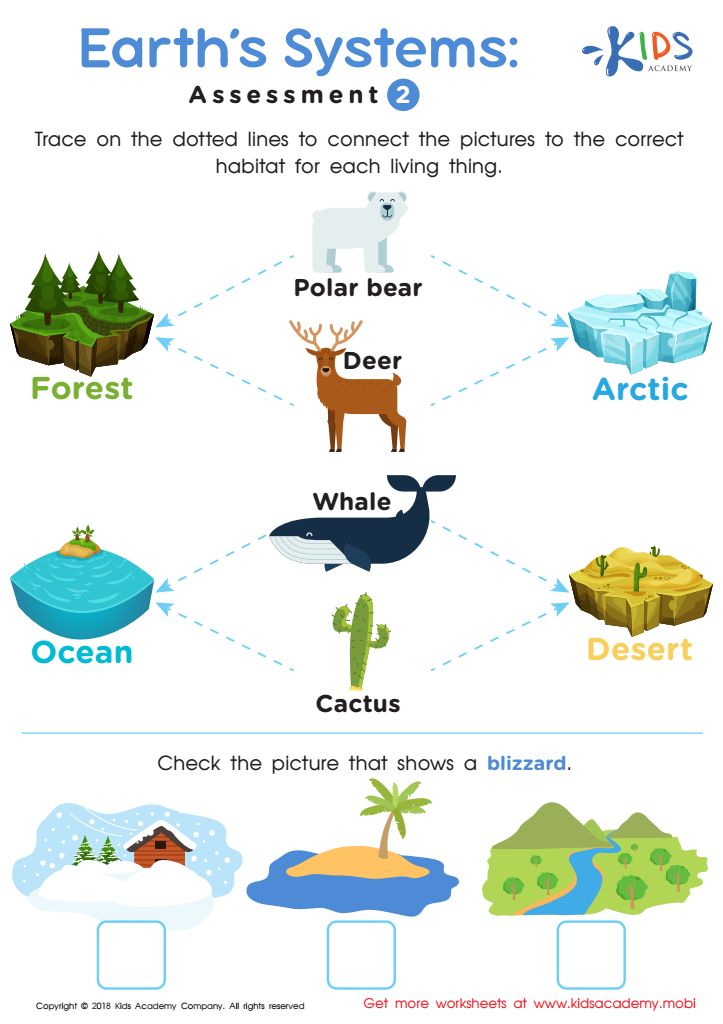
Earth's Systems: Assessment 2
Kids will love this free printable worksheet to assess their knowledge of habitats and the living creatures found in them. They'll trace the dotted lines to connect the pictures of plants and animals to their respective habitat and identify the type of weather depicted. No, polar bears don't live in the ocean, but they do like to swim in icy waters! With this fun activity, your little learner will master earth science basics.
Earth's Systems: Assessment 2
Worksheet
Join Kids Academy for Free
Who is primarily going to use this learning content?







Counting skills are fundamental for children aged 3-8 as they form the cornerstone of early mathematics learning, which is crucial for later academic success. Introducing counting through the use of animals captivates young minds, making the learning process engaging and enjoyable. Cute and colorful animals not only capture children's attention but also cater to their love for stories and imaginative play.
By associating numbers with animals, young learners can better grasp abstract numerical concepts. This method allows children to visualize counting, which helps in reinforcing the sequential order of numbers and improves memory retention. Counting animals also aids in developing fine motor skills as children physically move objects to count. This tactile experience enhances their understanding of one-to-one correspondence—a critical foundational concept in mathematics.
Furthermore, discussing animals and their characteristics while counting can expand children's vocabulary and knowledge about the natural world, fostering a love for learning across subjects. Early math skills obtained through counting activities are linked to higher confidence levels in tackling future mathematical challenges.
Thus, integrating counting skills through animals for children ages 3-8 not only builds robust academic foundations but also nurtures cognitive skills, curiosity, and enthusiasm for learning. Parents and teachers can play an essential role in facilitating these experiences to support the child's overall development.








