Enhancing observation skills Community Worksheets for Ages 3-8
3 filtered results
-
From - To
Boost your child's observation skills with our engaging "Enhancing Observation Skills Community Worksheets" designed for ages 3-8. These printable worksheets immerse young learners in community settings, encouraging them to closely observe their surroundings. By completing fun activities and exercises, children enhance their ability to notice details, make comparisons, and develop critical thinking skills. Our worksheets seamlessly blend education and creativity, providing an interactive way for kids to explore their community. Perfect for home or classroom use, these resources support early learning frameworks while fostering curiosity. Discover the joy of observation and help your child learn about their world today!
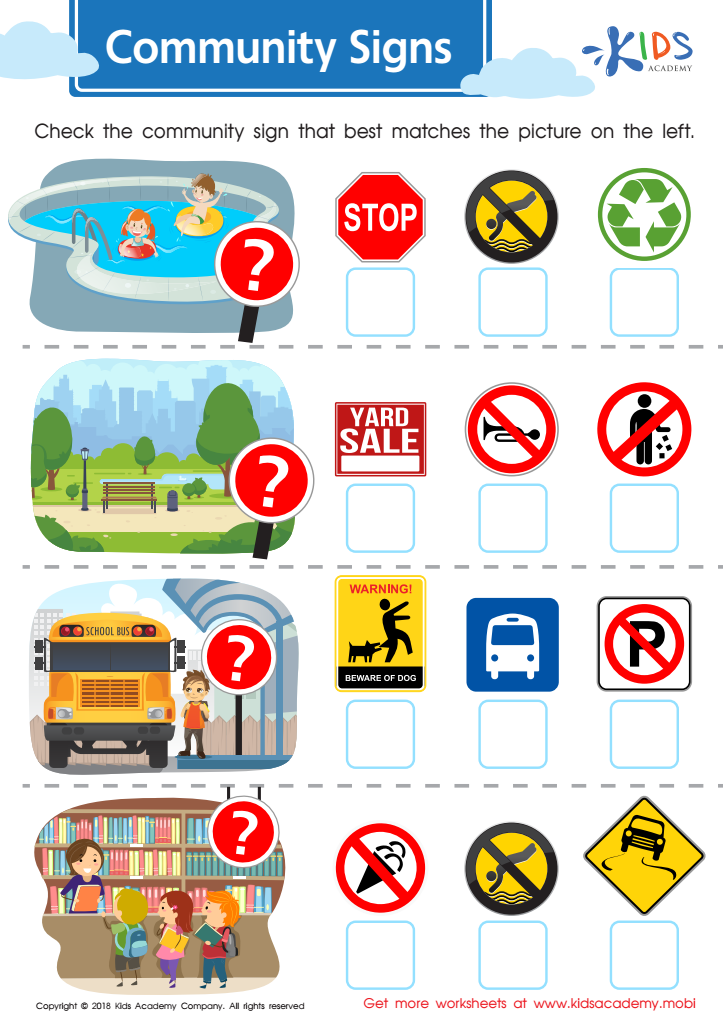
Community Signs Worksheet
 Assign to My Students
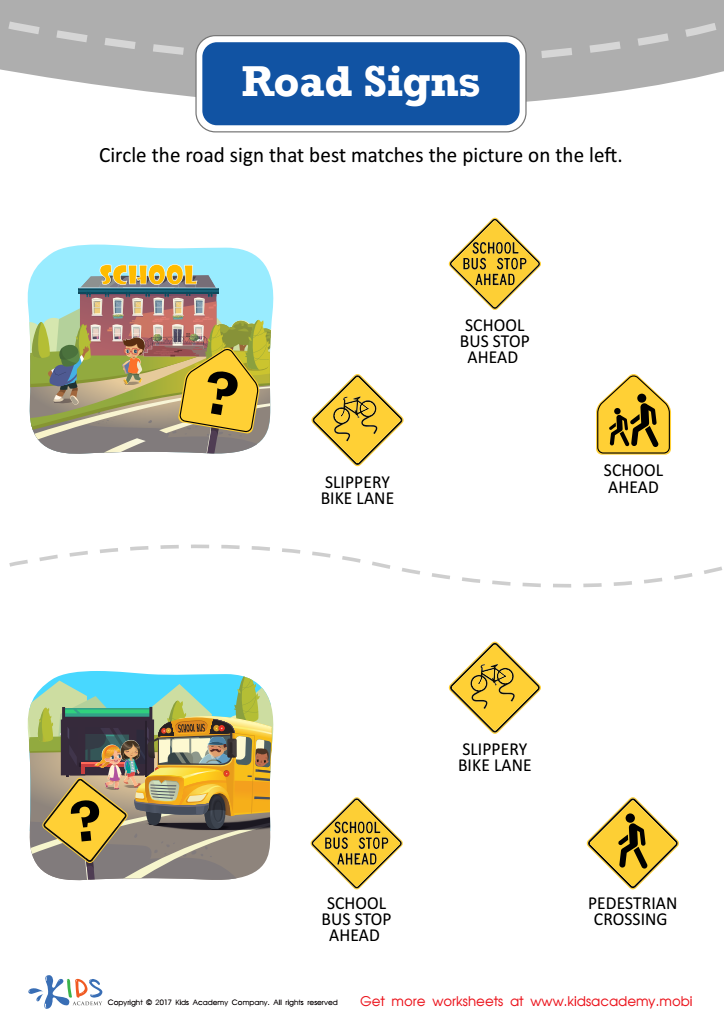
Road Signs (Part 1) Worksheet
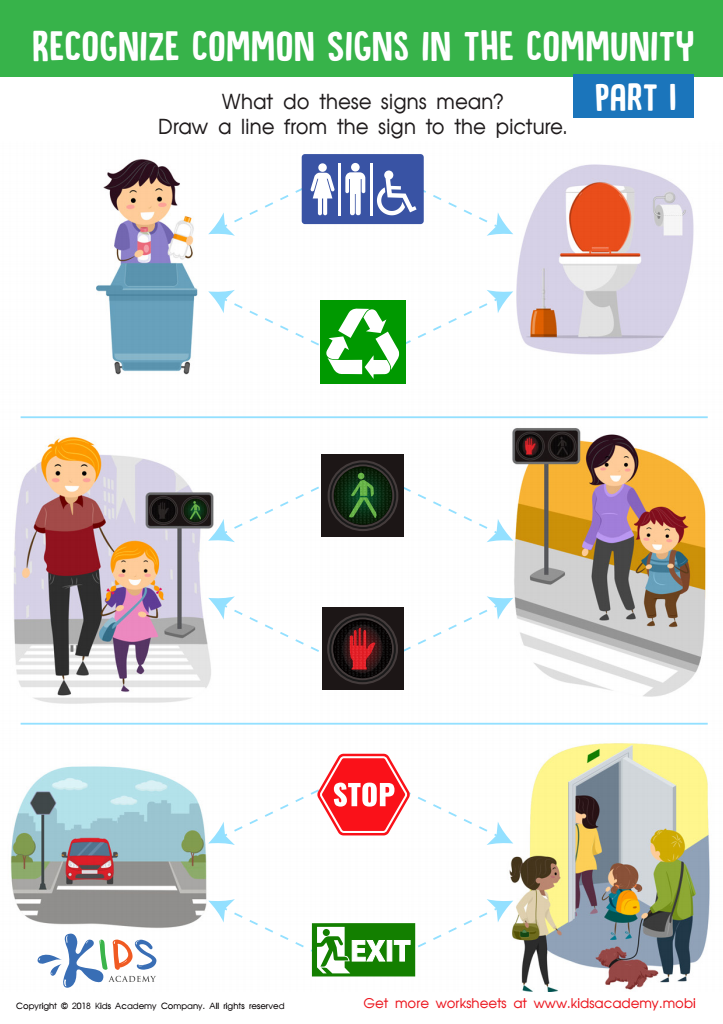
Recognize Common Signs: Part 1 Worksheet







Enhancing observation skills in young children aged 3-8 is crucial for their cognitive, social, and emotional development. Parents and teachers play a vital role in fostering these skills, as effective observation lays the groundwork for critical thinking, problem-solving, and creativity. By actively observing their environment, children learn to notice details, recognize patterns, and make connections, all of which are foundational for early learning.
Moreover, strong observation skills support emotional intelligence. Children learn to read social cues, understand emotions, and develop empathy by observing the actions and expressions of their peers and caregivers. This ability not only helps in building relationships but also reduces conflicts, promoting a harmonious community.
In a classroom setting, enhanced observation skills lead to more engaged learners. Children who are encouraged to observe keenly are likely to ask questions, explore concepts more deeply, and participate actively in their learning experiences. This enriches the educational environment and prepares them for future academic challenges.
Furthermore, community-based programs that focus on observation skills can strengthen connections among families, schools, and local organizations. This collaborative approach facilitates resource sharing and creates a supportive network where children can thrive, making it imperative for both parents and teachers to engage and prioritize observation skill development.








