
Spelling practice Community Worksheets for Ages 3-8
4 filtered results
Difficulty Level
Grade
Age
-
From - To
Subject
Activity
Standards
Welcome to our Spelling Practice Community Worksheets for Ages 3-8! These engaging and interactive worksheets are designed to help young learners develop essential spelling skills through the context of their communities. Our resources incorporate fun themes, familiar vocabulary, and vibrant illustrations to capture children's attention and enhance their learning experience. Perfect for home or classroom use, these worksheets support literacy development while fostering an understanding of social structures and roles. With a variety of activities tailored to different skill levels, your child will gain confidence in spelling and improve their language proficiency. Explore our worksheets and empower your child's educational journey today!
Favorites
With answer key
Interactive
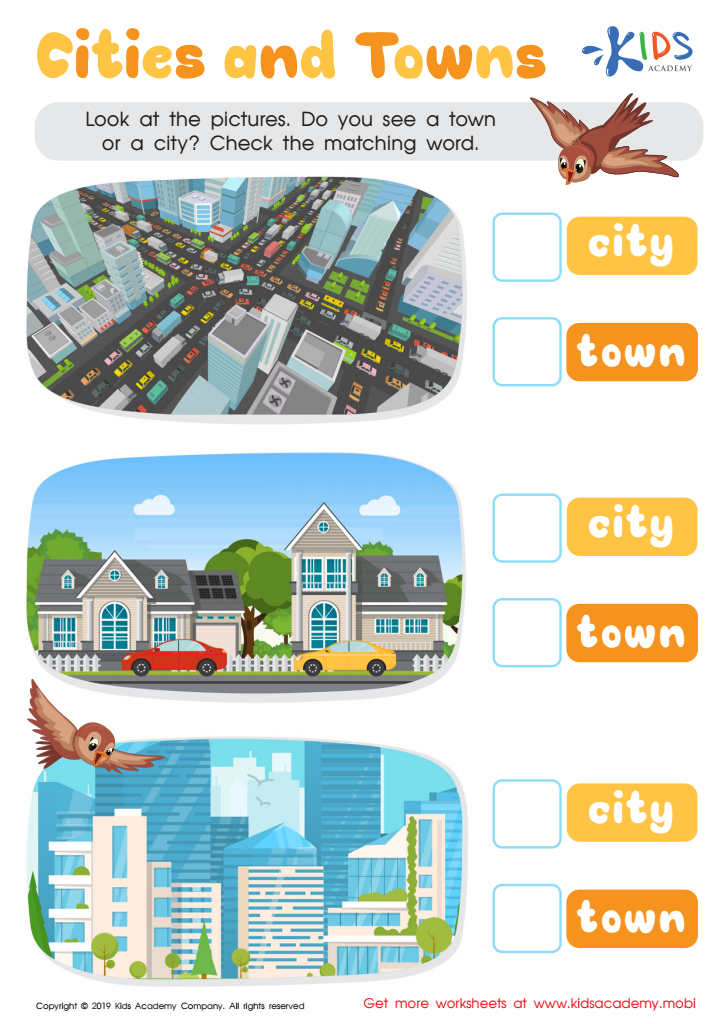
Cities and Towns Worksheet
Cities are buzzy and busy while towns tend to be peaceful. Ask your child if they can tell which one is which from a picture. This could be a great way to test their understanding of the differences between towns and cities. There are many businesses in cities, tall buildings and lots to do. Meanwhile towns are usually quieter.
 Assign to My Students
Cities and Towns Worksheet
Worksheet
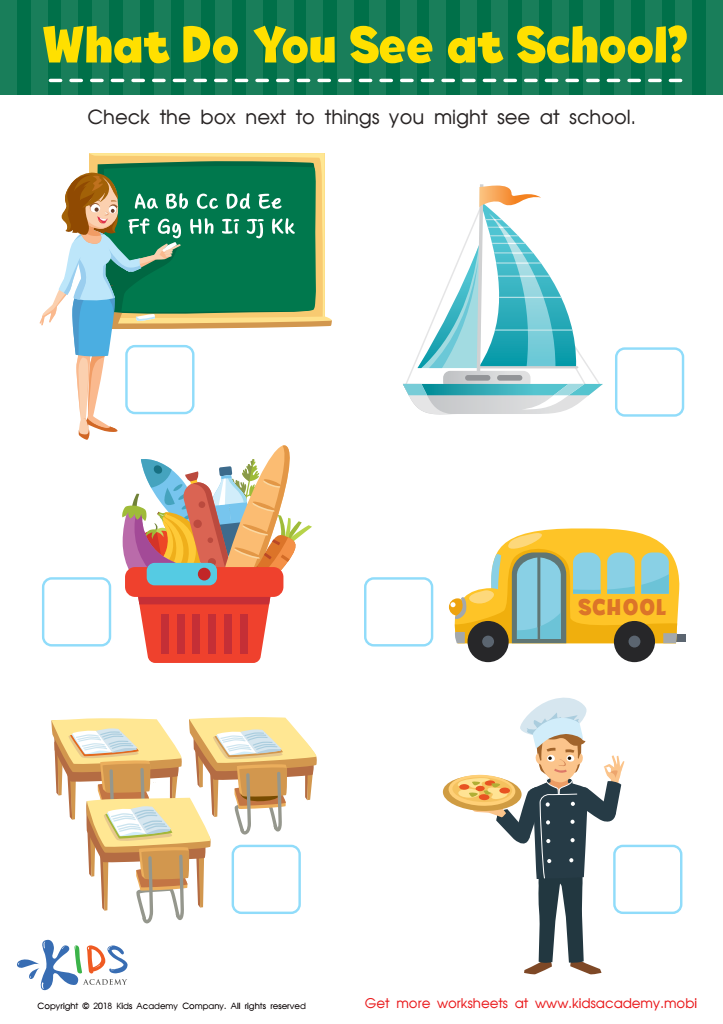
What Do you See at School? Worksheet
Have your kids give you a list of things they see at school. Then, view the worksheet together. Ask them to check the boxes next to the school items. Look for objects that can be found at school and those that don't belong. This is a great way to check their knowledge of what they see at school daily, except on weekends and holidays.
What Do you See at School? Worksheet
Worksheet
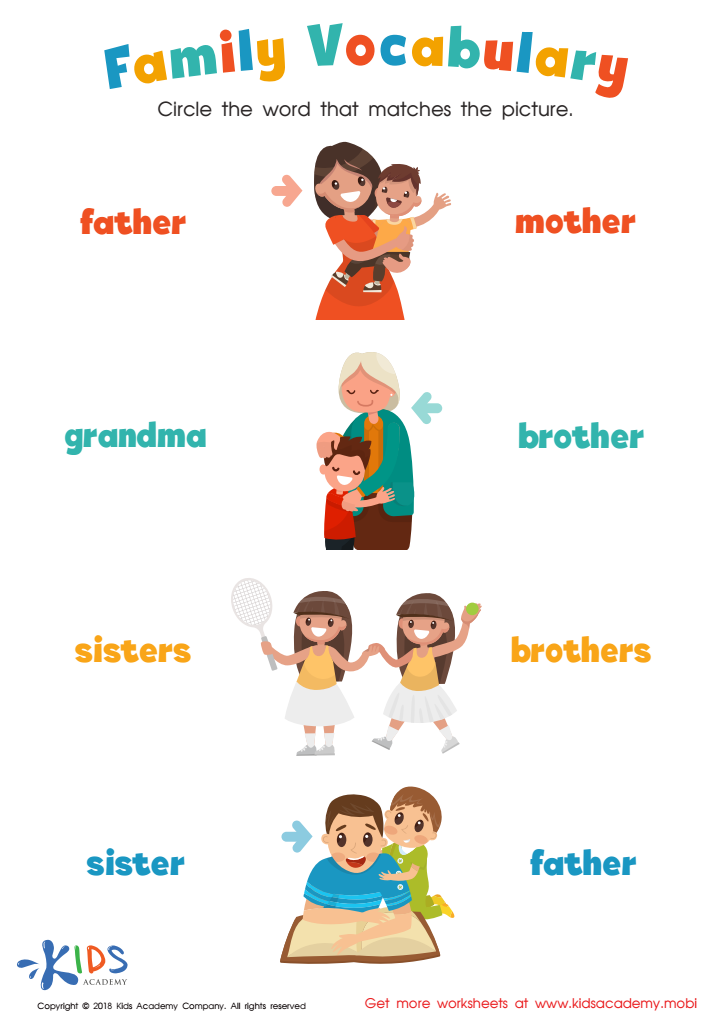
Family Vocabulary Worksheet
Students learn about families in social studies. This worksheet helps them identify family members by looking at a picture and circling the corresponding word. To extend their learning, ask them to talk about their own family members.
Family Vocabulary Worksheet
Worksheet
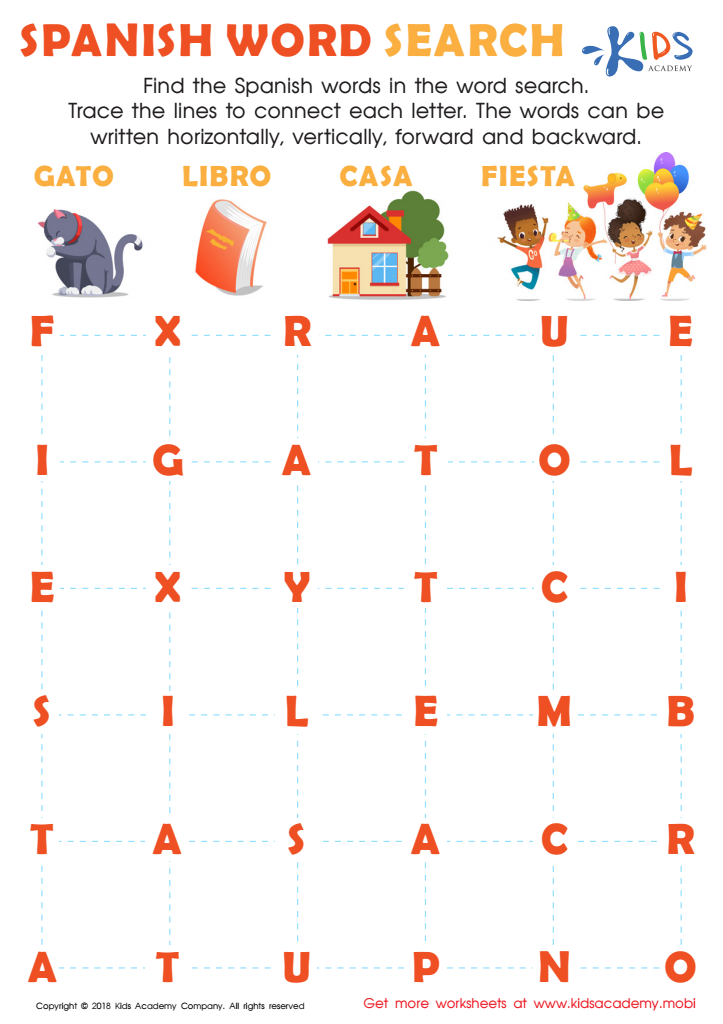
Spanish Word Search Worksheet
This free worksheet encourages students to learn Spanish words while developing visual, fine motor, and hand-eye coordination skills. Through colorful pictures and traceable lines, the task of finding words such as gato, libro, casa, and fiesta is disguised as a fun and engaging way to explore new cultures.
Spanish Word Search Worksheet
Worksheet
Join Kids Academy for Free
Who is primarily going to use this learning content?








Spelling practice is crucial for children aged 3-8, as it lays the foundation for literacy skills essential in communication and learning. During these formative years, children develop phonemic awareness, which is the understanding that words are made up of individual sounds or phonemes. A supportive spelling practice community provides an environment where children can engage in fun and interactive learning experiences, fostering a love for language.
Parents and teachers should care about such communities because they enhance collaborative learning. By participating in group activities, children are exposed to diverse techniques and strategies for mastering spelling, which can cater to various learning styles. Moreover, supportive engagement from parents and teachers reinforces children's confidence, making them more likely to take risks in their learning.
Additionally, these communities create a shared responsibility for literacy development, facilitating communication between home and school. When parents are involved, they can reinforce skills learned in the classroom, while teachers can provide resources and guidance aimed at enriching each child’s understanding.
Ultimately, investing time in spelling practice communities not only boosts children’s spelling skills but also nurtures critical thinking, problem-solving abilities, and early reading readiness—essentials for future academic success.








